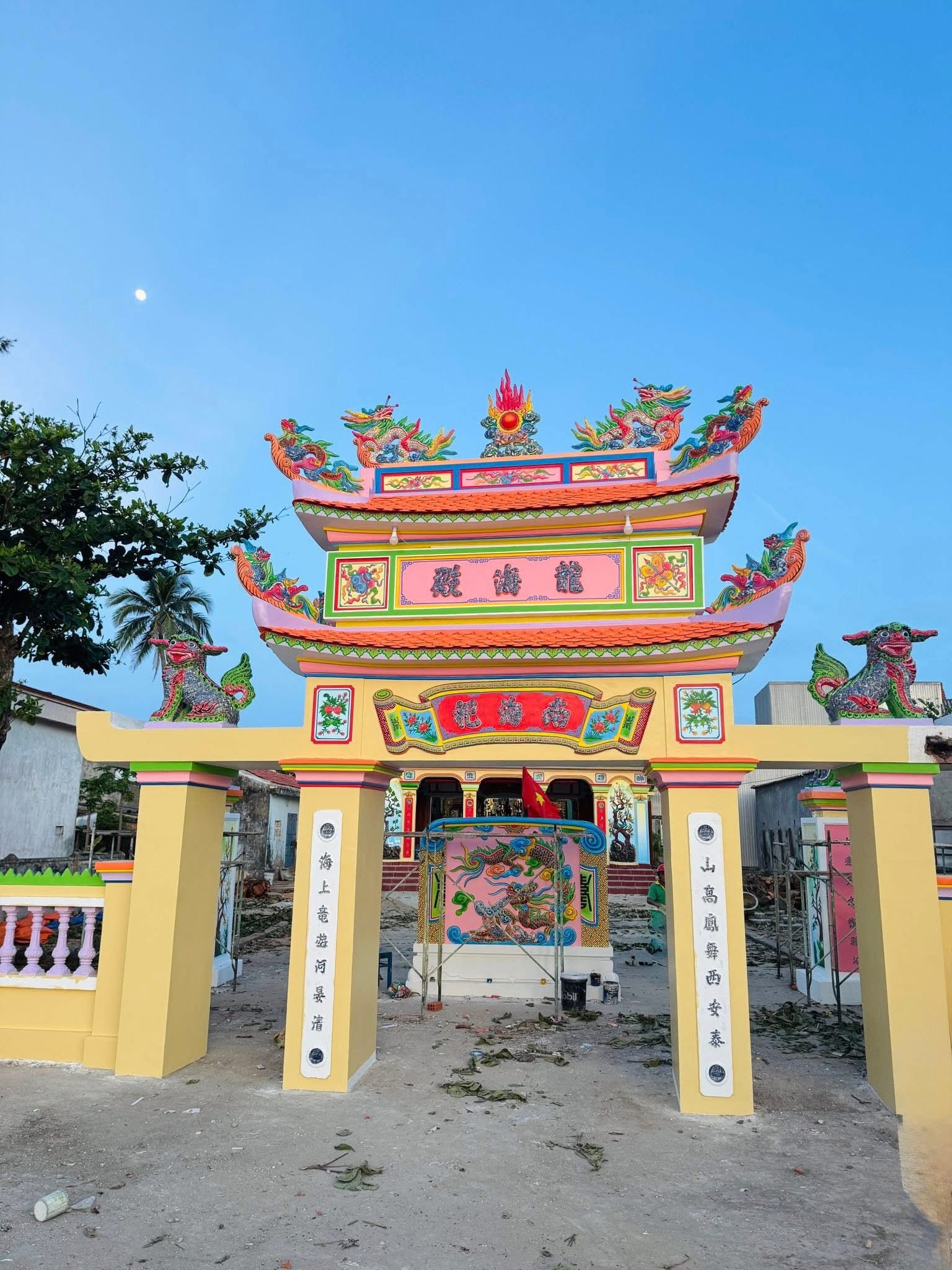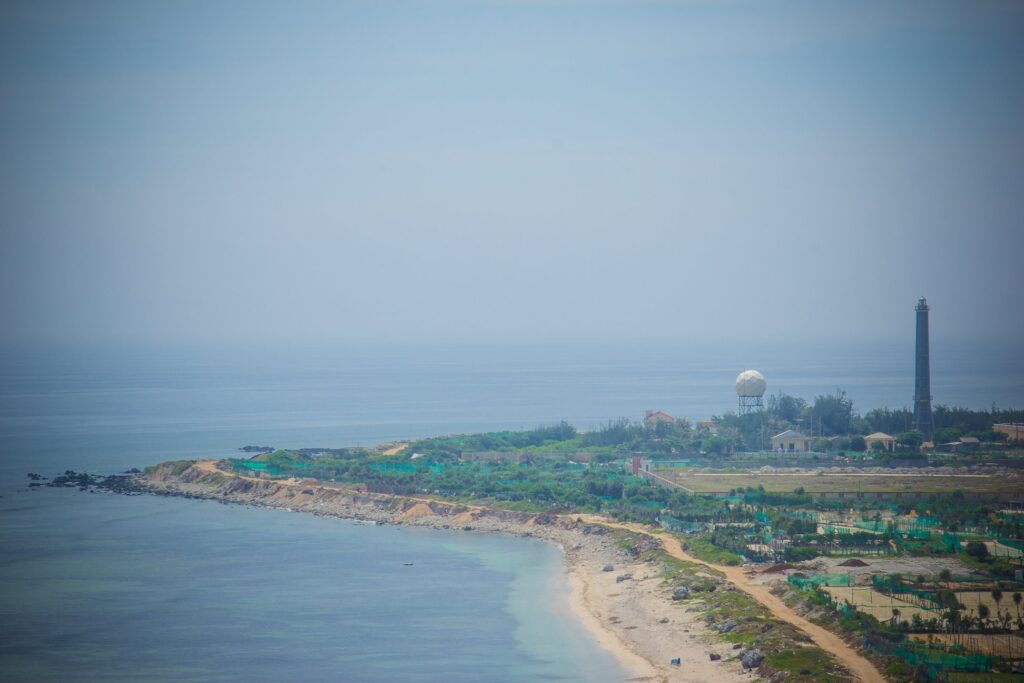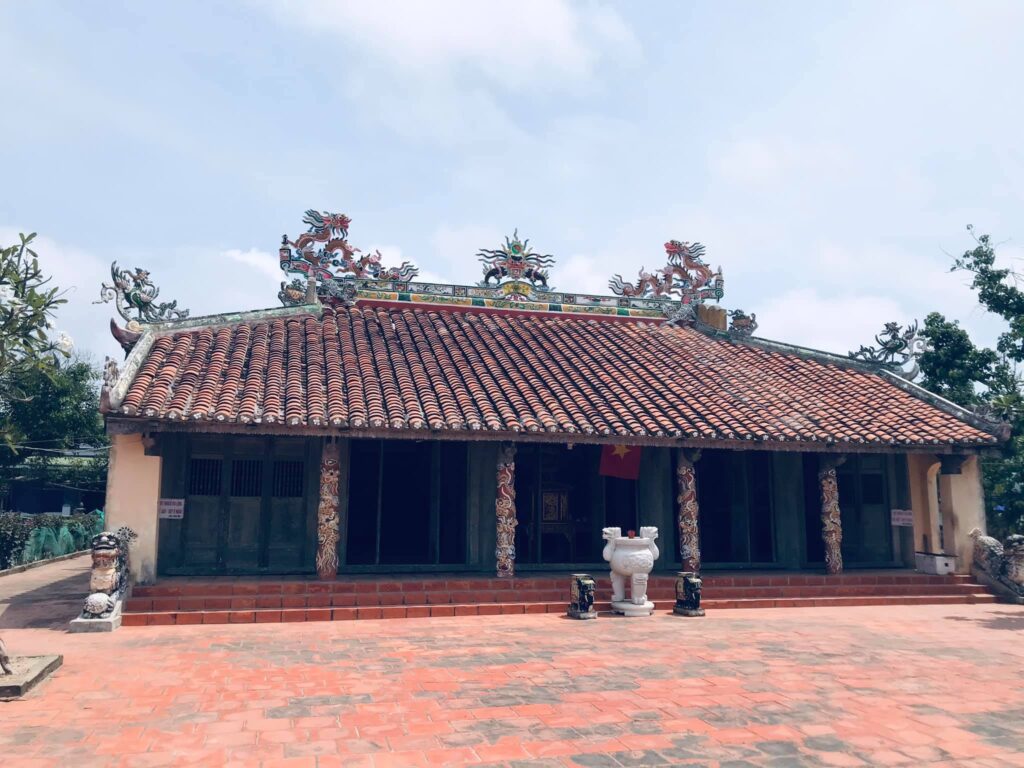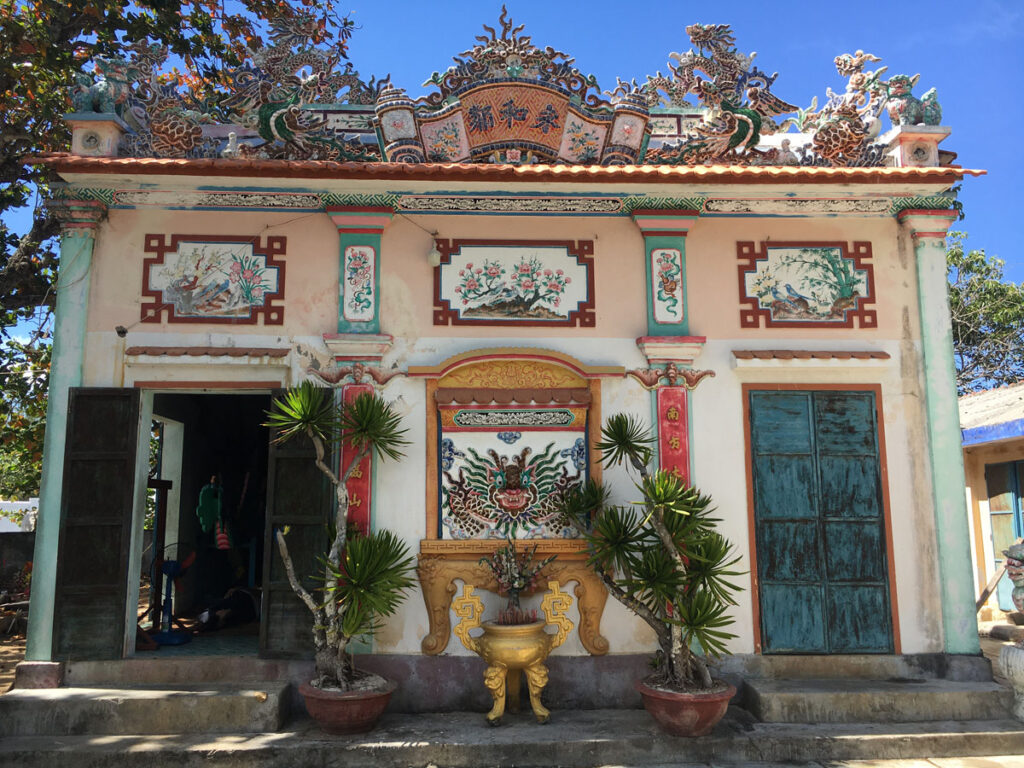
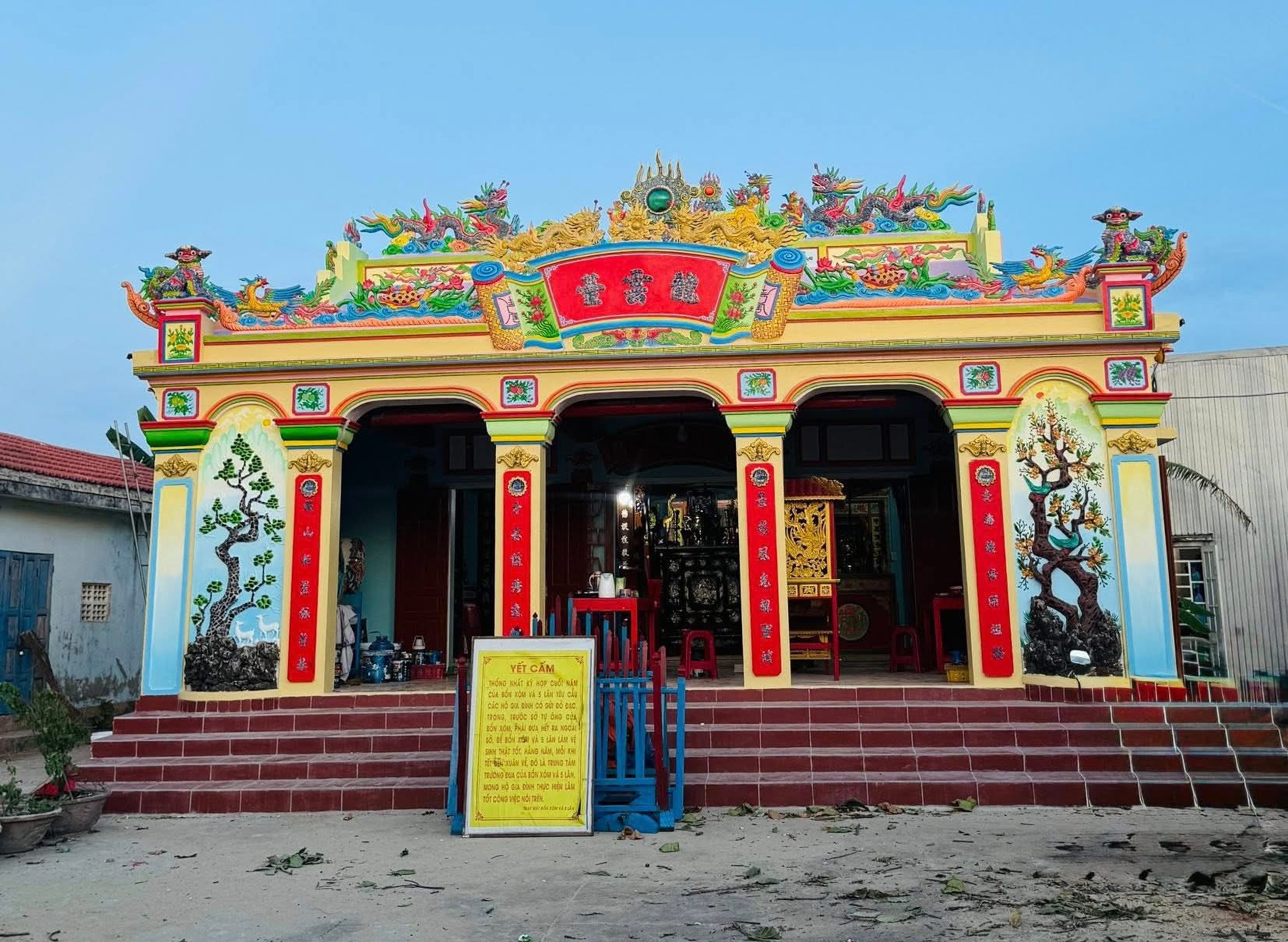
Tan Shrine, also called Sở Đại Vương, belongs to the Vạn Vĩnh Thạnh fishing guild in Đông Village, An Vĩnh Commune. This is one of the most sacred whale-worship sites on Lý Sơn Island, dedicated to Cá Ông (the Whale God), honored with the imperial titles “Đồng Đình Đại Vương” and “Đại tướng Huỳnh Long Hải.” The shrine is home to the two largest preserved whale skeletons in Vietnam, making it an invaluable cultural and spiritual heritage of the island.
A Legacy of Whale Worship
Whale worship is a long-standing belief among coastal communities in Central Vietnam. Fishermen affectionately call the whale Cá Ông, Ông Lớn (Great Lord), or Ông Lộng, regarding the whale as a divine protector who rescues seafarers from storms and rough seas. Stories of whales guiding stranded boats or carrying drowning fishermen ashore have been passed down for generations, nurturing a deep sense of gratitude and reverence.
For the people of Lý Sơn—an island district with a long maritime tradition—this belief becomes even more profound. To them, Cá Ông is not only a guardian spirit but also a symbol of peace, prosperity, and the enduring bond between humans and the ocean.
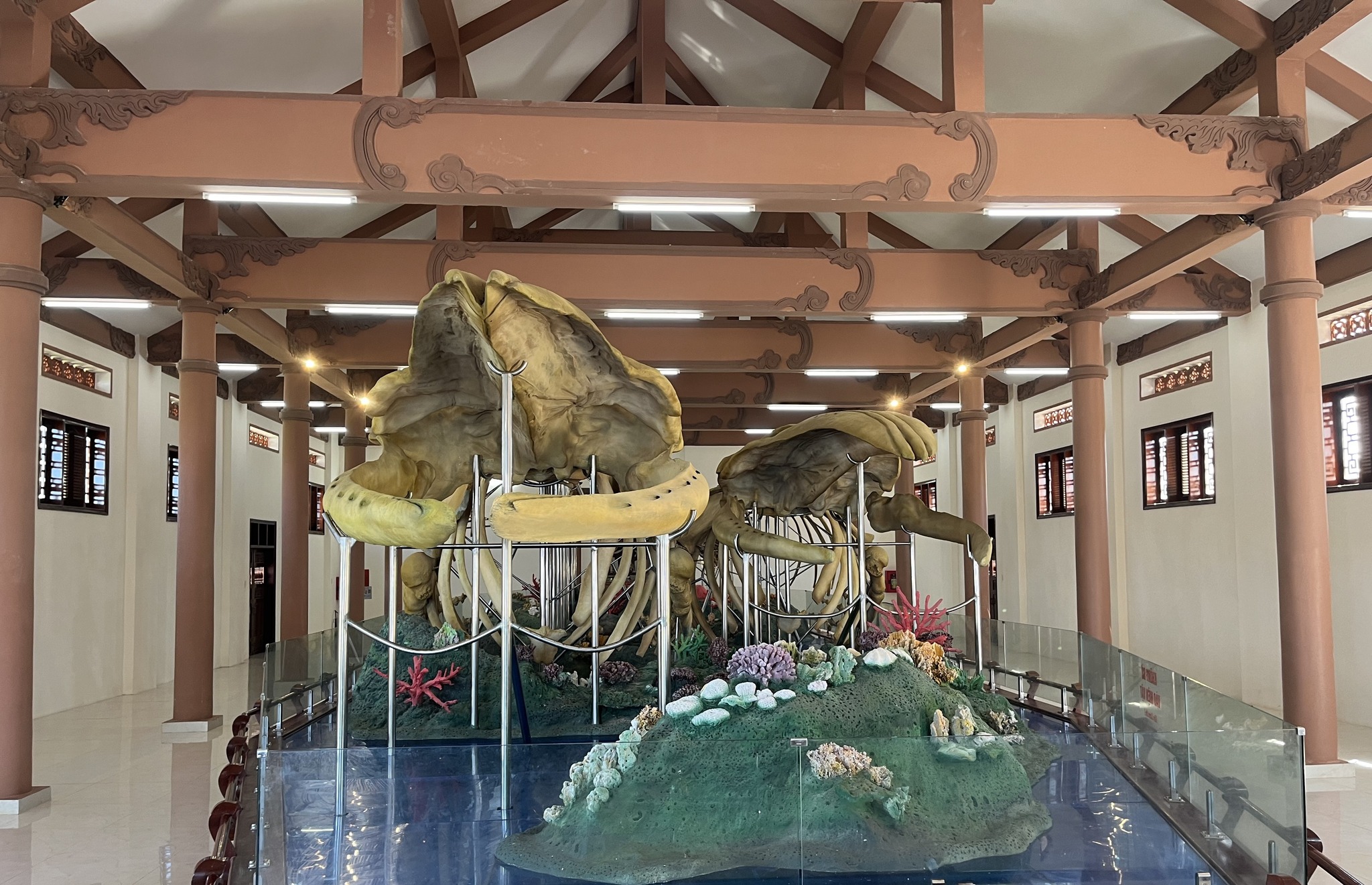
Home to Vietnam’s Largest Whale Skeletons
Inside Tan Shrine are two massive whale skeletons, meticulously preserved and displayed:
- The “Đồng Đình Đại Vương” skeleton, recognized for its extraordinary size
- The “Huỳnh Long Hải General” skeleton, equally impressive in both scale and historical value
Each skeleton is carefully stored in its own ceremonial chamber, accompanied by ancestral tablets, offerings, and ritual objects used by the fishing guild.
These remains are believed to belong to whales that washed ashore near Lý Sơn centuries ago. When a whale “passes away” at sea (referred to as “đi tu”, meaning “ascending to the heavens”), local fishermen consider it a sacred sign. They organize a formal funeral, mourn as though for a human elder, and bury the whale before performing “thượng ngọc cốt”—the ritual of exhuming and enshrining the bones after several years.
Spiritual Center of the Fishing Guild
As the principal shrine of the Vạn Vĩnh Thạnh guild, Tan Shrine plays an important role in the community’s spiritual and cultural life:
- Hosting whale worship ceremonies
- Holding rituals to pray for calm seas and abundant harvests
- Serving as the venue for guild meetings and seasonal festivals
Every year, particularly during the Lễ Khao Lề Thế Lính Hoàng Sa and the guild’s marine ceremonies, Tan Shrine welcomes locals and visitors who come to offer incense and seek blessings for safe voyages.
Architectural Features
Though modest in size compared to other temples on the island, Tan Shrine carries distinctive architectural elements:
- Traditional wooden beams and tiled roofs
- Carvings of marine motifs and protective deities
- Ancestral altars dedicated to Cá Ông and accompanying guardian spirits
The overall design reflects the harmony between island culture, fishermen’s beliefs, and the ancient maritime identity of Lý Sơn.
Recognized Cultural Heritage
For its significant spiritual and historical value, Tan Shrine was officially recognized as a Provincial-Level Historical and Cultural Site under Decision No. 796/QĐ-UBND dated May 20, 2015, issued by the People’s Committee of Quảng Ngãi Province.
This designation affirms the shrine’s importance as a unique heritage site preserving whale worship traditions that have shaped the cultural identity of Lý Sơn for centuries.