Thanh Lam Pagoda is located in Quy Thanh Hamlet, Ngu Phung Commune, within the Phu Quy Special Administrative Zone. With a history spanning more than two centuries, it is one of the island’s most important religious and cultural landmarks.
Origins of Thanh Lam Pagoda
The pagoda was founded in 1774, during the first year of the Cảnh Hưng era, when a group of 50 fishermen and families from Bình Định and Quảng Nam drifted to Phu Quy Island after encountering a major storm at sea. Finding the land fertile and freshwater abundant, they chose to settle permanently and built a small temple to worship the Buddha, praying for protection during their seafaring life.
This marked the birth of Thanh Lam Pagoda, recorded in the temple’s old Nôm-script genealogy.
Alongside the pagoda, the settlers also built a shrine to honor Trần Nam Hải. This shrine is known today as Quy Thanh Mausoleum.
Over the centuries, local residents and followers maintained the temple, preserving more than 30 ancient Buddha statues crafted from bronze, wood, and earthenware. Thanh Lam Pagoda became a spiritual center for islanders, hosting major Buddhist ceremonies such as Vesak, Ullambana, and full-moon rituals throughout the lunar year.
Historical Development Through the Dynasties
In 1828, an older pagoda in Ty Lang Village (named Linh Quang Tự—not to be confused with today’s Linh Quang Pagoda) was merged into Thanh Lam Pagoda when the two villages unified. From this merger, the temple inherited many additional relics, including statues more than 200 years old.
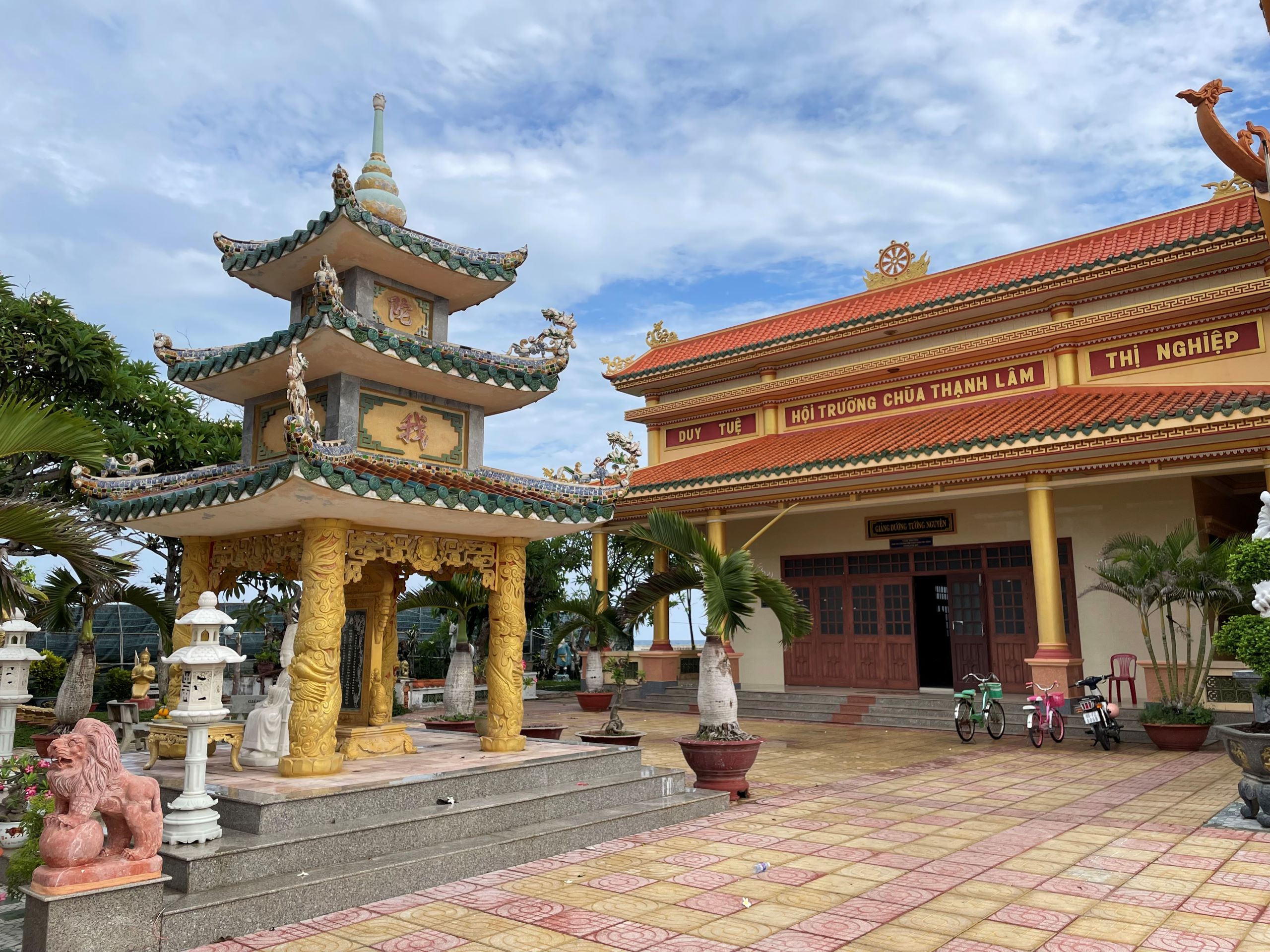
During the early 20th century, Buddhist revival movements brought learned monks from the mainland to Phu Quy. In 1930, Venerable Thích Tường Nguyện was assigned to settle at Thanh Lam Pagoda and expand Buddhist teachings. His compassion and service to local residents deeply rooted Buddhism on the island. Under his guidance, the main hall and the ancestral hall were restored and expanded.
Throughout the mid-20th century, Thanh Lam Pagoda continued to grow as a spiritual and community center. New facilities—including East and West halls, meeting rooms, and later large-scale architectural structures—were added between 1950 and 1995.
The temple’s significance was reaffirmed when local authorities and Buddhist organizations designated Thanh Lam as the headquarters for the Buddhist Representative Board of Phu Quy Island from the 1960s onward.
Architectural Highlights
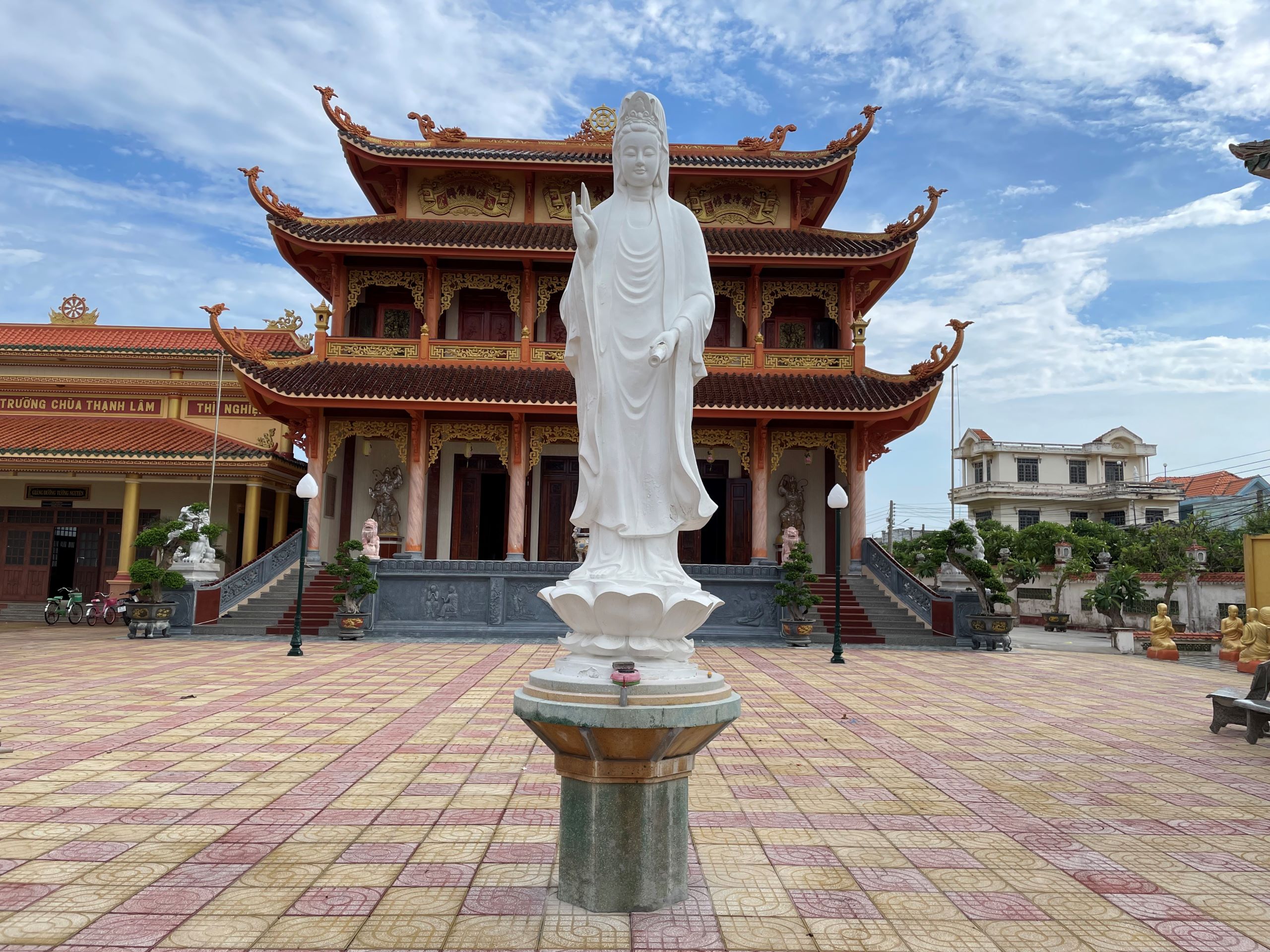
Thanh Lam Pagoda today features one of the most impressive Buddhist architectural complexes on Phu Quy Island. The temple grounds include:
- The Three-Entrance Gate (Tam Quan)
- The Seven-Story Stupa
- Memorial Stele Tower
- The Grand Bell Tower
- The Main Hall (Chính Điện)
- The Ancestral Hall (Nhà Tổ)
Stone walls, courtyards, and landscaped gardens
Seven-Story Stupa
The pagoda’s stupa is 21 meters tall, built in an octagonal shape with seven receding tiers.
Each roof corner is decorated with mythical sea dragons (giao long), symbolizing protection and the Buddha’s light radiating in eight directions.
Stele Tower
Behind the stupa stands a quadrangular stele tower housing a 1.7m-tall stone tablet engraved with classical Chinese characters recounting the life and contributions of Venerable Thích Tường Nguyện.
Grand Bell Tower
Opposite the stupa lies the majestic bell tower, crafted with two levels of curved tiled roofs and intricate bas-reliefs. Inside hangs the largest bronze bell in Binh Thuan Province, weighing 1.2 tons, 198 cm high and sounding deeply across the island.
Main Hall
The main hall, built in the shape of the Vietnamese “Công” character, is the heart of the temple.
It enshrines:
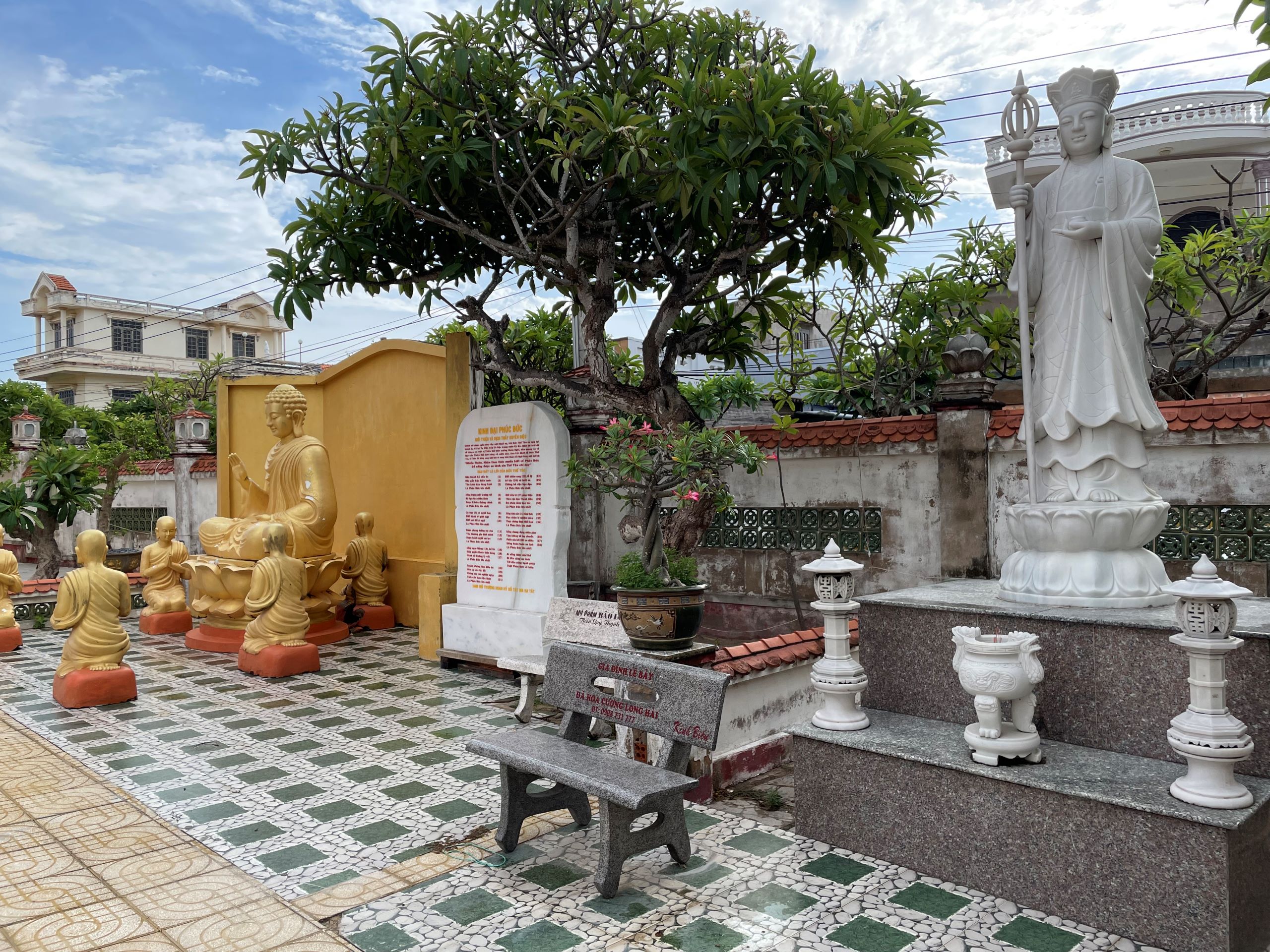
- A 2.7m statue of Shakyamuni Buddha
- Statues of Manjushri and Samantabhadra
- Bodhisattva Avalokiteshvara
- Numerous lacquered bas-reliefs depicting Buddhist teachings
Ancient couplets adorn the pillars, praising the peaceful beauty of Phu Quy Island and the compassion of the Buddha.
A Living Spiritual Heritage
For over 200 years, Thanh Lam Pagoda has served as one of the two major spiritual centers on Phu Quy Island. Its festivals—especially Vesak, Ullambana, and the full-moon ceremonies—attract hundreds of devotees each year, who come to pray for peace, prosperity, and calm seas.
Today, visitors can:
- Explore the pagoda’s grand Buddhist architecture
- Admire Vietnam’s largest island bell
- Climb the stupa for peaceful views
- Learn about centuries-old Buddhist traditions
- Enjoy a quiet, contemplative atmosphere far from the bustle of the mainland
Thanh Lam Pagoda remains not only a place of worship but also a symbol of the island’s cultural resilience and spiritual identity.