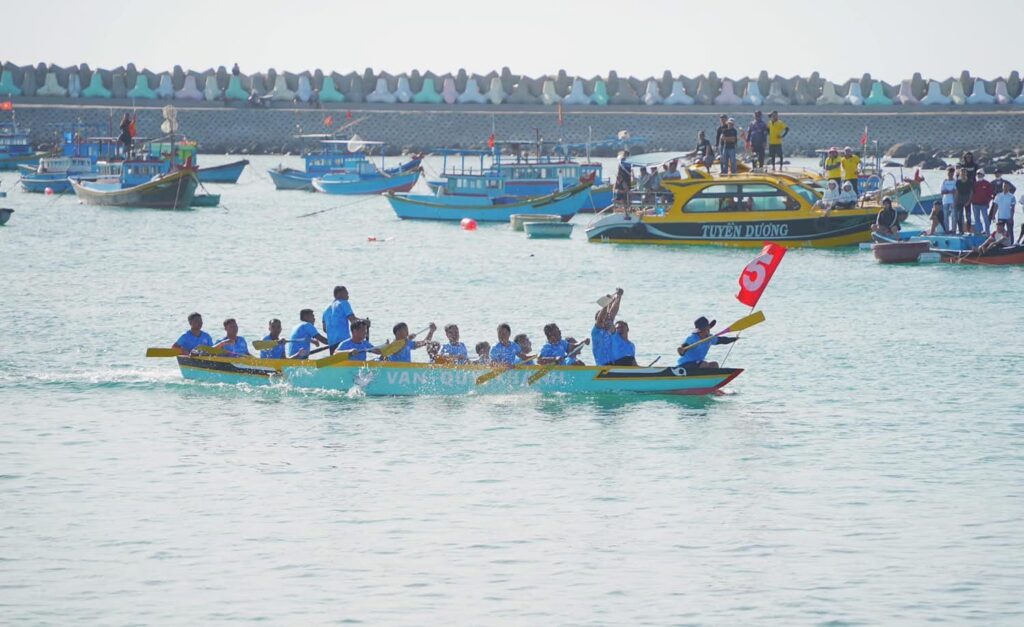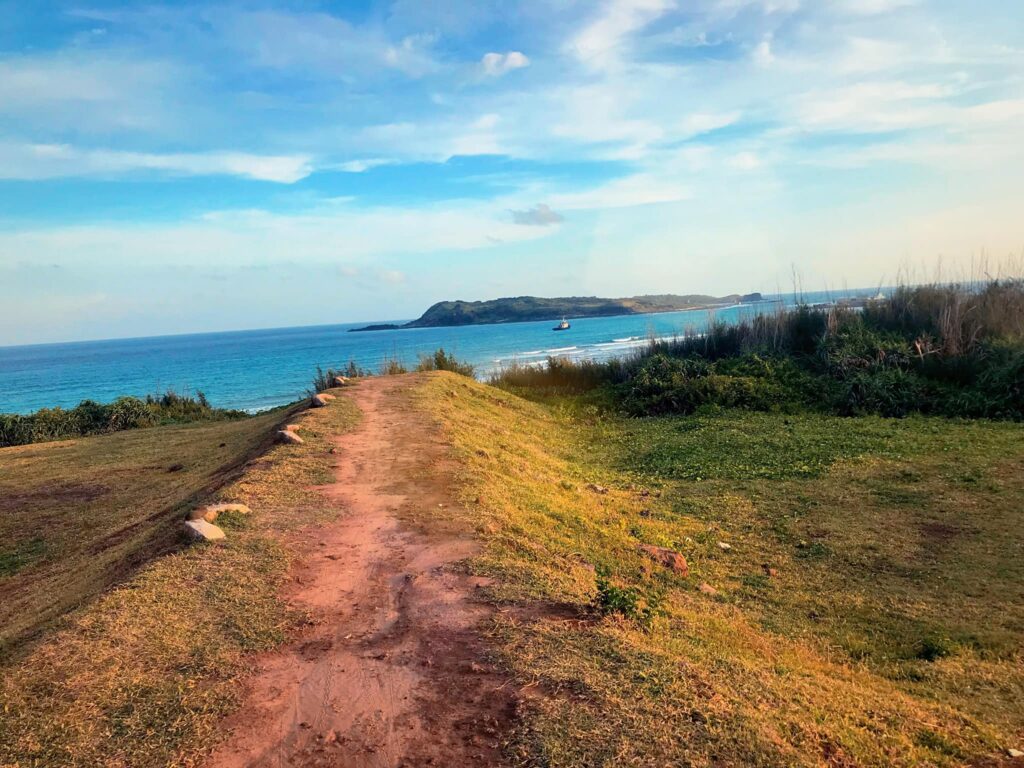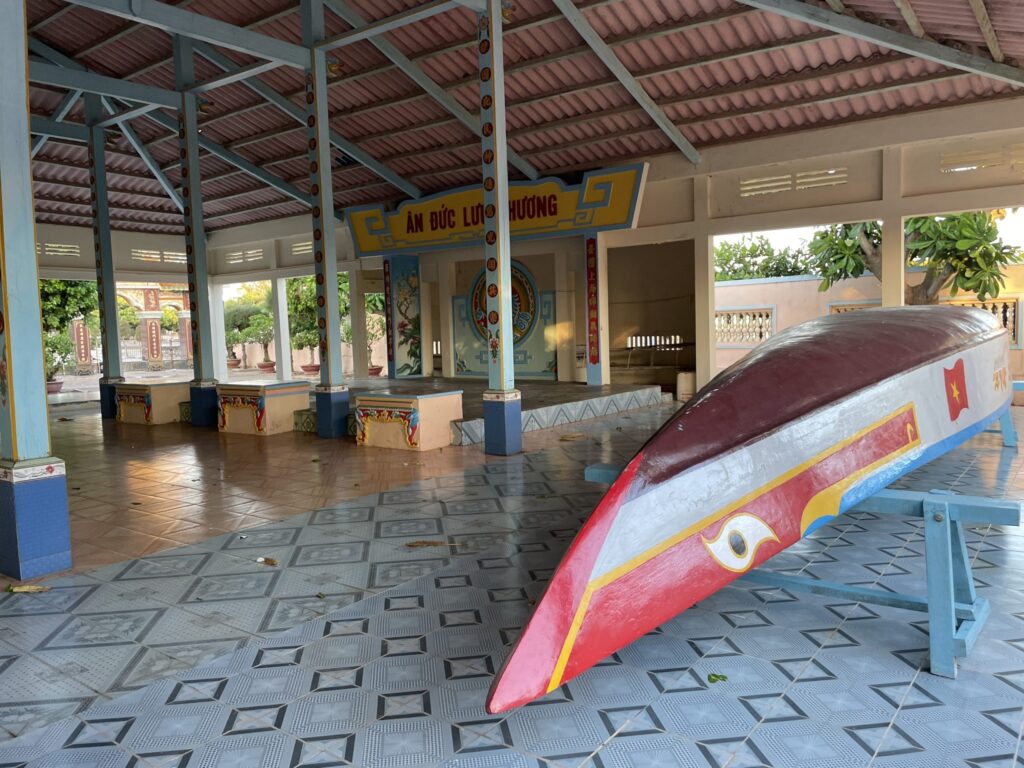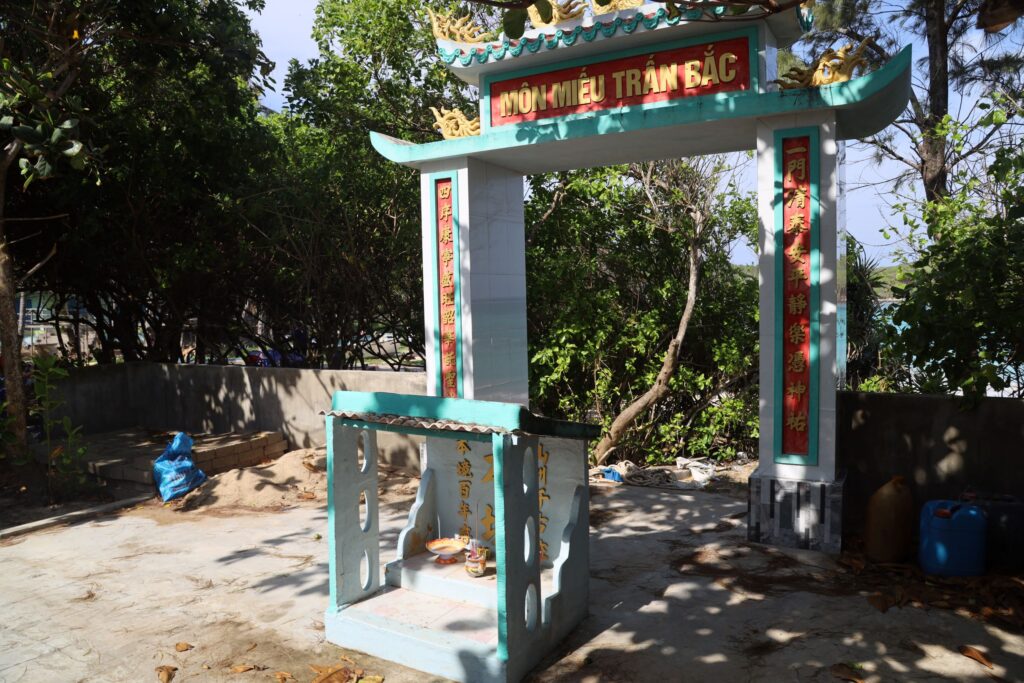
Phú Quý Island, also known as Cù Lao Thu or Cù Lao Khoa Xứ (referred to by the French as Poulo Ce cir de Mer), has a long and layered history. In the 4th year of Emperor Thiệu Trị’s reign (1844), due to its rich economic potential and the large quantity of valuable local products paid as tribute to the Huế court, the island was renamed from Tổng Hạ to Tổng Phú Quý, under Tuy Phong District, Ninh Thuận Prefecture, Bình Thuận Province.
Since July 1, 2025, Phú Quý has officially become a special zone of Lâm Đồng Province.
Early Settlement and Cultural Layers
Although Phú Quý is an isolated island in the open sea, archaeological evidence shows that human life was established here very early. During the quarrying of hard stone, residents discovered large jar burials containing stone tools such as axes, adzes, and finely crafted stone bracelets. These findings align with local legends suggesting that before settlers from the mainland arrived, upland peoples once lived here by foraging and fishing along the coast.
Over time, Phú Quý became a meeting point for multiple waves of migration from the mainland, involving various ethnic groups, with the Kinh people eventually forming the core population. When shipbuilding techniques advanced and sailboats were able to venture farther offshore, more people arrived on the island. The remaining tombs and the legend of Princess Bàn Tranh further suggest that the Champa people once inhabited Phú Quý.
In addition, many people fleeing harsh feudal conditions or political turmoil sought refuge here. During the Trịnh–Nguyễn civil war (1627–1672), numerous fishermen from central coastal provinces were driven by war or by the search for new fishing grounds. Their boats, battered by storms, were blown ashore and they settled on the island.
Alongside the Kinh, some Chinese migrants also integrated into the island community. In the 17th century, following the fall of the Ming dynasty, groups of Ming officials and followers fled south by sea; dozens of boats chose to settle on Phú Quý. They lived by weaving, trading, and commerce. Over time, many moved on to mainland cities, leaving only a small number of descendants on the island.
Formation of Villages
As the population grew, social organization gradually took shape. During the reign of Lord Nguyễn Phúc Khoát (1738–1765), the Đàng Trong administration organized island residents into households, teams, hamlets, and eventually villages. Although the population was still small, Phú Quý once had 14 villages and one hamlet, many named after the settlers’ original hometowns.
By 1886, the island was reorganized into 11 villages, and by 1930, after several mergers, only nine villages remained.
Today, Phú Quý covers about 16.4 km². Besides the main island, there are smaller surrounding islets such as Hòn Đá Cao, Hòn Đỏ, Hòn Tranh, and Hòn Hải. The island has a population of around 29,000 people, living in three island communes: Long Hải, Ngũ Phụng, and Tam Thanh, with multiple villages and hamlets.
Discovery of Ancient Wells
During a survey conducted in June 2018, researchers identified ten ancient wells scattered across the three communes of Phú Quý. Many of these wells are still in use today, supplying fresh water even during the dry season when modern wells often run dry.
Ancient Wells in Tam Thanh Commune
Several wells were documented in Mỹ Khê Village, including those located in private yards but traditionally regarded as community wells. These wells typically feature stone-lined shafts, originally square in shape, with a wooden square frame at the bottom—a hallmark of ancient Cham well construction. Despite renovations over time, their water remains clear, sweet, and abundant year-round.
One notable example is the “Coconut Garden Well,” situated near a long-established coconut grove and close to the coast. Its carefully cut stone lining suggests that it may be an ancient well later restored using refined stonework.
Ancient Wells in Long Hải Commune
In Long Hải, wells are often found along roads or near cultural sites. Some have been sealed for safety, while others remain in daily use.
Particularly significant is the Bàn Tranh Well, located within the grounds of the Princess Bàn Tranh Temple. Although partially altered during temple renovations, the well’s presence supports the theory that this site may date back to the Champa period, later respected and reused by Vietnamese settlers.
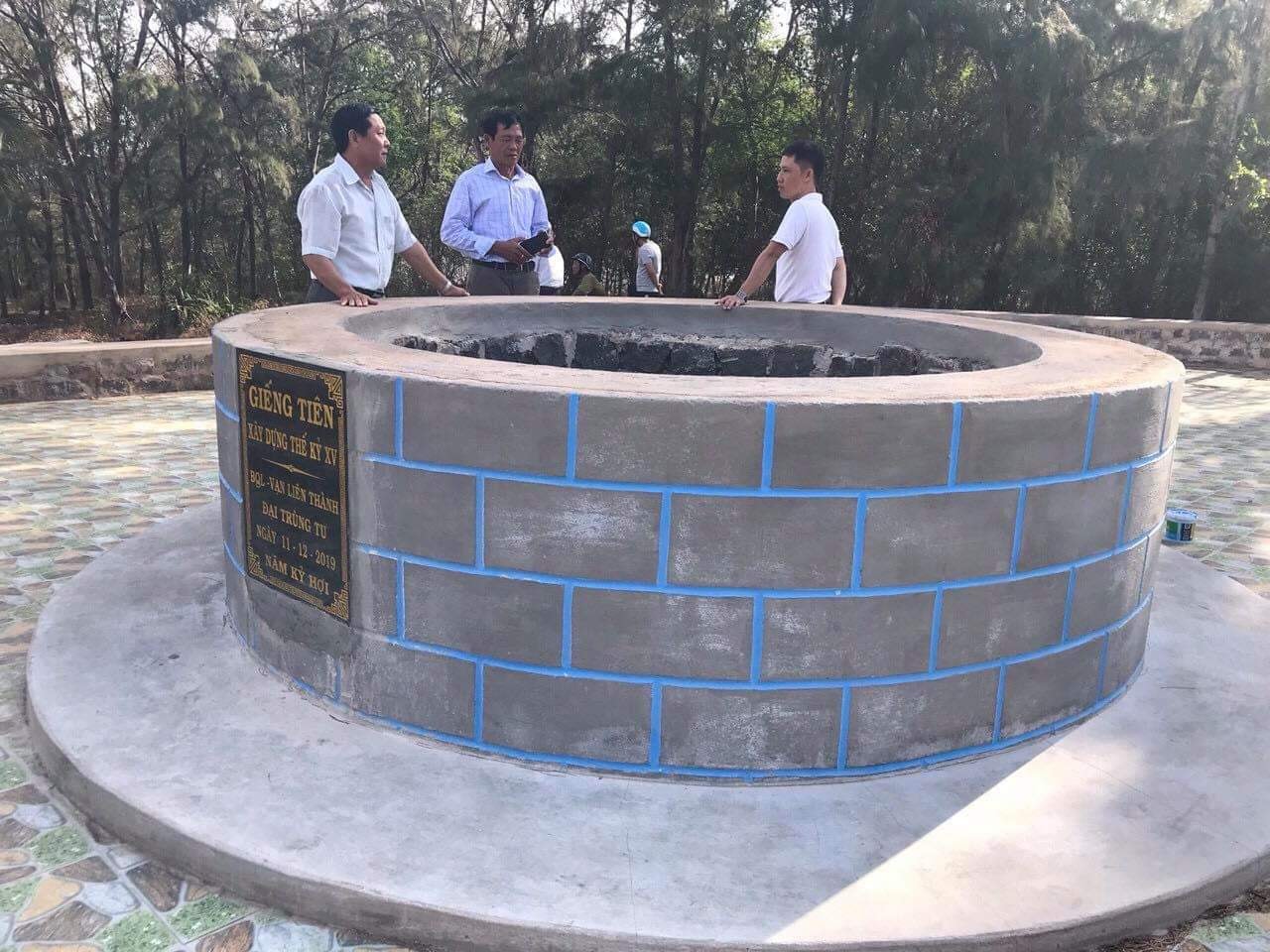
Another important site is Giếng Tiên (Fairy Well), a large ancient well now partially collapsed and officially classified as a heritage site requiring protection. Its size suggests it once served a large community and may have been associated with Cham religious architecture.
Ancient Wells in Ngũ Phụng Commune
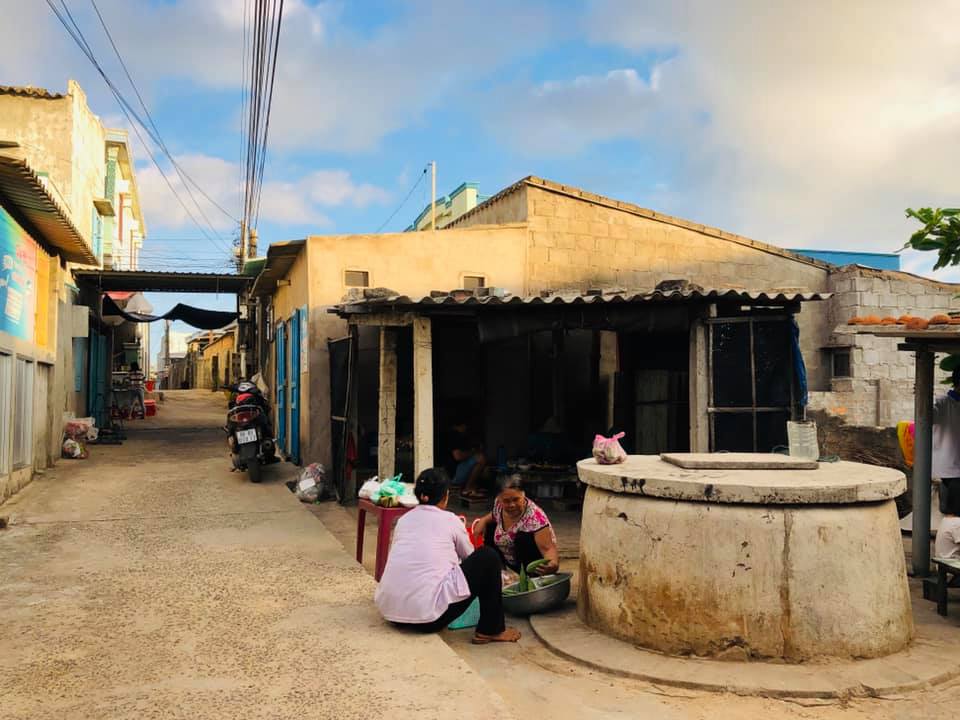
In Ngũ Phụng, several wells remain actively used by local households. The most remarkable is Phú An Village Well, also known as the Deep Well of Phú An. This large communal well continues to supply water to many families. Its depth and construction reflect advanced traditional techniques for locating and accessing underground freshwater sources.
Observations on the Ancient Well System of Phú Quý
Cham wells are typically square in shape, with a distinctive wooden square frame at the bottom, upon which stone or brick is stacked without mortar.
Thanks to the Cham people’s advanced knowledge of groundwater, these wells are renowned for their excellent water quality and their ability to never run dry, even during severe droughts.
Wells are found in diverse locations: at hill bases, near the sea, on mountain slopes, sand dunes, and plains—wherever reliable groundwater was detected.
On Phú Quý, due to the absence of clay, wells were constructed entirely from natural stone, rather than brick.
Most ancient wells have been repaired or reshaped, often converted from square to circular forms following Vietnamese well-building traditions. Nevertheless, their Cham origins can still be identified through the original square layout and the wooden base frame.
The island’s wells can be broadly classified into two types: original Cham wells and wells built using Cham techniques.
These wells are considered communal property, not belonging to any single family. Even today, some are used for irrigation, watering livestock, or daily household needs.
Based on the density of wells—often serving 10 to 15 households each—researchers can estimate the size of historical communities. In areas with several wells, villages likely supported hundreds of inhabitants.
Due to time constraints, the 2018 survey did not document all wells on Phú Quý Island. Further research is planned to more comprehensively study this unique and valuable ancient well system, which represents an important intersection of archaeology, water security, and island cultural heritage.
Dr. Nguyễn Tiến Đông – Institute of Archaeology
Dr. Edyta Roszko – University of Copenhagen, Denmark