The wild pineapple plant (dứa gai) does more than add a touch of green to Phu Quy Island—it has long been intertwined with the daily life of local residents. Among its many uses, the wild pineapple hammock once provided a stable source of income for islanders. Today, however, only a handful of people continue to preserve this traditional craft.
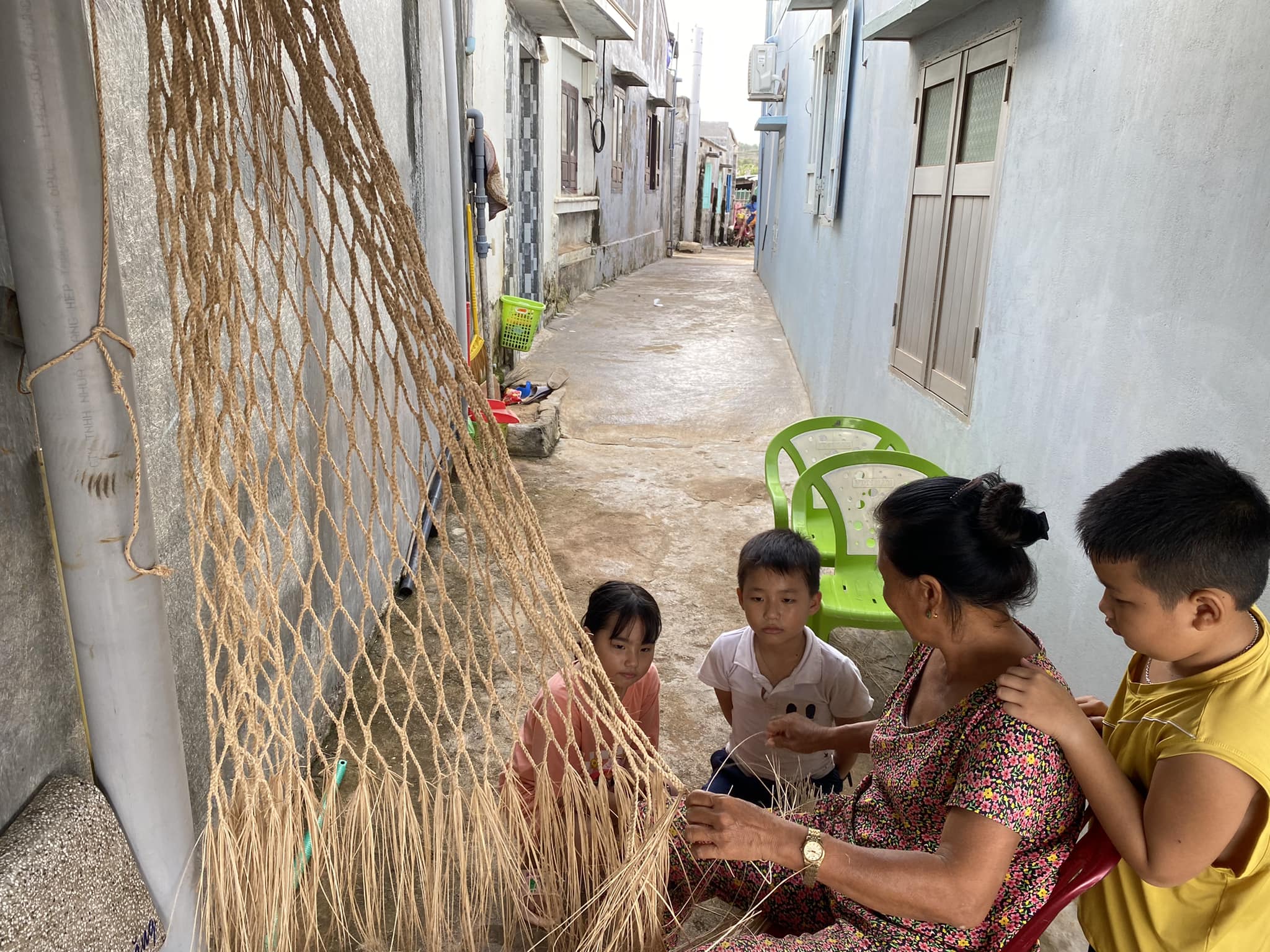
One of the last artisans still devoted to the trade is Mrs. Huynh Thi Nhon, from Phu Long Hamlet in Long Hai Commune. With several decades of experience, she and a few other women remain committed to keeping the craft alive. According to Mrs. Nhon, the wild pineapple plant is highly valuable: its fruit is used as traditional medicine, while its roots—especially the aerial roots that hang from the trunk without touching the soil—are ideal for making ropes and, most importantly, hammocks. These roots are preferred because they produce fibers that are exceptionally tough and durable. They must be straight, not too old, not too young—just the right maturity.
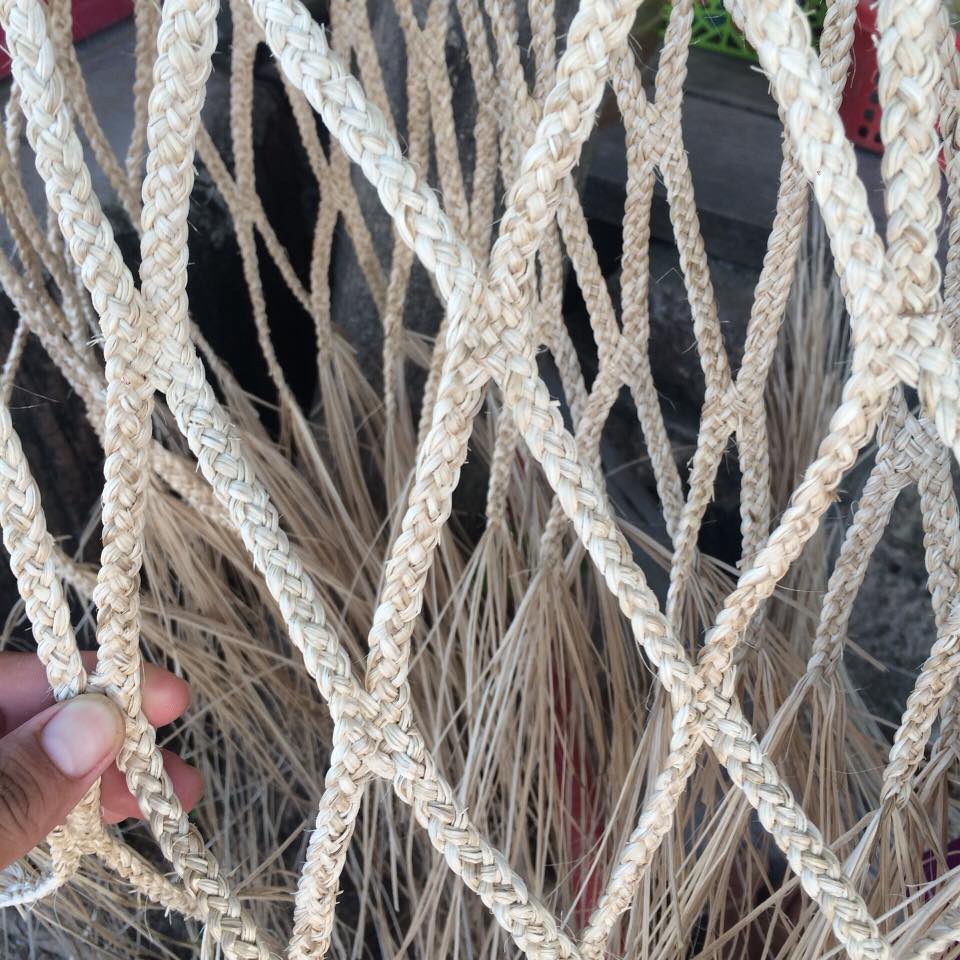
A single finished hammock requires about 15 kilograms of fresh wild pineapple roots and must go through numerous stages. The roots are stripped of their outer bark, then the core is shaved into thin strips and sun-dried. After drying, the strips are separated into smaller fibers and twisted into strong cords. Only then can the artisan begin weaving—starting from the hammock’s head and working patiently through each interconnected knot. Harvesting the roots requires physical strength, but weaving the hammock demands meticulous attention, persistence, and skillful hands.
As she works, Mrs. Nhon recalls the golden era of wild pineapple hammocks, when they were not only popular on Phu Quy but also sold widely in Phan Thiet, La Gi, and surrounding regions. There were times she thought of giving up the craft altogether.
Yet her greatest concern today is that no one is continuing this traditional craft. Mrs. Nhon hopes that tourism will help younger generations recognize the cultural value of the wild pineapple hammock and develop it into a sustainable local souvenir. She also wishes for greater support from local authorities to revive and preserve this unique heritage craft for future generations.