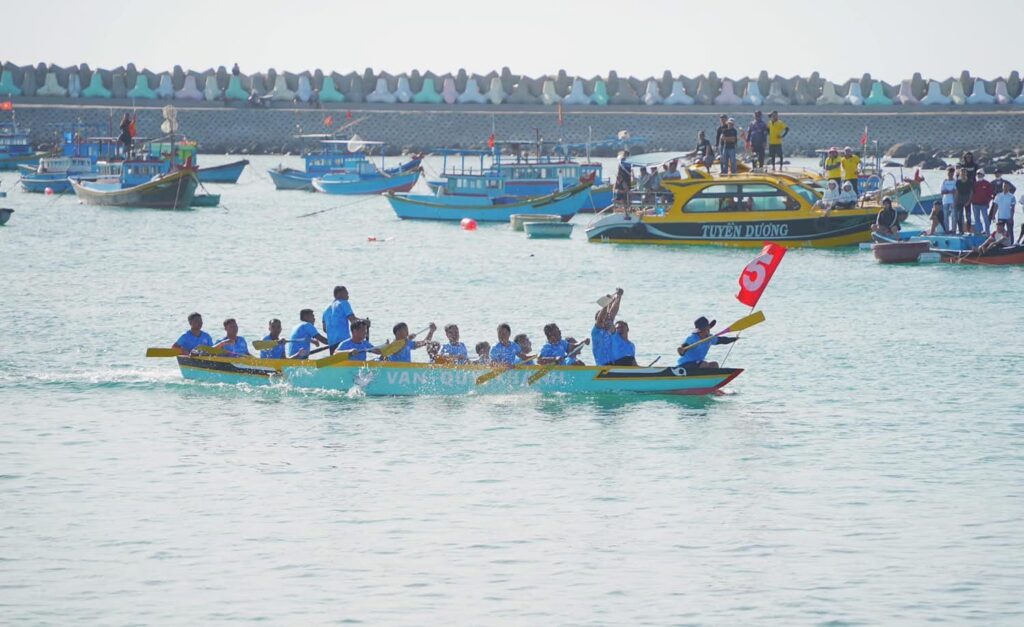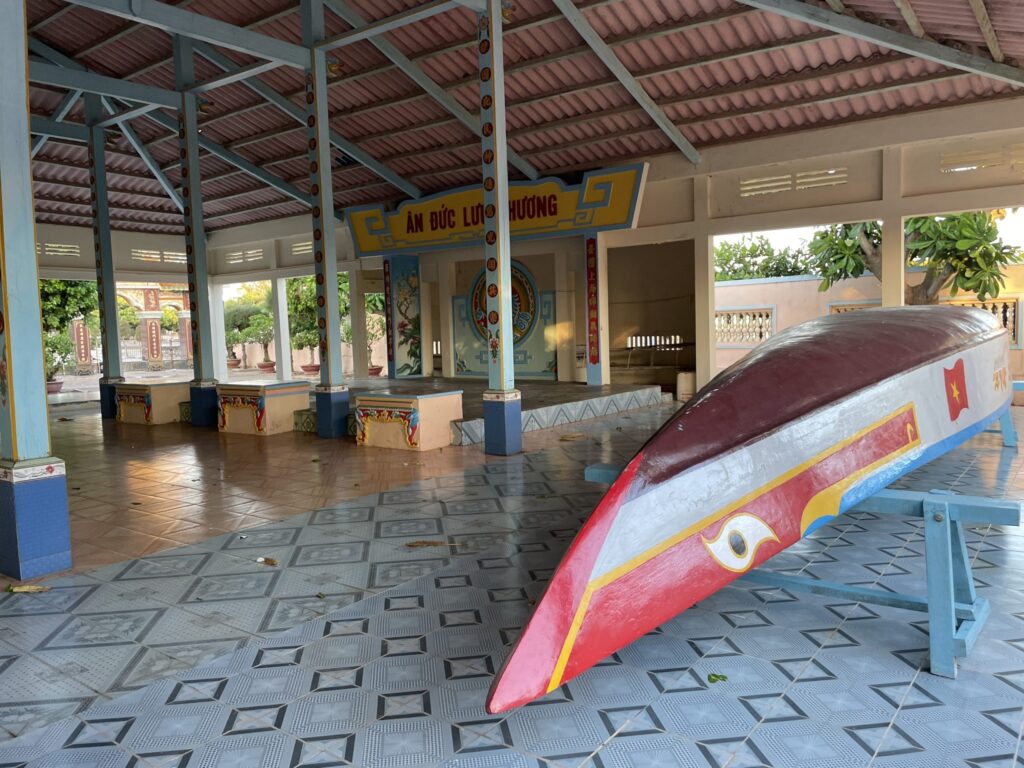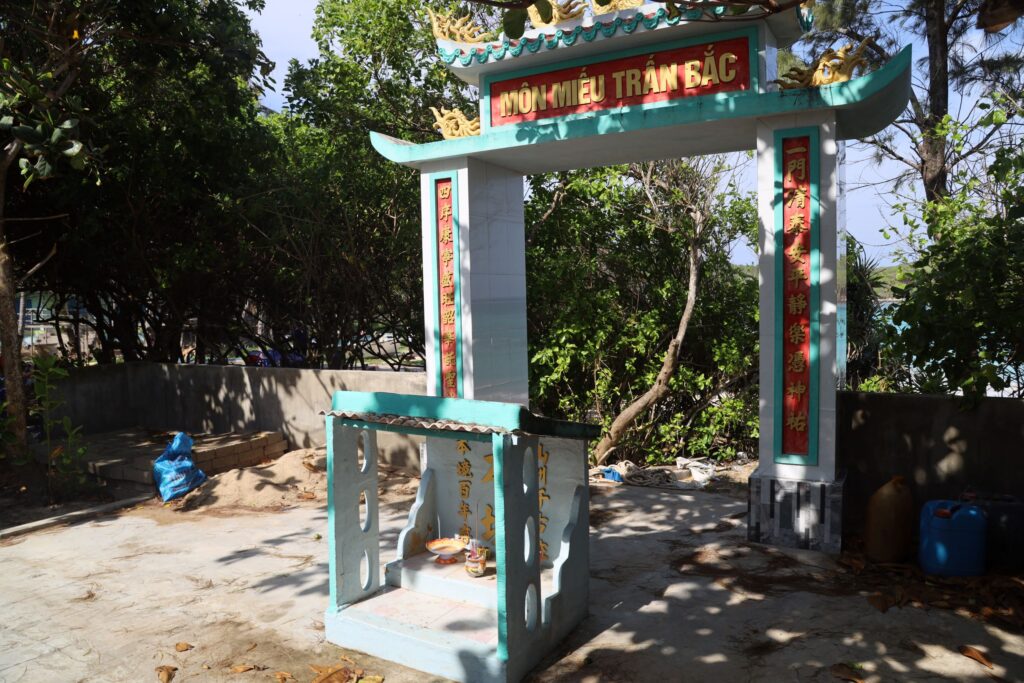
Phu Quy Island is home to many unique traditions, but the most unusual of all is its marriage custom. For generations, local couples have married without any formal wedding ceremony. If both families agree, the couple simply begins living together. The groom works with his own family during the day, then stays with the bride at night.
When either family needs help—for an ancestral ceremony, a house construction, or community event—they simply “borrow” the bride or groom for a few days, depending on the task at hand.
When does the bride move in with the groom’s family?
Anytime—on one condition:
The groom’s family must feel the need to welcome a daughter-in-law into the household and the bride must agree. When the bride’s family has an ancestral ceremony or a festive occasion, the groom’s family will visit, make the request, and bring the bride home if she consents.
Since the early 2000s, as more government workers and teachers from the mainland relocated to the island, photography shops and wedding-dress rentals have appeared. However, wedding celebrations for these “new residents” are usually minimal—mainly for photos and keepsakes. Wedding parties typically consist of simple sweets, tea, and soft drinks, similar to the ration-era style.
Even if a lavish wedding were organized, islanders rarely attend because they feel little connection. As a result, Phu Quy has become a natural model of frugality: elaborate wedding feasts simply never became a trend.
Traditional Marriage Customs: Then and Now
In earlier generations, traditional arranged marriages and matchmakers played a central role. The saying “Parents decide your seat in life” reflected the community norm. After “engagement” (often symbolic), the groom was required to present one pig’s head to the bride’s family each Lunar New Year for 12 consecutive years before the couple was considered officially married.
Leaving each other before the 12-year ritual was complete resulted in severe village penalties, either physical punishment or ceremonial fines called phạt chay lễ for “premature affection.”
If the groom completed all 12 offerings but the bride’s family canceled the marriage, they were required to compensate the groom’s household for the gifts received.
If the groom changed his mind after fulfilling the ritual, he had to bring a full set of wedding gifts to the bride’s family, including clothing and jewelry—just like a proper wedding.
Old village regulations were strict and universally respected.
A traditional verse summarizes the ritual:
“Complete the birth-rite offering
Nine cups of wine, four pigs in total:
One to honor the ancestors,
One to repay the bride’s upbringing,
One to show filial piety to grandparents,
And one to thank the parents who raised her…”
Different Villages, Different Customs
Each of Phu Quy’s three communes followed slightly different marriage traditions:
Long Hai & Ngu Phung
Wedding offerings included betel trays, rice wine, sticky-rice dishes, and a boiled chicken.
The bride’s family prepared an additional tray with betel, a pair of ceremonial candles, and a liter of rice wine, along with a “village fee” of 100 silver coins (in the old days).
The official marriage certificate was witnessed by both families and the matchmaker (ông Mai).
The bride’s family hosted the feast for both families, with modest households offering only sticky rice and a boiled chicken.
Tam Thanh
The bride’s family traditionally required the groom to “accept the terms,” which included providing gold earrings, jewelry, and clothing.
Ceremonial rituals included betel, wine, decorated parasols for the matchmaker, and a ceremonial wine jar.
Afterward, the couple bowed in gratitude to both the matchmaker (ông Mai) and the fortune-teller who selected the wedding date before the bride moved to the groom’s home.
Changes Over Time
Throughout the decades, many customs gradually faded. After the island’s liberation in 1975 and up to the early 2000s, weddings were simple due to widespread economic hardship.
Matchmakers still arranged meetings, but celebrations were minimal—perhaps a pair of gold earrings, a few chickens, and a tray of sticky rice shared between both families.
In wealthier households, larger weddings occurred but represented only 3–5% of marriages.
Modern Wedding Practices (Post-2000)
With improved living conditions, weddings on Phu Quy have become more common. Families now prefer to publicly celebrate their children’s marriage as a matter of pride.
Today:
- About 90% of couples in government sectors hold full wedding ceremonies.
- Around 50% of island residents follow the standard three-step process:
engagement → formal proposal → wedding ceremony.
Marriage Registration and Social Changes
Before the 2000s, most couples lived together without officially registering their marriage. As a result, when conflicts or divorces arose, local authorities had little legal basis to intervene. At that time, only about 25% of couples had marriage certificates.
After 2005, when the government encouraged re-registration, nearly all couples under 60 obtained proper documentation. Among couples over 60, about half remain unregistered.
Modern Issues
Although traditional values once kept divorce rare, cases have increased since 2000 due to:
- Financial hardship
- Early marriage (tảo hôn)
- Social pressures
Local authorities continue to promote education and community outreach to maintain social harmony and ethical family practices.
Written by Nhat Huy – Phu Quy Island Almanac (40-Year Edition)