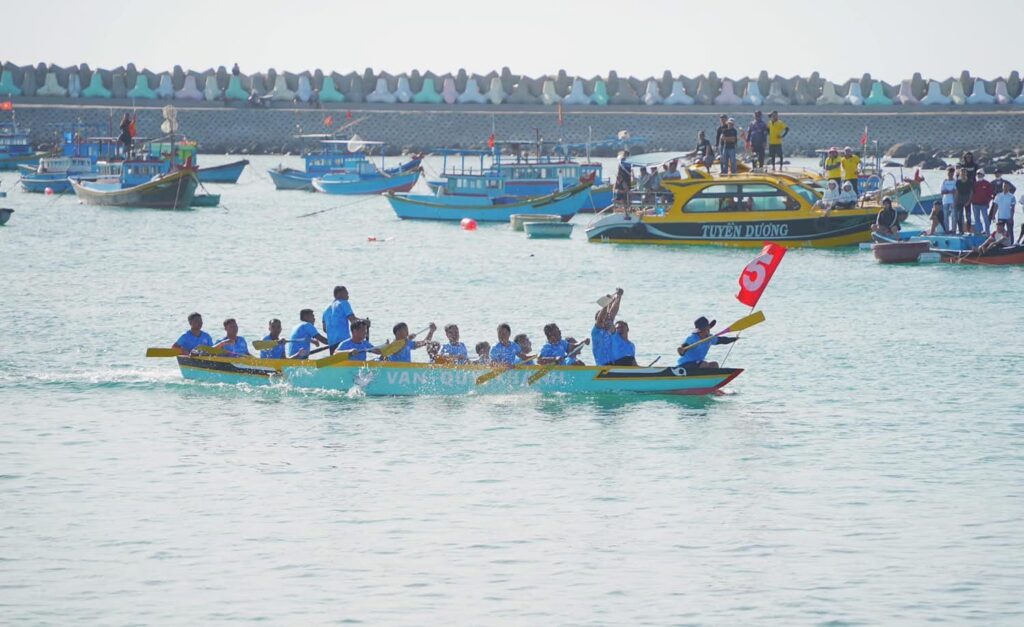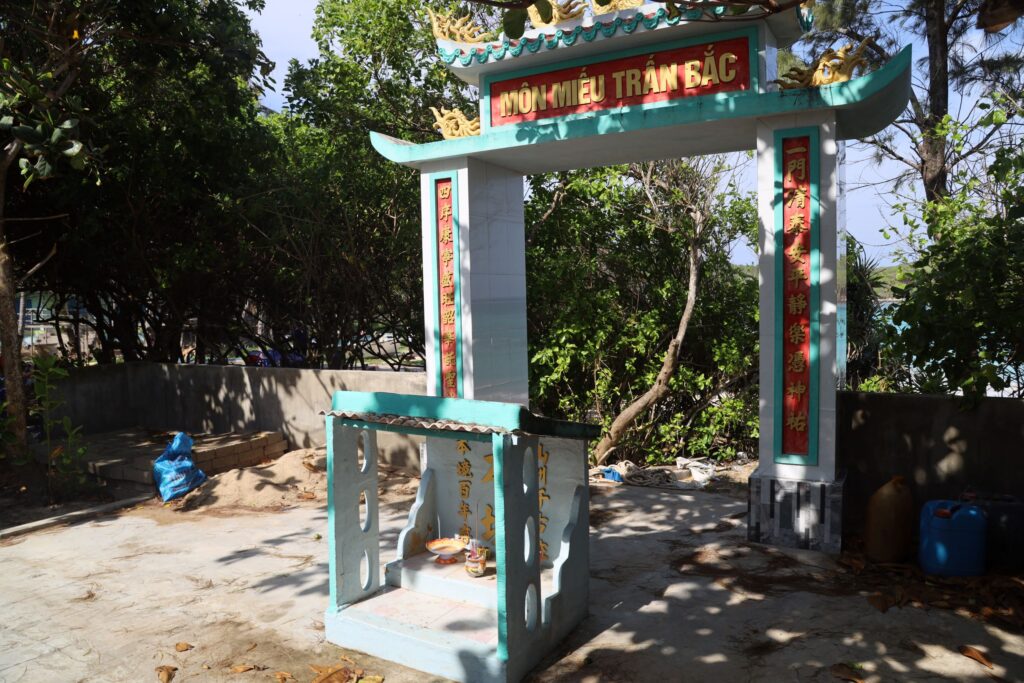
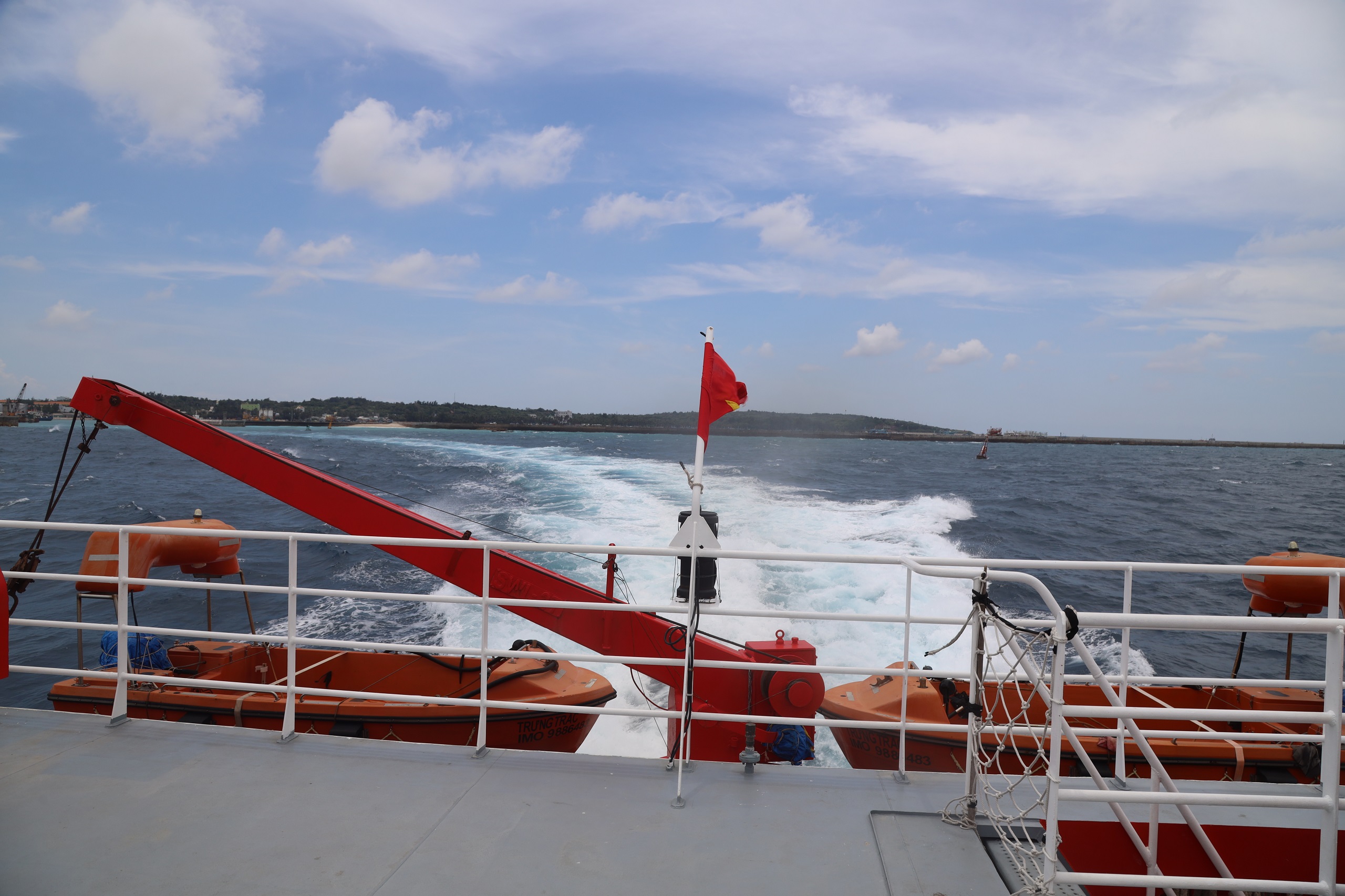
In the early Nguyen Dynasty, Phu Quy Island—then known as Vu Island or Hon Khoai—was later renamed Thuan Tinh. Although “located far out at sea,” the island had an established population of eleven hamlets, whose residents annually paid taxes to the royal court in the form of white woven cloth (bach bo). Historical records describe the island as having “poor soil and impoverished inhabitants, who lived mainly by cultivating red rice and upland sweet potatoes.” Recognizing the hardship, Emperor Gia Long (1802–1820), after stabilizing his rule, reviewed the situation and found the cloth tax too burdensome for the people of Vu Island, and thus “ordered a reduction” (1).
Not only did the monarchy reduce taxes, but Emperor Minh Mang (1820–1841) also granted the islanders an exemption from military conscription. He explained that “they live precariously far out at sea; the long and difficult maritime travel makes it inconvenient to assign them to provincial military duty. Thus, they are allowed to return to the civilian registry and continue paying the cloth tax as customary” (2).
The maritime region stretching from Binh Thuan to Ha Tien borders Southeast Asian waters and was frequently raided by Malay, Javanese, and Cham pirates—known locally as Cha Va and Do Ba. Their peak season of activity was during the southwest monsoon (from May onwards). On Phu Quy Island in particular, residents often had to confront Do Ba pirates and Tàu Ô raiders (Chinese sea bandits).
A report dated January 29, 1833 (14th year of Minh Mang), submitted by the chiefs of the island’s eleven hamlets (Thoi An, My Xuyen, An Hoa, Phu Ninh, Huong Lang, Thuong Hai, Hai Chau, Thoai Hai, My Khe, Trieu Duong, and Hoi Thuyen), listed the firearms and weapons available on the island. These weapons had been supplied by Gia Dinh naval forces to help the islanders fight off a previous Tàu Ô raid (3).
In August of the same year (Quy Ty, 1833), Phu Quy residents again faced a major attack by Do Ba pirates. The Dai Nam Thuc Luc recorded: “More than twenty Do Ba pirate ships clandestinely appeared near Thuan Tinh Island, Binh Thuan Province. The local people fought back but suffered over one hundred casualties. The province sent Deputy Commanders Pham Van Huyen and Duong Van Khoa with naval troops to pursue them. At Mao Du Island they attacked, captured one pirate ship, seized three men, and killed many others. Upon hearing this, the emperor rewarded Pham Van Huyen and his officers with five large silver Phi Long coins each, and granted the soldiers and civilians three hundred quan. Families of the dead and wounded received compensation according to rank” (4).
Another report from September 10, 1833, by the chief of Thoi An Village, stated that on July 9, a group of 32 Do Ba pirate vessels landed on the island and killed 32 villagers, including four from Thoi An (5).
These pirate attacks were preserved not only in official records but also in local folklore, reflecting the resilience and determination of Phu Quy islanders in defending their homeland. During fieldwork in Long Hai Commune, researchers were shown the script of a traditional cải lương play titled “The Echoing War Drum.” The play recounts the legend of Kiều Huy Mạng, a local commander who fought against Do Ba and later Tàu Ô pirates. His family’s story—marked by separation, hardship, and eventual reunion—symbolized the unwavering spirit of the islanders.
The Nguyen Dynasty recognized the strategic importance of safeguarding coastal populations. Dai Nam Thuc Luc records multiple imperial directives. Emperor Minh Mang emphasized that although island communities had long existed, before 1834 they had not been equipped with state-issued boats or weapons for defense. Therefore, the emperor ordered coastal governors to “inspect all inhabited islands under their jurisdiction and supply fishing boats capable of rapid deployment—three for larger populations, two for smaller ones. The state would pay for the vessels. Spears, matchlock guns, and ammunition were to be issued so that islanders could patrol and repel invaders, while also sending immediate reports to avoid delays” (6).
The emperor further declared that these were only temporary measures. For long-term stability, “proper and systematic arrangements” were required, including the construction of forts, deployment of troops, and recruitment of local militia to defend residents (7).
Nineteenth-century administrative documents preserved on Phu Quy show that the island was divided into five defensive units, with Thoi An and Hai Chau each assigned one unit. Thoi An, for example, was issued one cannon, four matchlock guns, twenty fire lances, five long spears, and five cân of gunpowder. Hai Chau received the same arsenal, though its gunpowder allocation was higher—one yến and two cân (8).
Foreign merchant ships approaching the island were also met with caution. One such case occurred in 1842 (Nham Dan), when two Western vessels anchored offshore and refused to leave despite repeated requests. When reported to Emperor Thieu Tri, he instructed: “If the Western ships are only seeking firewood and water and harbor no ill intent, allow them to collect what they need near the shore. Do not permit them to enter villagers’ homes, but also avoid driving them away too harshly, lest they mistake us for being inhospitable” (9).
Conclusion
Throughout the 19th century, the coastal and island regions of Binh Thuan frequently faced attacks from Tàu Ô, Do Ba, and Cha Va pirates. With the combined efforts of local inhabitants and strategic policies of the Nguyen Dynasty, the region gradually achieved security and stability. These historical episodes—and the proactive measures implemented—remain valuable lessons for Vietnam’s ongoing efforts to protect its maritime territories and island communities.