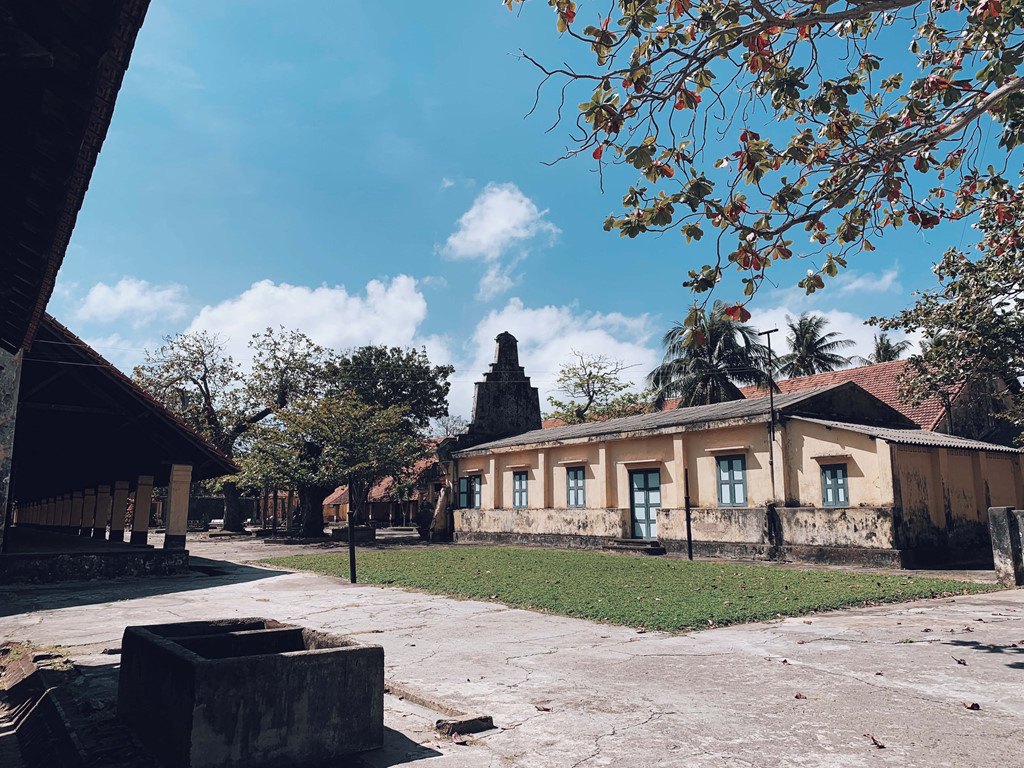
In late April 1975, an unusual tension spread across Con Dao Prison. Guards repeatedly searched the cells, shuffled prisoners between blocks, sealed off all information from the mainland, and isolated political prisoners more strictly than ever before. On April 29 and 30, military aircraft roared over Con Dao nonstop, while all political prisoners were locked inside, denied sunlight, water breaks, and even the daily 15 minutes of fresh air. The atmosphere was suffocating—something major was about to happen.
In this situation, the leadership committees secretly formed by political prisoners in various camps began urgently assessing the risks. A crucial message then arrived: through trusted local contacts, the Catholic priest Phạm Gia Thụy conveyed that Saigon had fallen and the Dương Văn Minh government had surrendered. After verifying the information, the prisoners immediately passed the news from cell to cell, preparing for a coordinated effort to reclaim control before the guards could carry out any desperate retaliation.
Around 11:30 PM on April 30, 1975, the first Tiger Cages were forced open. After nearly 2,000 days under brutal imprisonment, many broke into tears as they stepped out of darkness. By dawn, political prisoners had organized themselves into a provisional leadership committee, liberating camp after camp and taking control of key areas.
Within a few hours, more than 4,300 political prisoners—including nearly 500 women and over 30 death-row inmates—were freed. A temporary Party Committee of 12 members was established to stabilize the island, maintain order, protect civilians, and prevent unrest caused by escaped criminal inmates.
On May 1, 1975, the liberated prisoners had taken full control of the island and formed the Con Son Committee for National Reconciliation, inviting Father Phạm Gia Thụy to serve as Chairman to reassure residents—many of whom were relatives of prison staff or soldiers. Former security forces were persuaded to surrender and assist in maintaining order.
Over the next two days, the newly formed revolutionary force secured all major facilities, including the airfield, the Loran station, radar posts, and abandoned military warehouses. Using the weapons left behind, the political prisoners organized armed units to defend the island in case of a counterattack.
At dawn on May 4, 1975, liberation forces from the mainland landed on Con Dao. That afternoon, a victory ceremony was held at the former Governor’s Palace. Thousands of former prisoners waved the national flag, the Front flag, and portraits of President Ho Chi Minh, chanting in overwhelming joy as Con Dao was officially declared fully liberated.
In the following days, arrangements were made to return the freed prisoners to the mainland. Before departing, they cleaned and restored Hàng Dương Cemetery and tended the graves of martyrs such as Nguyễn An Ninh, Lê Hồng Phong, and Võ Thị Sáu—paying tribute to those who never saw freedom again.
On May 17, 1975, the final group of prisoners left Con Dao, closing a tragic yet heroic chapter in Vietnamese history. From a “hell on earth,” Con Dao rose as a symbol of resilience, sacrifice, and the unbreakable spirit of those who fought for independence and freedom.