Mention the Côn Đảo prison system, and the world recalls the most brutal forms of imprisonment and torture ever recorded. Among them, the infamous French Tiger Cages became a symbol of fear and suffering for generations of prisoners. Yet for nearly 30 years, the existence of this secret torture complex remained hidden—until it was finally exposed to international outrage.
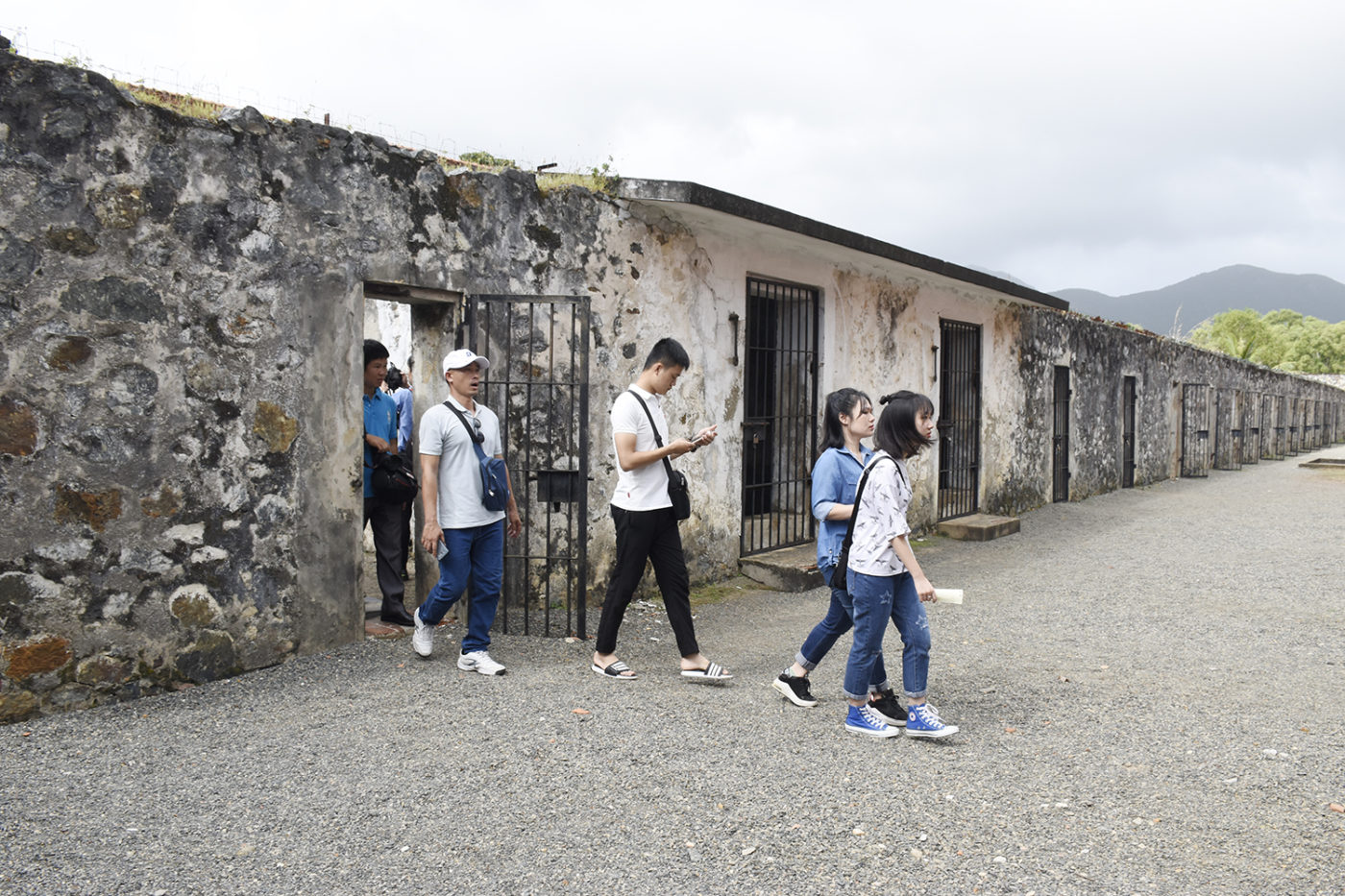
After visiting Phú Hải Prison, our group continued to the second site on the Côn Đảo prison tour: Phú Tường Prison, located at the intersection of Tôn Đức Thắng, Nguyễn Chí Thanh and Nguyễn Huệ. Like other French-built prisons on the island, Phú Tường features towering stone walls, layers of barbed wire, and locked steel gates. Construction began in 1940 and finished in 1944 after earlier prisons—Phú Thọ, Phú Hải, Phú Sơn—ran out of space.
Behind these thick walls, however, lay a horrifying secret. Passing through two small gates, we entered a hidden complex of 120 solitary cells and 60 open-roof punishment cells—the infamous Tiger Cages. These cells were interconnected with other prison blocks through tiny concealed doors. Prisoners who fainted under torture were dragged into the cages through different entry points so they would never know their location. For three decades, no one outside the island understood what truly happened here—until 1970, when five student protesters imprisoned in the Tiger Cages were released and described the entrance route from memory, sending their testimony to the U.S. Congress.
Soon after, a delegation of American congressmen arrived in Việt Nam to investigate. The prison chief, Nguyễn Văn Vệ, attempted to hide the cages and mislead the delegation. Ironically, it was his own outburst that revealed the secret: while angrily blocking the group from approaching a gated corridor, he struck the metal door with his cane. The guard inside, recognizing the voice and sound, assumed the warden was inspecting the area and opened the gate. The congressmen stepped inside—and the truth was laid bare.
Returning to the U.S., the delegation condemned the Tiger Cages and supplied photographs and documents published in Life magazine on July 17, 1970. The images shocked the world, fueling protests across Việt Nam, the United States, and beyond. The international pressure forced the South Vietnamese government to dismantle the Tiger Cages and relocate 480 prisoners—some to other prisons, others to mental hospitals due to trauma and abuse.
Walking through the cells today is haunting. Each solitary cage measures only 1.5 × 2.7 meters, covered by iron grates. In the hot season, 5 to 12 prisoners were crammed into a single cell, shackled with their legs raised to a steel bar. Eating, sleeping, bathing, and toileting all took place within that tiny space. Guards patrolled above with long, sharpened steel rods, ready to stab down at any movement. On the ceiling of each cell were two buckets—one of water, poured down at will; one of powdered lime, thrown into the prisoners’ eyes when they resisted. Hunger, disease, filth and constant torture broke the bodies of countless inmates.
Standing inside the Tiger Cages, listening to the guide recount stories of beatings, starvation and unimaginable cruelty, our entire group fell silent. It was impossible not to feel both anguish and profound respect for the revolutionary prisoners who endured this “hell on earth” in the name of independence and freedom for future generations.
(Article and photos by MINH HƯƠNG – Bà Rịa–Vũng Tàu Newspaper)