A Chronicle of Courage Inside the Côn Đảo Prison
Part I – Awakening to the Revolution
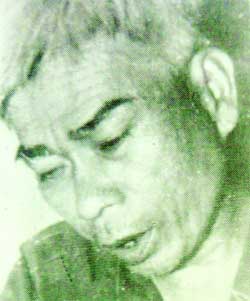
Among the many political prisoners once held in the infamous Côn Đảo Prison—long described as a “hell on earth”—few figures left as powerful an impression as Cao Văn Ngọc, the man later known as “The Old Man of the Tiger Cages.”
He was not a Communist Party member, nor did he hold any formal revolutionary rank, yet his unbreakable willpower earned profound respect from both comrades and enemies.
Born on June 16, 1897, in An Ngãi village, Long Điền district (now Bà Rịa–Vũng Tàu Province), Cao Văn Ngọc grew up in a community steeped in patriotic tradition, near the Minh Đạm revolutionary base. As a young man, he witnessed the exploitation of salt workers in Vũng Vằng under French colonial rule. Educated in both classical Chinese and the modern Vietnamese script, he nurtured strong moral values—benevolence, righteousness, integrity, and loyalty—and a deep sense of justice.
In 1937, he was elected Hương quản, a village-level official responsible for order and population records. But the position exposed him even more clearly to the abuses of the colonial administration. When the August Revolution broke out in 1945, Cao Văn Ngọc immediately joined the Vanguard Youth and participated in mass rallies that seized power in Bà Rịa, later returning to An Ngãi to dismantle the puppet government and establish revolutionary authority.
As the French returned to reoccupy the South, he joined the Quốc gia Tự vệ cuộc—the precursor to today’s People’s Public Security—and actively protected the newly formed revolutionary government.
By 1948, he became Secretary of the Farmers’ Salvation Association in An Ngãi and later operated semi-clandestinely out of Minh Đạm, mobilizing villagers, transporting supplies, sabotaging roads, and protecting resistance bases. His dedication and sense of responsibility made him a trusted figure in the movement.
After the 1954 Geneva Agreement, he continued operating legally in An Ngãi. But under increasingly harsh French and later American-backed repression, he struggled to maintain contact with revolutionary cells. In late 1954, local Party members reestablished links with him, and he soon became a core figure in political campaigns demanding implementation of the Geneva Accords.
On September 28, 1956, following an informant’s report, colonial forces raided his home and discovered revolutionary documents hidden in a bamboo tube. He was arrested immediately.
Despite brutal torture, he remained steadfast, insisting:
“That bamboo tube belonged to a nephew. I don’t know what was inside.”
Unable to break him, authorities sent him to the Biên Hòa Re-education Center and later requested extended detention, labeling him “extremely resistant.”
Part II – A Defiant Voice in the Tiger Cages
On January 11, 1957, the U.S.–Diệm regime deported Cao Văn Ngọc to Côn Đảo Prison, confining him in Camp I, home to the most unyielding political prisoners.
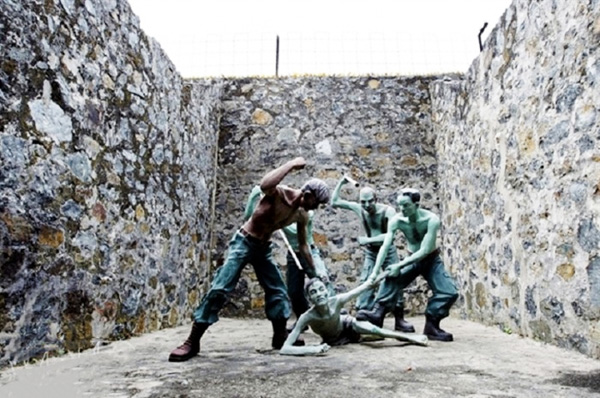
Here, the campaign of forced ideological renunciation, known as “anti-Communist recantation,” was at its peak. Prisoners were coerced to denounce the Communist Party and slander President Hồ Chí Minh. Those who refused were beaten, starved, and thrown into the notorious chuồng cọp—the Tiger Cages.
Ironically, the strongest resistance came from a man who was not a Party member.
To him, slandering Hồ Chí Minh—the man who fought to free the nation from colonial rule—was morally unacceptable. His unwavering loyalty made him a natural leader among the prisoners.
He famously told his fellow inmates:
“You are Communists, fighting for the Communist ideal. To die for that ideal is an honor.
As for me, who is not yet a Communist—I can only wish for such an honor.”
His words became a source of moral strength inside the Tiger Cages.
By early 1961, only 18 prisoners remained who still refused to sign renunciation papers. The prison authorities intensified their repression, attempting to extinguish the movement completely.
One cold morning, Phạm Sáu—the chief of Re-education Center I—passed by the Tiger Cages and stopped at Ngọc’s cell. The old man, then 64 years old, was naked, emaciated, and lying on the wet cement floor after days of starvation and beatings. Yet when the door opened, he lifted himself up and sat upright, maintaining a calm dignity.
Phạm Sáu mocked him:
“You’re not a Party member. Why resist? What debt do you owe Hồ Chí Minh?”
Cao Văn Ngọc replied without hesitation:
“President Hồ freed our people from slavery. That is a debt I must repay for the rest of my life.”
Shortly afterwards, he was ordered to write a statement of renunciation. Instead, he penned a line that would later become one of the most iconic documents in the Côn Đảo Museum:
“Côn Sơn, March 25, 1961.
I, Cao Văn Ngọc, 64 years old—too old and too uneducated to be ‘reformed’—therefore cannot recant.
I wish to stay here until the day I die.”
It was a declaration of defiance, integrity, and unwavering resolve.
A Martyr of the Anti-Recantation Movement
On the night of March 27, 1961, prison guards carried out a brutal crackdown on the remaining resisters. Five prisoners were beaten to death. Among them was Cao Văn Ngọc.
His death became a symbol of the anti-recantation movement—one of the most important political struggles within Côn Đảo Prison during the American-backed regime.
Thirty-seven years later, in 1998, the State posthumously granted him the title Hero of the People’s Armed Forces. His name now graces streets and schools in Hồ Chí Minh City, Long Điền, and Côn Đảo, ensuring that future generations remember the courage of the man once known simply as “The Old Man of the Tiger Cages.”
A Legacy that Lives Beyond the Prison Walls
Today, more than six decades after his death, the story of Cao Văn Ngọc endures—not only as a tale of political resistance but also as a testament to the strength of conscience and humanity. His life reminds us that heroism often emerges from ordinary people who choose integrity over fear.
In the silent corridors of the Tiger Cages, where rusted iron and stone still bear witness to unimaginable suffering, his legacy continues to speak:
Courage needs no rank.
Loyalty needs no title.
Truth needs no protection.
And that is why the name Cao Văn Ngọc still resonates whenever Côn Đảo’s history is told.