For generations of Vietnamese people — especially those in Bà Rịa–Vũng Tàu — the name Võ Thị Sáu has become a symbol of courage, patriotism and sacrifice. Her short but extraordinary life has been told and retold as a legend, echoing like an eternal anthem accompanying the nation through the decades.
Born in 1933 in Đất Đỏ District, Bà Rịa Province, Võ Thị Sáu grew up in a land rich in revolutionary tradition. Witnessing the brutal oppression of the French colonial forces, she joined the resistance at a very young age, working alongside her brothers. As a member of the Vanguard Security Force, she took part in many missions — most notably the assassination of the tyrannical chief Tòng in 1949 and a grenade attack against a French propaganda rally in Đất Đỏ.
Feared by the colonial authorities, she was relentlessly hunted. In December 1949, during an operation in Đất Đỏ, Võ Thị Sáu was captured. At the Bà Rịa prison, she endured more than a month of harsh interrogations, yet the enemy failed to extract a single confession. She was later transferred to Chí Hòa Prison, where she continued to act as a liaison for political prisoners and took part in protests demanding better conditions.
In April 1951, a French military court sentenced the teenage girl to death — a verdict that shocked international opinion and fueled anti-war protests in France. Fearing public backlash, the colonial authorities secretly transported her to Côn Đảo for execution.
On January 23, 1952, at the age of just 19, Võ Thị Sáu walked calmly to the Côn Đảo execution ground. Her last words have since become immortal:
“Do not blindfold me. Let me see my beloved homeland to the last moment.”
Standing tall in her white áo dài, her hair flowing down her back, she faced the firing squad with unwavering dignity. Her voice rose proudly above the chaos, singing revolutionary songs, and when the command to fire was given, she shouted:
“Down with French colonialism!”
“Long live Vietnamese independence!”
“Long live President Hồ Chí Minh!”
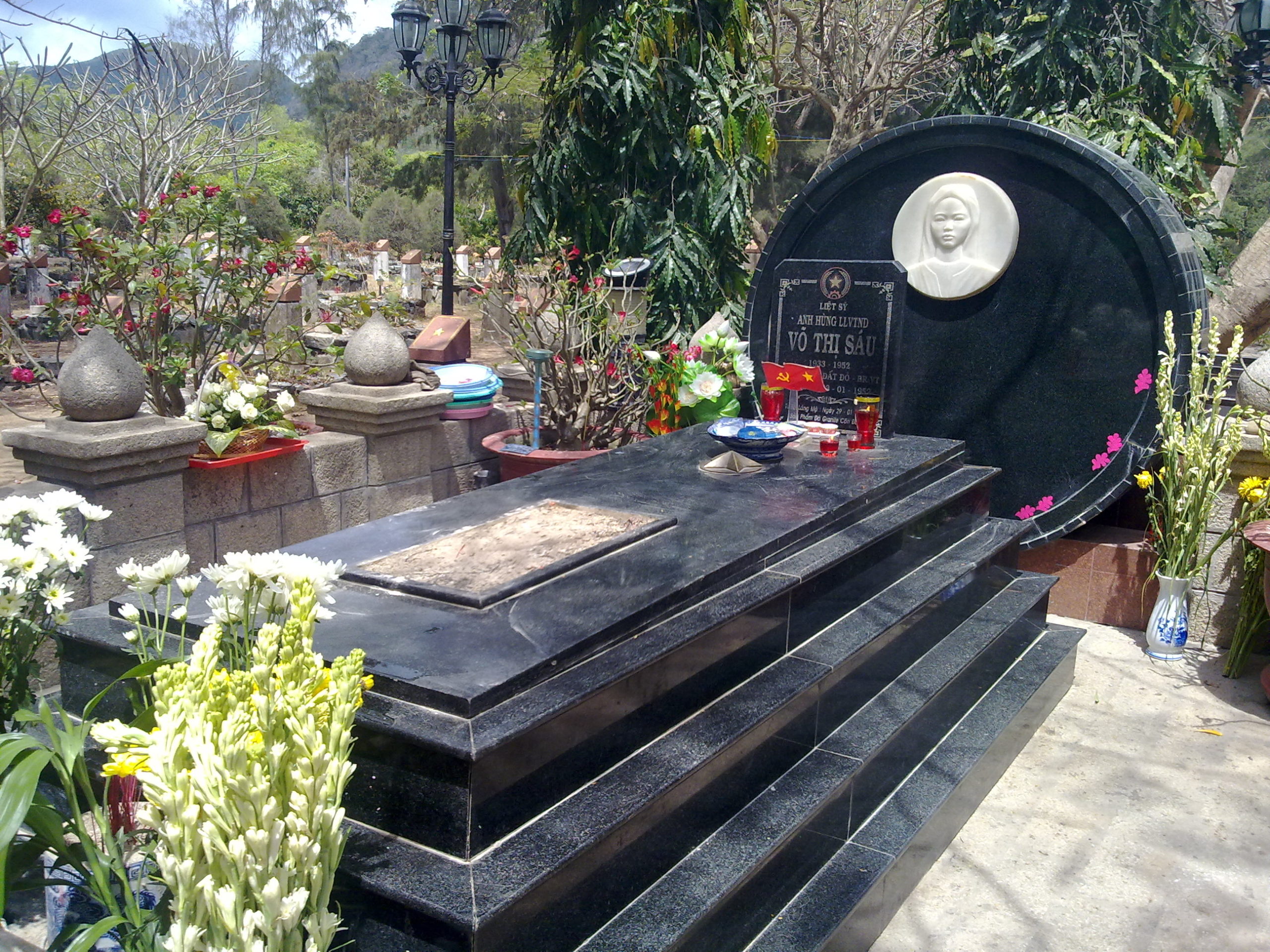
Her courageous spirit, echoing across the Hoàng Dương Cemetery — now a national historical site — became a beacon of resilience for generations to come.
Today, Võ Thị Sáu is honored as one of Vietnam’s most iconic heroines. Her name lives on in streets, schools, youth organizations and in the hearts of millions. Her bravery inspires young people to reject despair, resist negativity and strive for a better future.
Her life — though brief — shines as an immortal legend of Vietnam’s struggle for independence. To this day, she remains a symbol of purity, courage and unwavering loyalty to the homeland. As we remember her sacrifice, we are reminded to live and work with integrity, resilience and love for our nation — to be worthy of those who paved the way with their lives.
For the Vietnamese people, Võ Thị Sáu is not only a historical figure — she is a timeless spirit, living forever in the soul of the nation.