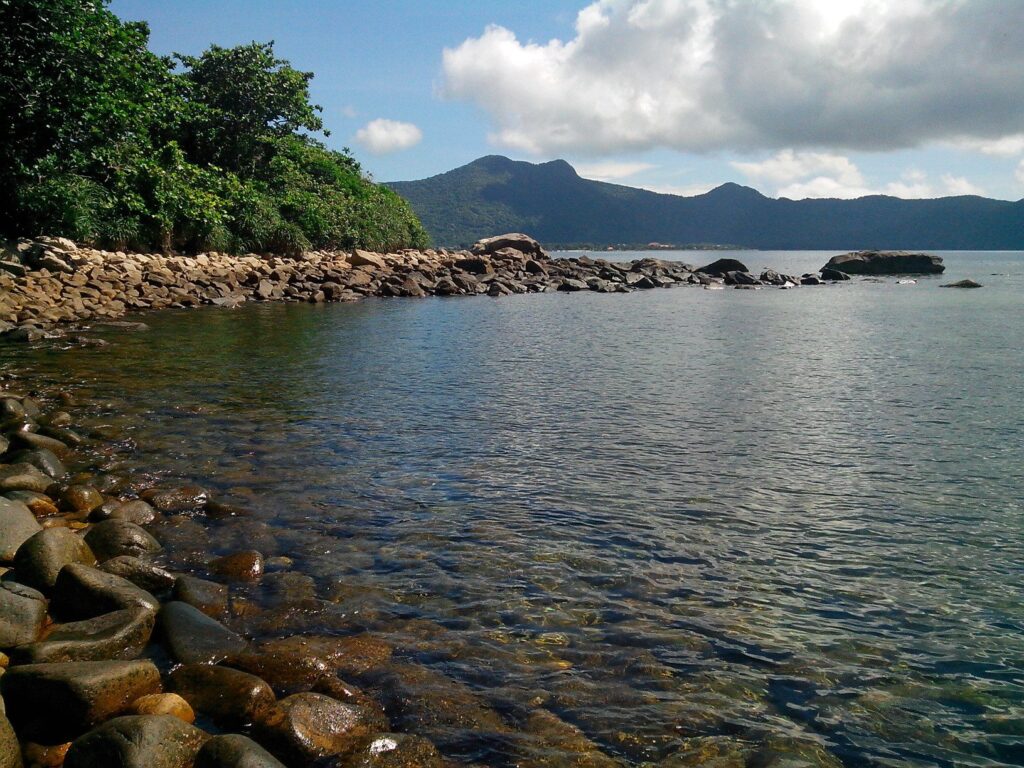
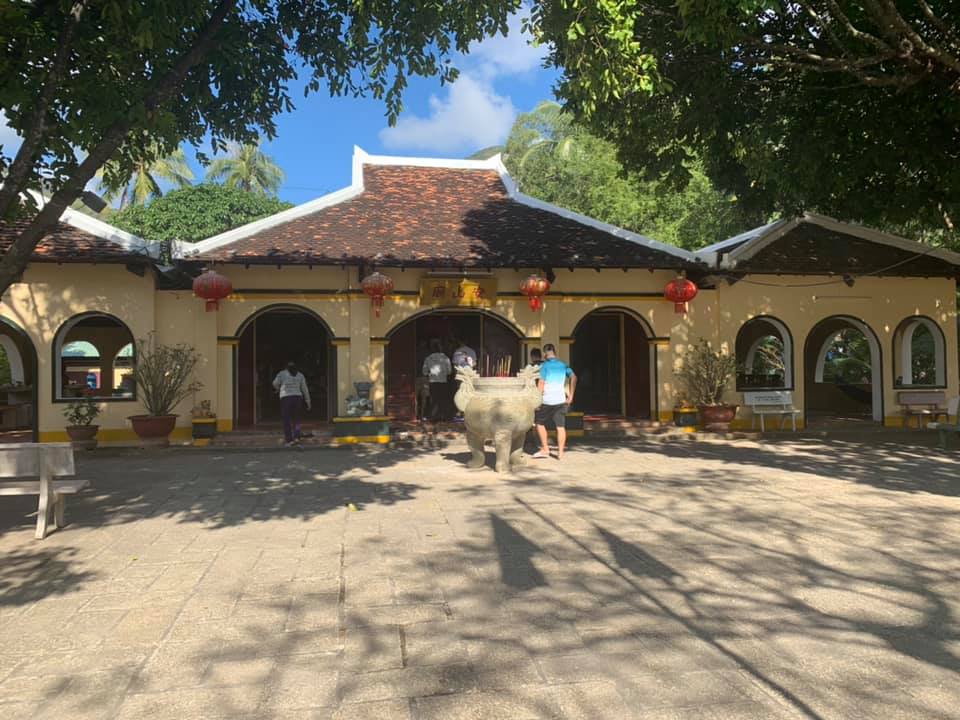
Located just 2 km southwest of Côn Đảo’s town center, An Sơn Miếu (also known as the Temple of Lady Phi Yến) stands as one of the island’s most sacred cultural landmarks. Behind its quiet, solemn appearance lies a poignant legend that has been passed down for more than two centuries.
The exile of Nguyễn Ánh and the tragedy that followed
In 1783, while fleeing the Tây Sơn army, Lord Nguyễn Ánh (later Emperor Gia Long) brought his family and 100 loyal households to seek refuge on Côn Sơn Island. As the conflict grew, he considered seeking military support from France and planned to send his young son, Prince Cảnh, as a political hostage.
His concubine, Lady Phi Yến (Lê Thị Răm), implored him not to rely on foreign powers, saying:
“This is a matter of our own people. Seeking help from outsiders may win a battle, but it will leave a stain on the nation for generations.”
Her words angered Lord Nguyễn, who believed she was conspiring with the Tây Sơn forces. He ordered her imprisonment in a stone cave on Little Côn Lôn Island—today known as Hòn Bà. She was sealed inside with only a few rice cakes and a jar of water to survive for half a month.
Just as she was confined, word arrived that Tây Sơn ships were approaching. Nguyễn Ánh quickly fled Côn Đảo for Phú Quốc. Before departure, the young Prince Hội An—Lady Phi Yến’s son—asked for his mother. Upon learning she had been left behind, he wept and begged to stay with her. In a moment of rage, Nguyễn Ánh threw the innocent child into the sea.
The prince’s body later washed ashore near Đầm Trầu Beach. Locals recovered and buried him, building a small shrine over his grave.
A mother’s grief and the birth of a legend
Villagers soon rescued Lady Phi Yến from the sealed cave and broke the heartbreaking news about her son. Devastated, she moved into a humble hut beside his tomb, tending to it daily. Her sorrow inspired a folk verse still known across Vietnam:
“The wind carries the mustard greens to heaven,
The coriander remains to bear earthly grief.”
(“Cải” and “Răm” referring poetically to the prince and his mother.)
Lady Phi Yến was also said to have composed a lament, expressing her loyalty and sorrow:
“I light this incense in vow to my lord,
For honest counsel I was condemned.
A throne built on turmoil leaves its mark,
And a mother bleeds while mourning her son.
Mountains grieve, rivers weep—flowers dim with tears.
I cry for my child, and again for my husband.”
A tragic end to protect her honor
In 1785, during a large ceremonial festival in nearby An Hải Village, elders invited Lady Phi Yến to join the ritual. Struck by her beauty, a man named Biện Thi attempted to violate her during the night. She escaped and raised an alarm; he was immediately restrained by villagers.
Believing that her purity had been tainted even by his touch, Lady Phi Yến cut off the arm he had grabbed and asked villagers to bury it. Overcome by shame, she took her own life that same night.
Her death enraged the people of Cỏ Ống Village, who marched to An Hải demanding justice until local officials intervened. Biện Thi was later executed, and Lady Phi Yến’s remains were buried at An Hải, where a temple was erected in her honor.
Over time, islanders believed that both Lady Phi Yến and Prince Hội An became protective spirits—appearing in dreams to warn villagers of storms, dangers, or auspicious signs.
From ruin to preservation
During French colonization, all islanders were relocated to the mainland, and the original shrine collapsed from neglect. In 1958, when Côn Sơn became a provincial administration under the South Vietnamese regime, provincial treasurer Nguyễn Kim Sáu reviewed historical records and petitioned for the shrine to be rebuilt on its former site. Prison labor was used to construct what is now An Sơn Miếu.
Today, the temple is recognized as a provincial cultural and historical relic by Bà Rịa – Vũng Tàu Province and is part of the master plan to restore and preserve Côn Đảo’s historical sites under Decision No. 264/2005/QĐ-TTg of the Prime Minister.
Among the few surviving folk heritage sites on Côn Đảo, An Sơn Miếu remains deeply revered. Locals consider Lady Phi Yến—alongside national martyr Võ Thị Sáu—as one of the island’s two sacred female figures who embody loyalty, virtue, and spiritual protection.