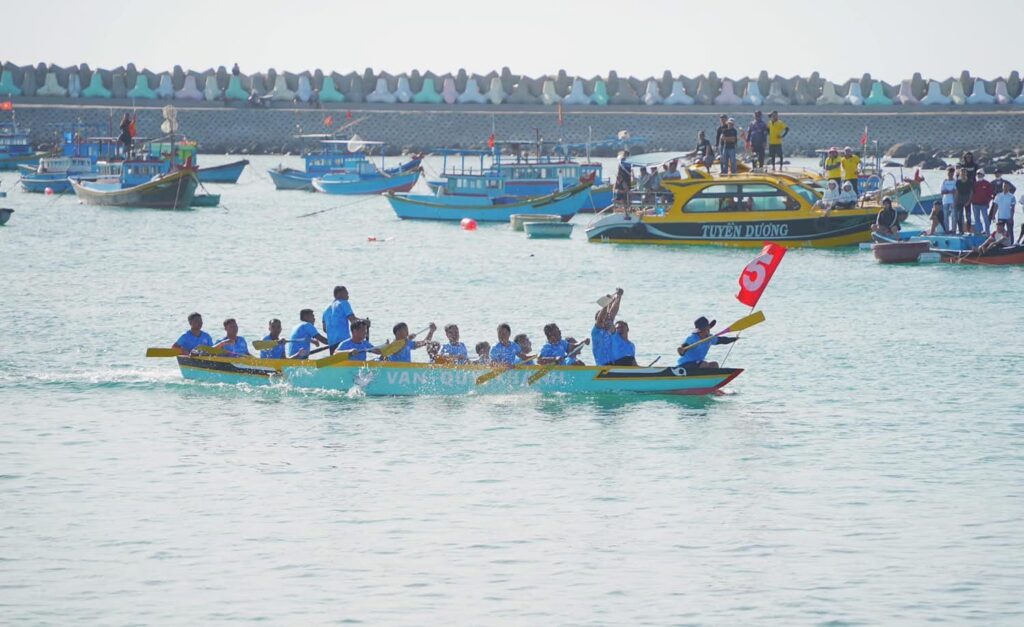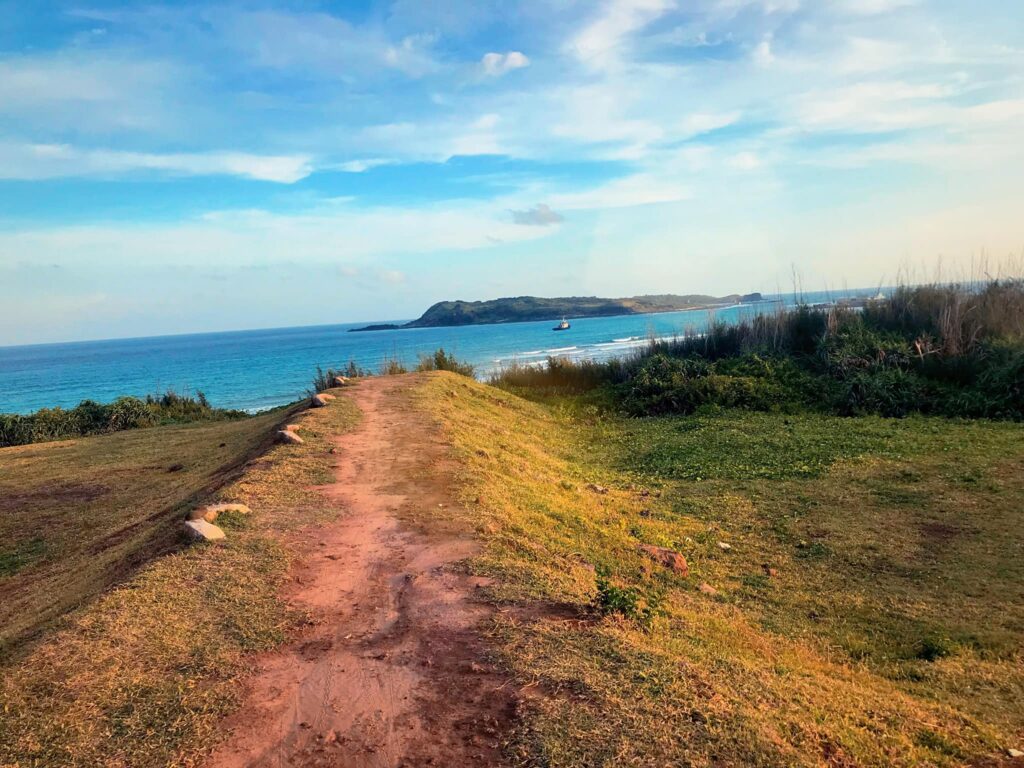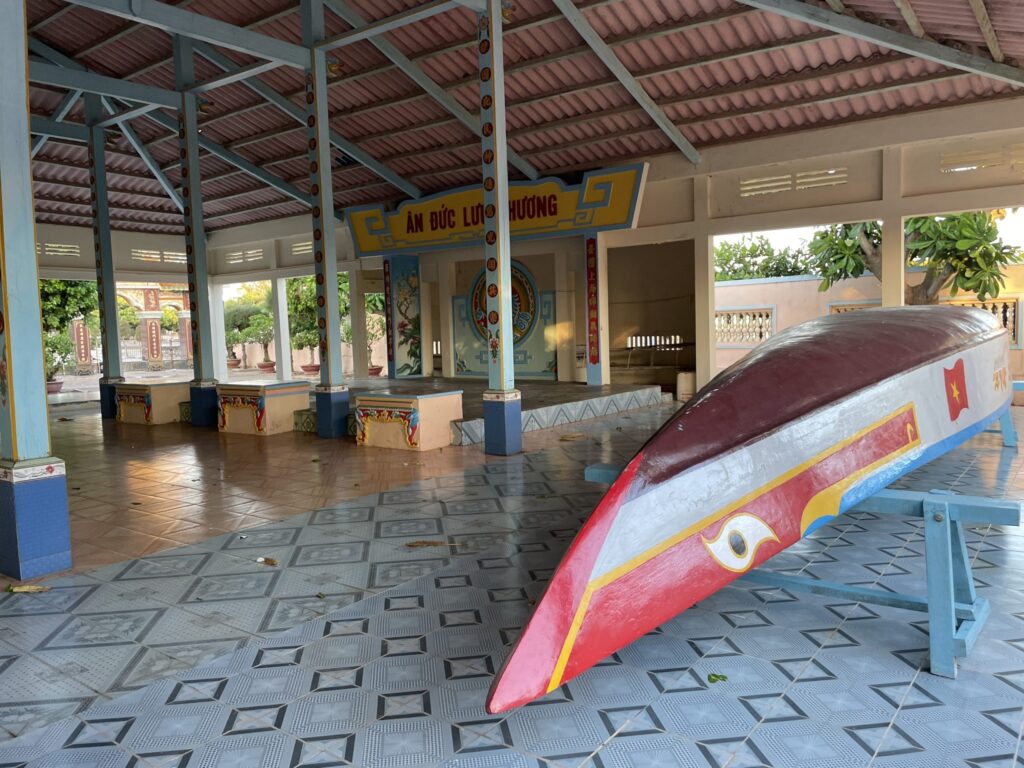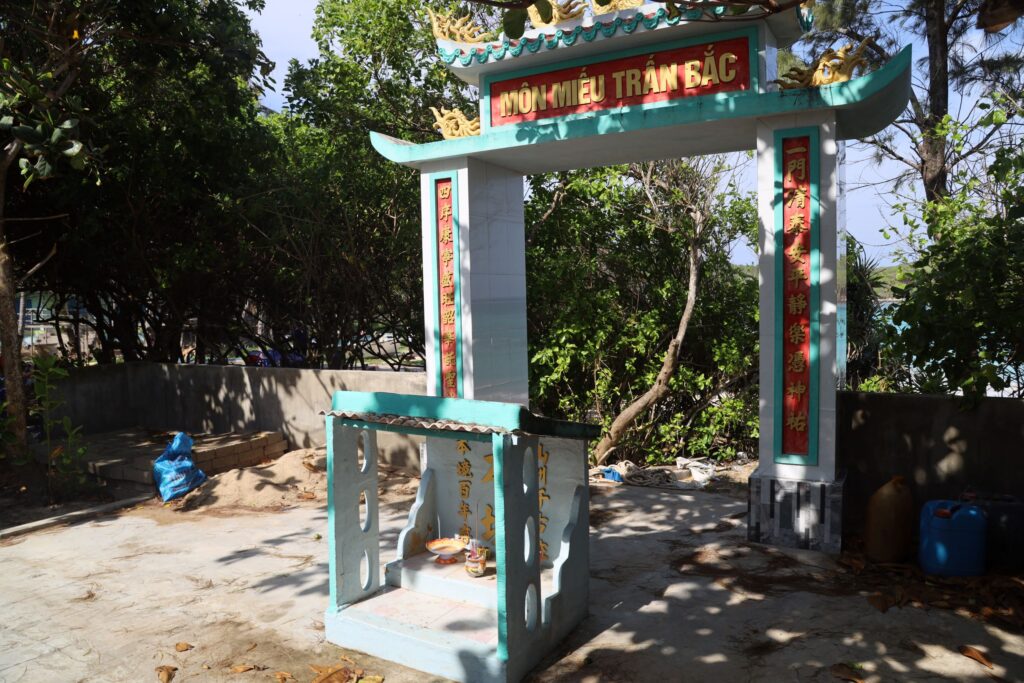
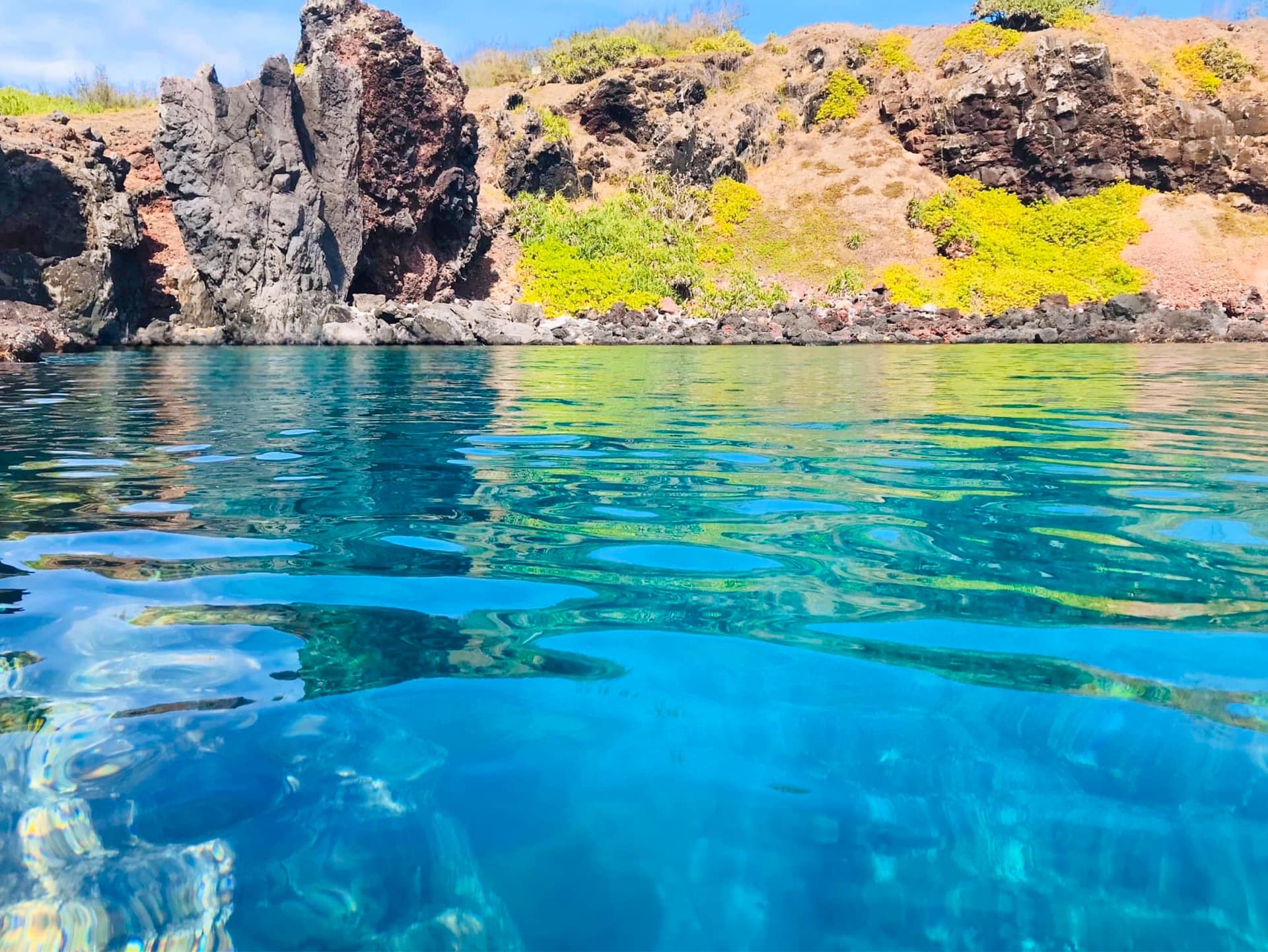
Whenever boats pass by Hon Tranh Island, locals often recount an ancient legend about Vung Phat—a shallow reddish-brown rock basin believed to be a spiritual refuge for fishermen and a safe harbor for boats during storms. This legend is also closely connected to Linh Quang Pagoda, a major Buddhist temple in Tam Thanh Commune founded in 1774 and now recognized as a National Cultural Heritage Site.
The Early Days of Linh Quang Pagoda
In its earliest days, Linh Quang Pagoda was nothing more than a simple thatched hermitage standing quietly against a deserted hillside. The surrounding landscape was filled with native forests and untouched rock formations that complemented the serenity of the Buddhist sanctuary.
Near the end of the 18th century, a devastating fire swept through the temple, destroying nearly all of its sacred relics. Miraculously, several bronze Buddha statues survived unharmed. After the fire, devotees and villagers came together to rebuild the pagoda on its original foundation.
The Mysterious Floating Sacred Stone
Not long after, villagers witnessed a strange and auspicious phenomenon:
At a narrow bend of the sea near Hon Tranh Island, a large sacred stone would float to the surface on auspicious days, only to sink again afterward. This occurred repeatedly, convincing the people that it was a divine sign.
Believing it to be a heavenly blessing, the villagers prayed at Linh Quang Pagoda and then organized boats to retrieve the floating stone. They brought it to the pagoda and carved it into a statue of Shakyamuni Buddha, which has since been known as the Sacred Stone Buddha of Linh Quang. From then on, the place where the stone appeared was called Vung Phat — “Buddha’s Basin.”
Another Version of the Legend
A different oral tradition tells of a 1.5-meter stone statue of Amitabha Buddha that would mysteriously appear and drift ashore at Mui Ngoai, Hon Tranh, on the 1st and 15th days of the second lunar month.
People believed it to be a divine manifestation. They eventually carried the statue to Linh Quang Pagoda and painted it in gold. Later, a group of thieves mistook the statue for solid gold and stole it, taking it to the mainland near Phan Ri – Hoa Da to scrape off the gold. When they realized it was stone, they threw it into the sea. Miraculously, the statue drifted back to its original place—“returning to where it belonged.”
Since then, locals have called that spot Vung Phat.
The Sacred Stone Buddha at Linh Quang
During our visit to Linh Quang Pagoda, we saw the revered stone statue—known as Thien Sanh Buddha. It sits in meditation pose, measuring 121 cm tall and weighing around 300 kg. The craftsmanship is delicate, with smooth, gentle carvings. The statue is lacquered and gilded, giving it a radiant appearance.
Interpreting the Legend
Comparing the details of both legends reveals several key points:
- The Buddha statue was carved locally by island artisans using a special type of porous stone found at Hon Tranh that can float on water.
- Whether in raw form or sculpted, the sacred stone’s appearance at the same site explains why the place is called Vung Phat.
- The second legend—though embellished—reinforces the belief in the Buddha’s protective presence over the island.
Oral histories from villagers, including recollections from elder Huynh Huy So, describe how the sacred stone was brought ashore and taken to the home of Mrs. Huynh Thi Long (Triều Dương Village), where it was carved into the Buddha statue still venerated today.
A famous folk poem by artisan Đỗ Chớ also alludes to the carving of the Buddha statue from this floating stone:
“This is where divine signs appear,
In ancient times the stone rose from the sea.
On auspicious days it surfaced again,
… Guided by heavenly whispers,
They invited master carvers to bring it to Linh Quang.”
A Legend Woven Into Phu Quy’s Spiritual Identity
All evidence suggests that the stone statue was crafted by local hands, while the mystical tales surrounding it serve to elevate its sacred meaning.
Whether born of miracle or tradition, the Stone Buddha of Vung Phat has become a powerful symbol—representing divine protection, cultural heritage, and the spiritual resilience of the people of Phu Quy Island.
It is this blend of history and legend that gives Vung Phat and Linh Quang Pagoda their profound cultural and spiritual significance today.