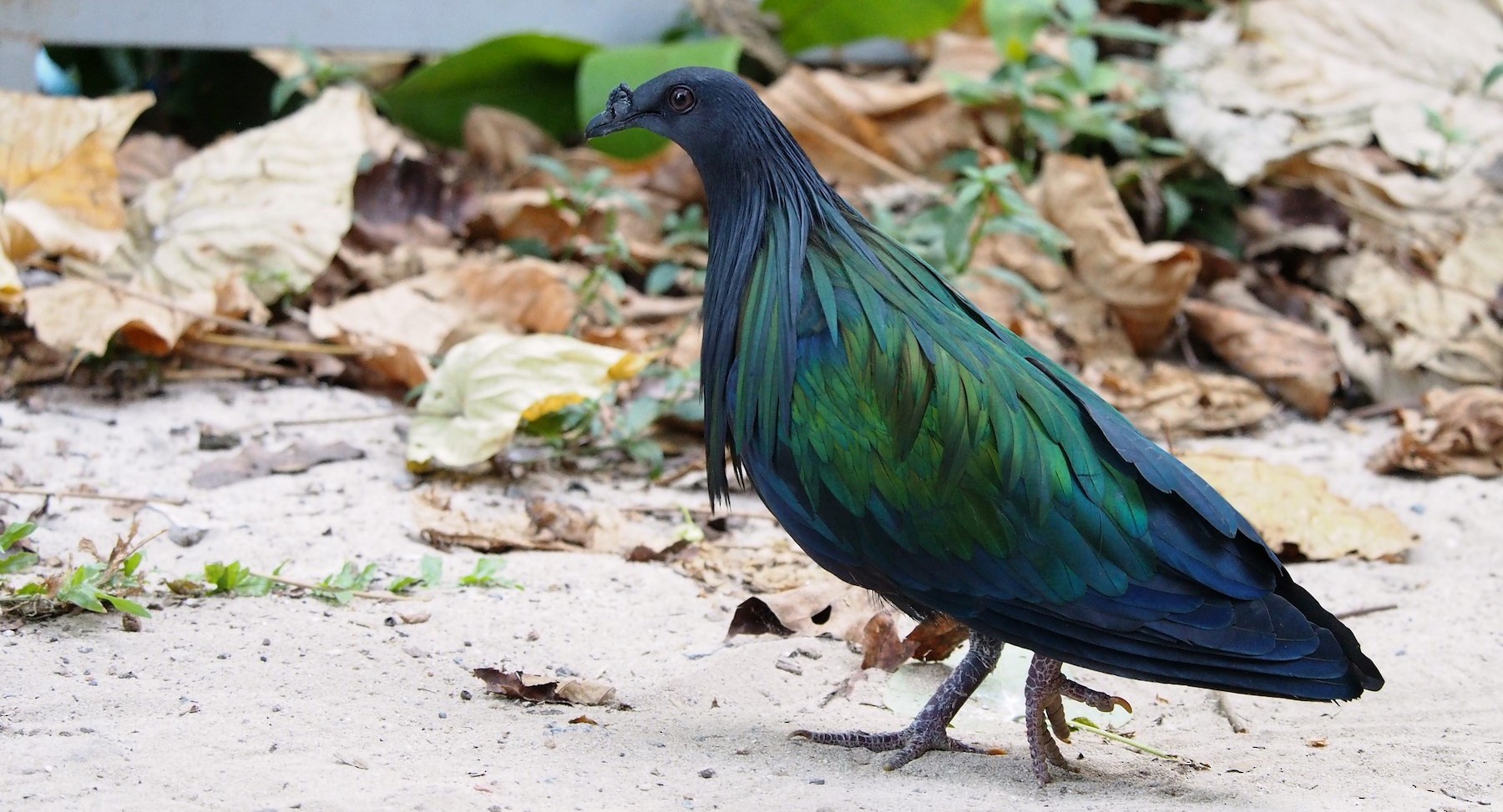
The Nicobar pigeon (Caloenas nicobarica) is one of the most striking and rare bird species in the world, listed in both the Vietnam Red Data Book and the IUCN Red List. In Vietnam, this beautiful pigeon is found only on Côn Đảo, making the archipelago its sole habitat within the country.
A Bird of Dazzling Colors
This is a large pigeon, measuring about 40 cm long. Its appearance is instantly recognizable:
- Head: soft gray
- Tail: very short, pure white
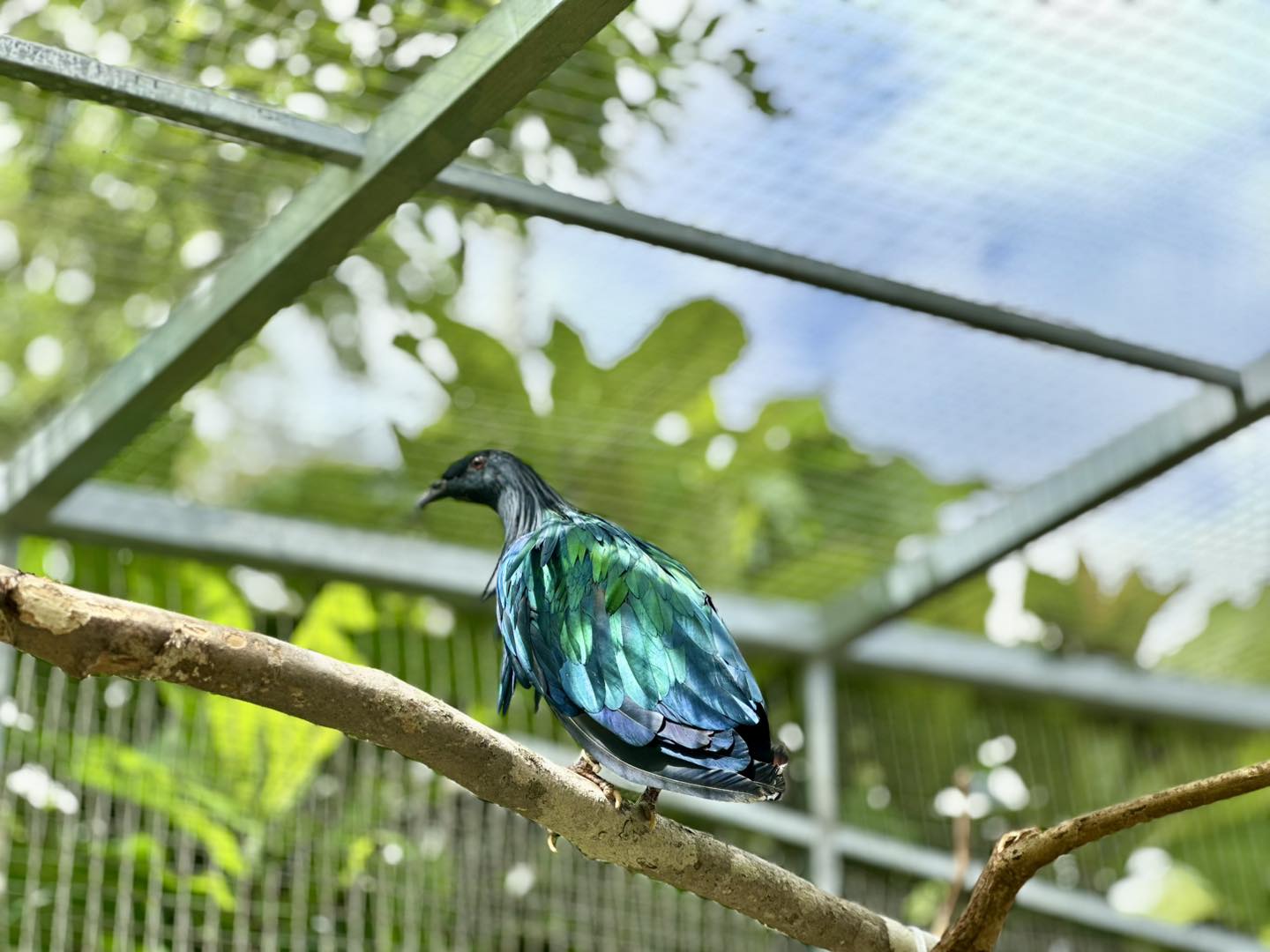
- Body plumage: iridescent metallic green, blue, and bronze
- Females are slightly smaller than males
When seen under sunlight, the Nicobar pigeon shimmers like a moving gemstone — one of the reasons birdwatchers consider it among the most captivating pigeons on Earth.
Habitat & Behavior
In Côn Đảo National Park, the Nicobar pigeon builds simple nests on wide tree branches, usually 5–10 meters above the ground.
- Diet: seeds, nuts, and forest fruits
- Breeding season: April–May
- Clutch size: 1 egg per nest
- Incubation: 20–24 days
The species forages mostly on the forest floor, quietly walking among fallen leaves in search of food.
Global Distribution
Outside Vietnam, the Nicobar pigeon inhabits small islands and coastal forest zones stretching from the Nicobar Islands (India) across the Malay Archipelago to the Solomon Islands and Palau. Its dependence on isolated islands makes it highly vulnerable to habitat loss and hunting.
Successful Captive Rearing in Côn Đảo
Engineer Phạm Thành Đúng, Head of Scientific Management at Côn Đảo National Park, is the first person in Vietnam to successfully rear a Nicobar pigeon chick taken from the wild until adulthood. The bird even laid eggs — a significant scientific milestone — though limited funding prevented further study on why the eggs did not hatch.
All Nicobar pigeons raised by Mr. Đúng have been released back into the wild. His early success has inspired a new research program dedicated to better understanding and conserving this rare species.
A Jewel of Côn Đảo’s Biodiversity
The Nicobar pigeon is a globally threatened species, protected under:
- The Vietnam Red Data Book
- International conservation lists
- Regulations of Côn Đảo National Park
Every year, these pigeons migrate to Côn Đảo from April to August — a reminder of how vital the island’s pristine forests are to global biodiversity.
Rare, beautiful, and deeply symbolic, the Nicobar pigeon stands as a living treasure of Côn Đảo — and its protection is essential to preserving the natural heritage of this sacred island.