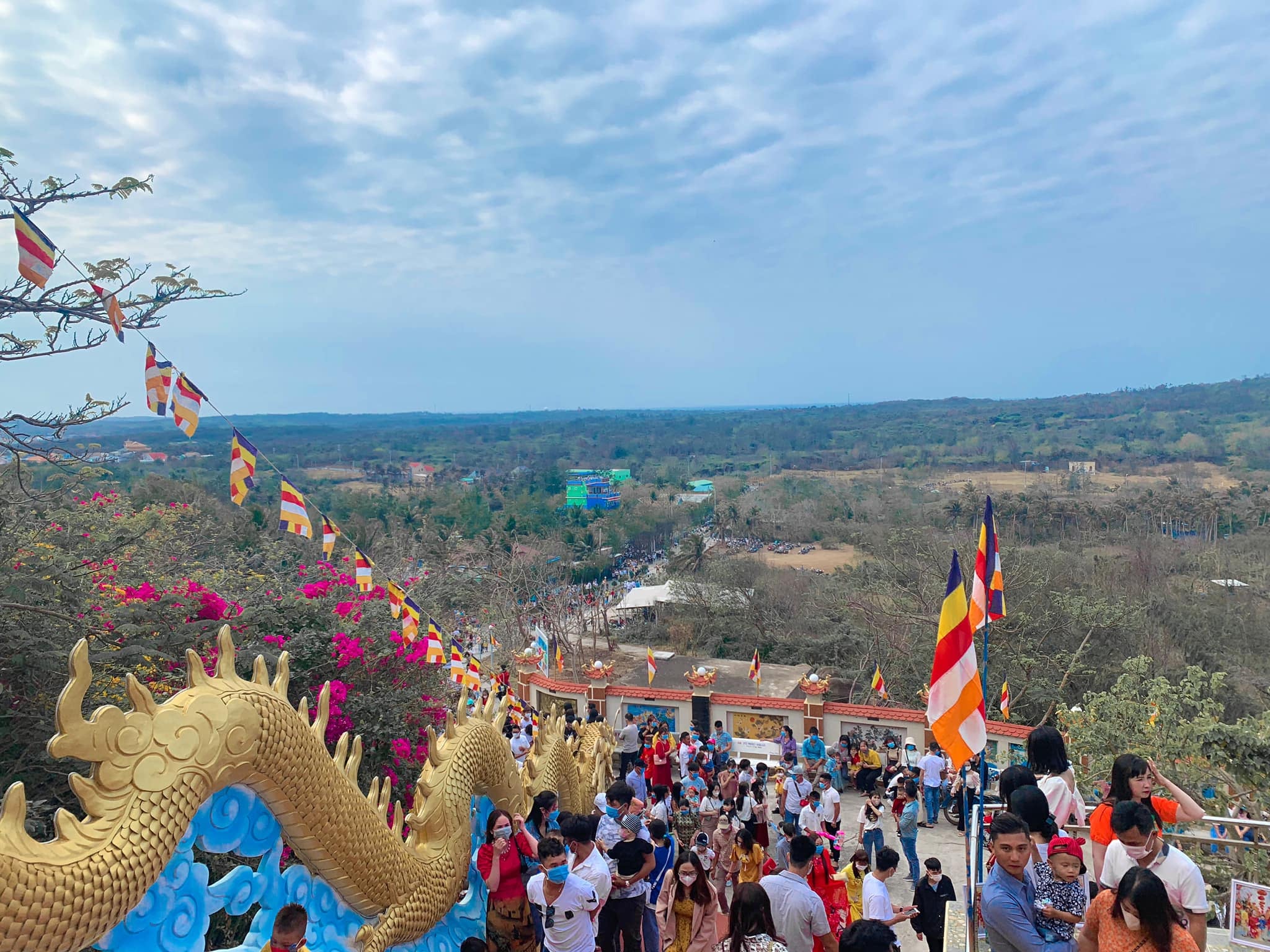
Phu Quy Special Zone is home to a remarkable concentration of religious and cultural heritage sites. Among them, Buddhist temples—ranging from centuries-old pagodas to newer, modern structures—play an especially important role. They are not only places of worship and spiritual practice but also sanctuaries dedicated to honoring fallen soldiers who sacrificed their lives to protect Vietnam’s maritime sovereignty.
For generations, spirituality has been deeply woven into the lives of Phu Quy’s fishermen. Before each voyage, locals visit the temples to pray for safe waters, favorable winds, and a peaceful return. These rituals reflect the strong spiritual foundation that has supported island communities throughout their history.
According to our records, Phu Quy Island has seven major pagodas spread across the main island: My Quang, Lien Hoa, Linh Buu, Linh Quang, Linh Son, Long Son, and Thanh Lam.
Linh Quang Pagoda—established over 300 years ago—is the oldest, while Long Son is the most recent, built in 1993. Each pagoda features unique architecture that blends traditional Vietnamese design with the serene natural landscape of the island.
Travelin.vn continues to update information on Phu Quy’s temples. Though this list may not be exhaustive, we hope it offers meaningful insights into the island’s spiritual heritage.
Linh Quang Pagoda – The First Buddhist Pagoda on Phu Quy Island
Linh Quang Pagoda is considered the birthplace of Buddhism on Phu Quy. It is not only a place of worship but also an important landmark reflecting the island’s history, culture, and artistic heritage.
Located on a small hill in My Khe Hamlet, Tam Thanh Commune, Linh Quang Pagoda is surrounded by lush trees and ancient stone tablets inscribed with historical writings. As one of the oldest and most architecturally significant pagodas, it is recognized as a National Scenic Site by the Ministry of Culture (Decision No. 51/QĐ/BT, January 12, 1996).
According to historical documents, the pagoda was first established in 1747 during the reign of King Le Hien Tong by Zen Master Nguyen Canh. Initially, it was a simple thatched hut used for chanting and lodging for monks. Over centuries of renovations—especially in 1992—it evolved into a beautiful architectural complex.
Local elders recount that in ancient times, the pagoda was surrounded by dense forests and rock formations. Zen Master Nguyen Canh chose this spot to pray for the safety of fishermen during their long voyages.
A significant historical episode occurred when Prince Nguyen Anh (later Emperor Gia Long) fled to Phu Quy Island during the Tay Son uprising. He found refuge at Linh Quang Pagoda and later, upon returning to the mainland and ascending to the throne, composed a poem engraved at the pagoda to commemorate his stay.
In the late 18th century, a fire destroyed many sacred artifacts. Soon after, a “sacred stone” was found drifting near Hon Tranh Island. Believing it to be a divine sign, islanders brought it back and carved it into a 121 cm, 300 kg statue of Buddha Shakyamuni, which remains enshrined at the temple to this day.
Inside the pagoda are precious relics, including a bronze bell cast in 1795 and a large Bat Nha drum carved from a single sao-wood trunk. The pagoda also houses royal decrees (“Sac menh chi bao”) bestowed by Nguyen Dynasty kings—five of which are still preserved.
Today, Linh Quang Pagoda remains the heart of spiritual life on Phu Quy, especially during festivals such as Vesak, Vu Lan, and traditional island ceremonies.
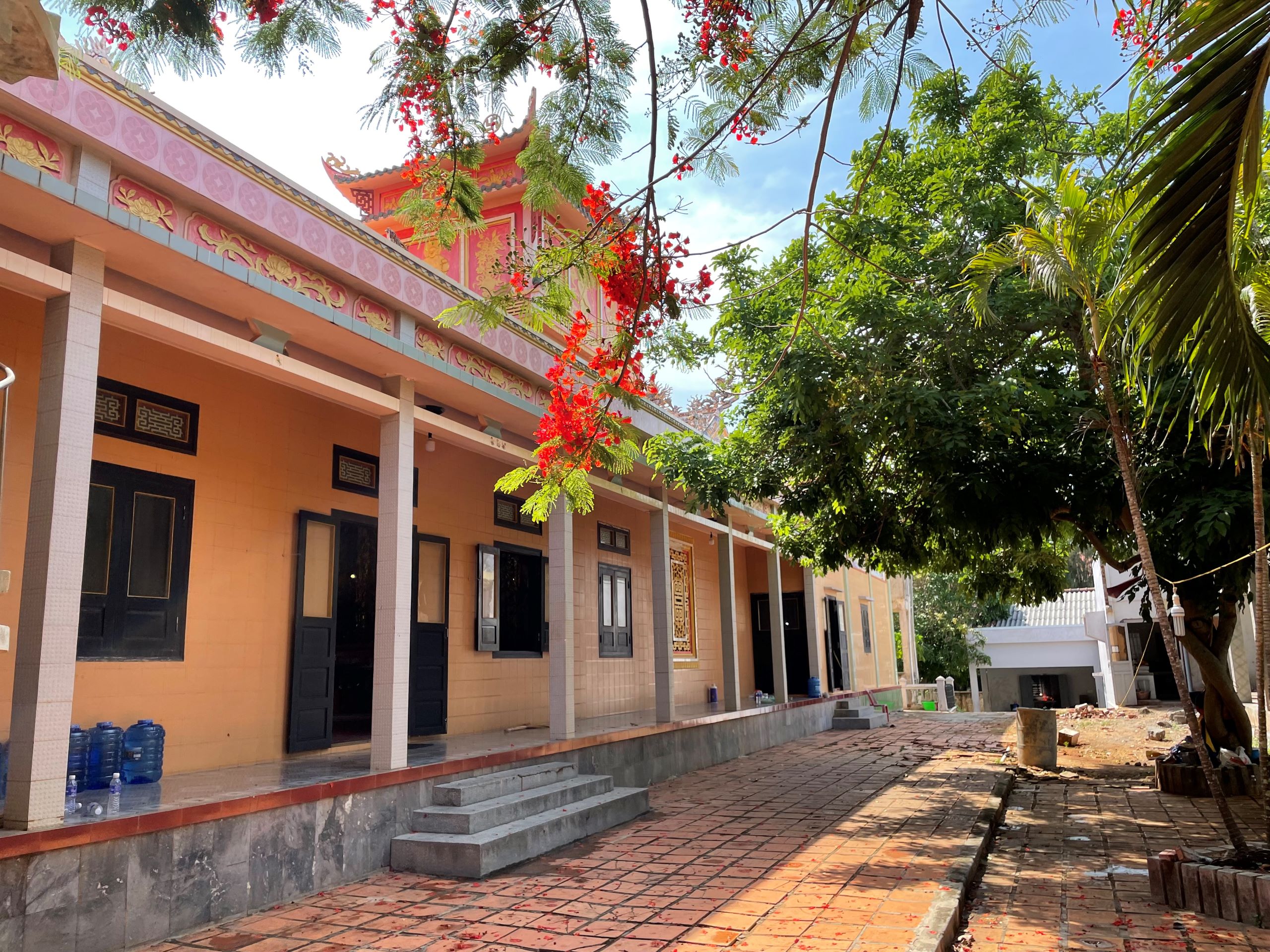
Linh Son Pagoda – The Sacred Pagoda on Cao Cat Mountain
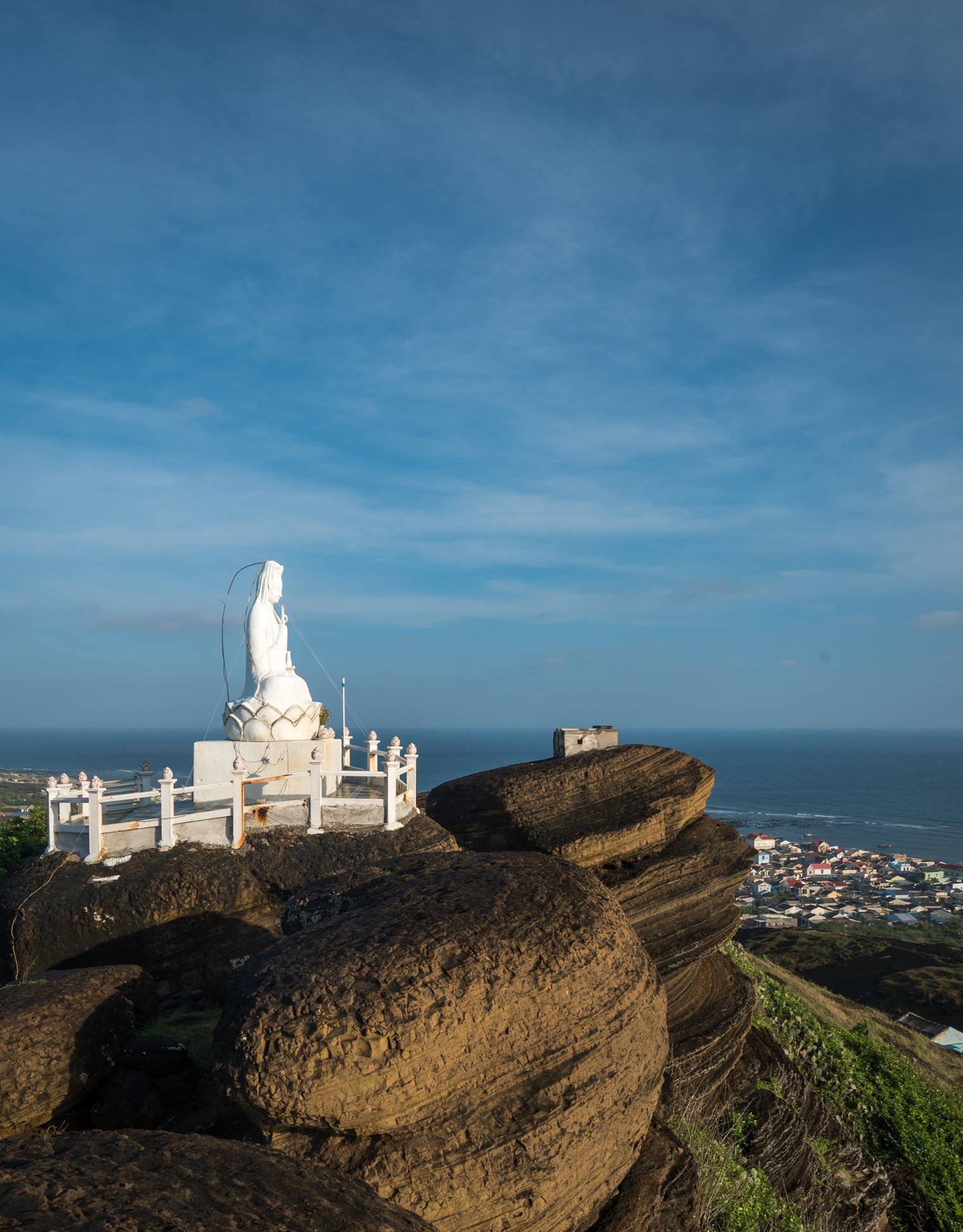
Linh Son Pagoda is located on Cao Cat Mountain, the second-highest peak on the island and revered as a sacred mountain by locals. The pagoda was restored in the early 20th century and is now one of Phu Quy’s most iconic religious sites.
Visitors must climb stone steps through dense forest to reach the pagoda. The journey offers breathtaking views of green foliage, mountain ridges, gentle sea breezes, and the tranquil sound of temple bells mingling with waves and wind—a deeply soothing experience.
Linh Son Pagoda is admired for:
- its serene natural setting
- ancient trees surrounding the temple
- its panoramic views over fishing villages, sand beaches, winding hillsides, boats, and Phu Quy Port
- a majestic Avalokitesvara (Guanyin) statue placed high upon a giant stone platform
The pagoda is an important spiritual refuge for fishermen who stop by to pray before heading out to sea. Without a resident abbot, local Buddhists take turns performing rituals and welcoming visitors.
Thanh Lam Pagoda – A 200-Year-Old Sanctuary in Ngu Phung Commune
Located in Quy Thanh Hamlet, Thanh Lam Pagoda is one of Phu Quy’s oldest religious sites, founded in 1774 by 50 settlers from Binh Dinh and Quang Nam who drifted to the island during a storm. Inspired by the island’s fertile land and fresh water, they settled here, built the pagoda, and placed their faith in Buddha for protection at sea.
The pagoda houses over 30 ancient Buddha statues made from wood, bronze, and terracotta. Annual ceremonies—including Vesak, the seventh lunar month, and full-moon rituals—attract large numbers of devotees seeking peace and blessings.
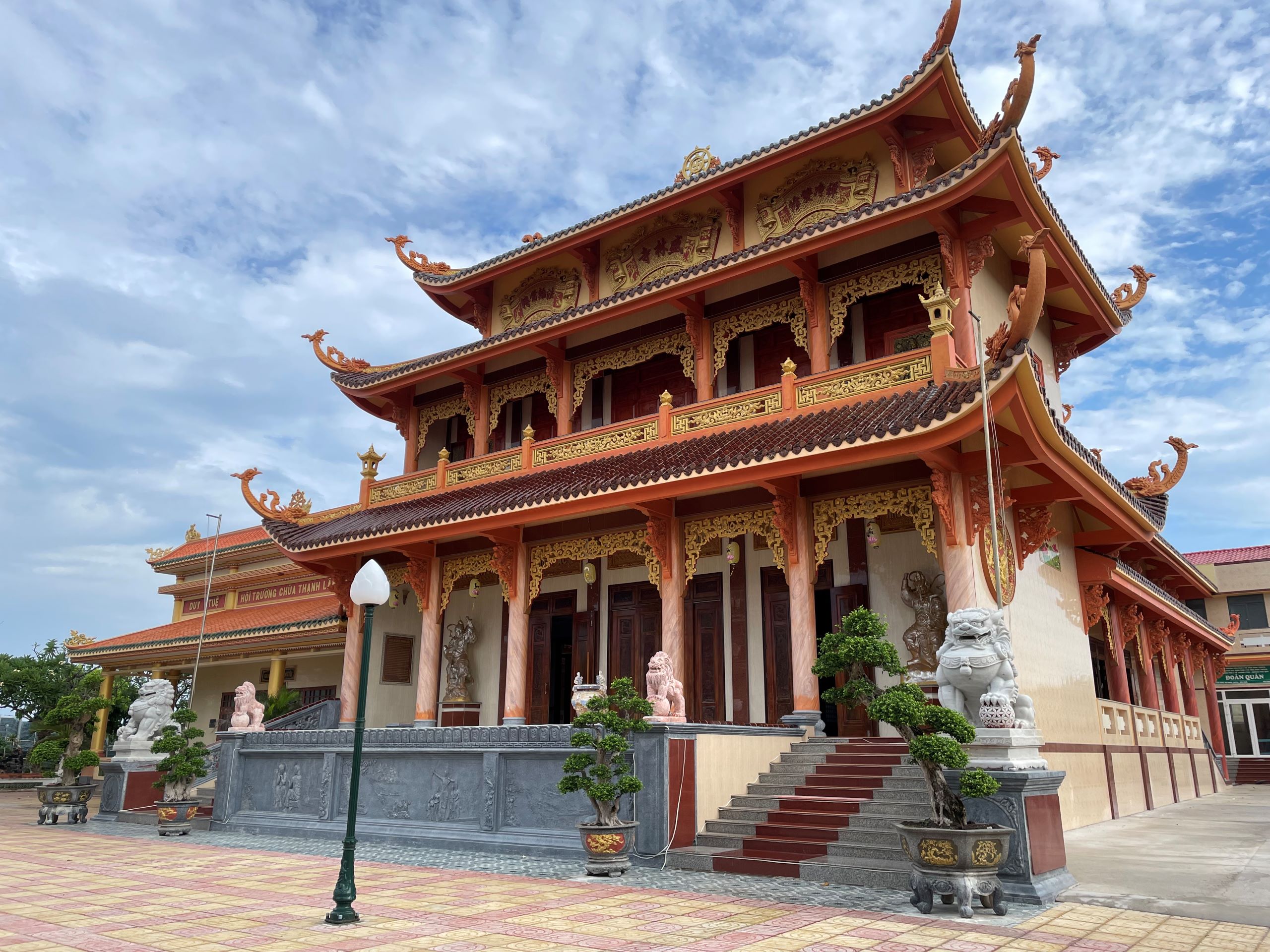
Linh Buu Pagoda
Established in 1971, Linh Buu Pagoda sits peacefully at the foot of a hill in Ngu Phung Commune. Although modest in its early days, the temple now features a unique Thai–Vietnamese style stupa, where the relics of venerable Master Tuong Kim are enshrined. Surrounded by ancient trees, the pagoda offers a tranquil retreat for those seeking spiritual calm.

My Quang Pagoda
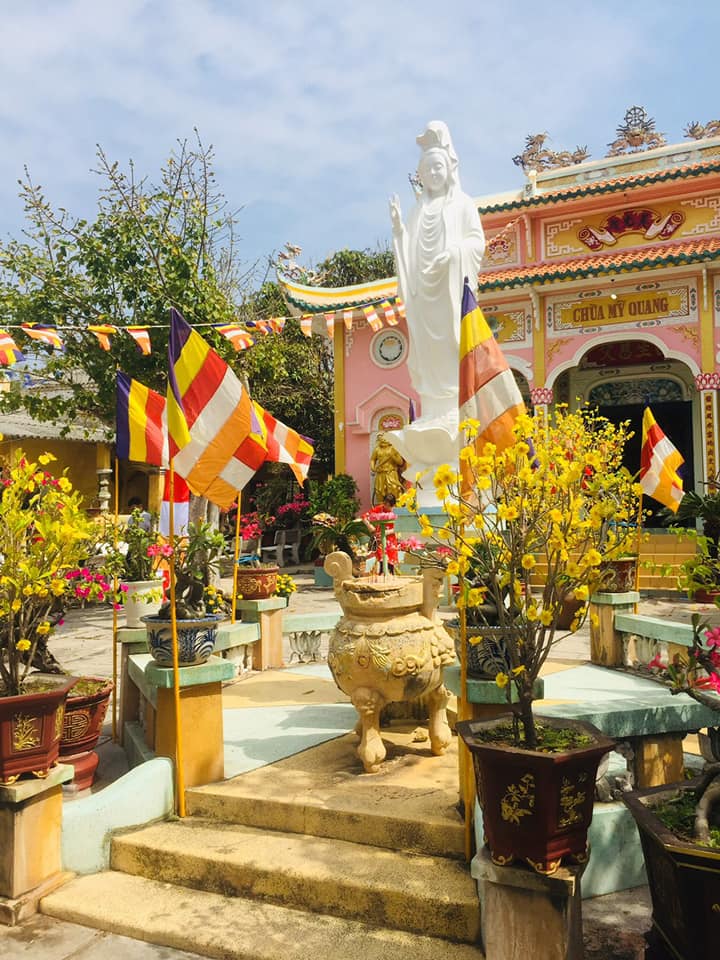
My Quang Pagoda is located on a sand dune in Phu An Hamlet, Ngu Phung Commune. Together with Quan Thanh Temple and Dinh Thay Shrine, it forms a meaningful spiritual cluster that reflects local beliefs and cultural traditions.
Lien Hoa Pagoda
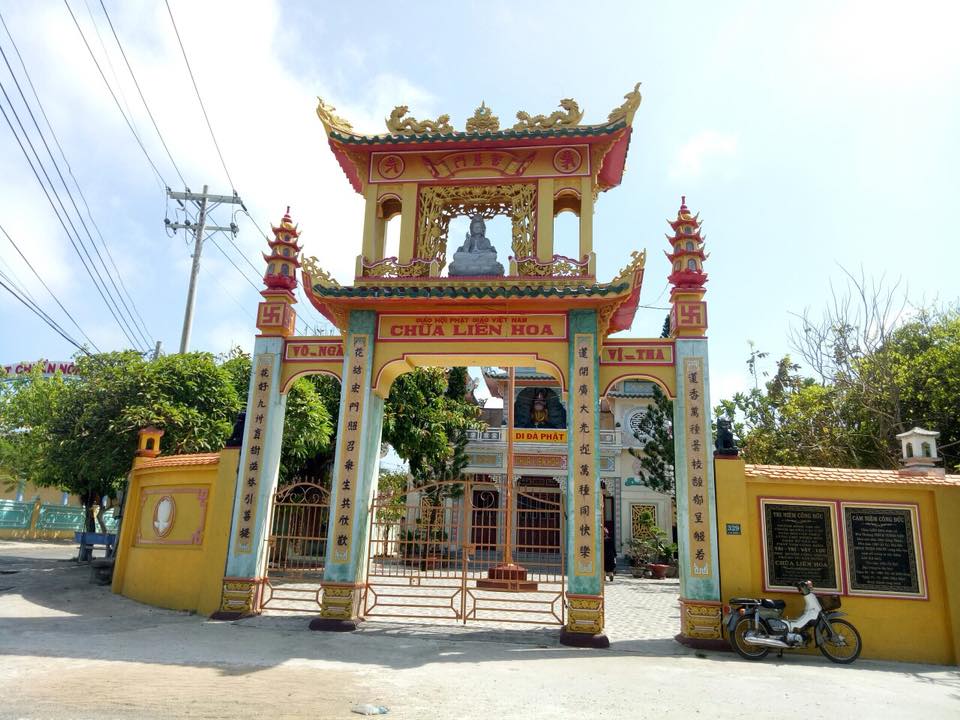
Lien Hoa Pagoda was founded by Venerable Thich Tuong Van, who served as the ritual master at Linh Son Pagoda. For nearly 90 years, after several restorations, Lien Hoa remains a popular place for pilgrims and tourists visiting Phu Quy Island.
Long Son Pagoda
Long Son Pagoda, located in Long Hai Commune, is the newest pagoda on the island, founded in 1993. Despite its young age, it has quickly become an important site for Buddhist practice and community activities.