
Vung Tau is not only famous for its scenic coastal roads, golden beaches, and peaceful ocean views—it is also home to many important revolutionary relics. Among them, the Revolutionary Historic Site of Mother Tám Nhung’s House stands out as a place deeply cherished by local residents, who affectionately call it with warmth and gratitude: “Nhà Má Tám Nhung.”
A Cradle of the August Revolution in Vung Tau
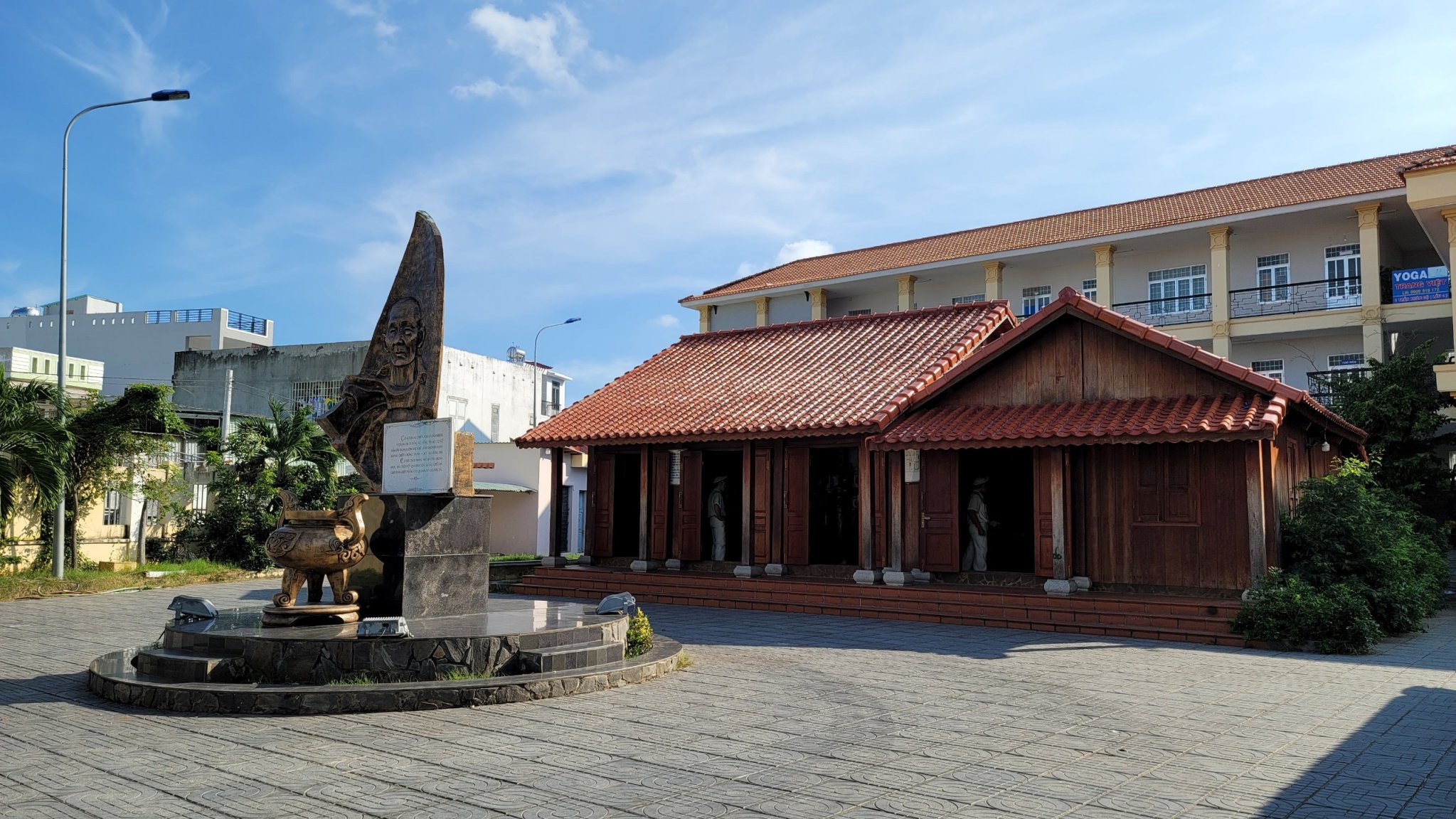
Between 1941–1942, at today’s address No. 1 Tran Xuan Do Street, Vung Tau Ward, the humble home of Mother Tám Nhung stood quietly among lush fruit trees.
On the night of August 25, 1945, the Vung Tau Revolutionary Uprising Committee was founded here. It was at this house that the first unit of revolutionary suicide soldiers was established—mobilizing people to rise up and seize power during the August Revolution of 1945.
For many years afterward, the home became an essential safe house for the Vung Tau Town Party Committee, sheltering revolutionaries throughout both the resistance against the French and later against the United States.
Recognizing its immense historical value, the Ministry of Culture and Information designated the house a National Historical Site in 1989. It was fully restored in 2015 and opened as a memorial to honor a heroic Vietnamese mother—humble, compassionate, loyal, and unyielding—who sheltered revolutionary cadres until the complete liberation of southern Vietnam in 1975.
The Life of Mother Tám Nhung and Her Family
Mr. Nguyễn Văn Nhung (born 1900, Mỹ Tho – Tiền Giang) was a patriotic citizen who took part in the 1930 uprising at 18 Thôn Vườn Trầu and later the Nam Kỳ Uprising in 1940. Arrested and brutally tortured by the French, he refused to betray the revolution and was eventually exiled.
He later moved to Vung Tau (1941–1942), living at Phuoc Hai Pagoda on Núi Lớn while reconnecting with the revolutionary movement.
Mrs. Hồ Thị Khuyên (born 1905, Gò Công – Tiền Giang), known by her alias Phạm Thị Tư, settled at the foothills of Big Mountain with her brother, reclaiming land and farming fruit trees. She and Mr. Nhung later married, and the neighborhood affectionately called her “Má Tám Nhung.”
They had three children:
- Nguyễn Văn Xứng (martyr)
- Nguyễn Thị Cấm (martyr)
- Nguyễn Văn Bông
Throughout the anti-French resistance (1945–1954), the family continued to harbor revolutionaries, providing shelter, food, and unwavering loyalty.
Inside the Historic House
The restored house preserves traditional early-20th-century southern architecture with:
- A three-room main house and two side wings
- Wooden pillars, tiled floors, yin–yang roof tiles
- A backyard well and garden
Inside the main hall is the ancestral altar of Mr. Nhung and Mrs. Khuyên, with portraits, incense burner, and brass candle holders. A signal oil lamp—once used by Mother Tám as a coded warning for revolutionaries (light on = danger, light off = safe)—is also displayed.
A secondary altar honors their three children, who sacrificed their lives for the revolution.
Visitors will also find wooden sleeping platforms, everyday utensils, and kitchen tools historically used by the family, including a rice jar for supporting the resistance (each meal, Mother Tám saved a handful of rice for revolutionary soldiers).
Reconstructed Scene: Confrontation with Saigon Regime Police
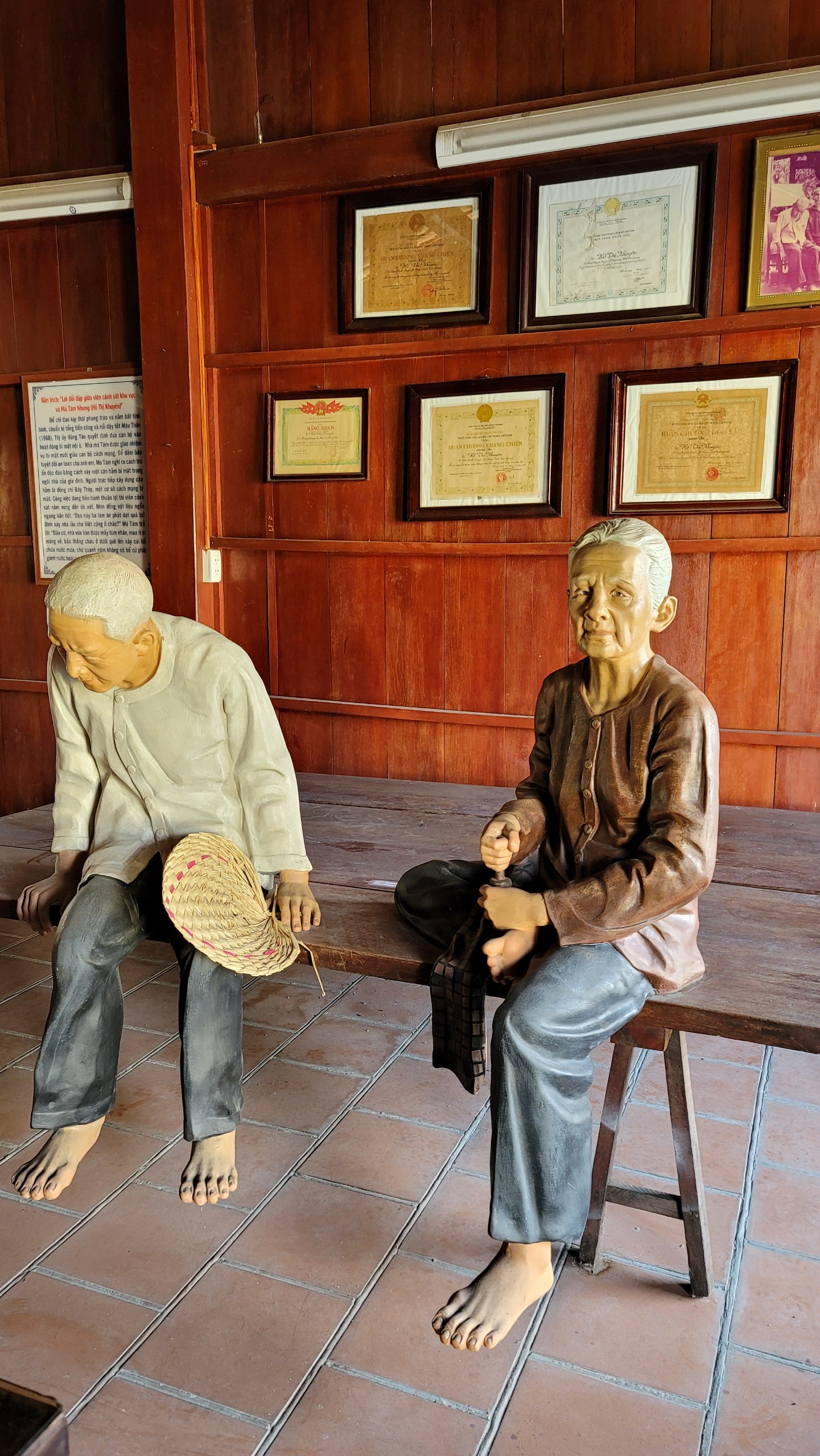
A striking exhibit features life-sized mannequins depicting two Republic of Vietnam policemen conducting a search—one interrogating violently, the other ransacking the kitchen.
In contrast, Mother Tám and her husband sit calmly, dignified and fearless.
Má Tám, in her brown áo bà ba with her hair neatly tied, chews betel with serene confidence—ready to distract and delay the enemy to protect hidden cadres.
The Secret Underground Hideout
This is one of the most remarkable features of the site.
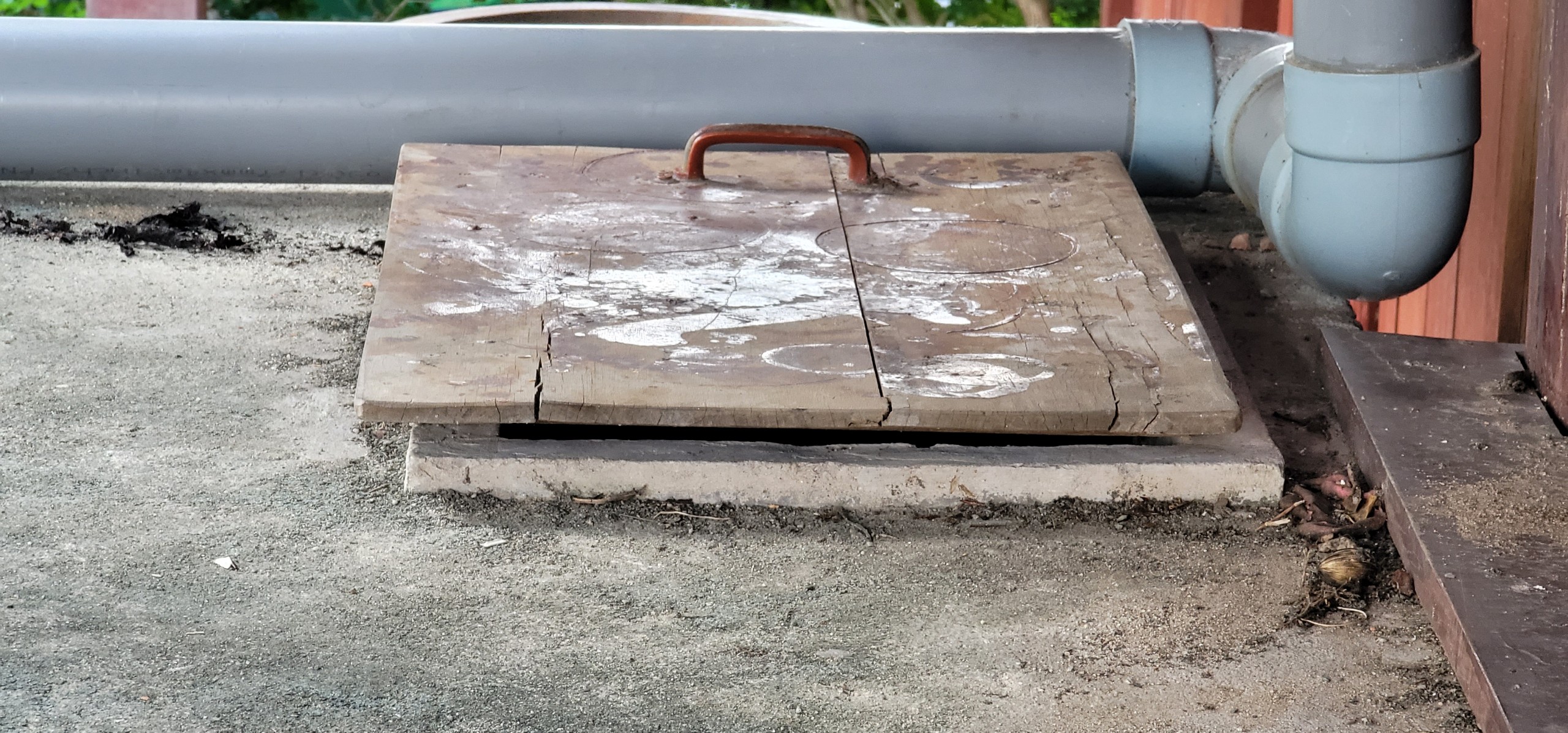
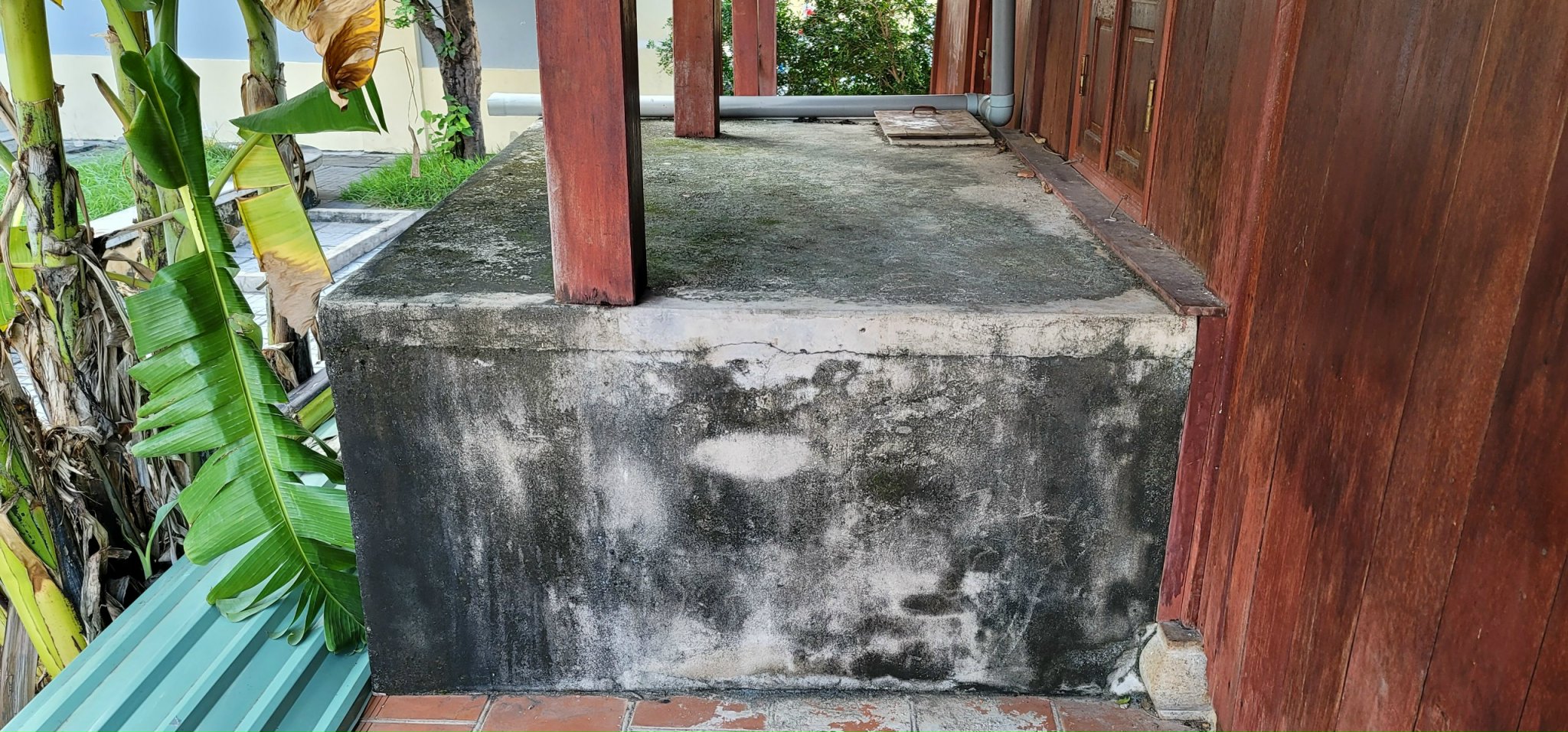
In 1967, Mother Tám built a hidden underground chamber disguised as a two-part water tank. Half stored rainwater; the other half served as a secret refuge.
The entrance was camouflaged with a wooden cupboard holding dishes. Even during inspections, the police never discovered it—thanks to Má Tám’s clever tactics, such as spreading fish to mask the area with a strong smell.
From 1968 until Vung Tau’s liberation in 1975, the hideout safely sheltered key revolutionary leaders, such as:
- Võ Thị Dậu
- Trần Văn Khánh
A reconstructed statue shows a cadre listening for danger before descending into the hideout—a powerful image highlighting Mother Tám’s extraordinary bravery and intelligence.
A Legacy of Courage and Loyalty
The house and underground shelter of Má Tám Nhung (Hồ Thị Khuyên) represent the steadfast spirit of southern Vietnamese mothers during wartime: simple, gentle, compassionate—but fiercely loyal and courageous.
Her family’s sacrifices contributed significantly to:
- the August Revolution of 1945,
- the resistance against French colonialism,
- and the resistance against U.S. intervention until national reunification in 1975.
Today, the site stands as a moving testament to patriotism, resilience, and the quiet heroism that shaped Vietnam’s revolutionary history.