Côn Đảo is known worldwide as the largest political prison complex in Indochina before 1975. Over more than a century, this beautiful island became a sacred land where tens of thousands of Vietnamese revolutionaries sacrificed their lives for national liberation and independence.
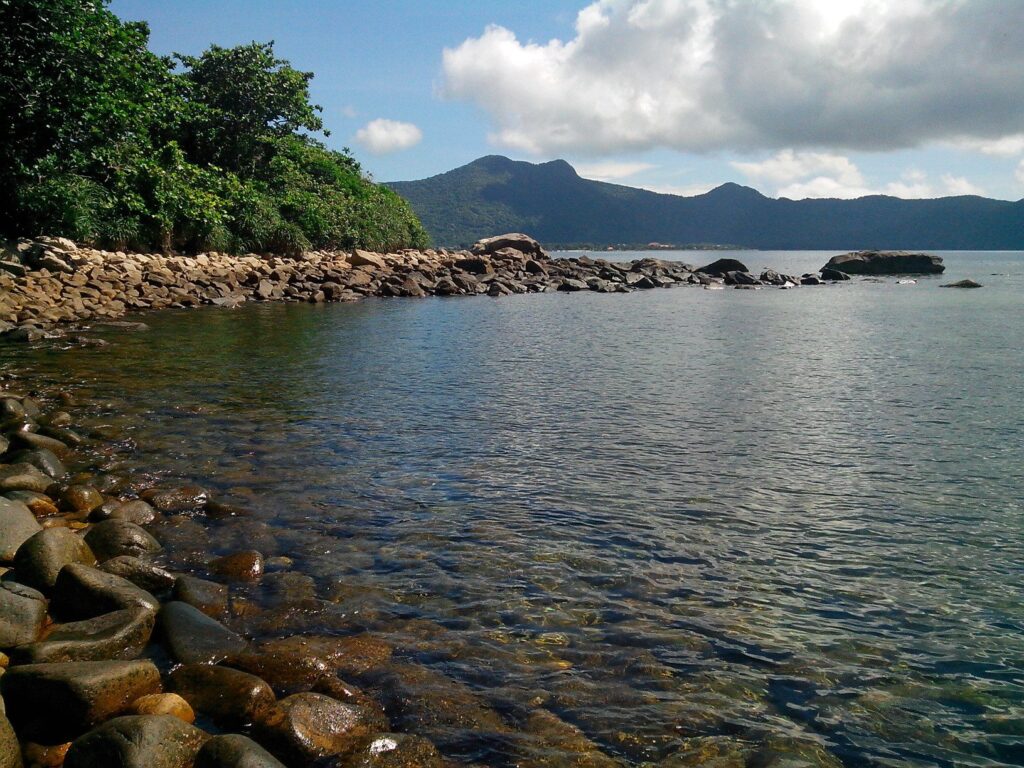
Covering nearly 76 km² with 16 islands, Côn Đảo appears like a tranquil painting of emerald seas, pristine mountains, and untouched forests. The seawater here is so clear that coral reefs and schools of fish can be seen from above. The sky and sea meet in a boundless blue, as if unchanged since ancient times. Much of Côn Đảo’s landscape remains wild and primeval.
Researchers estimate that Côn Đảo hosts 882 plant species, 144 animal species, 1,388 marine species, and is home to the largest number of sea turtles in Vietnam. Among its many beaches, Đầm Trầu stands out with its crystal waters and long stretches of silky sand—beautiful like a mermaid resting under the tropical sun. But beyond its natural beauty, Côn Đảo also preserves indelible evidence of wartime atrocities and remains a symbol of revolutionary heroism.
A Century of Hardship and Sacrifice
From 1862 to 1975, French colonialists and later American forces transformed this picturesque island into a notorious “hell on earth.” Approximately 200,000 political prisoners, mostly communist soldiers and patriots, were transported from the mainland and detained in 11 prison complexes. At least one in ten never returned, their bodies forever resting beneath the island’s soil.
Many prominent revolutionaries were imprisoned and perished here, including Nguyễn An Ninh, General Secretary Lê Hồng Phong, Lưu Chí Hiếu, and national heroes such as Võ Thị Sáu, Lê Văn Việt, and Cao Văn Ngọc. Among the most infamous prison facilities were the French Tiger Cages and later the American Tiger Cages, built for brutal solitary confinement.
The existence of the “Tiger Cages” remained hidden until 1970, when three escaped prisoners reached Sài Gòn and exposed the truth to international human rights organizations. Their testimonies and hand-drawn maps finally unveiled the horrors of the so-called “Phú Hải Rehabilitation Center,” revealing to the world the cruelty inflicted on Côn Đảo.
In 1971, the U.S. forces built a new prison system—the “American Tiger Cages”—equally inhumane. Inside suffocating tin-roofed cells or barbed-wire enclosures, prisoners were forced to stay in half-standing, half-sitting positions for days. Unsanitary waste buckets, starvation, and disease claimed countless lives, leaving prisoners emaciated and broken.
Cầu Tàu 914 – A Monument of Blood and Stone
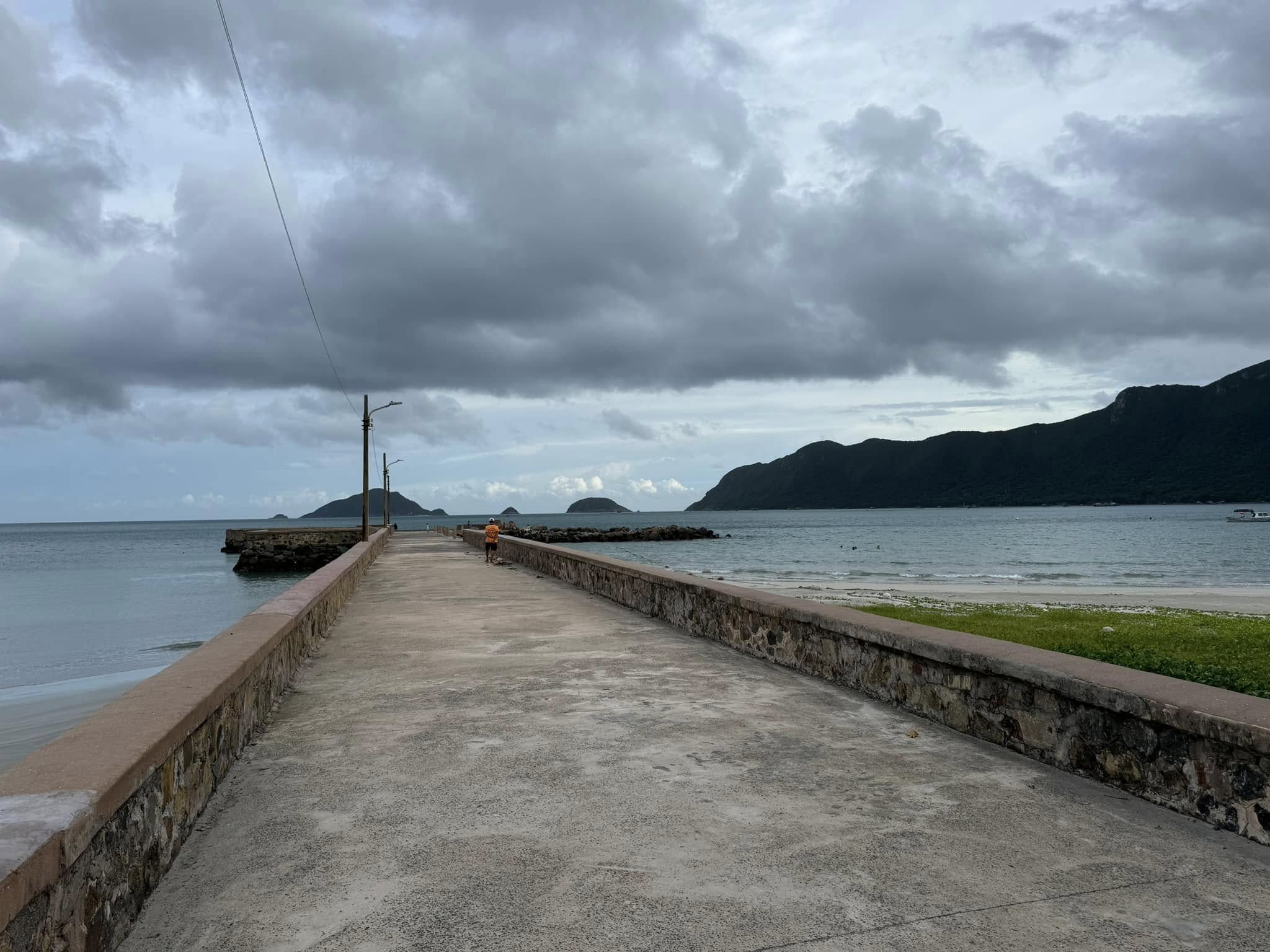
One of the island’s most haunting relics is Pier 914. Beginning in 1873, French authorities forced prisoners to cut stone from Côn Lôn Mountain and build a large pier in front of the governor’s residence. At least 914 prisoners died from beatings, collapsing rocks, disease, and exhaustion during its construction. Today, the stones still lie scattered, as if carrying the silent traces of their blood and suffering.
Despite unimaginable brutality, the spirit of revolution could not be crushed. Secret Party cells continued to operate, guiding resistance movements inside the prison. Leaders such as Tôn Đức Thắng, Lưu Chí Hiếu, Nguyễn Đức Thuận, Trần Văn Cao, and Trịnh Văn Lâu remained steadfast, inspiring others to fight until their final breath.
Legend, Memory, and Spiritual Heritage
Côn Đảo is also the setting of a poignant legend recorded in the folk verse:
“Gió đưa cây cải về trời,
Rau răm ở lại chịu đời đắng cay.”
The story tells of Lady Phi Yến (Lê Thị Răm), a concubine of Lord Nguyễn Ánh, and Prince Cải, her young son. Because she opposed Nguyễn Ánh’s plan to offer the prince to French Bishop Pigneau de Behaine as a political hostage, she was imprisoned in a cave, and Prince Cải was thrown into the sea. Islanders mourned deeply, and over time, the tragic tale became immortalized in poetry.
Today, An Sơn Shrine (dedicated to Lady Phi Yến) and Miếu Cậu Shrine (honoring Prince Cải) remain important spiritual sites on the island.
Hàng Dương Cemetery – Resting Place of Heroes
For many visitors, the greatest wish upon arriving in Côn Đảo is to visit Hàng Dương Martyrs’ Cemetery. Among its 1,913 graves, only 713 bear names; the rest belong to anonymous heroes who died from starvation, illness, torture, and hardship. Beneath the Casuarina trees and whispers of sea wind, each gravestone with a five-pointed star stands like the silent silhouette of a soldier.
It is said that nearly 20,000 prisoners lie across Côn Đảo’s forests and hills. Every step taken on this island touches upon sacred ground soaked with the blood of martyrs.
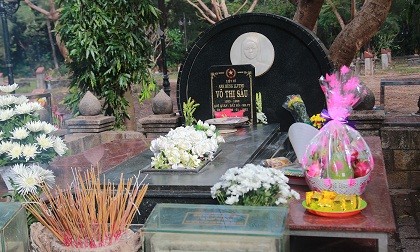
At night, thousands of candlelights flicker across Hàng Dương Cemetery. Visitors from all regions of Vietnam come to pay their respects, especially at the grave of Heroine Võ Thị Sáu, who—along with Hero Hồ Văn Năm—was secretly executed by the French on January 23, 1952.
Countless stories tell of Võ Thị Sáu’s spiritual presence. People believe that visiting her grave at night is the most meaningful. Offerings often include items dear to a young woman: a white conical hat, a hairpin, or a white flower—symbols of her purity. Amid incense smoke, groups whisper prayers, monks chant sutras, and many softly sing:
“Mùa hoa lê ki ma nở…
Thôn xóm vẫn nhắc tên người anh hùng đã chết cho mùa hoa lê ki ma nở…”