Across Vietnam, the name Võ Thị Sáu has long been synonymous with courage and sacrifice. Streets and schools bearing her name can be found from Bắc to Nam. Many Vietnamese can recite her story by heart: born in 1933 in Đất Đỏ (Bà Rịa), her real name was Nguyễn Thị Sáu. At age fourteen, in 1947, she joined the local armed reconnaissance unit of Đất Đỏ. During Tết Canh Dần (1950), she volunteered to eliminate a group of violent collaborators who terrorized the Đất Đỏ market. Though she successfully attacked them, she was later captured.
In April 1950, the French imprisoned her at Chí Hòa and sentenced her to death even though she was still a minor. Fearing public outrage, they secretly transferred her to Côn Đảo. At 4 a.m. on January 21, 1952, she was transported with political prisoners to the island. On the morning of January 23, 1952, at just nineteen, she refused a blindfold, raised her voice to sing Tiến Quân Ca, and shouted: “Down with French colonialism! Long live independent Vietnam! Long live President Hồ Chí Minh!” before meeting her death.
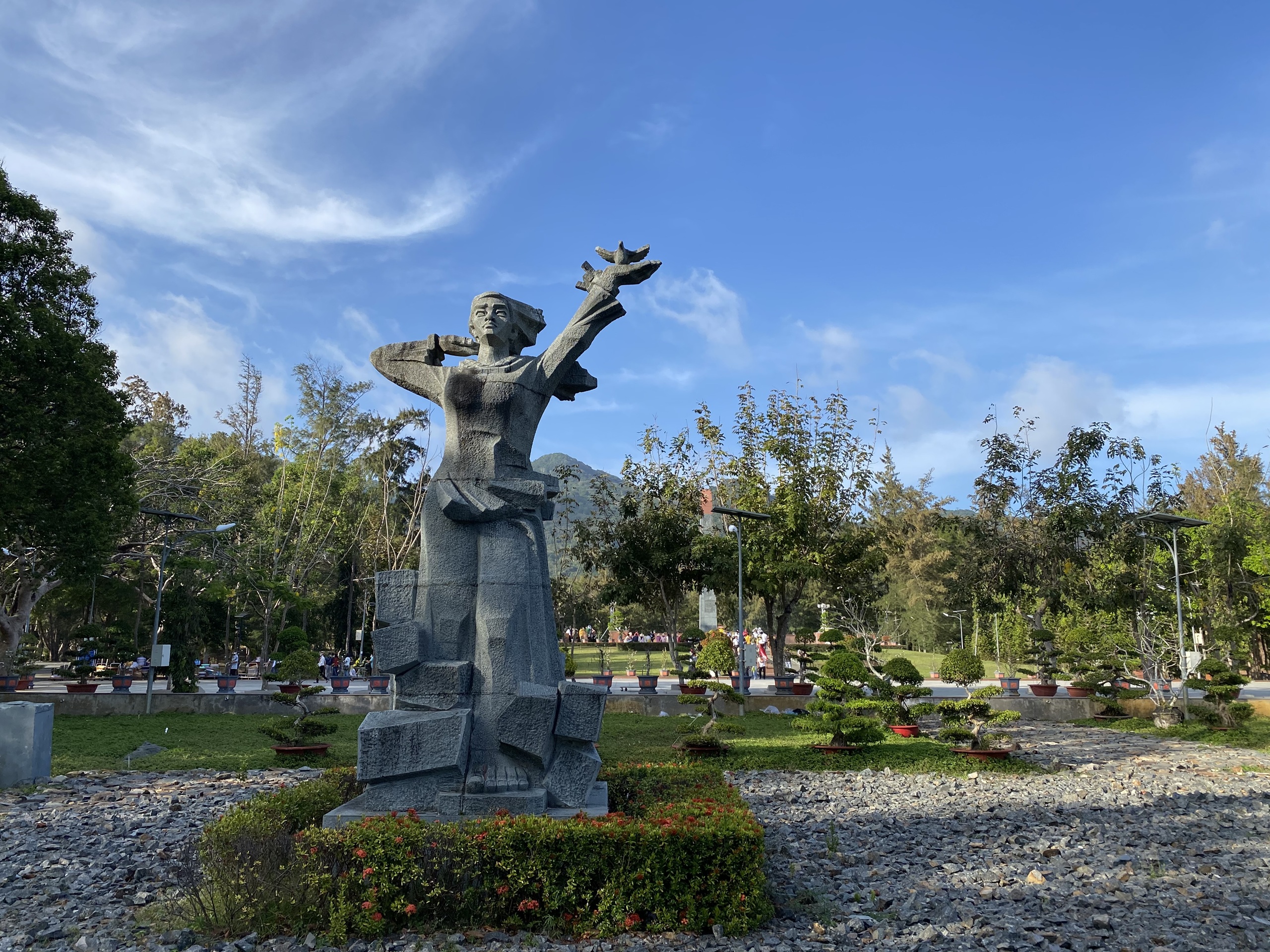
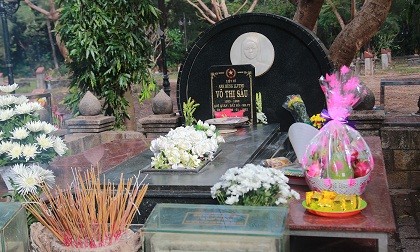
Her defiant spirit lives on in poetry and song. Generations grew up remembering her through Phùng Quán’s verses—“She plucks a roadside flower… lifts her voice among bayonets…”—and through the famous song “Mùa hoa lêkima nở.” In 1993, the State posthumously awarded her the title Hero of the People’s Armed Forces. In Đất Đỏ, a six-meter statue honors her memory. On Côn Đảo, her grave in Zone B of Hàng Dương Cemetery has become the island’s most visited shrine.
Yet what leaves the deepest impression on visitors to Côn Đảo are the legends surrounding her. Stories passed down for decades—mysterious, spiritual, profoundly emotional—show how the people venerate Võ Thị Sáu as a guardian spirit. These narratives do not appear in official histories, yet they endure like folk epics.
At both her statue in Đất Đỏ and her grave on Côn Đảo, incense never ceases to burn. According to former prisoner Bảy Oanh, now Director of the Côn Đảo Heritage Site, young couples often visit her grave before their wedding, offering combs and mirrors, praying for lifelong happiness. Many families—descendants of former prison guards—still keep an altar to her at home, calling her “Cô Sáu” or “Bà Sáu.” People swear “before Cô Sáu,” or warn one another that “Cô Sáu will twist your neck!” Her death anniversary on January 23 is one of the island’s largest ceremonies; even former guards return to pay respects.
Inside the memorial house, a glass cabinet displays decades of offerings: rows of women’s áo dài, and boxes filled with gold necklaces, earrings and rings donated for Cô Sáu. When asked whether the jewelry was real, a guide replied sharply, “Of course it’s real—no one would dare offer anything fake. Cô Sáu would punish them!”
Legends have surrounded her grave since the day she fell. Islanders once believed her spirit emerged from a casuarina tree near her tomb, wandering the streets each night before returning at dawn. They said she checked on the island’s good and bad deeds, then returned to her resting place before anyone woke.
Stories tell of the cement headstone erected by prisoners immediately after her execution—each time the warden smashed it, the headstone mysteriously reappeared the next morning. In truth, prisoners rebuilt it under cover of night, but the tale deeply unsettled guards and collaborators.
Old prisoners recalled that the French legionnaire ordered to shoot her could not eat for two days. “Her eyes will haunt me forever,” he confessed.
There were also tales of Liễu, the wife of a prison officer, who fainted during the execution. One evening, she secretly brought incense to the grave and saw a young woman in a white áo dài emerge from the tomb. Terrified, she fled home and immediately built an altar to honor Võ Thị Sáu. Many Vietnamese prison staff later did the same, believing that a young woman unjustly killed becomes a powerful spirit.
Even some of the harshest wardens feared her. Governor Bạch Văn Bốn, notorious for killing hundreds of prisoners during the 1950s, dismissed the legends as communist “propaganda.” But one night, he claimed to see a woman walking toward the pier. When she turned and stared at him, he dropped his gun and fled indoors, trembling.
Those who desecrated her grave often met strange fates. A notorious trustee named Nghị smashed her headstone and incense burner. Days later, he fell gravely ill and died shortly after being transferred to Chợ Quán Hospital. Another prisoner, Sước, who destroyed her marble headstone under a later warden, was found dead on a seaside rock the next morning.
Some wardens eventually paid reverence. Governor Tăng Tư, after hearing many stories, secretly installed an altar to her in his residence. When two guards accused each other of theft, he ordered them to swear before Cô Sáu’s grave; one immediately confessed. He later commissioned a marble headstone for her, which stood for nine years before Sước destroyed it.
These legends are endless. Writer Phùng Quán kept an altar to her in his Hanoi home from 1982 onward, alongside the long poem Trường ca Võ Thị Sáu, winner of the 1955 Warsaw Youth Festival. “Cô Sáu is sacred,” he often said. “She warns me of dangers and keeps my mind clear when I write.”

Listening to these stories, one cannot help but reflect on human immortality. Some people live long and fade away; others, like Võ Thị Sáu, die young yet remain forever alive—in the hearts of the people and in the spiritual memory of the nation.