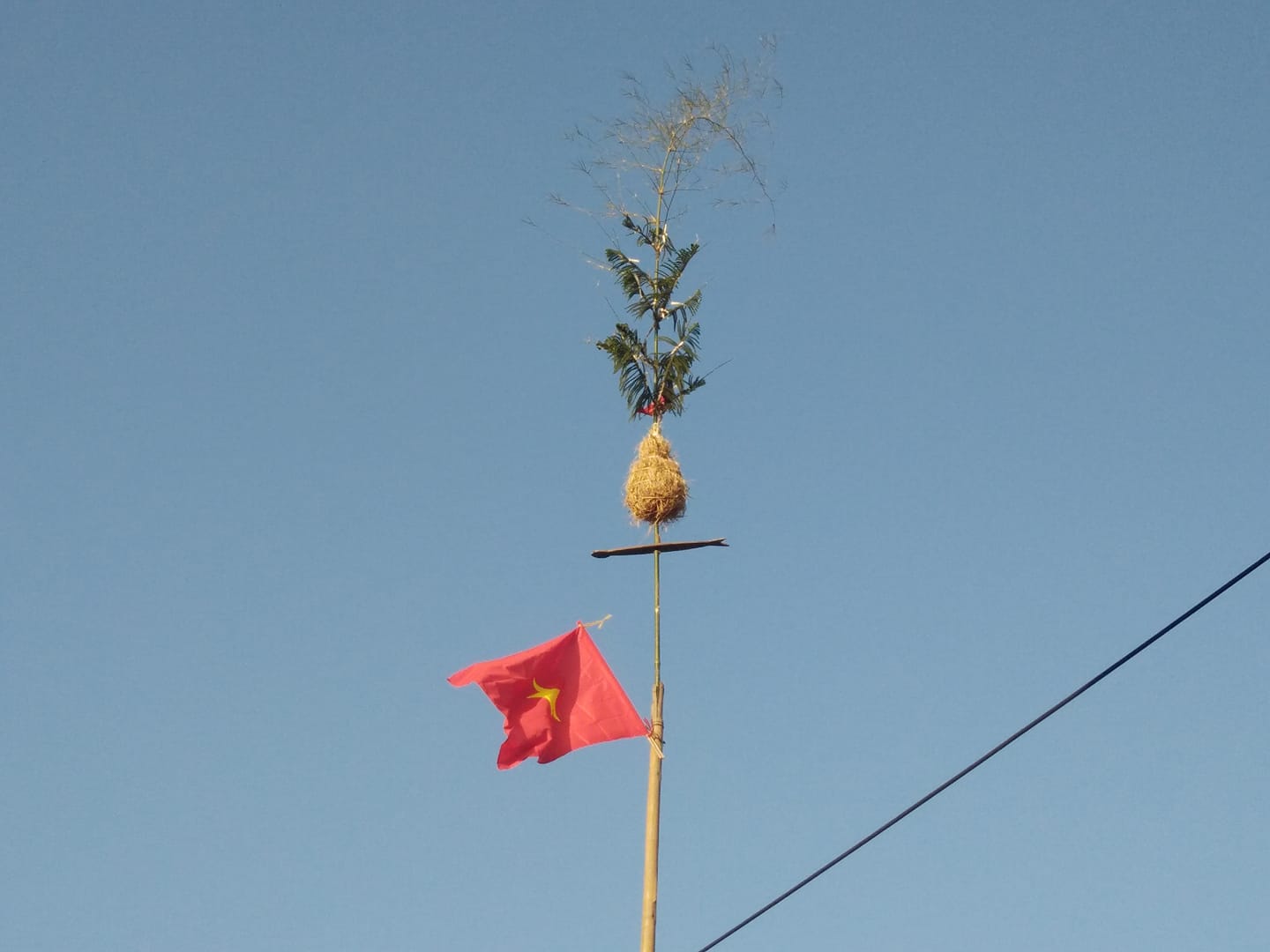
On Phu Quy Island, the Tet pole (cây nêu) is not erected on the 23rd day of the twelfth lunar month like in many other regions of Vietnam. Instead, islanders raise the nêu on the last day of the lunar year (the 29th or 30th), and take it down on the 7th day of the first lunar month, the day of “Khai Hạ.”
For the people of Phu Quy, erecting the Tet pole is an important ritual. Therefore, everything—from preparing the materials to the ceremonial raising of the pole—is carried out by the head of the household. Preparations begin several days before Tet.
Because Phu Quy has no large bamboo, families must purchase dried bamboo from the mainland. The bamboo used must be old, straight, and durable. After selecting a suitable pole, the homeowner paints it with oil-based colors to give it a fresh, festive look. Popular colors include green, sea blue, yellow, or a combination of two colors.
At the top of the nêu, islanders attach symbolic offerings: a small cluster of bamboo twigs, two betel leaves (one male, one female, placed face-to-face), two slices of fresh areca nut, and two pieces of ceremonial votive paper or a sheet of gilt paper. These items are tied with fibers from the wild pineapple plant. A distinctive feature of Phu Quy’s Tet poles is the carved wooden bar near the top—decorated with images of sacred animals such as dragons or phoenixes. This wooden bar is fixed at a 90-degree angle to hang the national flag. At temples or community shrines, an additional “communal flag” (ngũ sắc flag) is displayed.
Explaining the meaning behind these designs, Mr. Phạm Phước of Tam Thanh Commune (interviewed in 2016) said:
“Dragons and phoenixes are two of the four sacred creatures in Vietnamese culture (Dragon, Qilin, Turtle, Phoenix). Families usually choose the phoenix symbol, while temples and communal houses use the dragon—hoping for blessings, prosperity, and peace in the new year.”
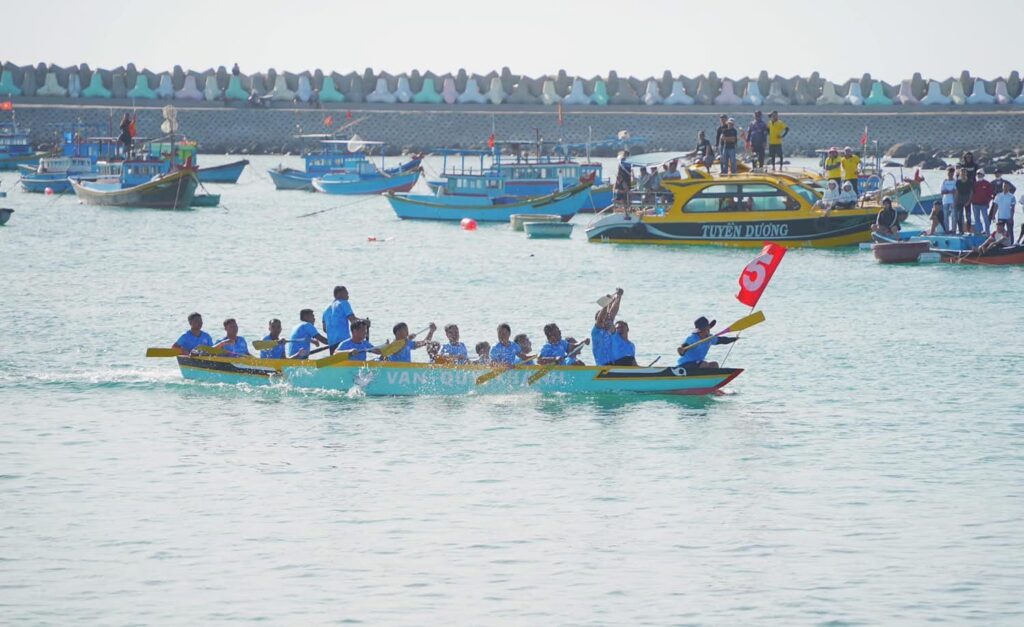
Fishermen at sea also observe this tradition in their own way. Since their boats are their homes and the fishing grounds are their homeland, they symbolically erect a nêu by tying a small cluster of bamboo leaves to the flagpole of their fishing boats. The presence of the national flag fluttering above the Tet pole represents not only prayers for a bountiful fishing year but also an assertion of national sovereignty over the waters where they work.
For islanders, seeing Tet poles adorned with red flags waving proudly in the wind deepens their sense of cultural identity and responsibility in preserving tradition and protecting national territory.
According to the author Đỗ Thành Danh, some Phu Quy natives who migrated to Thuan Quy Commune (Ham Thuan Nam District) still keep this ancient custom. When they cannot erect a full Tet pole, they simply tie a few bamboo twigs with gilt paper and hang them at their gate as a symbolic gesture.
Visiting Phu Quy during springtime, travelers often feel as though they’ve stepped into a mythical landscape—rows upon rows of Tet poles, each bearing the vibrant national flag, standing in front of every home. Many visitors are surprised, believing they’ve walked into a folktale they’d only heard about as children. The author of this article was once one of them.