



The shrine commonly known as Miếu Cô Vân—or Cô Vân Tiên Cảnh—has often been mentioned as a spiritual site on Côn Đảo. However, according to official information from local authorities, the story surrounding “Cô Vân” is entirely fabricated.
A full review of archival materials related to the Côn Đảo Prison historical complex shows no records of any grave or shrine named Cô Vân on Hòn Cau. Authorities confirm that around 1980, Lê Văn Tuội (Bảy Sơn)—a caretaker assigned to Hòn Cau—together with several others, piled dead coral into a mound and spread the rumor that it was the grave of a refugee named Vân, said to be spiritually powerful so that fishermen would come to worship. Long-time residents of Côn Đảo also affirm that the story is completely unfounded.
Before misinformation spread further, the Côn Đảo District People’s Committee issued an official statement clarifying the matter and calling on individuals and organizations to help preserve the island’s tourism reputation and natural environment.
A Fabricated Legend
Many tales circulate about Cô Vân, but none have clear timelines or verifiable facts. The only recurring detail is that she supposedly died at sea. Some stories claim that when her body was found, her documents were smudged by seawater, leaving only the name “Vân.” Others say her remains washed ashore on Hòn Cau as a skeleton, prompting fishermen to bury her and build a simple grave.
Fishermen passing Hòn Cau at night once spoke of seeing a young woman in white gliding along the rocky slopes, surrounded by a mist like floating clouds. From that imagery came the name “Cô Vân”—vân meaning “cloud.” Believing she could bring prosperity and good fortune, fishermen would stop to offer prayers for luck at sea.
For many years the story faded into obscurity. But recently, rumors of a “sacred grave of Cô Vân” resurfaced, fueled by sensationalized storytelling. Tourists visiting Côn Đảo heard exaggerated accounts and began visiting the site to burn incense—resulting in littering and pollution.
Veterans of Côn Đảo note that such rumors often coincide with commercial intentions, as increased belief in a shrine encourages more tourists to hire boats from Côn Sơn Island to Hòn Cau.
Hòn Cau – History and Natural Beauty
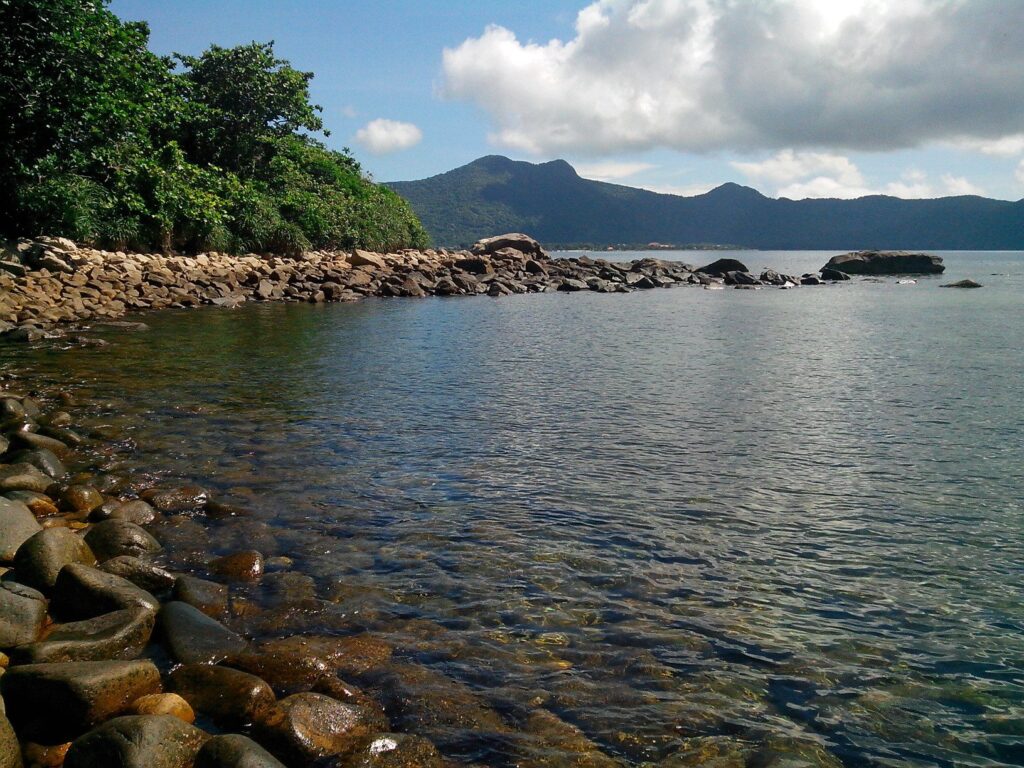
Hòn Cau is historically known as Xóm Bà Thiết, a settlement during the Gia Long period. It is one of only two islands in the Côn Sơn archipelago with natural freshwater. Its sweeping arc of white sand, coconut trees, wind-bent Phong Ba trees, and gentle waves create a picturesque and tranquil coastal landscape.
The island was also a place of imprisonment during the French colonial era, most notably holding Former Prime Minister Phạm Văn Đồng in 1930–1931.
Since 1984, the entire island—including its forests and surrounding marine areas—has been zoned as special-use forest land, with no designation for religious or spiritual structures. Some islands, including Hòn Cau, are open to regulated tourism such as nature exploration, snorkeling, and historical visits.
No Historical Basis for “Miếu Cô Vân”
Interviews with longtime residents and historical figures—such as Hứa Phước Ninh, former political prisoner and former Secretary of the Côn Đảo District Party Committee—confirm that the “sacred Cô Vân” narrative was created by caretakers of Hòn Cau around 1980 and has no factual basis.
In 2015, several individuals and businesses requested permission to renovate the supposed grave of Cô Vân, but the district government rejected the proposal due to a lack of legal and historical foundation.
Preventing Misinformation and Superstition
In recent years, the Côn Đảo authorities have:
- Instructed hotels, travel agencies, and transport providers not to spread false or superstitious information
- Warned tourists against believing fabricated stories
- Monitored and penalized individuals promoting superstition
- Addressed misleading online content on platforms like Facebook and Zalo
- Coordinated cleanup efforts on Hòn Cau to manage waste from visitors
Moving forward, the district will continue strengthening communication efforts, enforcing regulations, and working with the National Park to ensure accurate information and protect Hòn Cau’s natural environment.
A Worthwhile Destination
Despite the myths, Hòn Cau remains a remarkable place to visit. Travelers can explore:
- The historical detention site of Former Prime Minister Phạm Văn Đồng
- Coconut forests and lush fruit gardens
- Conservation projects within the National Park
- Pristine beaches and vibrant coral reefs
These experiences offer unforgettable moments amidst the island’s pure, untouched beauty—without the need for invented legends.




)