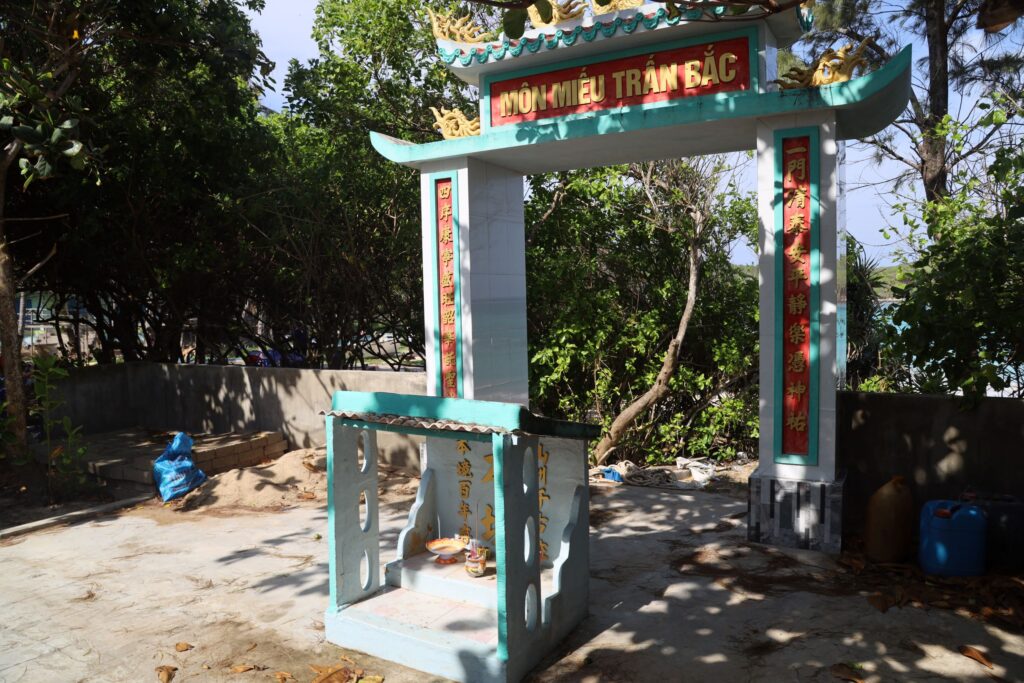

Among the many spiritual and cultural landmarks of Phú Quý Island, the Shrine of Lady Ban Tranh stands out as one of the most mysterious and sacred. Historical documents compiled by researcher Lê Hữu Lễ, published in the 2010 issue of the Journal of Research and Development, reveal lesser-known stories surrounding this ancient sanctuary—a place deeply connected to the fate of Princess Ban Tranh from the former Champa Kingdom.
According to legend, Princess Ban Tranh was exiled to Phú Quý after committing an offense in the royal court. She passed away on the island at a very young age and was buried right where the shrine now stands. The Cham people built the original temple in the late 15th century to honor her spirit. When Vietnamese settlers later arrived, they continued the worship ritual and referred to the site as the Temple of Princess Ban Tranh. Over time, because of her sacred protection—especially for fishermen at sea—she became revered as Lady of the Land, Lady of the Island, or Ban Tranh Vương. Historical records also indicate that in the first year of Emperor Minh Mạng (1820), the court officially bestowed upon her the title “Bàn Tranh Vương hiển vượng chi thần”, recognizing her spiritual importance.
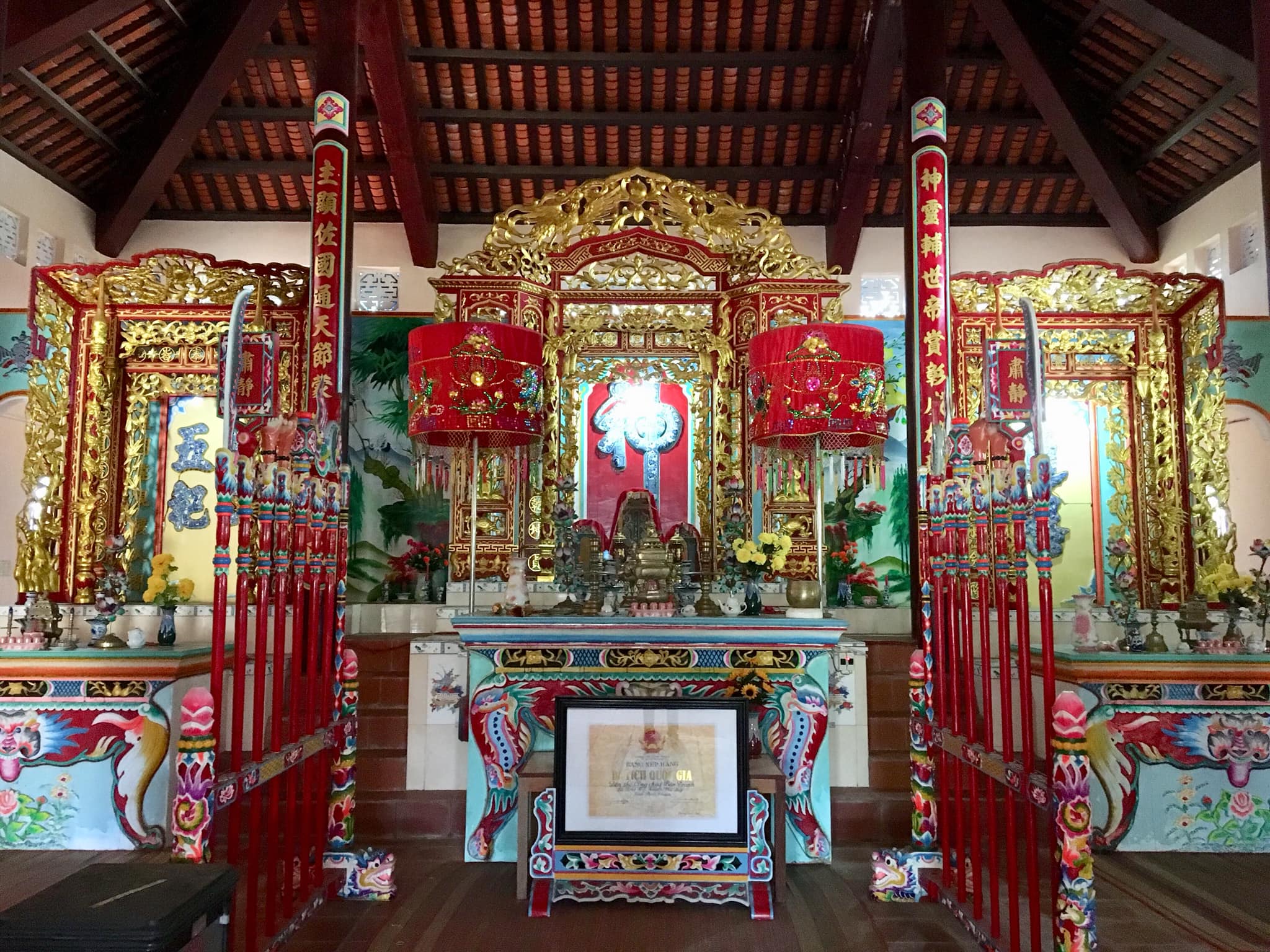
One of the most unique and sacred features of the shrine is that the princess’s tomb lies directly beneath the main altar. The grave is covered with a stone slab made from sea-sharpening rock taken from the waters around Phú Quý Island, engraved with a large, solemn character meaning “Deity.” Because of this, locals rarely enter the shrine casually; they only gather to clean and offer incense during important ceremonial days, fearing they might disturb her rest. Renovation works on the shrine have always been carried out with extreme caution, often taking years to complete due to the community’s deep respect and fear of offending the spirit.
The heart of the shrine lies in its main sanctuary, which preserves a unique blend of Cham and Vietnamese artistry. Inside are three altars: the central altar dedicated to Princess Ban Tranh, and two side altars honoring the early founders and guardians of the shrine. Particularly notable are the three stone Kút (sacred Cham stone pillars). The central Kút is larger than the two side pieces, displaying a harmonious fusion of Cham sculptural motifs and Vietnamese decorative styles. Ancient Sino-Nom inscriptions can still be found on these stones, including phrases such as “Cung Bà Tranh vương thần vị” (The Sacred Spirit of Lady Ban Tranh). The shrine also preserves several old wooden plaques and parallel sentences praising her virtues and the contributions of earlier generations.
The worship of Princess Ban Tranh has long become a deeply rooted spiritual practice among the people of Phú Quý. Islanders believe she remains ever-present, protecting fishermen during their voyages, ensuring safety and prosperity for families, and safeguarding the community against misfortune. The shrine remains closed throughout most of the year and only opens for major ceremonial days.
The most important event is the annual Ban Tranh Princess Commemoration Ceremony on the 3rd day of the first lunar month. On this day, the royal decrees (sắc phong) are ceremoniously carried from the village communal house to the shrine for the main ritual, then further escorted to the Shrine of Thầy Sài Nại for additional rites. The festive activities take place only at Thầy Sài Nại’s temple; according to long-standing custom, the Shrine of Lady Ban Tranh does not host singing, feasting, or celebratory performances.
Another significant ritual is the Giao Phiên Ceremony on the 4th day of the fourth lunar month. The decrees are once again taken to the shrine to invite Lady Ban Tranh’s spirit to join the ceremonies at Thầy Sài Nại’s temple. After the main ritual, the decrees and ceremonial responsibility are formally handed over to the next village in rotation—a long-preserved tradition that reflects the communal respect for the island’s protective deities.
Today, the island community still safeguards eight royal decrees dedicated to Princess Ban Tranh, issued during the reigns of Emperors Minh Mạng, Thiệu Trị, Tự Đức, Đồng Khánh, Duy Tân, and Khải Định. Five of these decrees honor Lady Ban Tranh alone, while three—issued during the reigns of Tự Đức, Đồng Khánh, and Duy Tân—recognize both Lady Ban Tranh and Thầy Sài Nại. These documents are invaluable cultural artifacts that affirm her esteemed role in the spiritual life of Phú Quý’s inhabitants for generations.
More than a sacred temple, the Shrine of Lady Ban Tranh represents a rich blend of legend, history, and cultural identity. Its ancient Cham roots, Vietnamese spiritual traditions, rare architectural features, and preserved royal decrees make it one of the most compelling cultural sites on Phú Quý Island—an essential stop for visitors who love discovering local heritage and timeless stories.