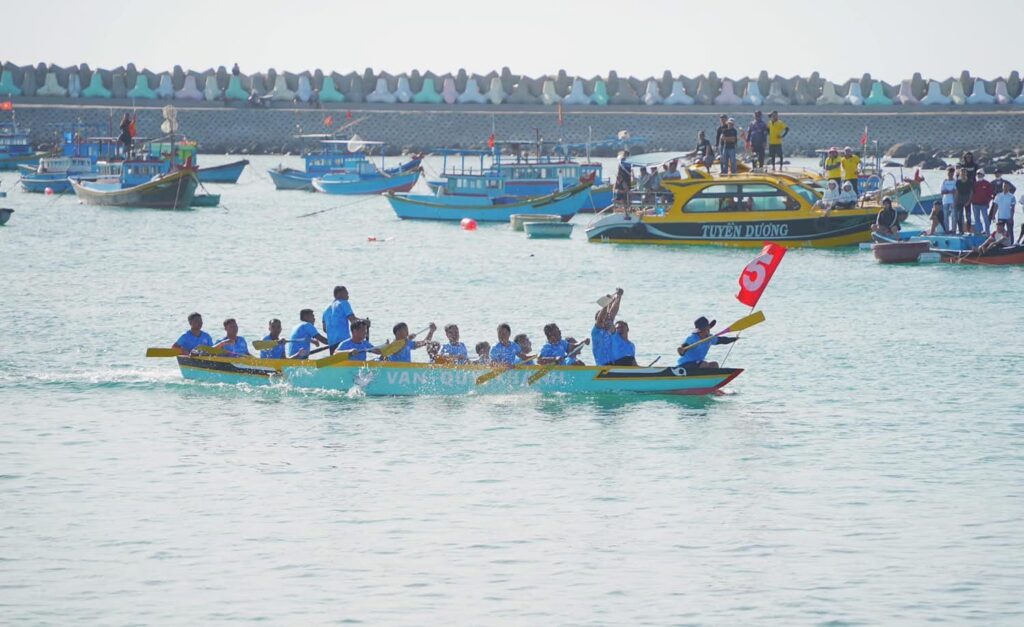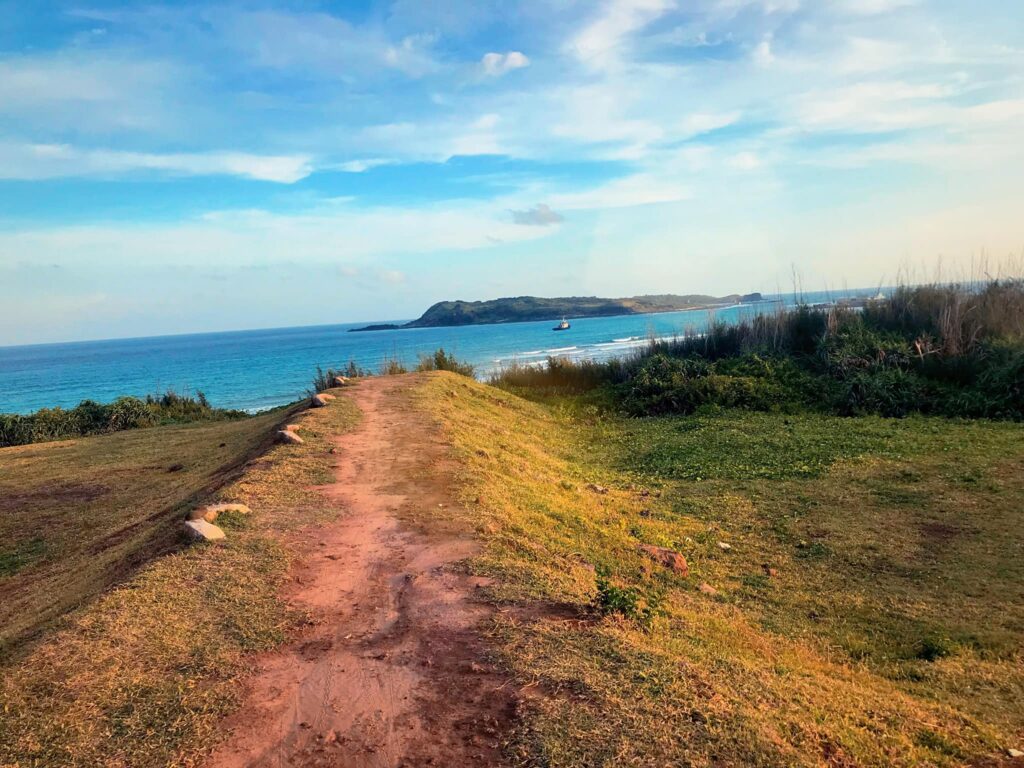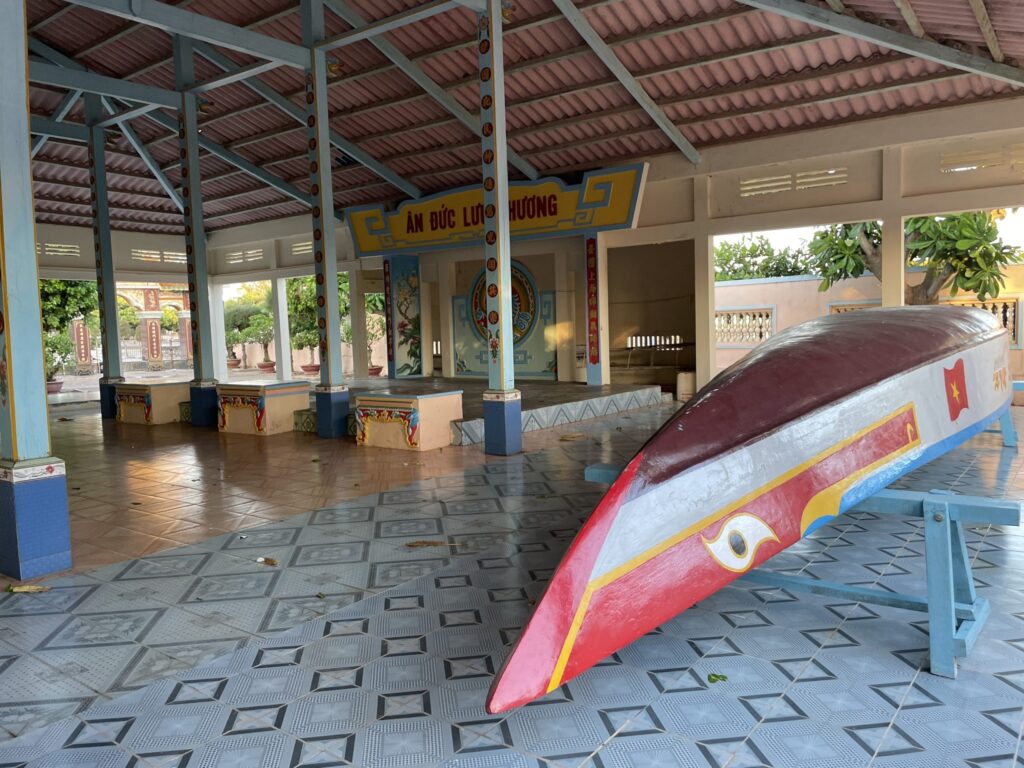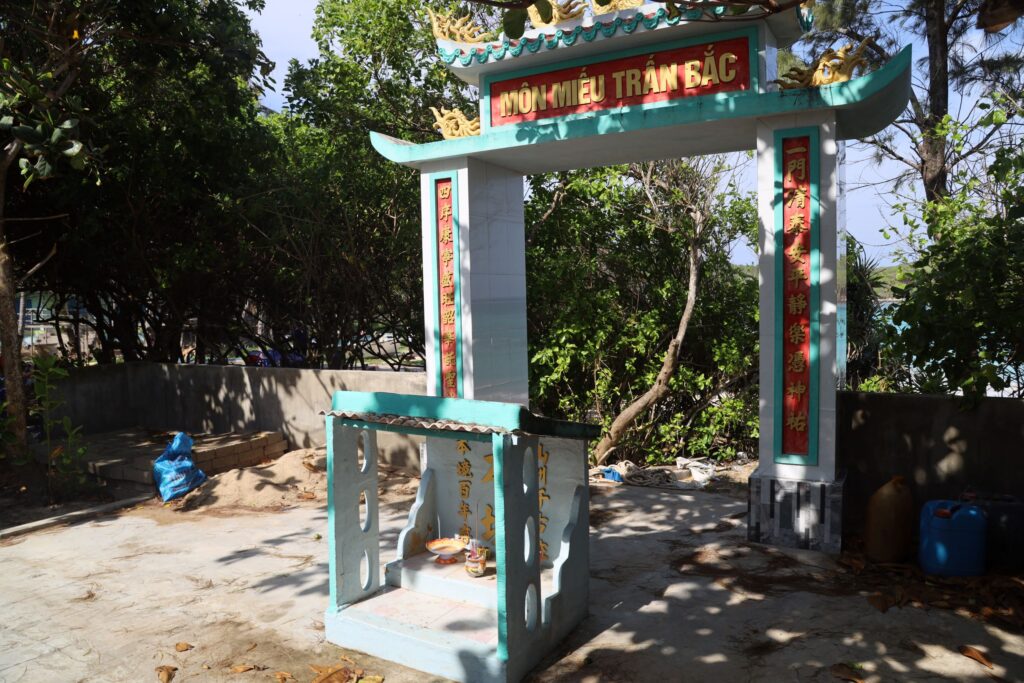

Phu Quy Island in Lam Dong Province is known as the locality with the highest number of whale-worship sites in Vietnam. For generations, the island’s fishing communities—whose lives are inseparable from the sea—have placed absolute faith in the divine protection of Ông Nam Hải, the Whale God. Every year, they hold dozens of rituals and festivals dedicated to him, praying for abundant catches and safe voyages.
A Protector of Fishermen
The cult of the Whale God reflects the deep belief among coastal people that Nam Hải is the guardian deity of fishermen at sea. According to local lore, during Nguyễn Ánh’s exile (later Emperor Gia Long), his boat encountered violent storms, and a whale saved him from certain death. Out of gratitude, once crowned emperor, Gia Long conferred upon the whale the noble title:
“Nam Hải Cự Tộc Ngọc Lân Từ Tế Chương Linh Trợ Tín Trừng Trạm Chi Thần”
(“The Great Ancestral Spirit of the Southern Sea, the Benevolent and Miraculous One Who Protects and Guides Seafarers”)
Folk legends offer an even more poetic origin:
Avalokitesvara Bodhisattva (Quan Âm) once passed over the Southern Sea and saw people drowning in storms. Moved by compassion, she tore her robe into many pieces and cast them into the ocean. Each piece transformed into a giant fish whose bones were made from elephant bones, granting them great strength to save people in distress.
Hence, the Vietnamese name “cá voi” (whale) and the belief that whales are divine beings sent to protect humans, appearing whenever boats are in danger.
Historical Records of a Sacred Creature
The Đại Nam Nhất Thống Chí (Imperial Geography of the Nguyen Dynasty) describes the whale as follows:
“The whale is called Đức Ngư. Its head is round, with a blowhole on its forehead. Its skin is smooth, dark, and scaleless, and its tail flares out like a shrimp’s. Gentle by nature, it often saves people at sea. In the Minh Mạng era, it was named Nhân Ngư; in the Tự Đức era, it was renamed Đức Ngư.”
The belief is deeply rooted in the southern coast, expressed through the saying:
“Bắc hải chi ngư – Nam hải chi Thần”
(“In the North it is a fish; in the South it is a God.”)
The Gia Định Thành Thông Chí further notes:
Only from the Gianh River down to Hà Tiên does the whale manifest its miracles, rescuing humans promptly. When a whale unfortunately dies and washes ashore, local fishermen donate money to buy cloth, hold a formal funeral, bury it with great respect, and build a shrine beside the grave. Places that bury whales prosper; places without a burial site still build temples to honor the Whale God.
A Deeply Rooted Maritime Tradition
Scholar Ngô Đức Thịnh, in Beliefs and Spiritual Culture in Vietnam, writes:
“Living on rivers and seas, fishermen often face dangers and disasters. Over time, they developed complex rituals and beliefs, the most prominent being the worship of whales—Ông Nam Hải—along the central and southern coasts. Whale temples house sacred whale bones (Ngọc Cốt), and annual ceremonies such as Nghinh Ông are held with funerals, processions, and festivals.”
Phu Quy: A Living Museum of Whale Worship
With its many whale temples, sacred relics, and traditional ceremonies, Phu Quy Island stands as one of Vietnam’s most remarkable centers of Nam Hải worship. Here, the Whale God is not just a symbol of maritime spirituality but also a cultural cornerstone—embodying gratitude, community solidarity, and the enduring hope for peace and prosperity on the open sea.