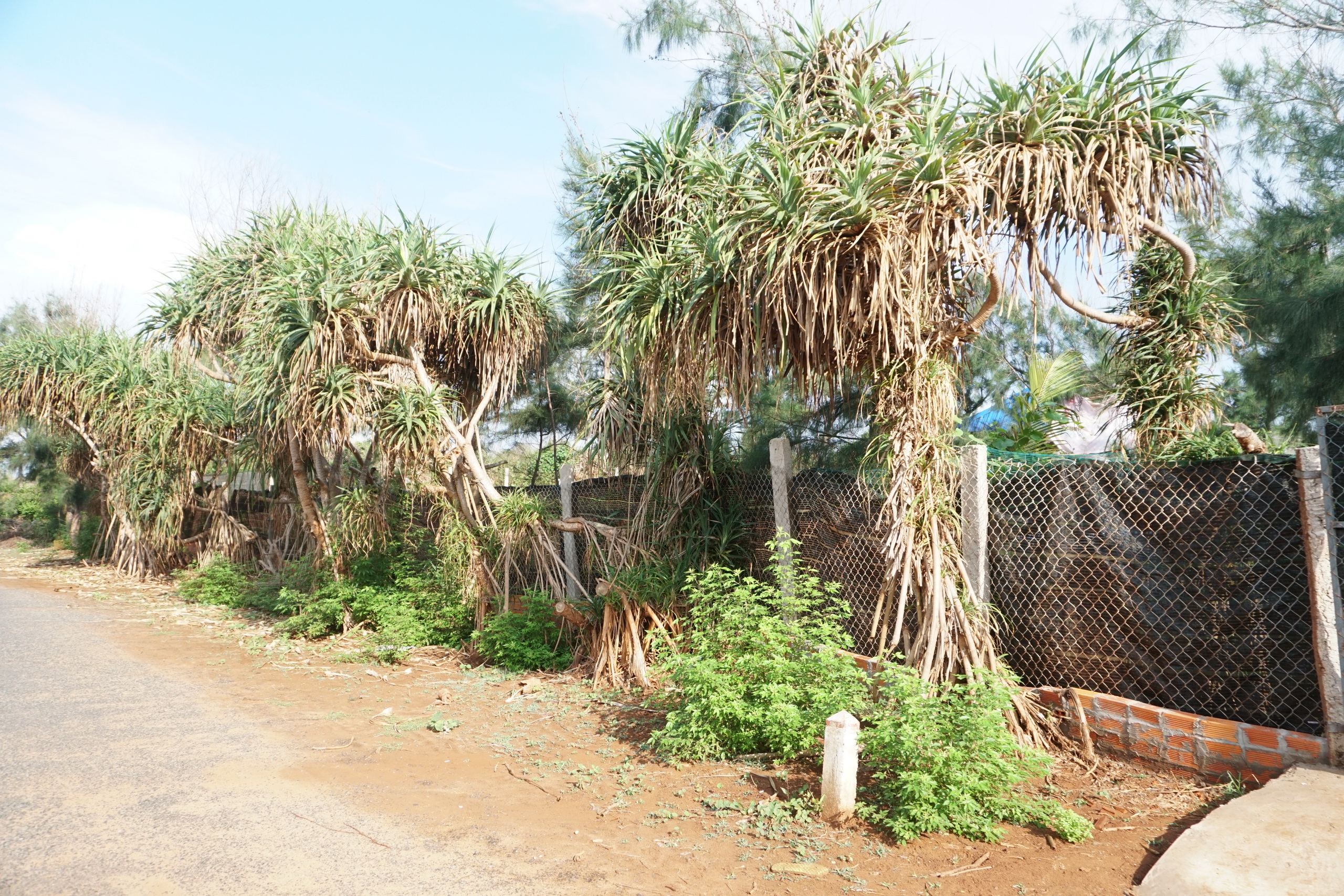
Phu Quy Island in Lam Dong Province is often called the land of wild pandanus. No matter where you go—along coastal roads, on hillsides, mountain slopes, or sandy shores—you will easily spot clusters of wild pandanus thriving in the sun and sea breeze.
Wild Pandanus Fruit in Phu Quy
Wild pandanus (Pandanus tectorius) is a tropical plant that grows naturally in coastal forests, sandy shores, mangrove areas, and saltwater riverbanks. Today, it is widely used in traditional medicine thanks to its nutritional and healing properties. The fruit is valued for supporting liver health, kidney stones, and diabetes, making it highly sought after.
The main harvest season is November–December (lunar calendar), when the fruit turns dark, the segments split slightly, and the texture becomes firm. To dry and store it long-term, locals separate each segment and sun-dry them until fully dehydrated before keeping them in airtight bags.
Phu Quy has two common varieties:
- Turmeric pandanus – sweeter and rarer, often used to infuse rice wine
- Red pandanus – more common along the island’s coasts
A fresh fruit typically weighs 1.5–2 kg, but only 0.5–0.7 kg remains after drying.

Traditional Uses & Medicinal Benefits
In Vietnamese herbal medicine, wild pandanus has a sweet and neutral nature. It is considered a precious remedy that strengthens vitality, balances internal energy, purifies the body, improves digestion, and even reduces alcohol intoxication.
Below are popular traditional remedies passed down through generations:
1. Pain & swelling from injuries
Crush the roots and apply directly to the affected area. Replace once daily.
2. Remedies for cirrhosis and abdominal fluid
- Recipe 1: Cat’s-tongue weed + cow-knee root (20–30g each) + pandanus root (30–40g). Decoction, 1 dose/day.
- Recipe 2: 200g dried fruit + several medicinal roots (ray plant, trâm bầu leaves, vọng cách bark, etc.) boiled and consumed.
3. Kidney stones
- Recipe 1: Kim tiền thảo (18g) + wild banana seeds (12g) + pandanus seeds (15g).
- Recipe 2: Young pandanus shoots + mugwort + water clover (20g each), crushed, strained, and mixed with a little sugar.
4. Cough from colds
Use 4–12g pandanus flowers or 10–15g dried fruit, decocted daily.
5. Chronic skin sores
Crushed young shoots mixed with soybeans and applied to the wounds.
6. Acute and viral hepatitis
12g pandanus fruit + various liver-supporting herbs decocted into 450ml and drunk in three servings daily.
7. Heatstroke & headache
A mix of herbs including pandanus leaves boiled into a cooling drink.
8. Itching & dermatitis
A herbal mixture including pandanus leaves, consumed as a daily decoction.
9. Dysentery
30–60g pandanus fruit boiled and consumed daily.
10. Rheumatism & joint pain
A combination of pandanus leaves, roots, and other medicinal herbs decocted daily.
11. Urinary tract inflammation & kidney stones
A formula of pandanus root, cogon grass root, banana seeds, and other herbs taken 2–3 times a day.
12. Edema
Pandanus root boiled together with aromatic herbs and taken daily.
13. Chronic hepatitis
A blend of chó đẻ răng cưa (50g) and pandanus fruit (100g) decocted daily.
14. Testicular inflammation
A boiled mixture of pandanus seeds, perilla leaves, and orange-leaf basil used as a warm wash.

A Cultural Symbol of Phu Quy
Beyond its medicinal value, wild pandanus is a familiar part of daily life on the island. Its roots are used in traditional hammock weaving—an old craft that still survives today—while the fruit is treasured as a natural remedy and a symbol of the island’s rugged, sun-drenched landscape.
Phu Quy’s pandanus stands as a reminder of how local people have lived in harmony with nature for centuries, turning even the wildest coastal plants into something useful and meaningful.