Sunrise in Côn Đảo leaves a strangely unforgettable impression—even for those who have been here before. A deep, peaceful stillness settles over streets marked by history, seemingly contrasting with the eager, restless energy of the sea. Far offshore, a small island appears on the horizon, hinting at quiet wonders waiting to be discovered.
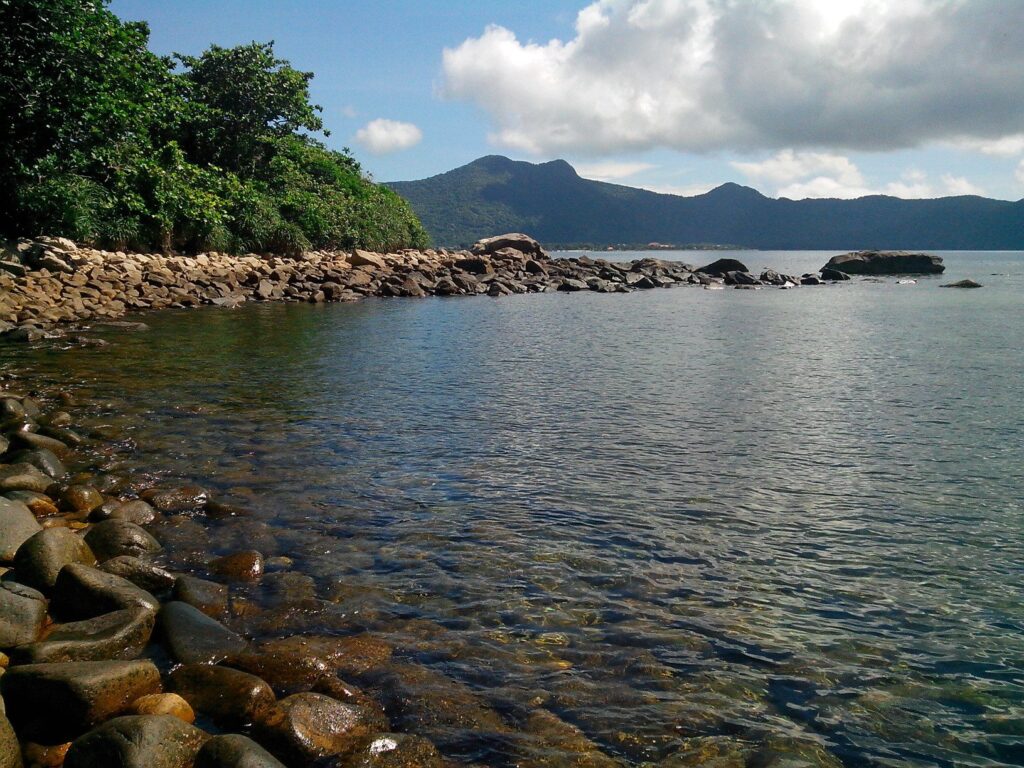
Made up of 14 large and small islands, Côn Đảo is the common name for the Côn Sơn Archipelago. Its geography creates exceptionally rich natural habitats. After about two hours of travel, you arrive at a small island ringed by sharp rock slabs—your first stop. Following an earthen path uphill, you reach a modest hut that feels more like a watchtower than a home. This is Hòn Tre Nhỏ, where a ranger station of Côn Đảo National Park is stationed.
Not far from nearby islets, sun-scorched rocky capes rise from the sea. These cliffs—surrounded by water and battered by wind—form an ideal refuge for many seabirds.
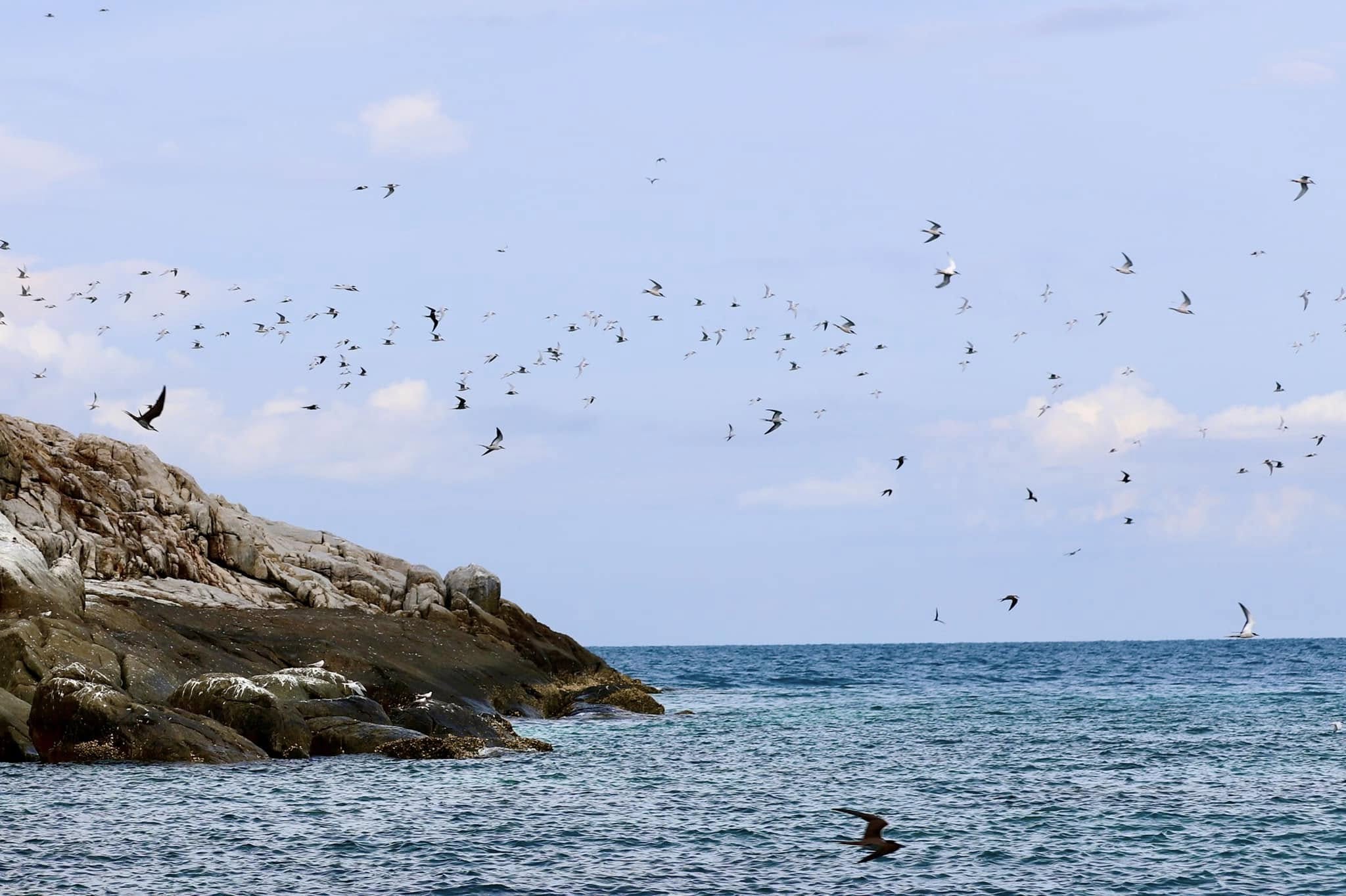
At a large mountain cleft beside the path, terns appear boldly indifferent to human visitors. They perch on vertical rock faces, glide and sweep through the air, then settle down again to preen calmly—unmoved even as clouds gather, signaling a sudden downpour about to fall and cool stones that have baked under the sun all day.
In Côn Đảo, from June to September, brief showers often arrive unexpectedly during the day. The heavy rain feeds this natural garden with abundant life, washing away the heat and returning the small island to crisp, clean air. By sunset, it becomes easier to distinguish each species.
Côn Đảo Terns
The cliffs close to the rolling waves are home to various tern species, while white imperial pigeons and other forest birds often rest on treetops near their nests. Terns live close to the shoreline and typically nest in rocky hollows; even when resting, they rarely perch on high branches. Only when night falls do they reluctantly return to their nesting sites.
Crossing a dense patch of coastal woodland—where hardy phong ba trees cling to the land—you reach the western edge of the small island. The sea suddenly opens before your eyes, filled with terns banking in the wind. If you look carefully, you may even notice signs of their life on the ground: warm tern eggs, hidden among rocks. There are many kinds of terns, each with its own traits. Two representative species in Côn Đảo are the brown noddy and the black-naped tern.
The brown noddy (Anous stolidus) lives in flocks and is considered one of the rarer seabirds found here. As adults, they show pale plumage that shades into gray at the crown.
The black-naped tern is among the most common seabirds in Côn Đảo. With striking black-and-white plumage, a dark head and face, and a pale stripe from the forehead trailing behind the eye, it is well adapted to life at sea. It can dip beneath the surface and dive skillfully to hunt close to the water. Often living in pairs and in large groups, this species has slender, relatively long legs that help it balance on rocky ledges and coastal cliffs while also supporting agile feeding over the sea.
Like most birds, its internal anatomy is familiar, yet it is refined for marine survival. Its brain is compactly protected within the skull, and its bones are porous and lighter than those of domestic birds—helping it take off easily from varied terrain. With a broad wingspan and lightweight structure, it can glide long distances without constant wingbeats.
Their nests are simple, usually placed in hard-to-reach crevices and cliff hollows where few predators can follow. A shallow depression is scraped into the ground, typically 15–20 cm in diameter, with no lining.
Breeding season begins around early May. Each nest usually contains one to two eggs, laid about two weeks apart. The embryos develop quickly, and chicks may hatch roughly a month later. As the speckles on the eggs darken, it signals the chick inside is nearly ready to emerge.
Newly hatched chicks are vulnerable—especially to reptiles and rodents—so cliffside nesting near the sea becomes a safer strategy. That is also why black-naped terns breed more densely along the western shore of Hòn Tre Nhỏ.
As chicks, they wear soft gray plumage, not yet divided into the sharp black-and-white pattern of adults. At about one week old, a chick can fit in the palm of a hand; its wings are still short, and the pale belly feathers are only beginning to appear. Their food consists of tiny pieces of fish or shrimp torn up by their parents.
By late May, these young birds begin joining the busiest tern communities. After a single feeding season, they grow strong enough to join the flock—living like true “sea fishers,” always facing the ocean in search of food.
Hòn Trứng: A Seabird Haven
Not far from Hòn Tre Nhỏ lies another place regarded as a paradise for seabirds: Hòn Trứng (“Egg Island”), named for its rounded appearance and rocky geology.
Because it is almost entirely cliffs and stone, reaching the summit is difficult. Large concentrations of birds leave heavy deposits that make the rocks slippery and dangerous. If someone climbs too close to the top, birds on the outer ledges burst into flight and sound an alarm, warning the rest above.
With an area of nearly one square kilometer, the flat landing zone on the summit provides an ideal space for seabirds to gather and live. Aside from the curiosity of human visitors, they face little disturbance from other creatures.
Even though they live in large colonies, black-naped terns still maintain distinct private territories. Pair by pair, they claim their own corners. During courtship, the female displays carefully preened, glossy wings, while the male lands at a cautious distance, watching intently. Moments later, the female darts upward as if teasing; the two birds merge into a collective aerial dance, then return to the chosen ledge—where the male finally lands beside her without hesitation.
Their mating season is short, typically lasting around two weeks. After that, females move less, flying mainly during feeding hours. Maternal instinct seems to soften their behavior as they protect the life forming within their nests.
The White Imperial Pigeon of Côn Đảo
As the black-naped tern breeding season tapers off, other species become more visible. White imperial pigeons often appear in greater numbers, perching on branches in the late afternoon, brightening the forest canopy.
In Vietnam, this species is found only in Côn Đảo, living on islands with green forests—especially secondary forests or mangrove habitats. During breeding season, they typically lay one to two eggs. Chicks hatch in nests high above the ground. Unlike seabirds, their diet consists mainly of seeds, small fruits, and young shoots, so their growth and development tend to be slower.
Adult white imperial pigeons have creamy white plumage, with a gray-blue beak and eye-ring. The mother incubates and cares for the chicks through the night, while the father often remains separate during the early period. By day, the mother forages; by evening, she returns to brood the young.
Nicobar Pigeon: A Rare Jewel of the Forest
Deeper into the Ma Thiên Lãnh forest—near the cave known locally as the Virgin Mary’s Grotto—there is hope of spotting even rarer winged inhabitants. One of the most remarkable is the Nicobar pigeon, a large, elusive bird found in Vietnam only in Côn Đảo. It is difficult to approach; it takes flight at the slightest sign of movement.
Unlike terns, Nicobar pigeons do not forage in large flocks. They move alone, in pairs, and remain hidden beneath dense canopy. They nest discreetly, often lower and more concealed than the nests of white imperial pigeons, woven beneath thick leaves and branches.
As evening falls and waves surge against the rocks with the rising tide, seabirds return to their cliff and treetop nests. The coastal cliffs suddenly become noisy—like an apartment block at dusk—while a Nicobar chick remains calm amid the commotion, seemingly undisturbed by the “neighbors.”
Along narrow coastal crevices, sharp chirps echo from high rock gaps. Above, swiftlets circle once, then dive into a small cave opening—barely wide enough for two people to squeeze through. On steep rock faces inside are delicate white nests built by swiftlets. Each nest is small—just over 10 cm²—enough to hold one to two tiny eggs, as part of the annual incubation cycle. From February to April, these birds gather on remote cliffs and hard-to-reach caves to breed. Besides Hòn Tre Nhỏ, Việt Minh Cave is another known nesting site, reachable by speedboat in about 15 minutes.
A Sky-Sea Society
The early sea-scape is magnificent. After a night’s rest, birds release themselves into the open air as if savoring the cool freshness of dawn, immersed in the scent of saltwater and a new day. In this bustling “society in the sky,” something mysterious—and somehow sacred—seems to be unfolding among cliffs and treetops. Between the bold, sweeping glides of seabirds, there are also moments of calm and quiet grace.
Alongside carefree adult terns, mothers guard freshly laid eggs tucked into rocky hollows—small lives born of nature’s ancient duty to continue the species. These hidden chicks, pressed beneath the warm bodies of their parents, become the next leg in a vast relay of life that keeps the ocean’s winged communities thriving.
In the immense space between sea and sky, birds such as terns, white imperial pigeons, Nicobar pigeons, and countless other endemic species act like living bridges—linking horizon to horizon, shrinking distance, and blurring the boundary between nature and humankind.
Where birdlife is not threatened by human interference, each species is allowed to flourish, expanding its numbers and sustaining its lineage. And in the humid embrace of dense forests, both plants and animals find conditions rich enough to grow and diversify. The abundance of birds is no exception—from sharp, restless terns to shy forest songbirds at the edge of their nests, to devoted mother swiftlets tending their young—together forming the vibrant rhythm of a flying world over the sea.
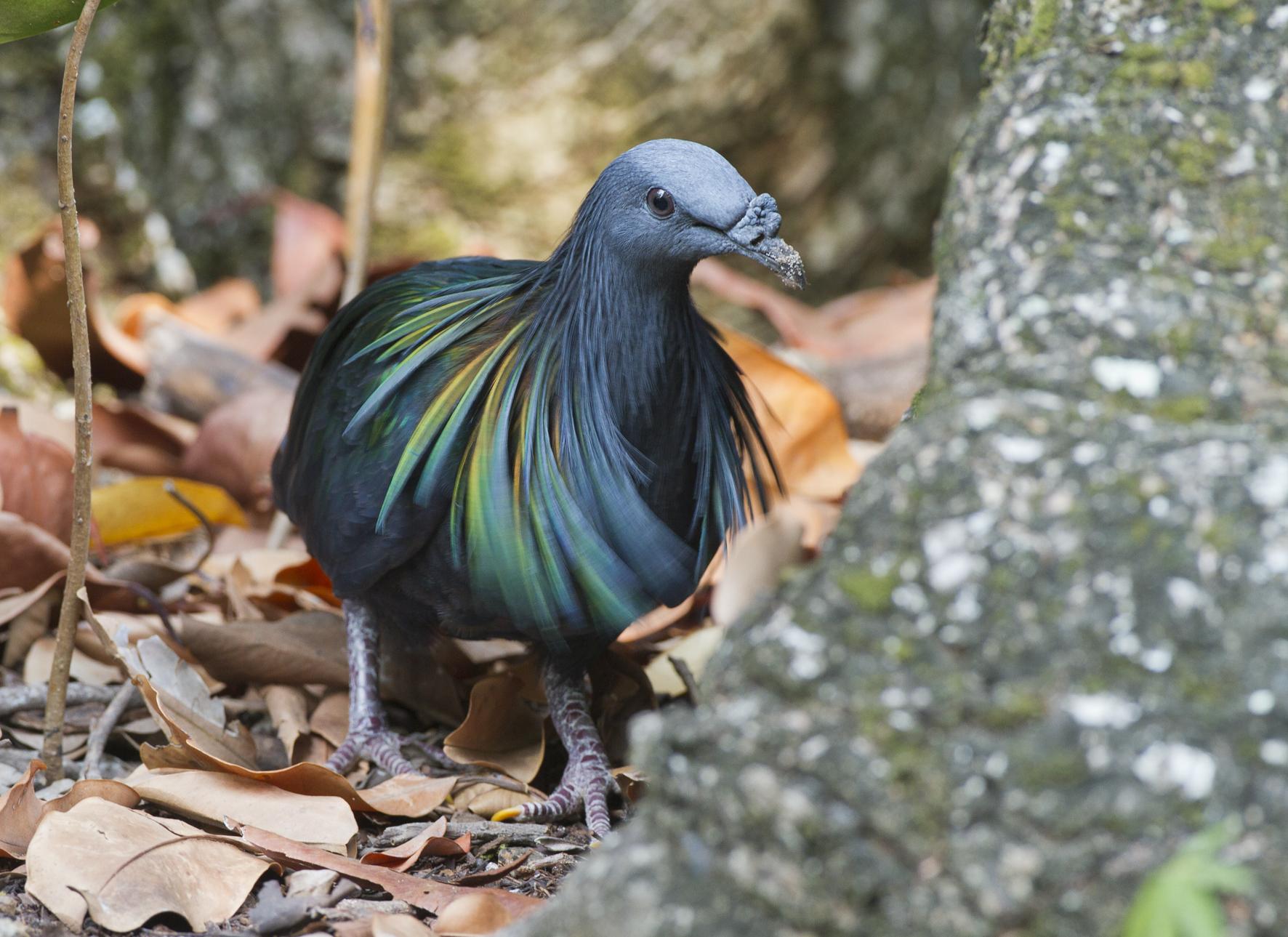
The presence of the rare Nicobar pigeon, recorded in global conservation lists, only deepens the richness of this extraordinary island ecosystem—one of Côn Đảo’s most remarkable gifts to Vietnam’s natural heritage.