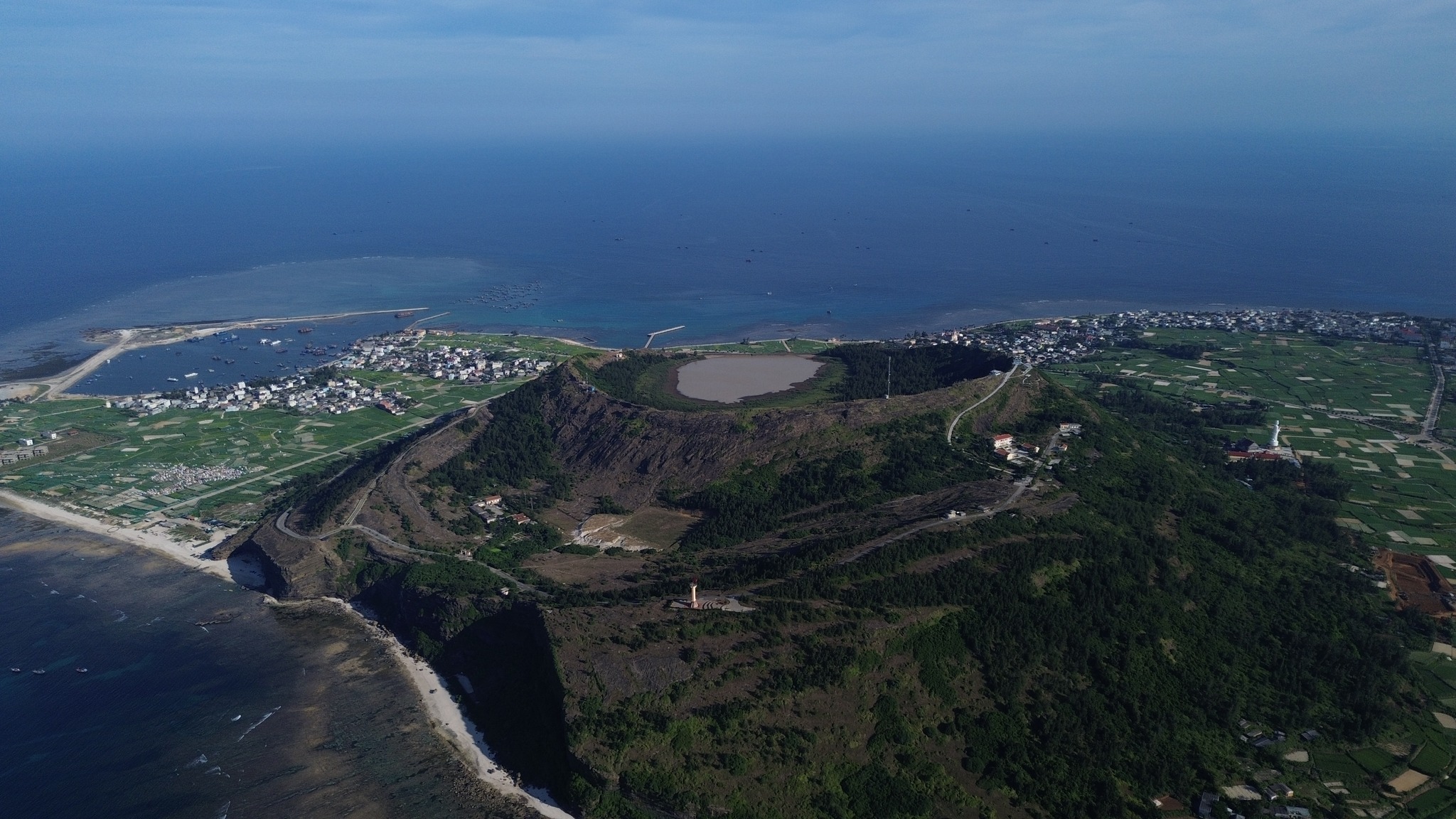
Thoi Loi Volcano, located in Dong An Hai Village, is the largest volcanic structure on Ly Son Island. According to geologists, Thoi Loi erupted approximately 11 million years ago, forming a unique landscape with two distinct volcanic craters that remain visible today.
The larger crater measures nearly 1 km in diameter. In the distant past, it was a shallow seawater basin where volcanic ash settled, creating clearly layered sediment deposits. The smaller crater, about 500 m wide, has been transformed into the Thoi Loi freshwater reservoir, which holds around 270,000 m³ of water and plays a vital role in supplying freshwater for local residents.
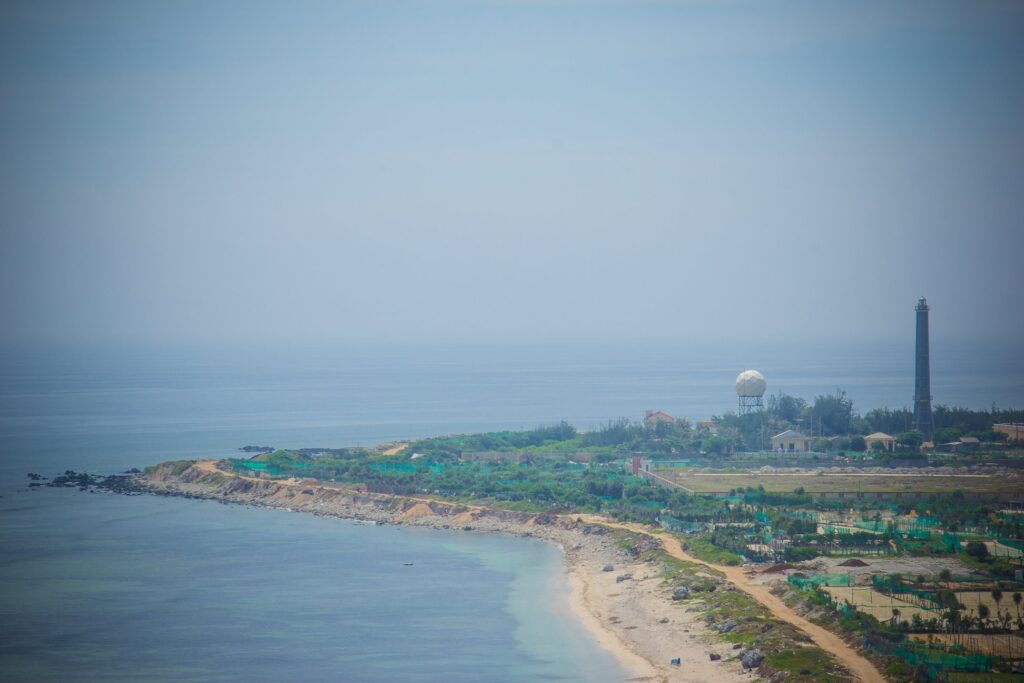
From afar, Thoi Loi rises prominently above the vast blue sea, resembling a mighty natural fortress with stacked basalt columns formed by ancient lava flows. Its summit reaches 169 meters, shaped like a sharp peak proudly facing the ocean winds.
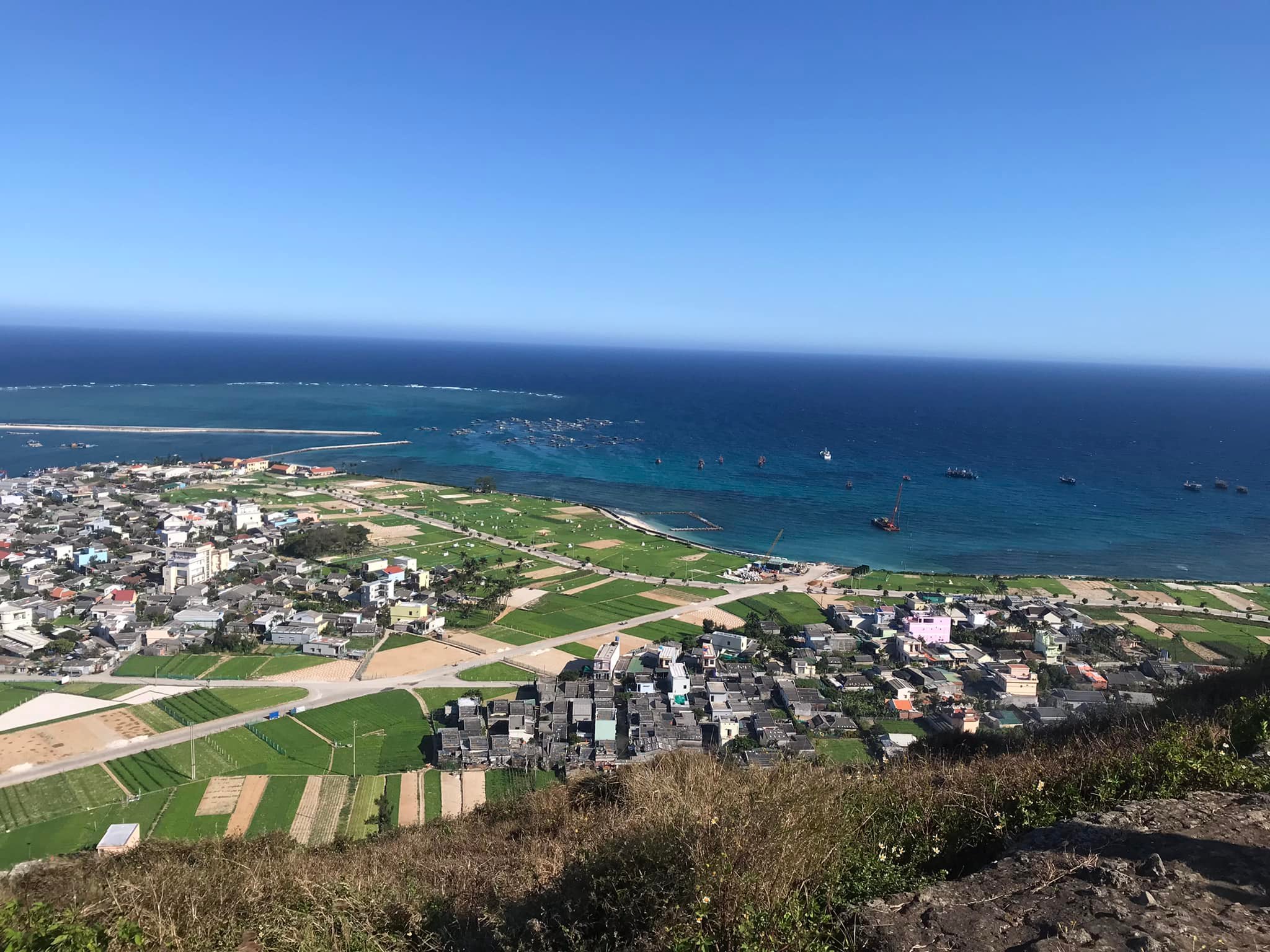
Standing on the summit, visitors are greeted by a panoramic view of a massive volcanic caldera, along with sweeping vistas of the open sea, rice fields, garlic farms, and fishing boats below. This is also one of the most enchanting places on the island to watch sunrise and sunset, when golden light spills across the sky and reflects on the water.
The northern slope of the mountain has been sculpted over millions of years by waves, tides, wind, and sand, creating dramatic cliffs, small caves, underwater rock formations, and coral reefs—contributing to the island’s striking and rugged beauty.
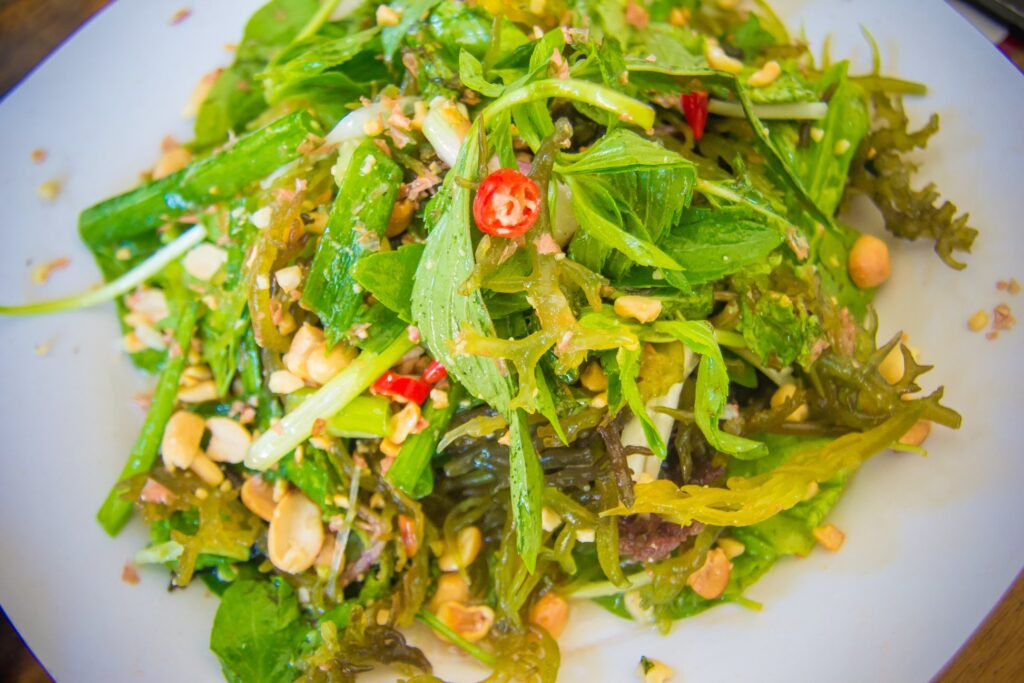
A visit to Thoi Loi would not be complete without checking in at the Ly Son Flagpole, a symbolic marker affirming Vietnam’s maritime sovereignty. Nearby, visitors can sit on coastal rock ledges to fish, admire the deep-blue sea, and even catch fresh seafood right from the shore.