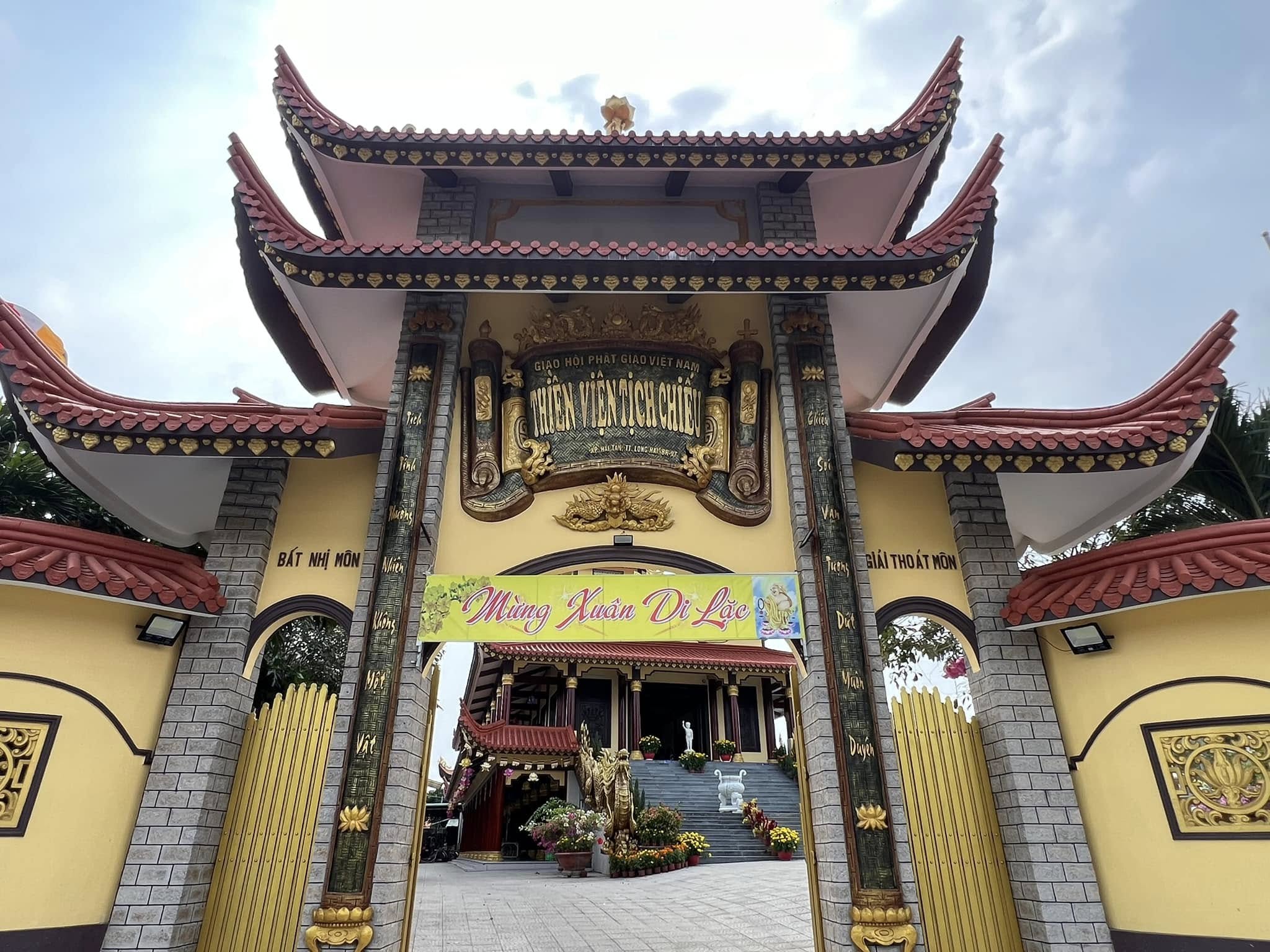
Amid the sunlit and wind-swept coast of Long Hai, Tich Chieu Zen Monastery appears like a peaceful oasis where visitors can return to silence and inner depth. Few people know that before becoming the serene Zen center it is today, this place began as two small hermitages—simple retreats that carried the sincere aspirations of devoted practitioners.
Originally, the site consisted of Quan Am Hermitage, founded by two lay Buddhists, Tran Thi Tu (Dharma name Tinh Ngoc) and Tran Thi Bay (Dharma name Tinh Buu), along with another hermitage established in 1973 by Venerable Nun Thich Nu Dieu Quang. In 1988, Tinh Ngoc and Tinh Buu offered both hermitages and nearly half a hectare of land to Venerable Master Thich Thanh Tu, who then appointed Nun Thich Nu Hanh Thanh and Nun Thich Nu Dieu Tanh to oversee the property.
Sharing the same spiritual vision, the two nuns requested to merge the hermitages into what became Tich Chieu Zen Monastery, with the aim of building a training center for Buddhist nuns. By 1993, the monastery had been rebuilt into its present form, nurturing nearly twenty female Zen practitioners and helping cultivate future generations of the monastic community.
The atmosphere of Tich Chieu Zen Monastery is simple, pure, and deeply contemplative. Its grounds include the Main Hall, Patriarch Hall, dining hall, and living quarters for the nuns, all harmoniously set among greenery and traditional architecture. From the entrance, visitors are welcomed by a small, carefully tended garden with pine trees, cypresses, cycads, and seasonal flowers, creating a sense of gentle beauty and quiet reflection.
The Main Hall is square in shape, crowned with a two-tiered tiled roof in the style of ancient Vietnamese pagodas. Inside, Shakyamuni Buddha is enshrined in a solemn and tranquil space, ideal for meditation and worship.
Behind the Main Hall lies the Patriarch Hall, separated by an open courtyard. At its center stands a miniature rock garden symbolizing Mount Linh Thu (Vulture Peak)—the setting of the Zen story “The Buddha Holds Up a Flower” (Niêm Hoa Vi Tiếu). When the Buddha silently raised a flower, only Mahākāśyapa smiled in understanding, marking the transmission of the Zen “mind seal.” The rock garden is also adorned with statues of Avalokitesvara (Guanyin) and Maitreya, reminding visitors of the Buddhist virtues of compassion, joy, and equanimity.
Though modest in size, every corner of Tich Chieu Zen Monastery is thoughtfully designed, combining aesthetic grace with profound spiritual meaning. It is not only a place of practice for the nuns but also an ideal retreat for those seeking peace, stillness, and spiritual depth during their visit to Long Hai.
If you wish to experience a side of Long Hai beyond blue seas and sandy beaches—one filled with quiet contemplation and authentic Buddhist values—Tich Chieu Zen Monastery is a destination not to be missed.