
Phu Quy Island is not only famous for its crystal-blue waters, pristine landscapes and vibrant coral reefs, but also known as a spiritual land filled with sacred legends. Below are the most significant spiritual sites that travelers should not miss when exploring this mysterious island.
Princess Ban Tranh Shrine
For generations, the people of Phu Quy have regarded Princess Ban Tranh as the island’s protector deity—guarding the land, each village and every household. Locals honor her as Lady of the Realm, and the place dedicated to her worship is known as the Princess Ban Tranh Shrine. Several Nguyen Dynasty kings bestowed upon her multiple royal decrees, recognizing her as a Supreme Deity.
According to legend, Ban Tranh was a Cham princess exiled to the island for refusing a political marriage. Accompanied by attendants, supplies and tools, she arrived at this uninhabited island after days at sea. With leadership and resilience, she organized her group to cultivate land, fish, and establish the earliest settlements on Phu Quy. After her death, villagers built a shrine at the site where she was buried. Her spirit was said to be highly responsive and protective, and islanders believed she safeguarded the entire community.
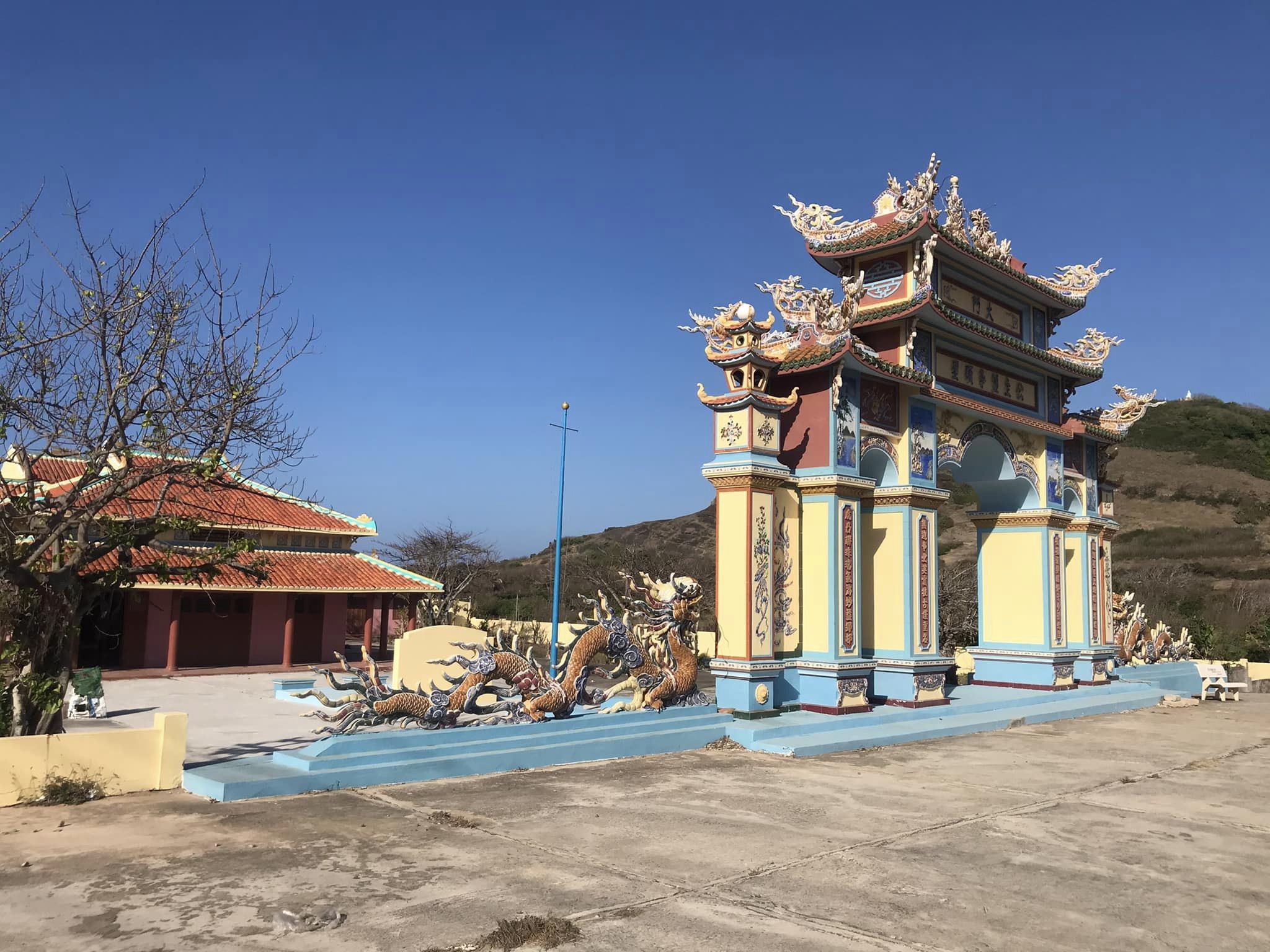
Over centuries, the Vietnamese residents continued to restore the shrine, preserve the rituals and worship her according to traditional customs. Her cult became the most sacred belief on the island. Each year, 3 communes (formerly 14 villages) take turns holding ceremonies and keeping her royal decrees—an exceptional cultural practice unique to Phu Quy.
Today, the shrine stands near Mount Cao Cat in a spacious green area known as “Ba Chua’s Fields.” Although the original architecture no longer remains, the shrine continues to attract thousands during the Ban Tranh Memorial Festival held on the 3rd day of the Lunar New Year. Visitors come to offer prayers, listen to local legends, admire Cham–Vietnamese cultural interactions, and conveniently trek to the peak of Cao Cat Mountain and the Linh Son Pagoda located just minutes away.
Sai Nai Master Shrine and Tomb
The shrine and tomb of Master Sai Nai reflect timeless values of compassion and spiritual protection. Islanders believe that after his passing, Sai Nai manifested divine power—often appearing through thunderous sounds and a radiant light. Fishermen recount numerous stories of being rescued during storms or wartime after praying to him.
Legend says Master Sai Nai was a Chinese merchant who frequently traveled across Southeast Asia in the 16th century. A skilled geomancer and physician, he once visited Phu Quy and recognized it as a sacred land. He befriended Princess Ban Tranh and treated local people during his journeys. Before his death, he wished for his ashes to rest on Phu Quy. After he passed away (on the 4th day of the 4th lunar month), a northern fleet brought his ashes to the island at night, conducted rituals and buried him at what is now Doi Thay in Dong Hai Hamlet.
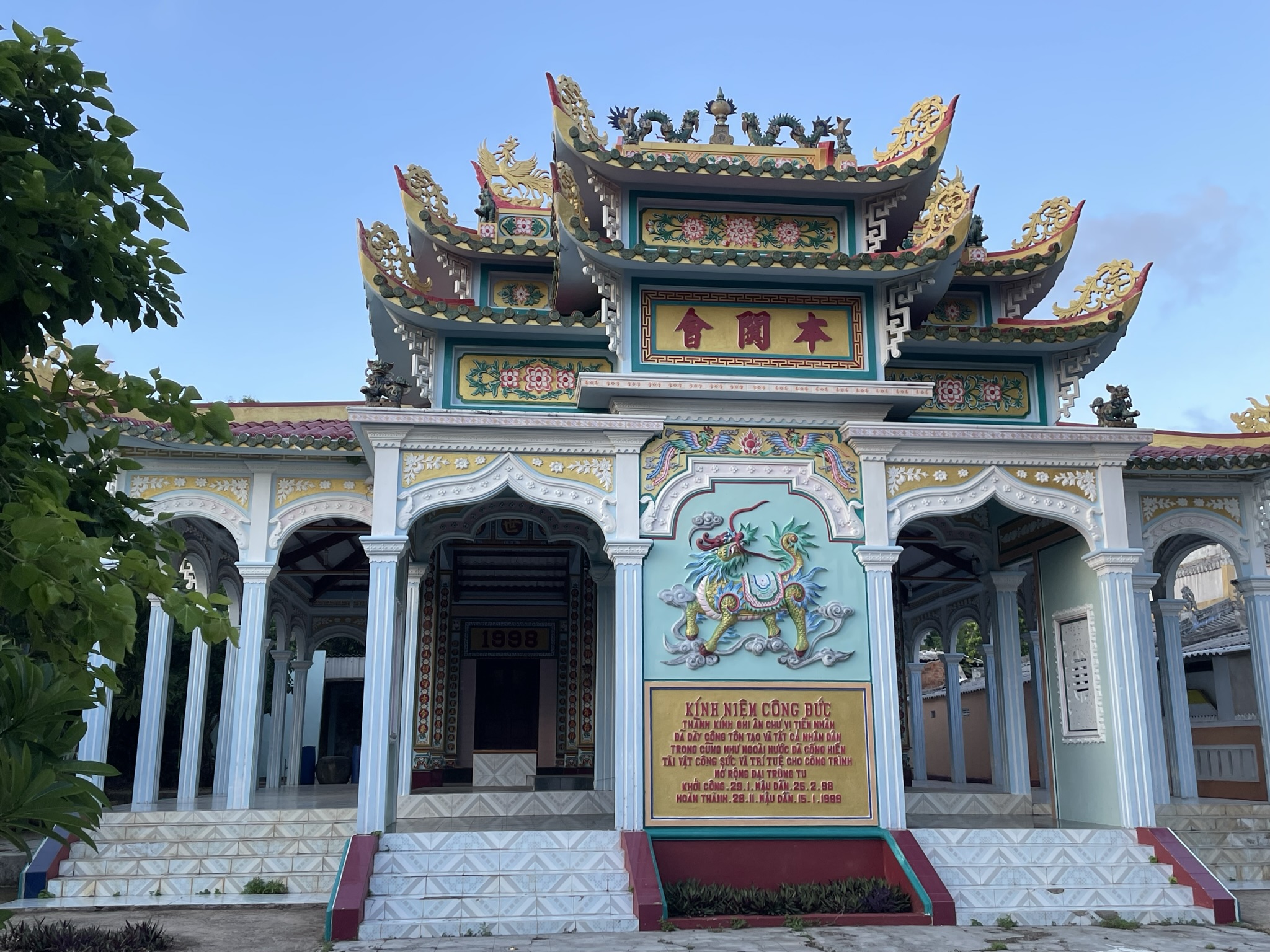
For convenience, the Vietnamese later built the Sai Nai Master Shrine in Ngu Phung Commune. The shrine reflects strong cultural interaction between Vietnamese and Chinese communities through worship practices, architecture and rituals that have continued for more than 300 years.
Sai Nai is regarded as the guardian of the entire island and especially the protector of merchants, fishermen, migrant families and overseas communities. During year-end, countless people visit to give thanks, often queuing or registering days in advance.
The Nguyen Dynasty acknowledged his spiritual influence, granting him three royal decrees, which rotate annually among island villages for caretaking and worship.
An Thanh Whale Temple (Vạn An Thạnh)
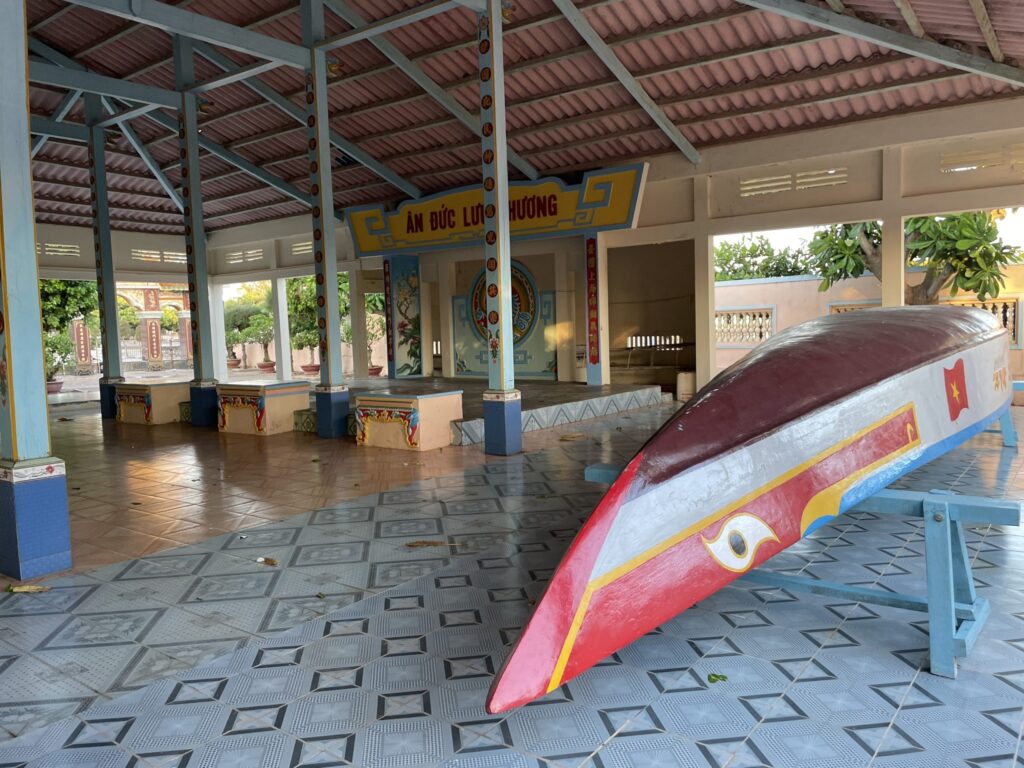
An Thanh Whale Temple, built in 1781, is one of Phu Quy’s oldest heritage sites and was recognized as a National Historic Monument (1996). The temple is dedicated to the Whale God (Ông Nam Hải)—a central belief of coastal communities in central Vietnam.
Whale worship was brought by migrants from the Quang regions in the 17th–18th centuries. Fishermen see the whale as a divine protector who rescues people at sea. The temple preserves hundreds of stories about miraculous whale rescues and a massive whale skeleton over 17 meters long, with 50 vertebrae on display.

The temple also honors village founders and ancestors. Visitors can explore traditional architecture, learn about rituals and whale funerary customs, and understand the deep spiritual connection between fishermen and the sea.
Tran Bac Shrine – Hon Tranh Island
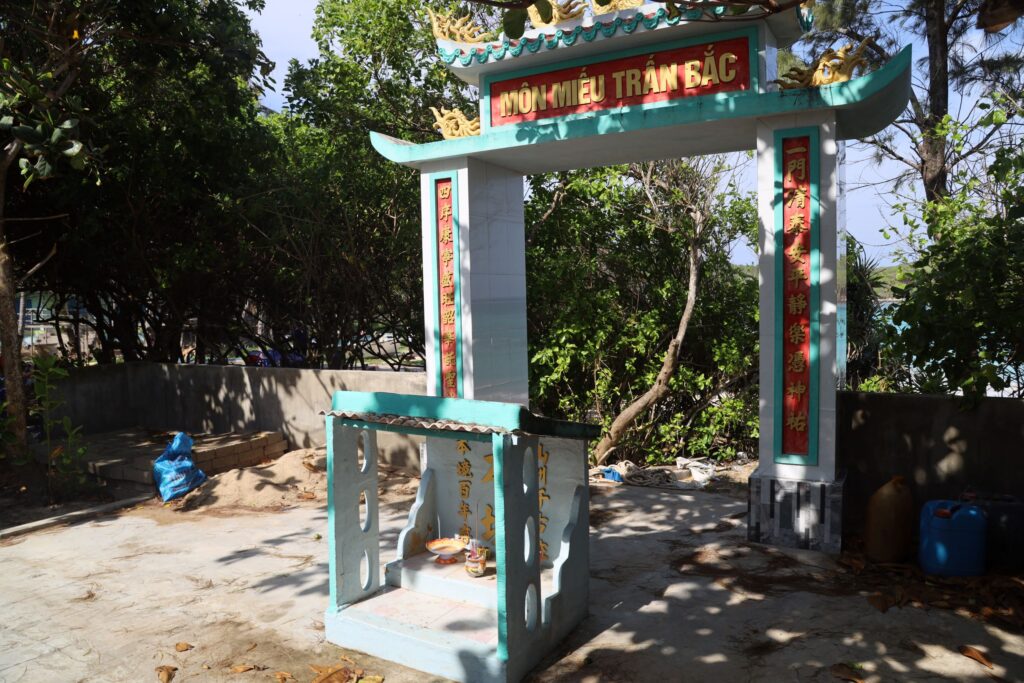
Built in the early 19th century, the Tran Bac Shrine on Hon Tranh Island venerates Bui Quan Cong, a historical figure believed to be a high-ranking military official (“Trấn Bắc”) honored for his contributions in Quang Nam during the 17th century. He is worshipped alongside Goddess Thiên Y A Na.
The shrine comprises a main gate, central hall, incense house and a whale mausoleum containing 72 whale skeletons—said to have drifted ashore simultaneously in a mysterious event. All remains were ceremonially interred and now rest inside the shrine.
The Nguyen kings granted multiple royal decrees to Tran Bac, which are preserved at An Thanh Whale Temple and ceremonially transported to Hon Tranh only during major festivals.
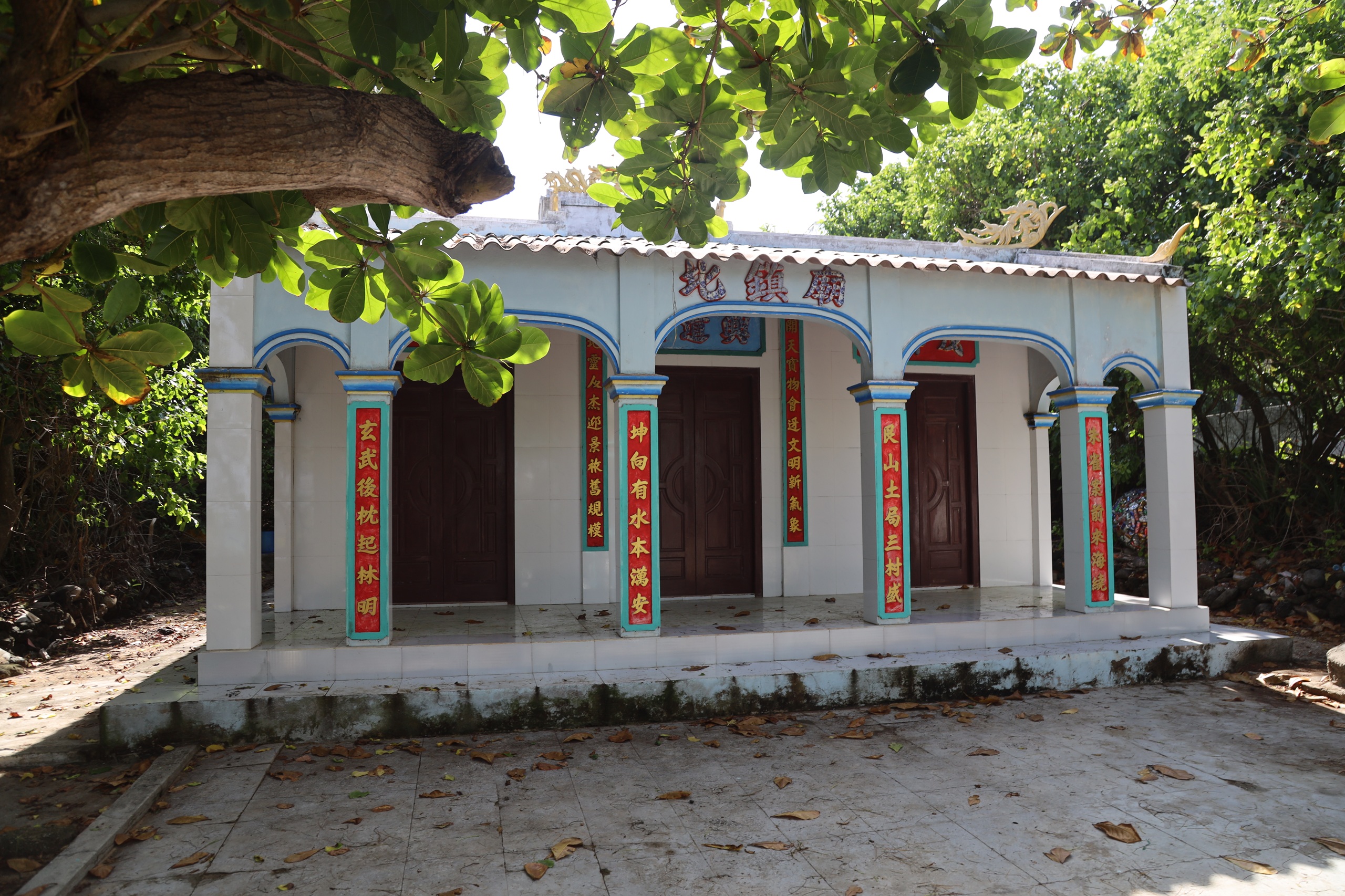
Annual ceremonies include:
- March 12 (Lunar) – Worship of Goddess Thiên Y A Na
- August 7 (Lunar) – Worship of Tran Bac Master
Locals believe the shrine is extremely sacred; disrespectful acts are said to bring misfortune unless one sincerely repents.
Linh Quang Pagoda
Linh Quang Pagoda, located in Tam Thanh Commune, is the oldest Buddhist temple on Phu Quy, founded in 1747. The temple sits amid a peaceful landscape ideal for meditation and worship, blending traditional folk architecture with Buddhist decorative art.
The pagoda was originally a small thatched hermitage established by Monk Nguyen Canh. After a devastating fire, villagers rebuilt it into a proper temple, preserving several ancient bronze statues that survived the blaze. The pagoda later became a center for spreading Buddhism on the island.
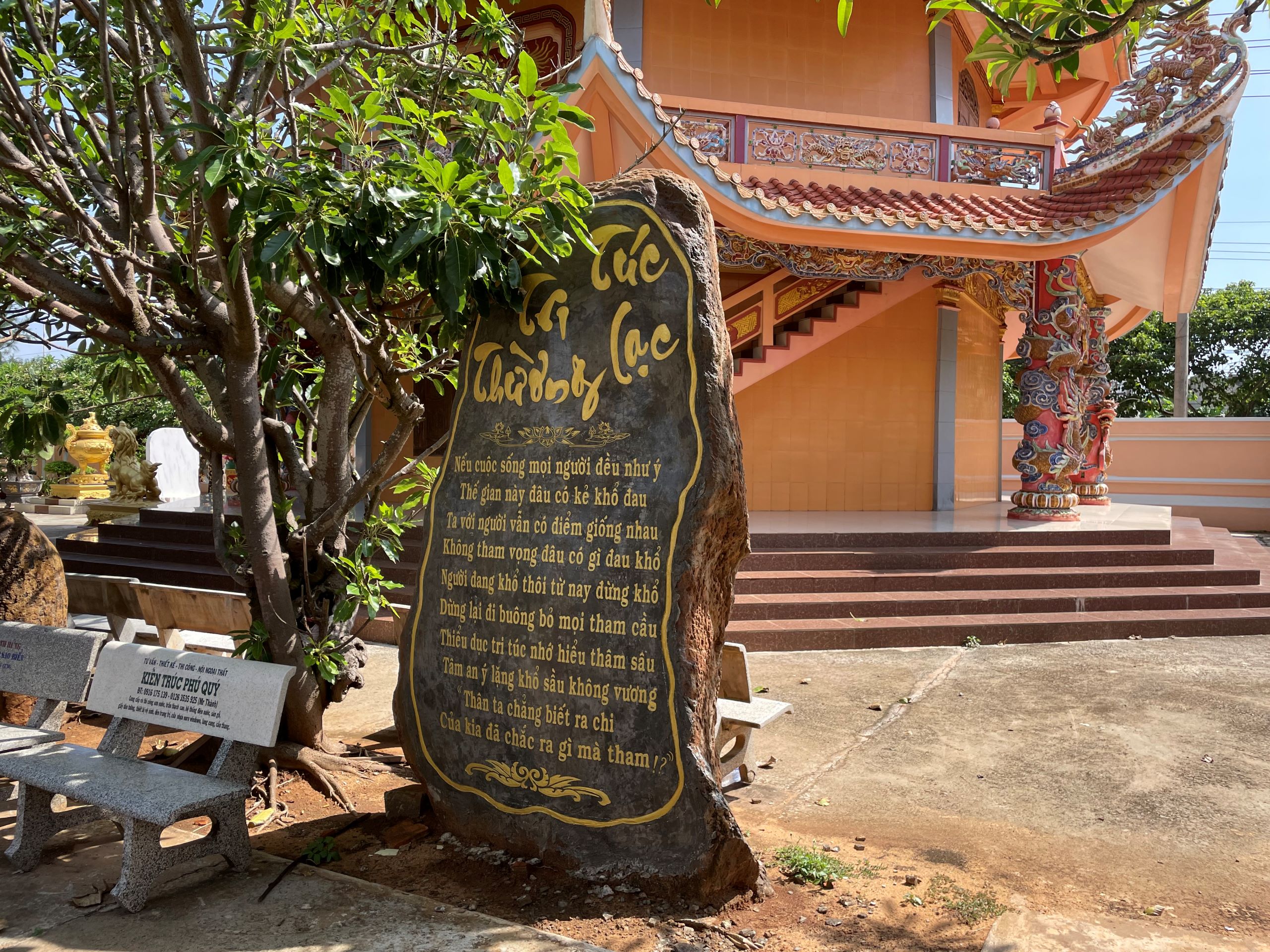
One of the island’s most famous legends relates to the Sacred Stone of Hon Tranh—a floating rock that repeatedly rose from the sea after the fire. Seeing it as a divine sign, fishermen retrieved the stone and carved it into a statue of Shakyamuni Buddha, which is still worshipped in the main hall. The site where the stone emerged is now called Vũng Phật (Buddha Bay).
Linh Quang Pagoda also appears in stories of Nguyen Anh (later Emperor Gia Long), who is believed to have sought refuge here and prayed for protection during his struggles against the Tay Son.
Recognized as a National Scenic Monument in 1996, the pagoda remains a spiritual anchor for the island community. Visitors come not only to worship and admire its architecture, but also to learn about centuries-old legends and cultural heritage.