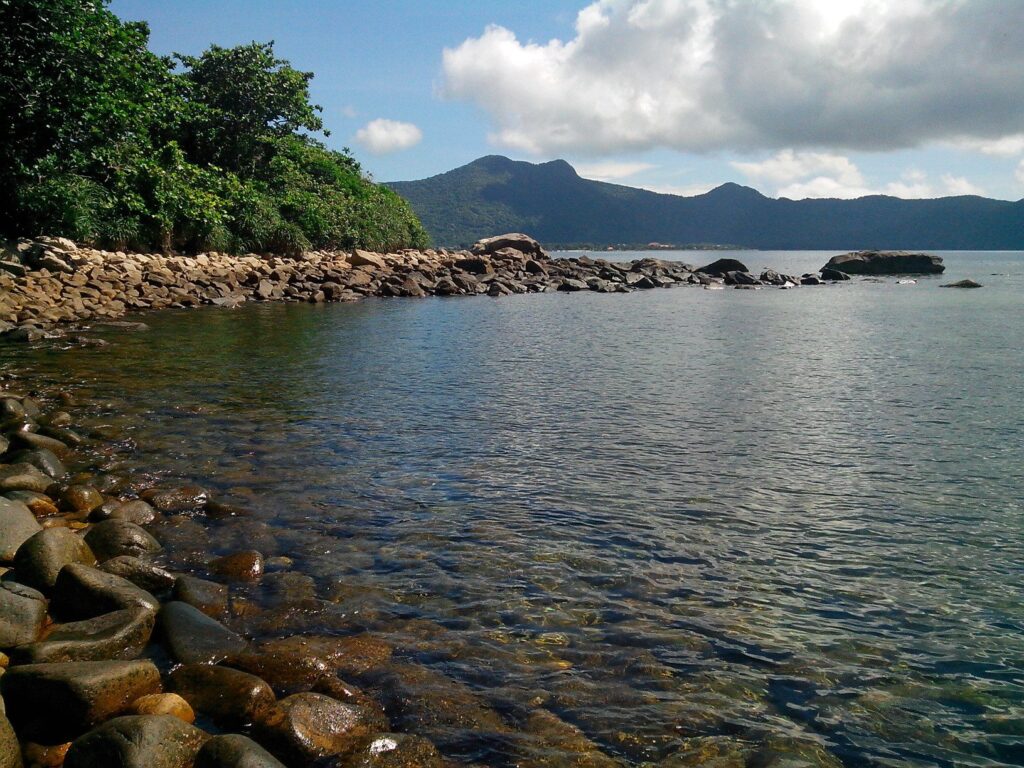
Your journey begins at the Tourist Pier, where the boat picks you up and heads straight toward Hon Tai. As the boat moves away from the pier, look back toward the mainland — you’ll be greeted with a breathtaking panoramic view of Con Son Bay and the township of Con Dao, surrounded majestically by Nui Chua, Nui So Ray, and Nui Thanh Gia (the highest peak on the island).
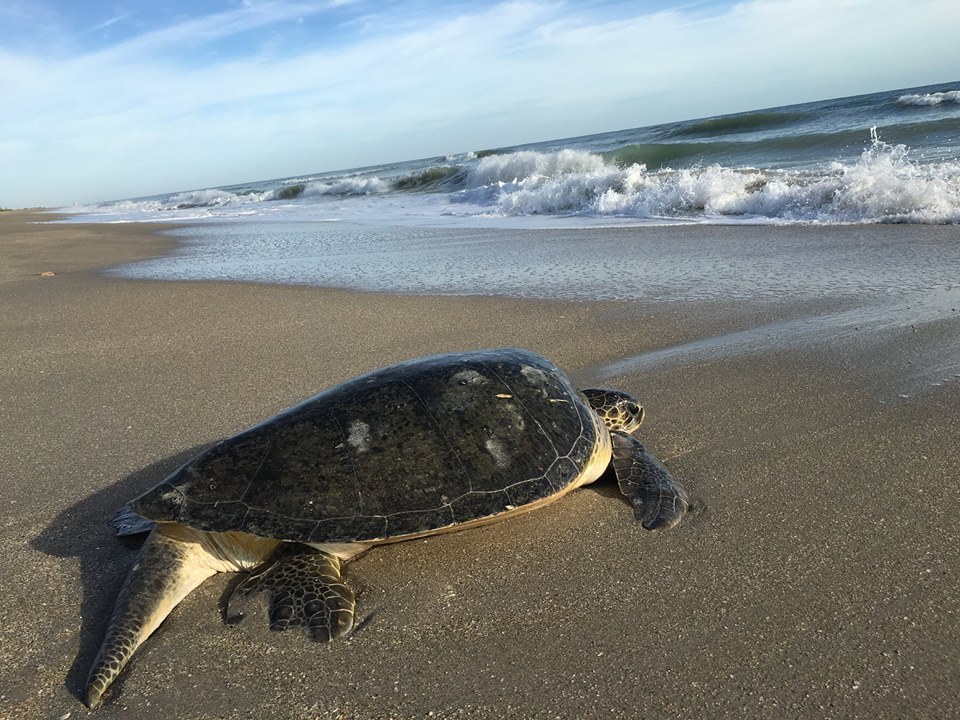
If luck is on your side, you may spot dolphins playfully swimming alongside the boat, dugongs rising gently to the surface for air, or sea turtles mating during their breeding season. These turtles often float calmly on the water, giving visitors the rare opportunity to film or photograph them up close. Upon arriving at Hon Tai, you will visit the habitat of the red-faced macaques — a primate species listed in Vietnam’s Red Data Book.
Bai Cat Lon – Hon Bay Canh
The tour continues as you board the boat once again and head toward Hon Bay Canh. Along the way, the captain may stop at a few ideal spots for you to try sea fishing or dive into the crystal-clear water to admire stunning multi-colored coral reefs teeming with marine life.
Upon reaching Hon Bay Canh, visitors can explore the mangrove forest and stop by the Sea Turtle Conservation Station to learn about the life cycle and nesting habits of sea turtles. For an even more memorable experience, you can stay overnight on the island to witness mother turtles crawling ashore under the moonlight to lay their eggs — a magical and emotional moment for many travelers.

Travel Tip!
Hon Bay Canh lies to the east of Con Son Island and spans 683 hectares. It consists of two island masses connected by a natural sandbar known as Bai Cat Lon. The entire island is covered by pristine tropical rainforest and is home to several endemic and rare species such as the Con Dao black squirrel, Sunda colugo, monitor lizards, pythons, snakes, and various seabirds.
Bai Cat Lon is one of 14 sea turtle nesting beaches in Con Dao and holds the highest number of nesting turtles in the entire archipelago. During the nesting season (April–September), you may see 1–2 turtles on a quiet night, and up to 20–30 mother turtles on busy nights coming ashore to dig nests and lay eggs.