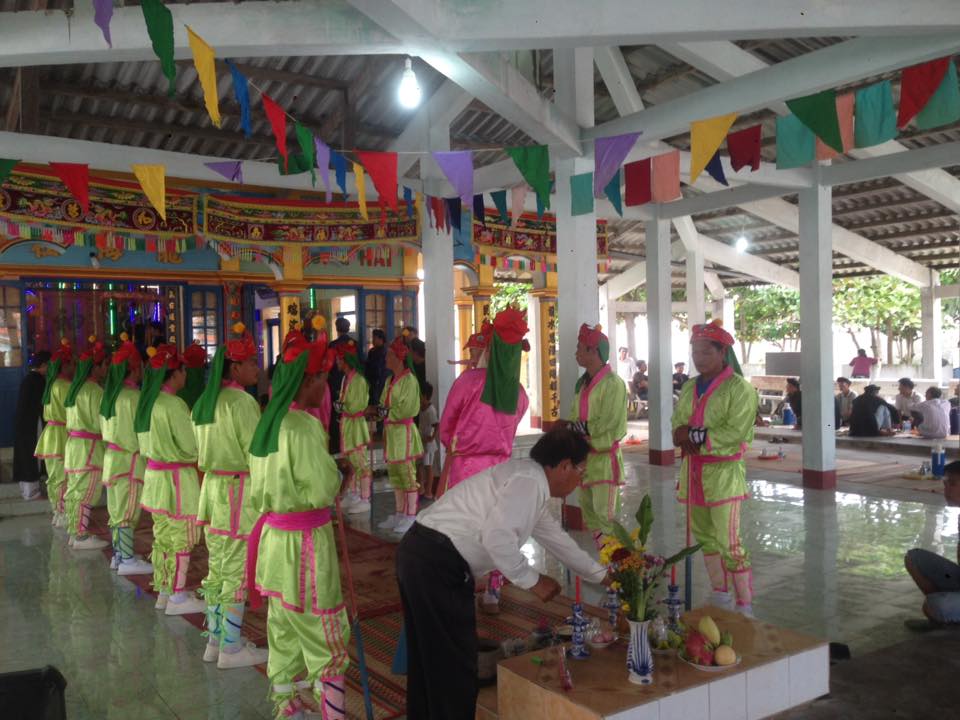
In the 17th century, after the Ming loyalists in China were defeated by the Qing dynasty, many officials and merchants fled southward by sea. Some of their fleets reached Phú Quý Island and chose to stop there. They gradually integrated with the local community, engaging in silk weaving, trading, and other livelihoods—leaving behind subtle cultural imprints on the island.
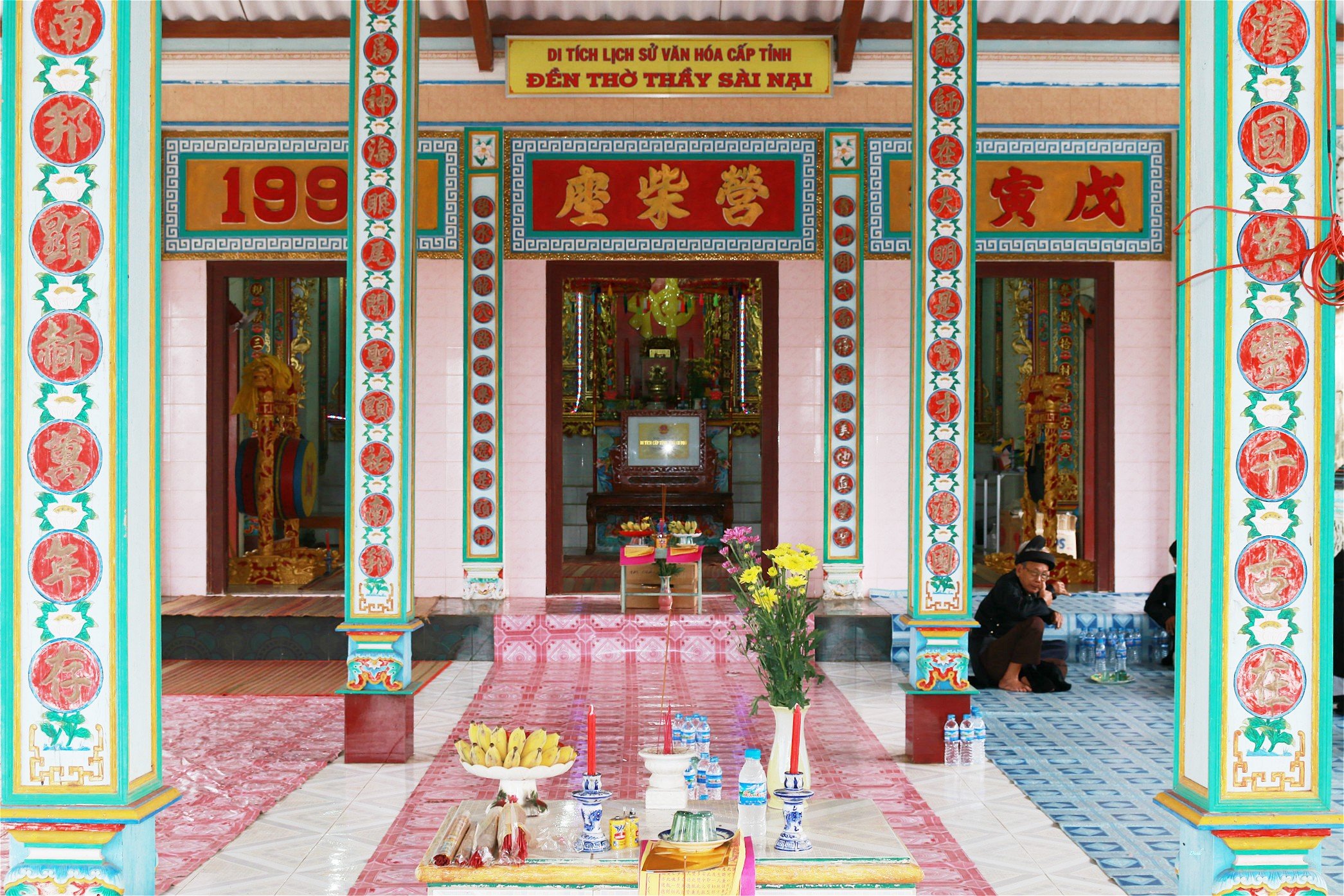
The emergence of the Sai Nai Master (Thầy Sài Nại) cult and the tradition of worshipping Guan Sheng Di Jun (Quan Thánh Đế Quân) is considered evidence of this early Chinese influence.
Chinese Religious Traditions on Phú Quý
Worship of Guan Sheng Di Jun (Quan Thánh Đế Quân)
Guan Sheng Di Jun (Guan Yu, 162–219 AD), a historical figure from the late Han–Three Kingdoms period, is revered by the Chinese for embodying loyalty, righteousness, integrity, and courage. Chinese migrants brought this folk belief with them along their migration routes.
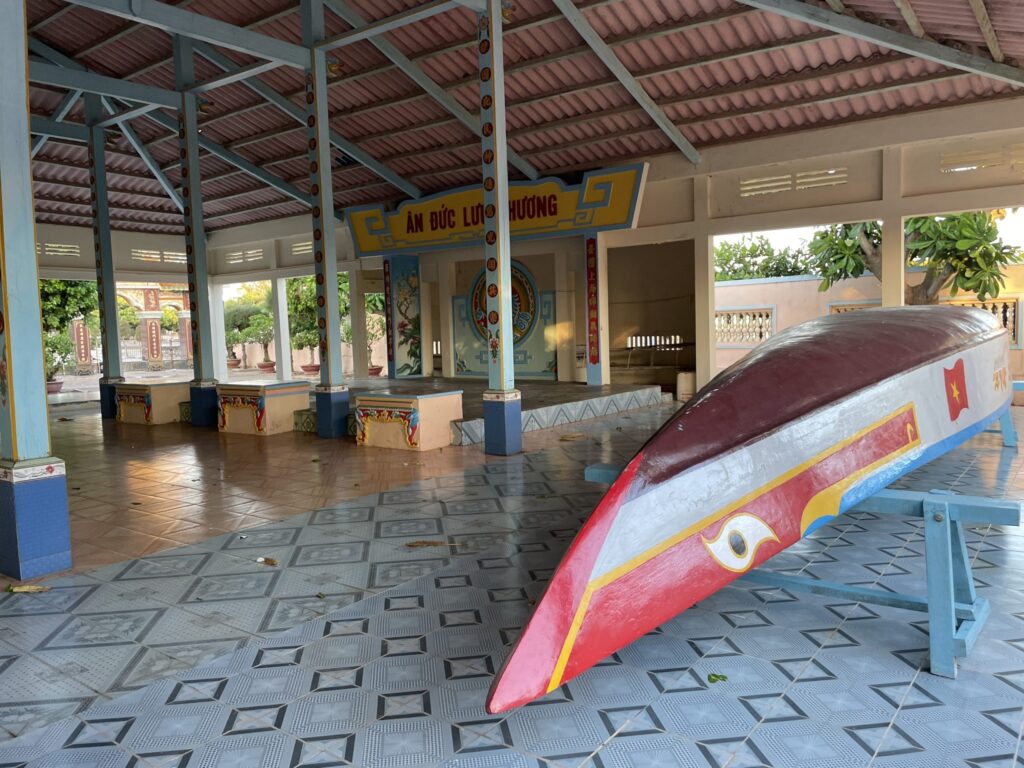
Local legend recounts that during his years in exile, Nguyễn Ánh (later Emperor Gia Long) often visited the Guan Sheng Temple on Phú Quý Island to pray for clarity and protection. After ascending the throne, he issued an imperial order encouraging the islanders to worship the deity.
Although no royal decrees are preserved today, the temple remains an important spiritual site for the people of Phú Quý.
The Cult of Sai Nai Master (Thầy Sài Nại)
According to local lore, Sai Nai Master was a Chinese merchant in the 16th century—a skilled geographer, healer, and seafarer. During his voyages, he stopped at Phú Quý Island and recognized it as a spiritually significant land.
He befriended Princess Bàn Tranh, who had settled earlier on the island. On subsequent visits, he treated illnesses and helped the poor, earning the deep respect of the islanders. Before his death, he expressed a wish to be buried on Phú Quý.
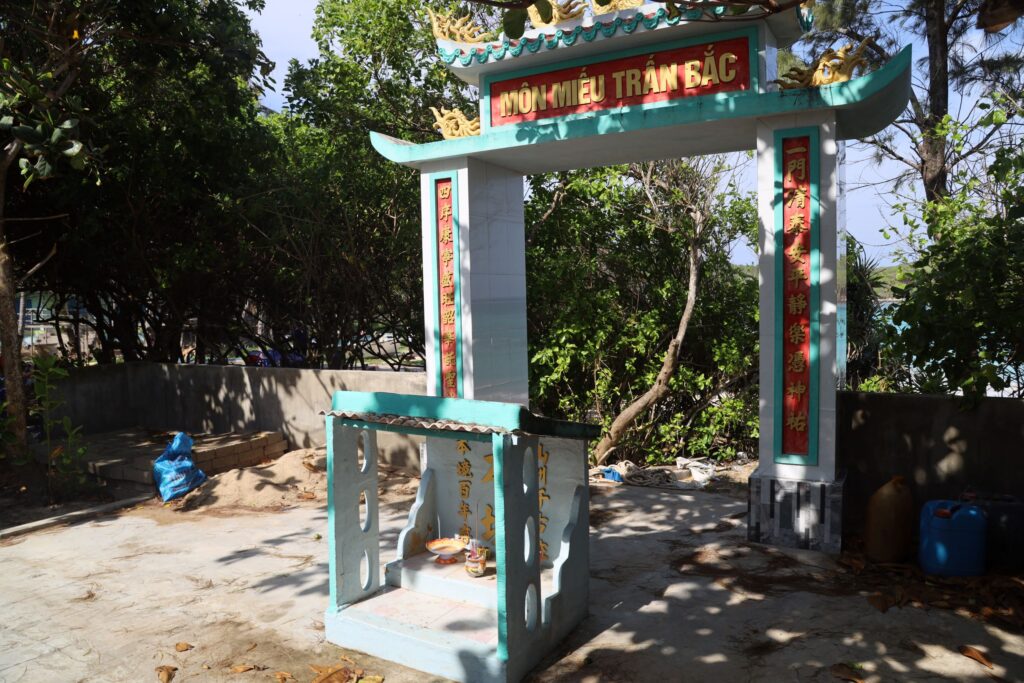
After he passed away on the 4th day of the 4th lunar month, a fleet from the north arrived at night, performed rituals, and buried his ashes at what is now Doi Thầy in Đông Hải Hamlet. Early the next morning, islanders found offerings and erected a stone grave—Mộ Thầy.
Residents believe that Sai Nai Master manifested as a protective spirit after death, helping fishermen survive storms and wartime dangers.
Did the Chinese Settle Permanently on Phú Quý?
Historical evidence suggests:
- The Chinese did not establish long-term settlements on the island.
- They visited mainly during maritime trade voyages.
- Their influence is seen primarily in religious practices, not demographic presence.
- Most were merchants exchanging goods, medicines, and supplies with the islanders.
Phú Quý, being remote and sparsely populated until the 18th century, was unsuitable for the large trading communities that Chinese migrants typically established elsewhere.
Broader Chinese Heritage in Bình Thuận Province
Historical records show that by the mid-17th century, many Chinese migrants viewed Bình Thuận on the mainland as fertile and favorable for trade. They settled there, building villages, markets, and temples. Notable heritage sites include:
- 1725: Lady Thien Hau Temple (Phú Hài)
- 1741: Guangdong Assembly Hall (Phan Rí Cửa)
- 1756: Lady Thien Hau Temple (Chợ Lầu)
- 1778: Ong Pagoda, Phan Thiết (dedicated to Guan Sheng Di Jun)
Today, Bình Thuận has seven Chinese assembly halls, mainly in Phan Thiết and Phan Rí Cửa—clear evidence of long-term, thriving Chinese communities on the mainland rather than the island.
Although the Chinese did not remain on Phú Quý for generations, their presence during trade voyages left spiritual and cultural traces—most notably the worship of Sai Nai Master and Guan Sheng Di Jun.
Their influence, though subtle, continues to shape the island’s cultural identity and remains part of the collective memory of Phú Quý’s inhabitants.