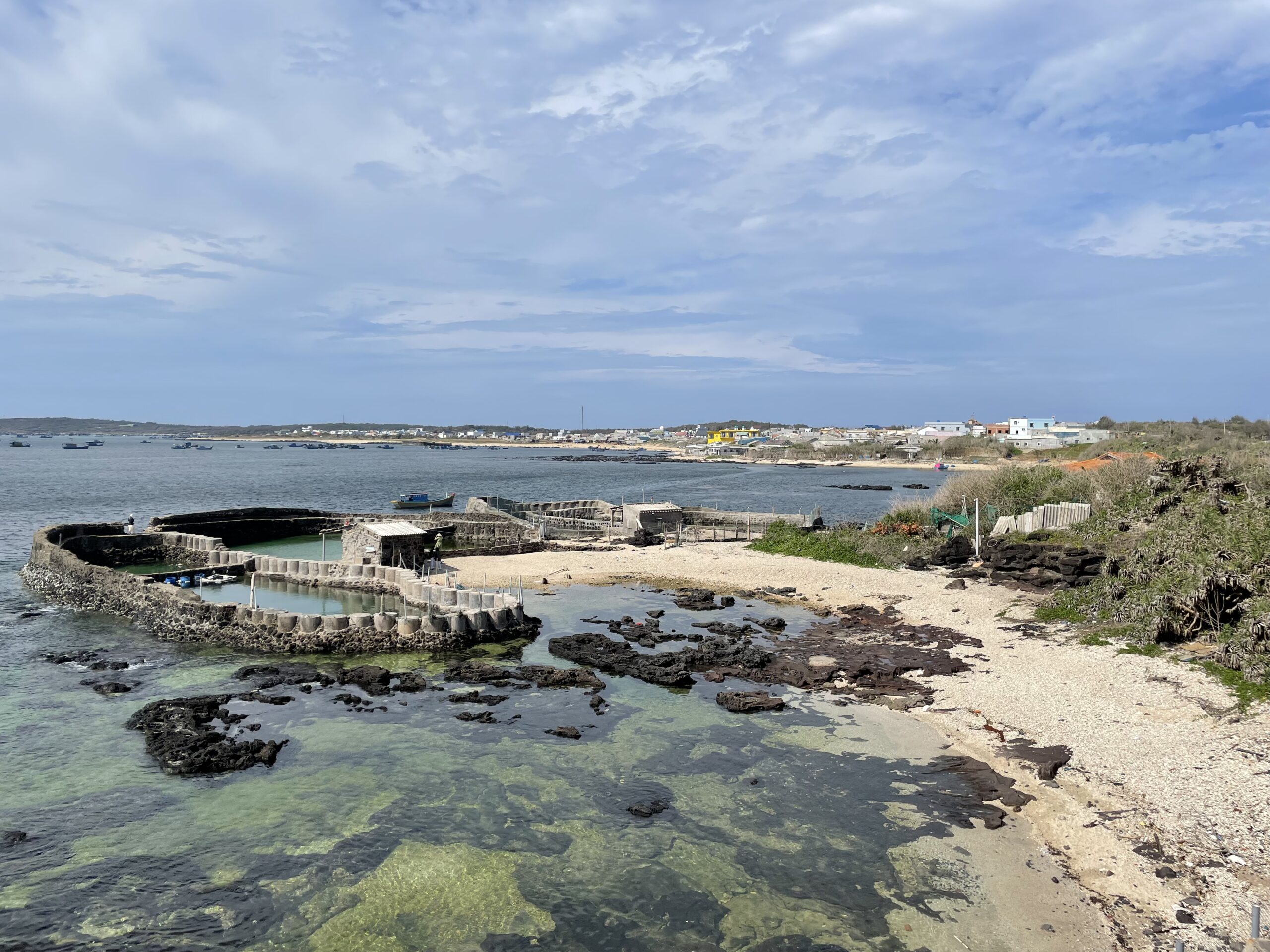
For generations, the people of Phu Quy have lived in unity, sharing hardship and working side by side. Due to the island’s long history of self-sufficient living, local occupations were once limited, shaped by natural conditions and the simple rhythms of daily life. Yet from that simplicity emerged a number of unique traditional crafts—now precious cultural legacies of the island.
Agriculture and Traditional Weaving
For a long time, agriculture was the backbone of Phu Quy’s economy. Besides cultivating essential crops, islanders grew mulberry, raised silkworms, and developed a thriving traditional weaving craft.
Historical records show that as early as 1740 (the first year of King Canh Hung), locally produced white cotton fabric—known as vai ta or bach bo—was valuable enough to be used as annual tax payment to the imperial court.
Though weaving once brought prosperity and renown to Phu Quy artisans, the craft gradually disappeared after the country’s liberation and no longer exists today.
Groundnut Oil Pressing
Another once-flourishing craft was the pressing of groundnut (peanut) oil. The oil was used for cooking and lighting, while the byproducts—bean residue and oil cake—served as food for people, livestock, and as fertilizer for the fields.
The craft was widely practiced in the past, but in the last few decades, it has vanished completely, and the traditional tools used for oil pressing are no longer preserved.
Hammock Weaving – A Craft of Patience and Skill
Hammock weaving was another hallmark craft of Phu Quy. With skilled hands and great patience, islanders created durable, beautifully woven hammocks from wild pineapple roots and pandanus leaves.
Types of Hammocks
- Wild pineapple-root hammocks (võng dứa)
- Pandanus-leaf hammocks (võng thơm) – considered the finest and most valuable
How They Were Made
Pineapple roots were harvested on hilltops, stripped, sun-dried, then twisted into strong fibers.
Pandanus leaves were soaked in seawater for about 10 days, beaten until soft, combed into strands, and then woven with exceptional care.
Tay Long Hamlet in Long Hai Commune was—and still is—the center of this craft. Today, a few households continue the tradition, offering visitors the chance to watch and even learn the weaving process firsthand.
Fishing – A Life Built on the Ocean
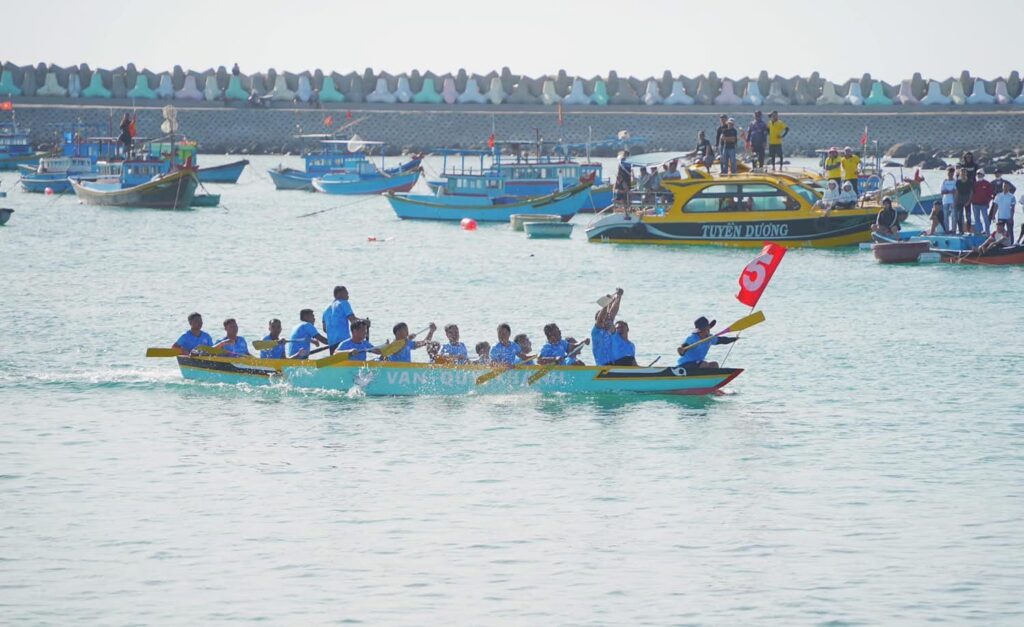
For centuries, the vast ocean has been the island’s nurturing mother—offering both livelihood and protection. Fishing eventually became the island’s economic strength, though in earlier times it was merely a supplementary occupation due to rudimentary tools and dangerous conditions at sea.
Old sayings like
“Fishing in August is like gathering early-season husk” and
“One day of fishing feeds one meal”
reflect the hardship of the trade in the past.
Only with improved equipment and motorized boats did fishermen begin traveling hundreds of nautical miles offshore and significantly increase their catch.
Shark Fishing – A Once-Thriving Tradition
Around a century ago, shark fishing became a major occupation, especially in Quý Thạnh Hamlet (Ngũ Phụng). Every household joined the trade. Fishermen processed sharks for:
- fins (sold to markets in Phan Thiết, Vũng Tàu, Nha Trang, Mỹ Tho)
- liver oil
- leather from sharkskin
- dried meat
Today, sharks are scarce around Phu Quy, and the trade has nearly disappeared—but shark dishes like steam-cooked shark wrapped in rice paper remain a unique culinary specialty.
Squid Jigging – The Art of Light Fishing
Squid fishing, known locally as “thẻ mực”, is one of the island’s signature occupations. Fishermen once relied on torches, bottle lamps, and carbide lamps—whose heat and glow attracted squid to the surface.
The method involved:
- A fishing line fitted with white cloth “lures”
- A sinker pulling the line to the seabed
- Constant up-and-down movement to mimic prey
- Scooping squid that floated toward the light
This innovative technique paved the way for modern light-based squid fishing widely used today.
Marine Cage Farming
Today, Phu Quy is known for its thriving seafood cage farming, concentrated in:
- Lach Du (Tam Thanh)
- Long Hai Commune
Wooden rafts supported by plastic barrels form floating fish cages, measuring about 3.5m x 3.5m. Another method—using shoreline concrete ponds—emerged around the year 2000, ideal for raising diverse marine species.
These modern aquaculture models have greatly boosted the island’s economy and seafood supply.
Ancestral Shrine Crafting – A Sacred Island Tradition
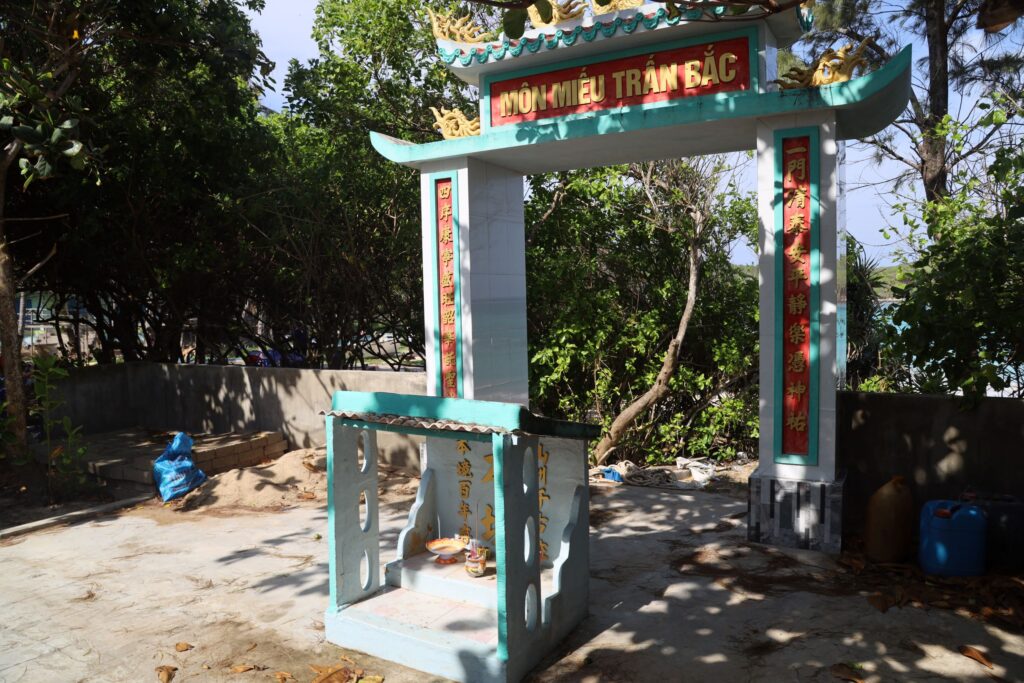
On Phu Quy, nine out of ten homes have an ancestral shrine—a deeply spiritual symbol believed to protect families at sea and bring good fortune.
Structure of a Traditional Phu Quy Shrine
- Front pediment (mày) carved with twin dragons
- Leg panels (chân quỳ) decorated with seasonal motifs
- Twin dragon pillars (long đăng)
- Side wings (cánh quạt) depicting the four sacred creatures:
dragon, qilin, tortoise, phoenix
Shrines have two tiers:
- Upper tier: deities and household guardians
- Lower tier: ancestors (tổ đường for eldest sons, phước đường for younger branches)
Three master craftsmen still uphold this sacred craft. The most renowned is Mr. Trần Thiện Nghiệp of Đông Hải, a third-generation artisan. A well-crafted shrine can cost up to 20 million VND, reflecting the intricacy of hand-carved patterns and custom-painted motifs.
These shrines represent not only religious devotion but also the artistic soul of Phu Quy’s people.
Craft Villages – A Living Cultural Attraction
Each craft—from weaving and hammock making to shrine carving and aquaculture—embodies the resilience and creativity of Phu Quy’s fishing communities. Today, these craft villages offer rich experiences for visitors, who can:
- Join fishing trips
- Observe traditional production methods
- Learn local weaving or shrine-carving techniques
- Engage with artisans and families who keep these traditions alive