


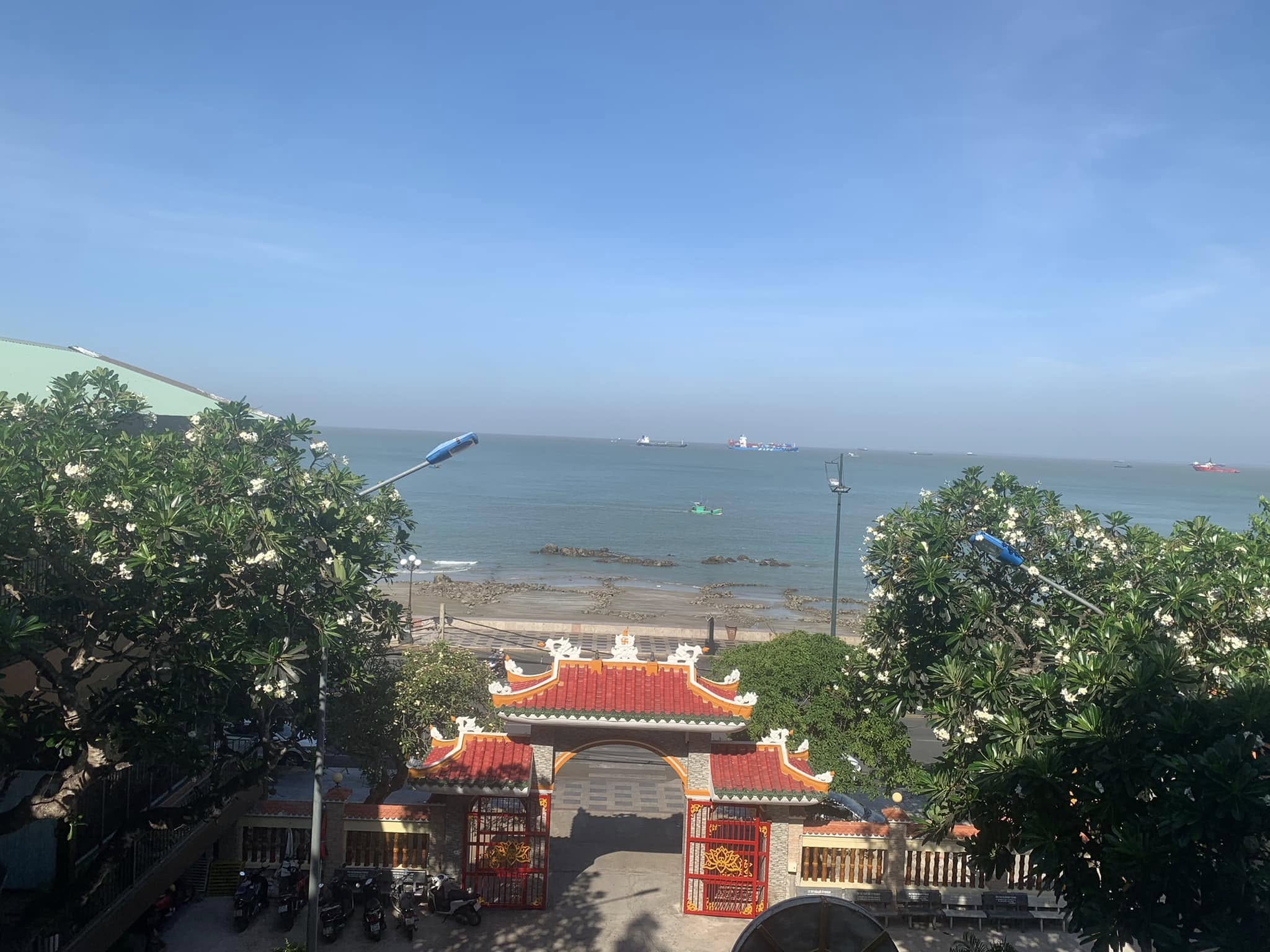
Tu Quang Pagoda, located at 102 Hạ Long Street, Vũng Tàu Ward, Ho Chi Minh City, is one of the city’s long-established Buddhist temples, closely associated with the formation and development of Buddhism in this coastal region.
Founded in 1960 by Venerable Thích Tâm Châu, Tu Quang Pagoda began as a modest structure, with its main hall originally built as a simple single-story building and a statue of Avalokiteśvara Bodhisattva placed outside. Over the decades, together with the growth of the city and the collective devotion of monks and lay Buddhists, the pagoda has undergone several restorations and expansions, gradually taking on the spacious and dignified appearance it has today. The pagoda is currently overseen by Venerable Thích Minh Quang, the second abbot.
Set on the western foothills of Núi Nhỏ (Tao Phùng Mountain), just below the Vũng Tàu Lighthouse, Tu Quang Pagoda enjoys a rare “backed by mountains, facing the sea” location. With the open sea stretching out in front and solid mountains rising behind, the setting creates a calm, contemplative atmosphere well suited for meditation, study, and spiritual reflection.
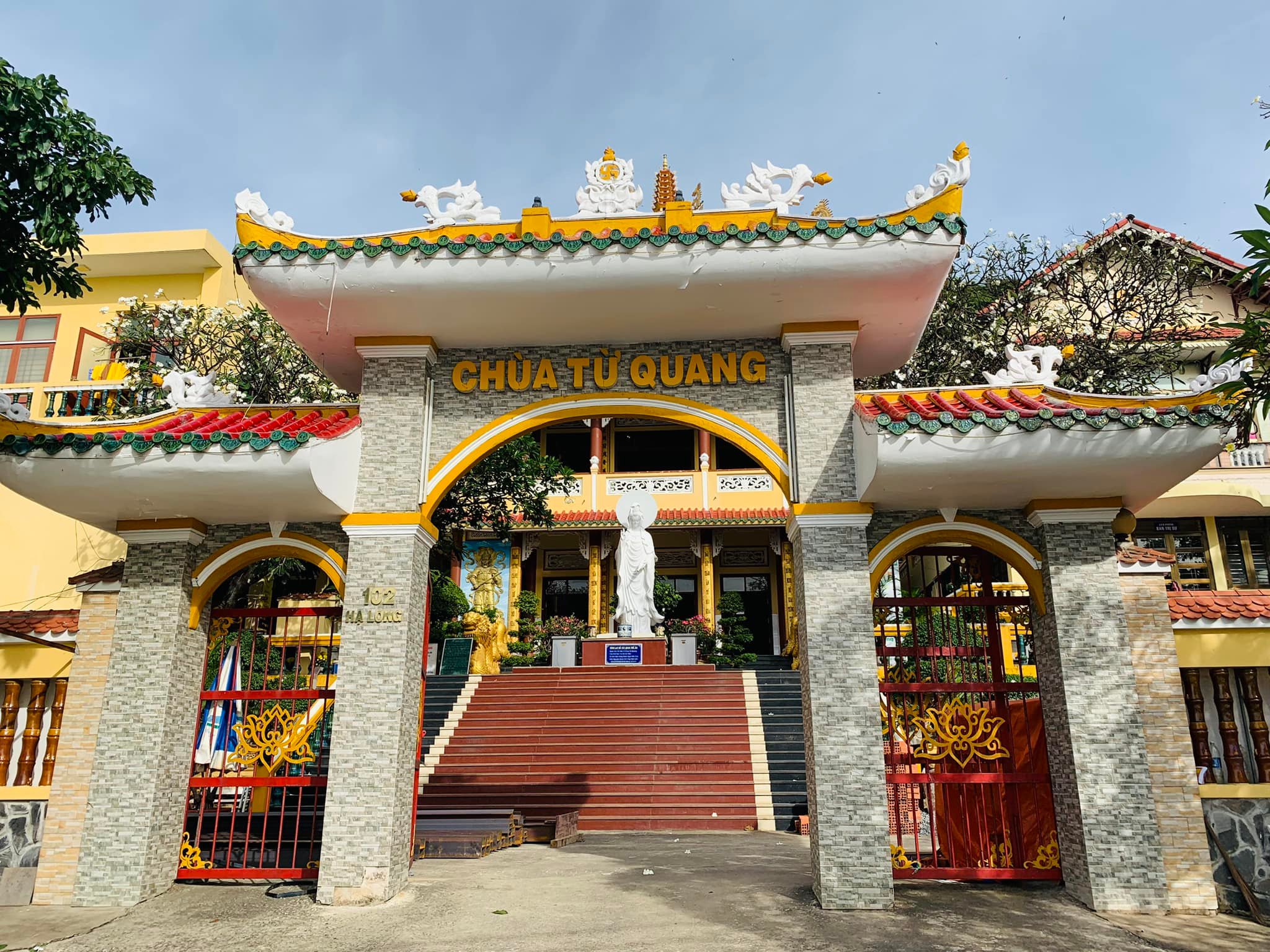
The Tam Quan (triple-arched gate) is built in a traditional architectural style. Passing through the gate, visitors enter a wide, level courtyard adorned with large ornamental plants and fragrant frangipani trees. From the courtyard, a short flight of steps leads to the solemn statue of Avalokiteśvara Bodhisattva, beside a lush garden and a quiet lotus pond that together evoke a sense of ease and serenity.
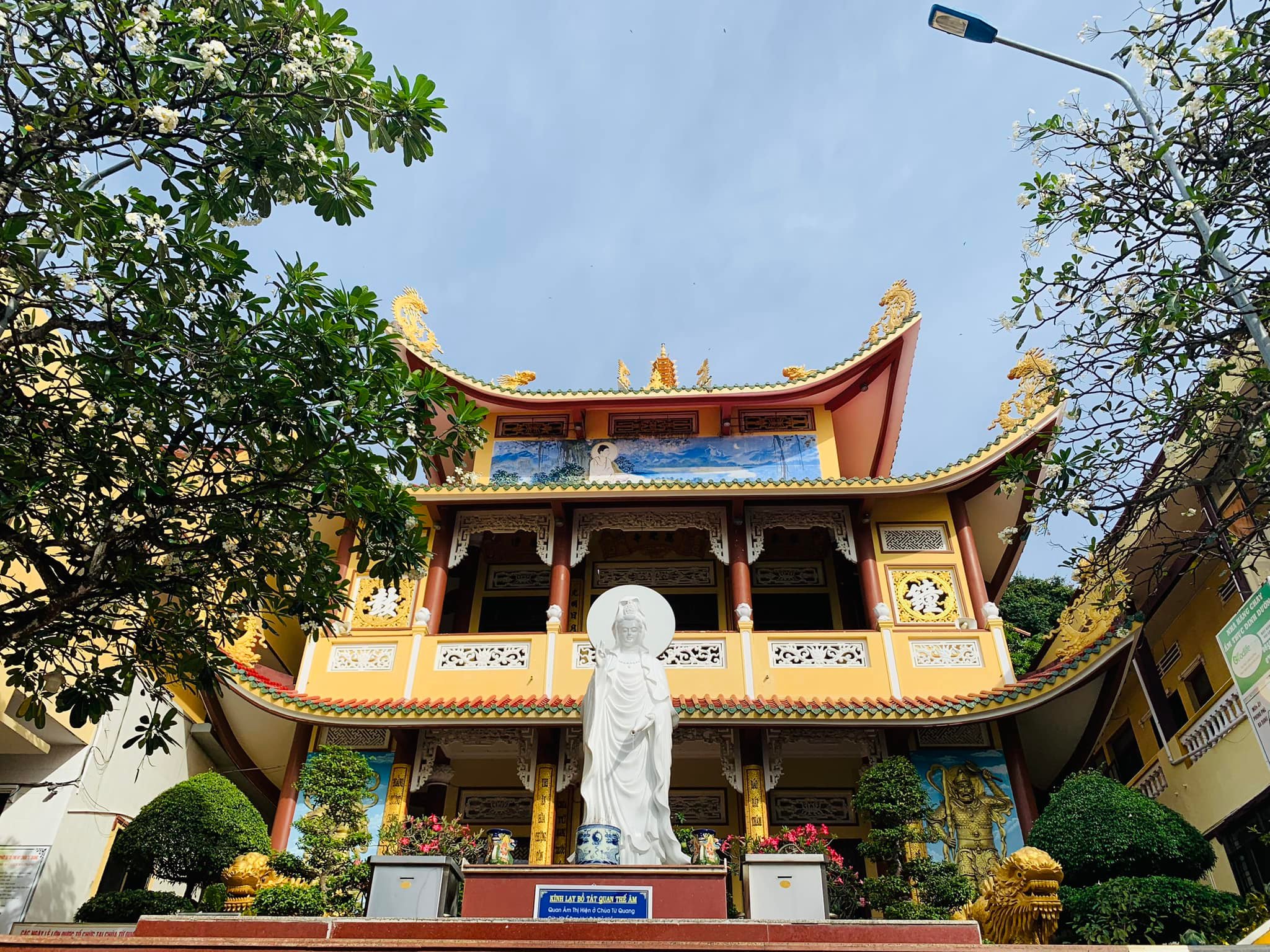
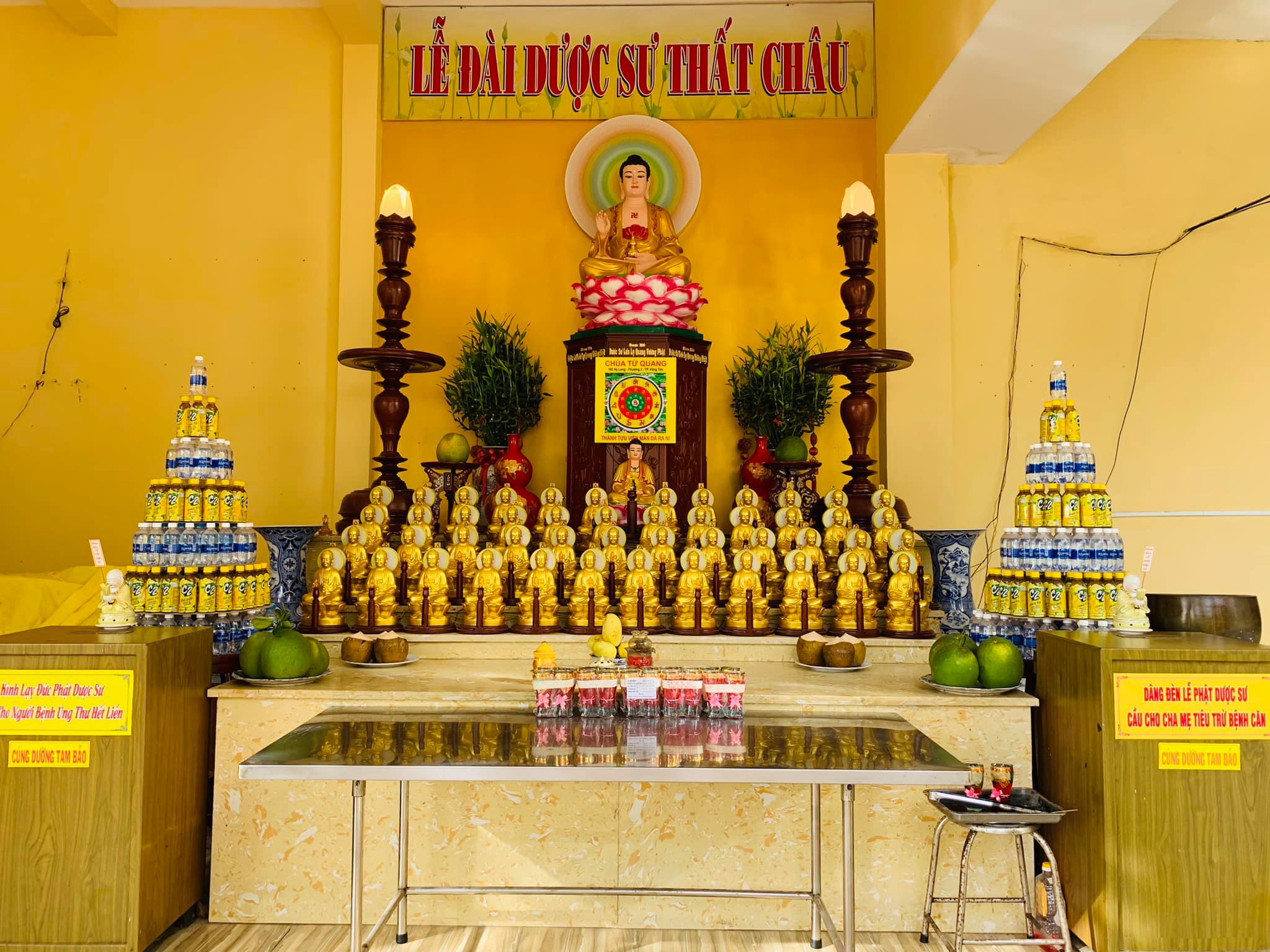
Deeper inside is the worship area dedicated to Śākyamuni Buddha, along with numerous statues of Buddhas and Bodhisattvas, all respectfully arranged with incense, flowers, and offerings. The main hall serves as the spiritual heart of the pagoda, enshrining a large central Buddha statue, flanked by Bodhisattva figures and carefully ordered ritual objects.
On either side of the main hall are the offices of the Buddhist Executive Board and a guest room for visiting monks and lay followers. Adjacent to the main hall is the lecture hall, where regular Dharma talks, meetings, and communal activities are held.
A distinctive feature of Tu Quang Pagoda is a pair of large wooden vessels, each carved from a single block of imported wood and placed prominently within the grounds. According to resident monks, many devotees believe that sincere prayers made while touching these vessels bring a sense of spiritual response and inner peace.
Situated along one of the most scenic coastal roads in the city and covering an area of more than 2,000 square meters, Tu Quang Pagoda is not only a place of Buddhist practice but also a familiar cultural and spiritual stop for both locals and visitors. Amid the lively rhythm of the seaside city, the pagoda retains a quiet, contemplative presence—a gentle pause that allows visitors to rediscover calm, balance, and inner stillness during their journey through Vũng Tàu.

)