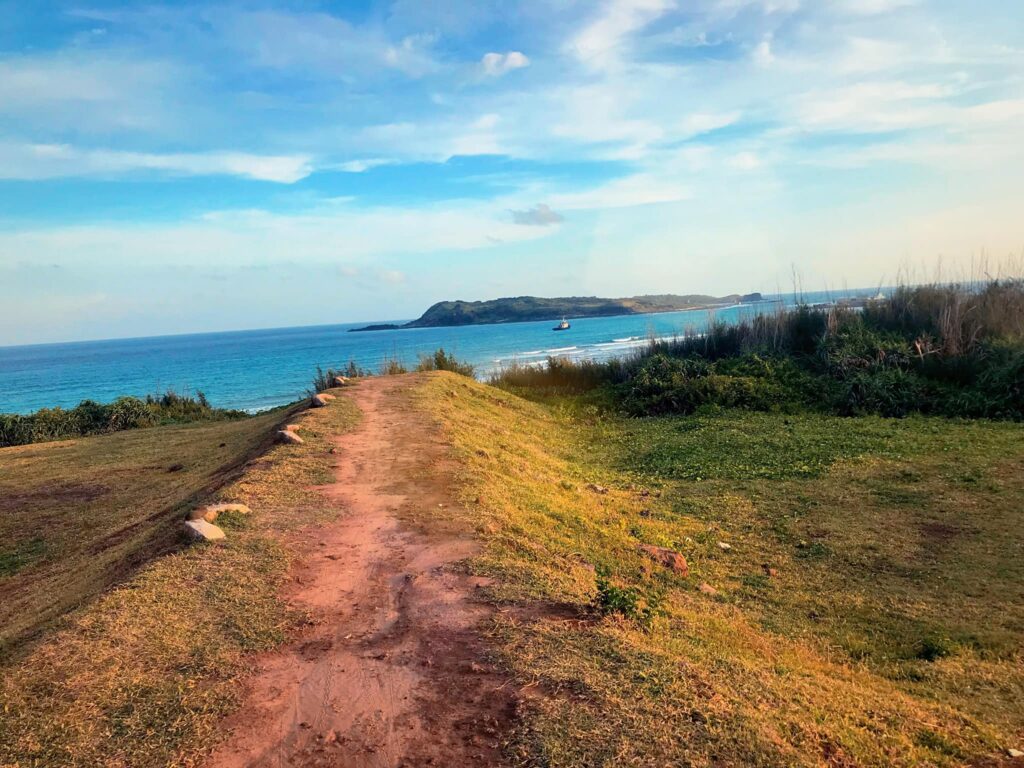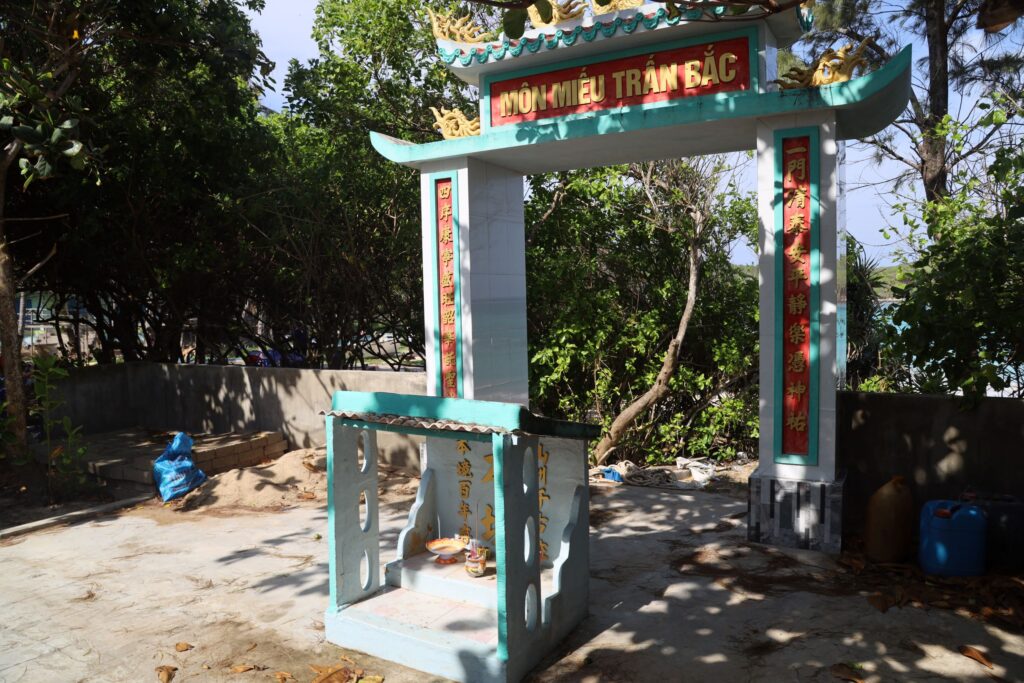
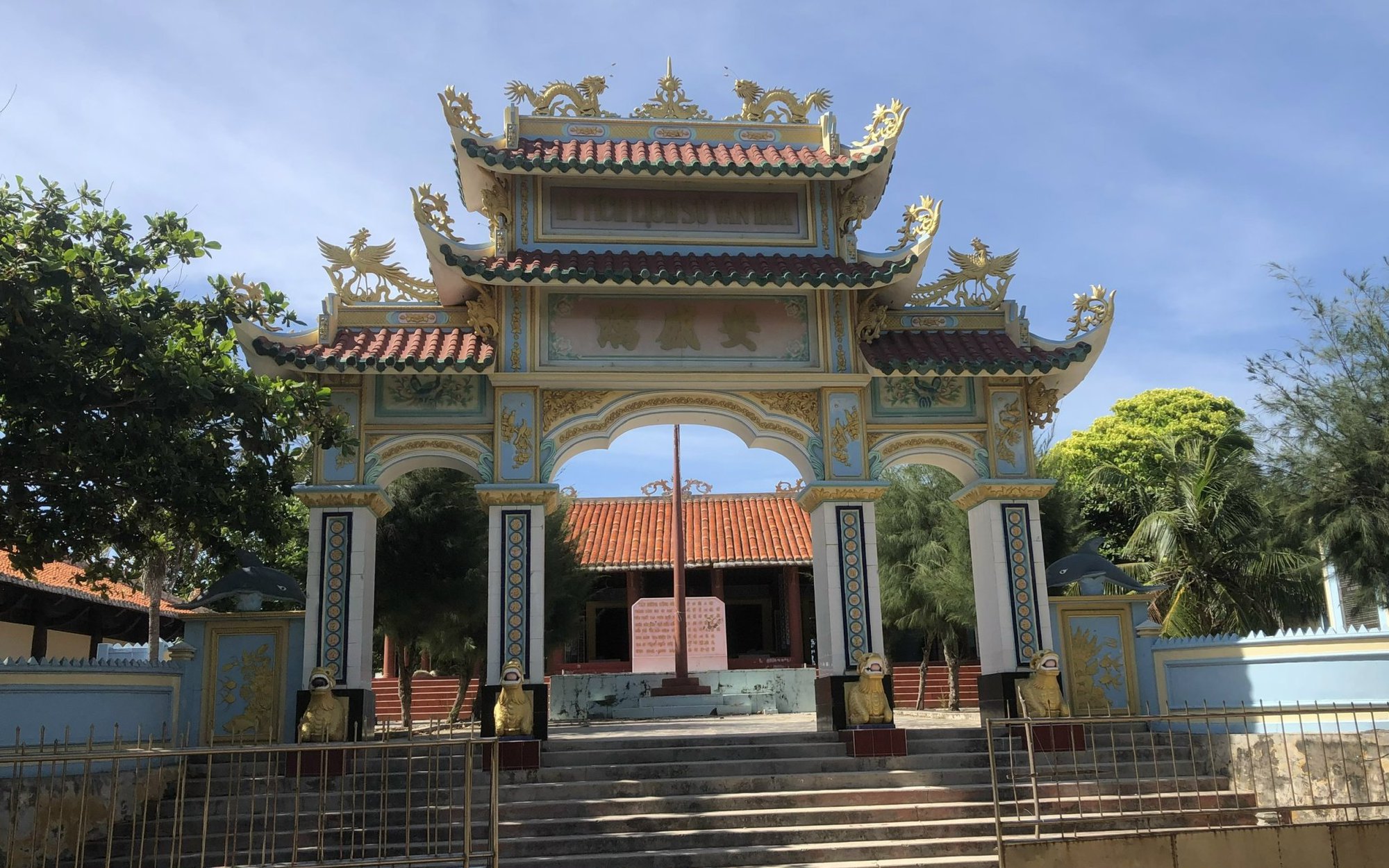
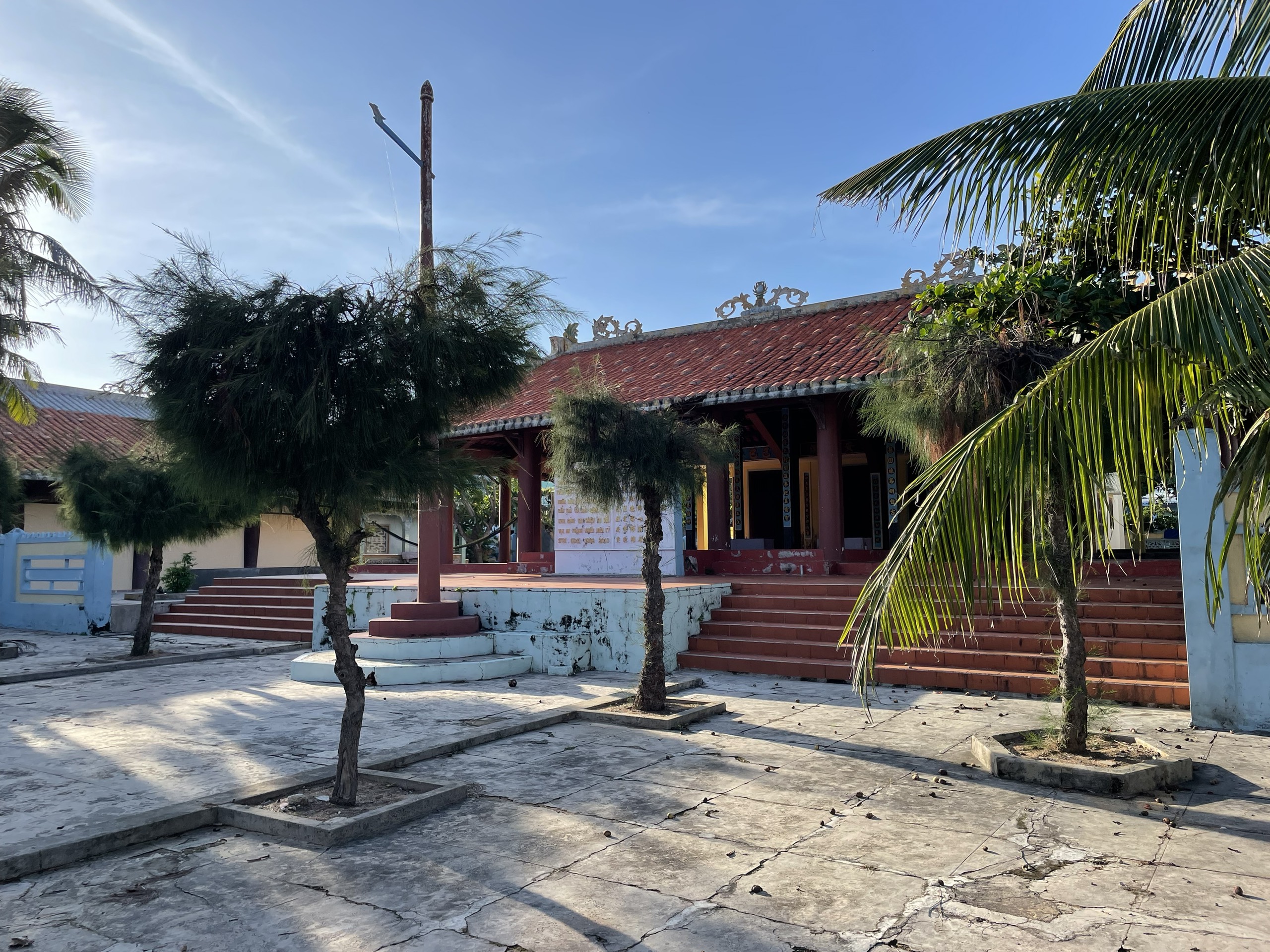
Van An Thạnh is located on a stretch of white sand right by the sea in Triều Dương Hamlet, Tam Thanh Commune, Phú Quý Special Zone. The name An Thạnh reflects the long-held wish of local fishermen for a peaceful and prosperous life. The Van is dedicated primarily to the worship of Cá Ông (the Whale, also known as the Nam Hải Deity), while also honoring the Village Tutelary God, the Forefathers (Tiền hiền), and the Later Ancestors (Hậu hiền).
In agricultural regions, the traditional communal cultural institution is known as a Đình (village communal house). In coastal and island fishing communities, this role is fulfilled by a Vạn. Both Đình and Vạn worship the village tutelary god as well as the founding and later ancestors. However, a Vạn bears a distinctly maritime character: while the tutelary god is worshipped as a secondary figure, the principal deity is the Nam Hải God, symbolized by the whale.
The History of Van An Thạnh
Van An Thạnh was established in 1781 (the Year of Tân Sửu), making it the oldest Van on Phú Quý Island. In its early days, it was a simple structure—just a wooden frame with thatched roofing and leaf walls. Over time, with support from the state and generous contributions of labor and resources from local residents, the Van has been rebuilt into a solid, dignified complex. Today, it stands spacious, well-maintained, and surrounded by a clean, open landscape.
The architectural elements of Van An Thạnh embody distinctive artistic features deeply rooted in Vietnamese maritime culture. Decorative reliefs of dragons, phoenixes, fish, squid, flowers, and foliage, along with ornate horizontal lacquered boards and parallel couplets, reflect the collective creativity and craftsmanship of island residents over centuries. These details have made Van An Thạnh a compelling destination for visitors from near and far.
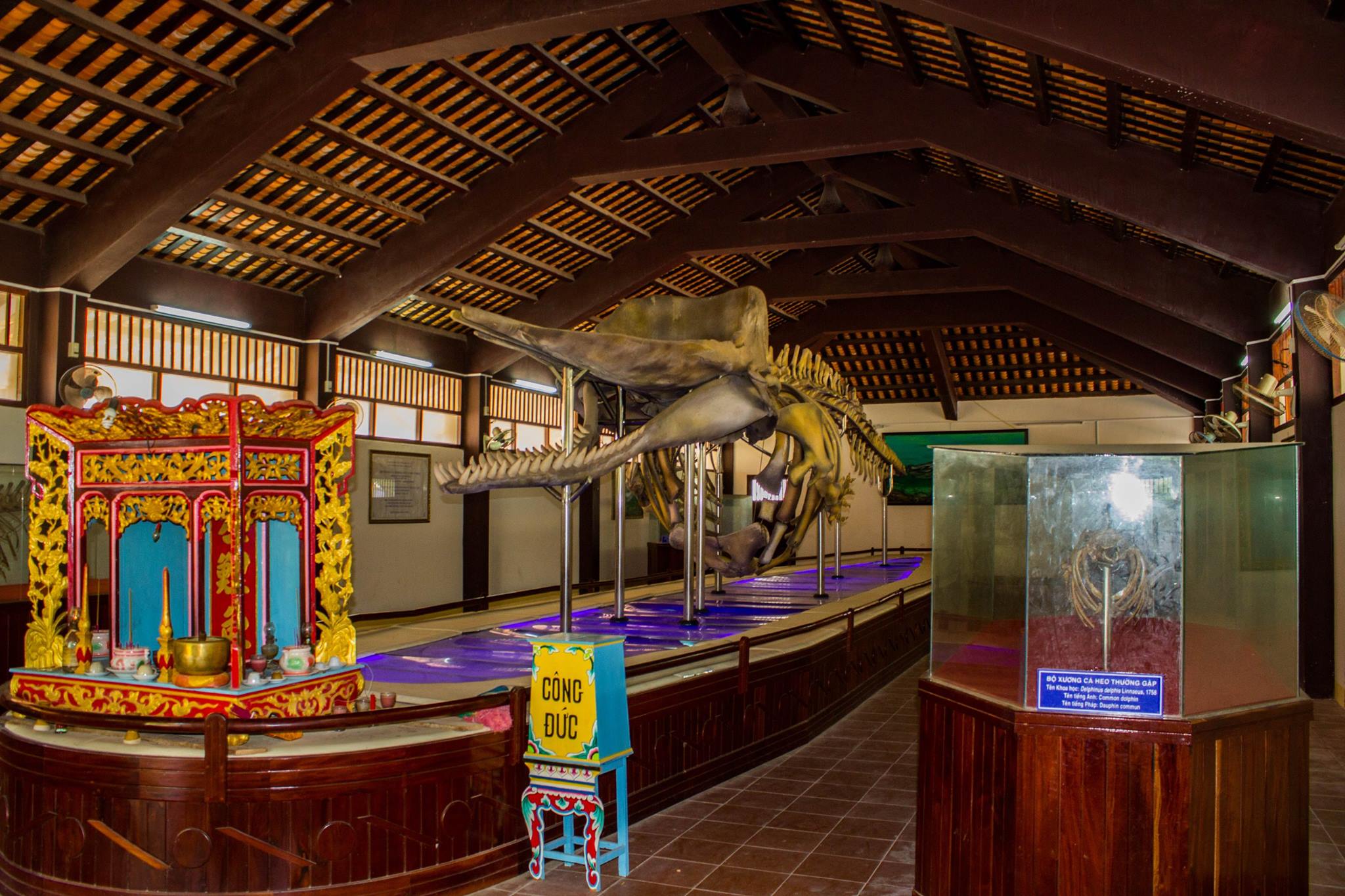
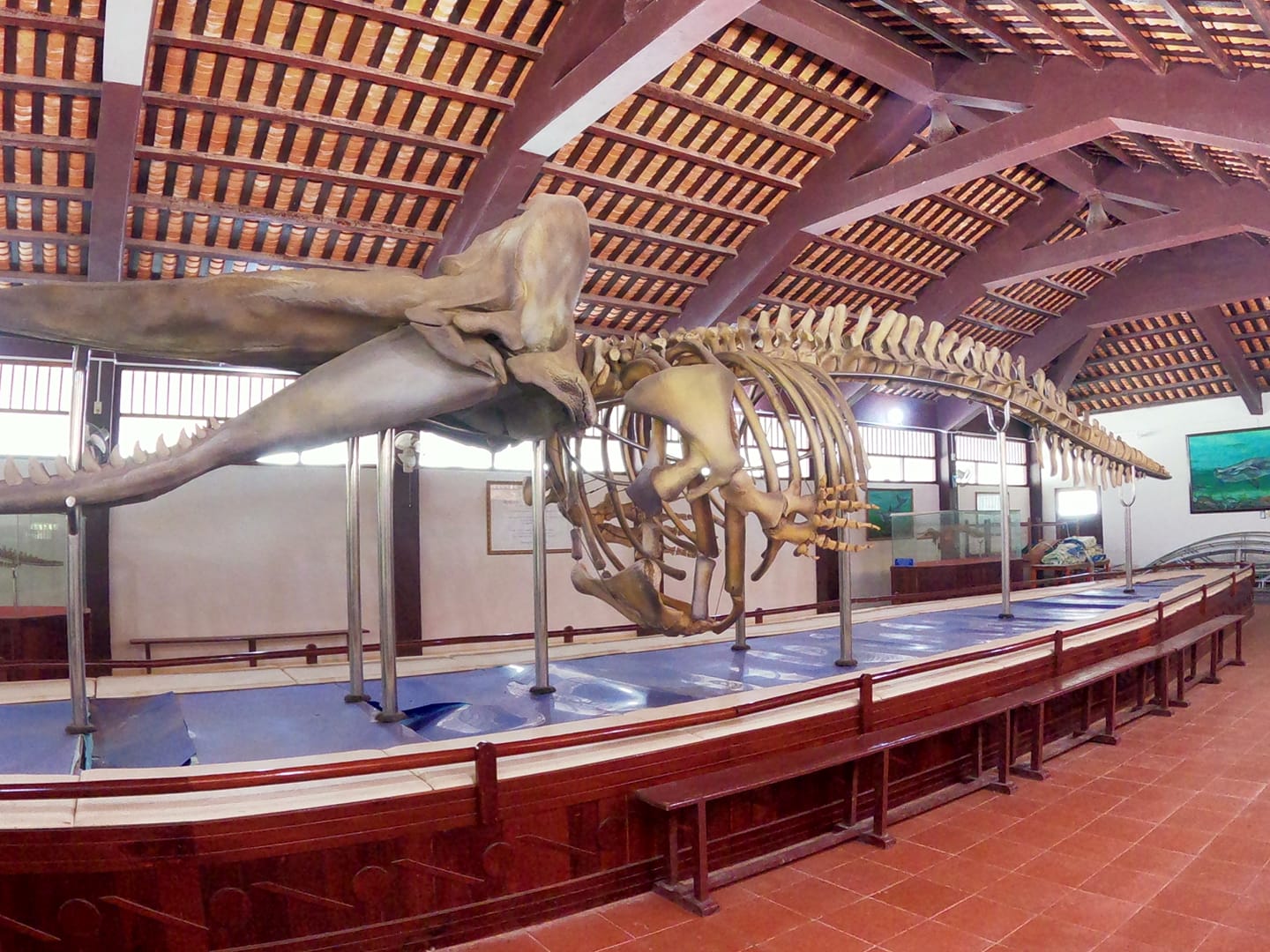
Within the Van is preserved the skeleton of a large whale (Nhà Táng whale), belonging to the whale family. The skeleton measures over 17 meters in length, consists of 50 vertebrae, and has 30 pairs of teeth in the lower jaw. According to oral tradition, the whale weighed around 40 tons when it washed ashore. The skeleton has been restored and is now displayed in a dedicated exhibition hall within the Van’s grounds.
Beyond its role as a place of worship, Van An Thạnh functions as a maritime cultural museum that has existed for nearly 250 years, housing collections related to whales and leatherback turtles. It is considered one of the oldest marine museums in the world. In recent years, marine researchers and international visitors have shown great interest in the way artifacts are preserved and protected at Van An Thạnh.
In addition to the primary worship of Cá Ông, Van An Thạnh also venerates the Village Tutelary God, the Forefathers, and the Later Ancestors, similar to communal houses found on the mainland.
Recognized as a living witness to the island’s long history, Van An Thạnh embodies enduring historical, cultural, artistic, and folkloric values. These values continue to be preserved, refined, and passed on to future generations. In recognition of its significance, Van An Thạnh was designated a National Historical–Cultural Relic by the Ministry of Culture and Information under Decision No. 51/QĐ/BT dated January 12, 1996.
The Major Commemoration Ceremony at Van An Thạnh
Historical records note that in 1841, a massive whale (Nam Hải) washed ashore in front of Van An Thạnh and was solemnly buried by the people of Phú Quý. As this whale was the largest ever recorded on the island, locals chose the 15th day of the 10th lunar month—the day it was discovered—as the annual memorial day, marked by rituals and community gatherings.
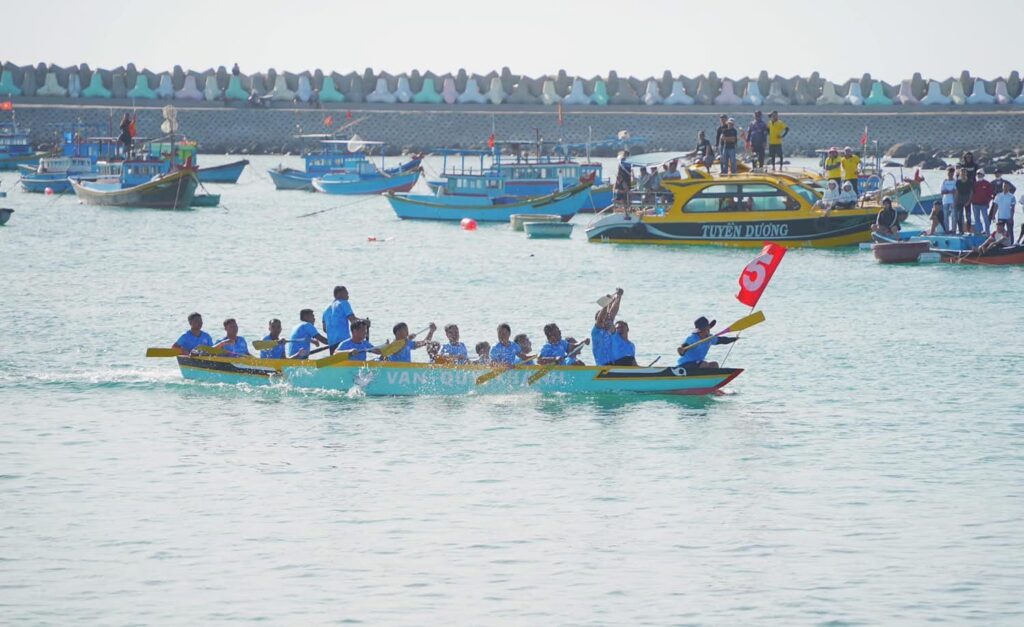
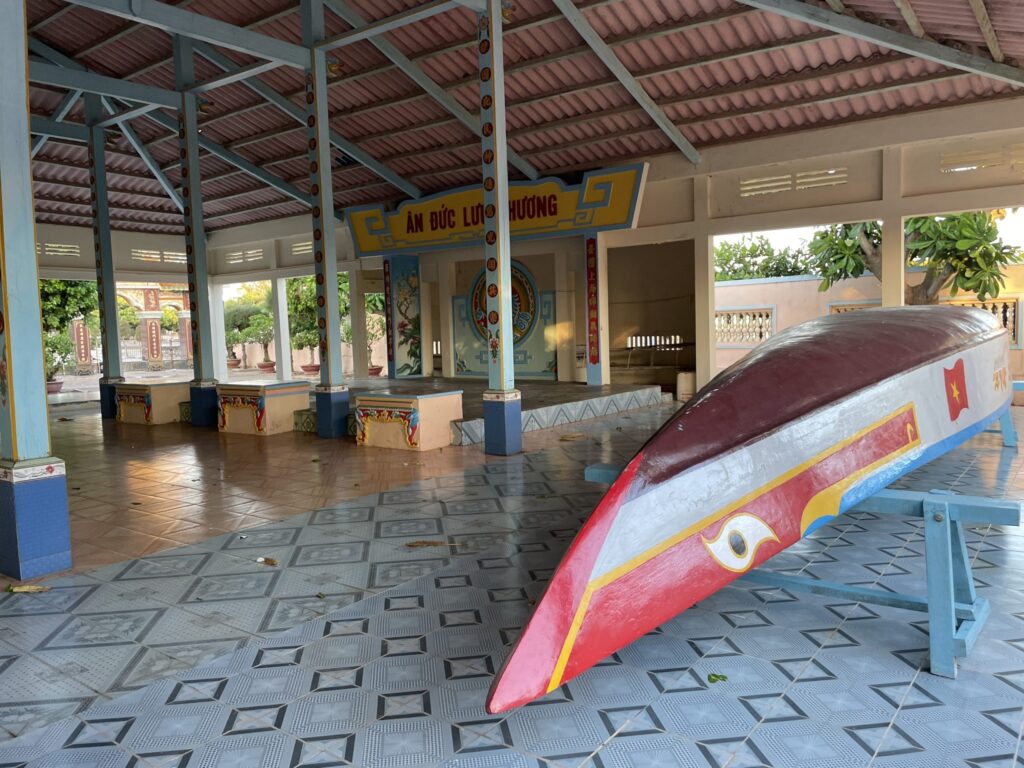
In addition to religious ceremonies associated with maritime beliefs, Van An Thạnh also serves as a venue for important communal activities such as village meetings, boat racing, and traditional tuồng (classical opera) performances held regularly for local residents.
During festival occasions, islanders working far from home make special efforts to return, offering incense to express gratitude to the Nam Hải Deity. These gatherings also provide opportunities to reconnect, share stories of the past year, and enjoy traditional performances together.
The Whale Worship Festival (Lễ Cầu Ngư) at Van An Thạnh
All ten Vans on Phú Quý Island maintain the Whale Worship Festival (Lễ Cầu Ngư), though the scale and timing vary. As the earliest and most historically significant Van, Van An Thạnh is regarded as the leading Van on the island. Consequently, the rituals and festivals held here carry special importance for the local community.
The Whale Worship Festival at Van An Thạnh is held annually to commemorate the great ancestors, marking the anniversary of the discovery and burial of a large whale. One notable recent celebration took place over two days, featuring nearly 20 consecutive ritual ceremonies. These included the presentation of royal decrees, the welcoming of deities, the honoring of forefathers, and the ceremonial sea procession to invite the Nam Hải God back to the Van.
The most impressive ritual is the sea procession, during which a flotilla of boats sails offshore in a grand formation to symbolically welcome the Nam Hải Deity from the sea. Upon completion of the ritual, participants believe the deity has accepted their prayers and accompanies the boats back to shore, filling the community with confidence and spiritual reassurance.
Cultural Value and Tourism Significance
Through the Whale Worship Festival, Van An Thạnh introduces visitors to the unique spiritual and cultural traditions of Phú Quý’s fishing communities. These festivals play an important role in promoting cultural tourism, enriching travel experiences, and attracting both domestic and international visitors to the island.
During festival periods, traditional folk arts such as ritual folk songs and chèo bả trạo—ancient performance forms of Phú Quý fishermen—are staged, drawing enthusiastic participation from locals. Islanders living elsewhere eagerly return to contribute financially and emotionally to ensure the festival is ever more vibrant and meaningful.
For visitors to Phú Quý Island, a visit to Van An Thạnh offers deep insight into the whale worship beliefs, maritime cultural values, and communal traditions that have been preserved for generations. It provides an essential understanding of the island’s historical development and the unique belief system shaped by the livelihoods of its fishing communities—an enduring testament to the intimate bond between people and the sea.