
Vạn An Thạnh is located in Trieu Duong Village, Tam Thanh Commune, Phu Quy Special Zone, Lam Dong Province. It lies 2.5 km southeast of Phu Quy district center and 800 meters east of the Tam Thanh Commune People’s Committee. In 1996, the site was officially recognized as a National Historical–Cultural Relic by the Ministry of Culture and Information (now Ministry of Culture, Sports and Tourism).
For the people of Phu Quy, the name Vạn An Thạnh represents their collective wish for peace, prosperity, and harmony. The temple venerates the whale—or “Ông”—also known as the Nam Hai Deity, a sacred guardian strongly associated with the seafaring traditions of coastal communities in central Vietnam.
During the 17th and 18th centuries, large groups of people from the Ngũ Quảng region migrated southward to settle new lands, with some eventually establishing communities on Phu Quy Island. Among the cultural practices they brought with them was the whale-worship belief, which served as a spiritual anchor for those living amid the vast, perilous ocean. For the island’s fishermen, the whale is seen as a divine protector who rescues sailors in times of danger. Numerous tales about the whale’s miracles have been passed down through generations—stories that may carry elements of legend, but are nonetheless held in absolute reverence by local fishermen.
Vạn An Thạnh was founded in the year Tân Sửu (1781) and is considered the oldest whale temple on Phu Quy Island. In addition to honoring the Nam Hai Deity, the temple also worships the village’s Thành Hoàng (tutelary deity) as well as the Tiền hiền and Hậu hiền—the early founders who contributed to establishing the village and its fishing guild.
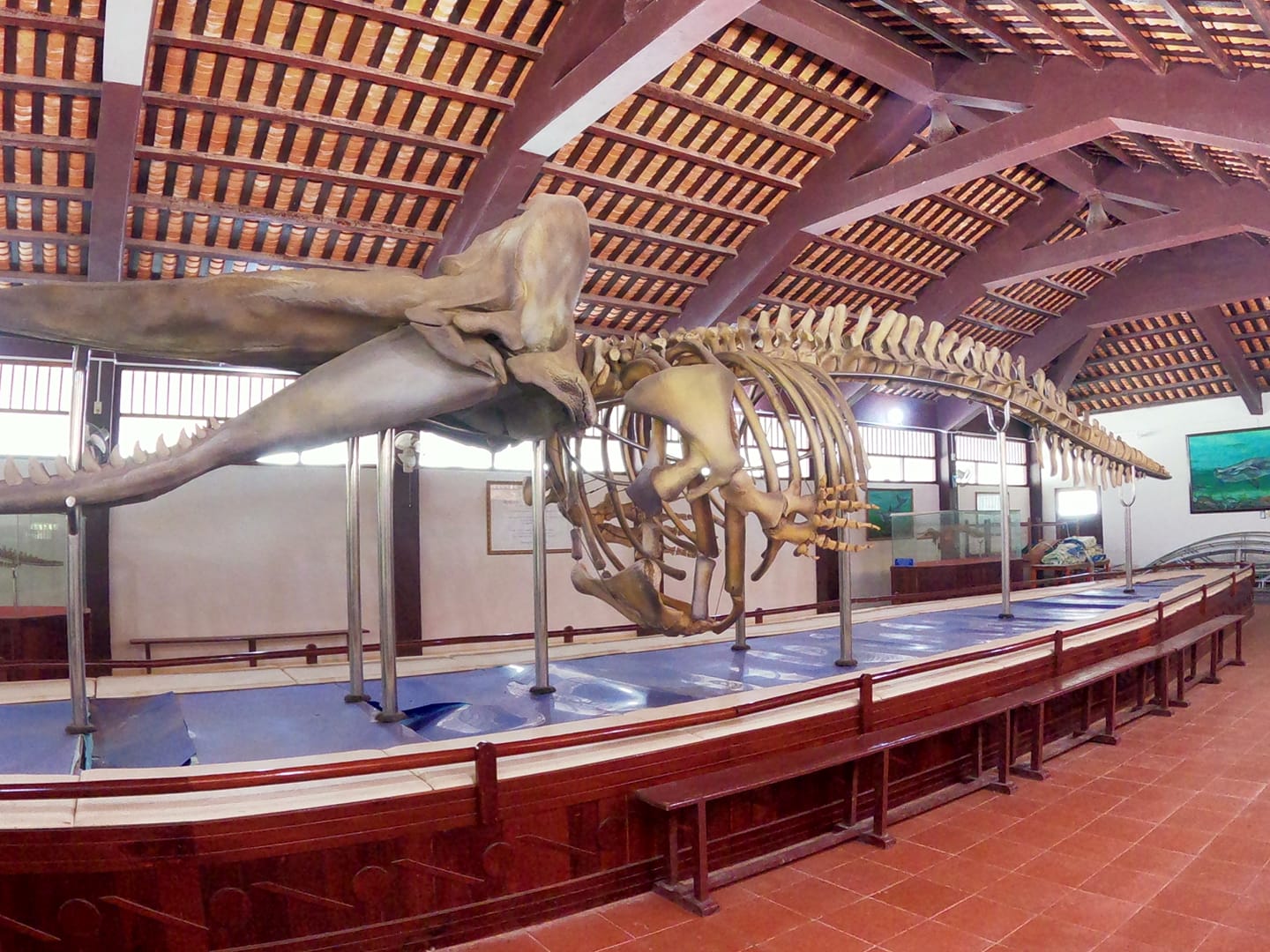
In Tân Sửu (1841), a whale was found drifting ashore in front of the temple—a sacred omen in the belief system of the islanders. The whale was solemnly buried beside the temple. Three years later, the bones were exhumed, cleansed, and enshrined in the main sanctuary. As the first whale ever recorded to drift ashore at Phu Quy, this “Ông” was honored with the title Vị Cố. Today, inside the main altar dedicated to the Nam Hai Deity, a sacred inscription remains—engraved in classical Sino-Vietnamese characters—commemorating this whale.
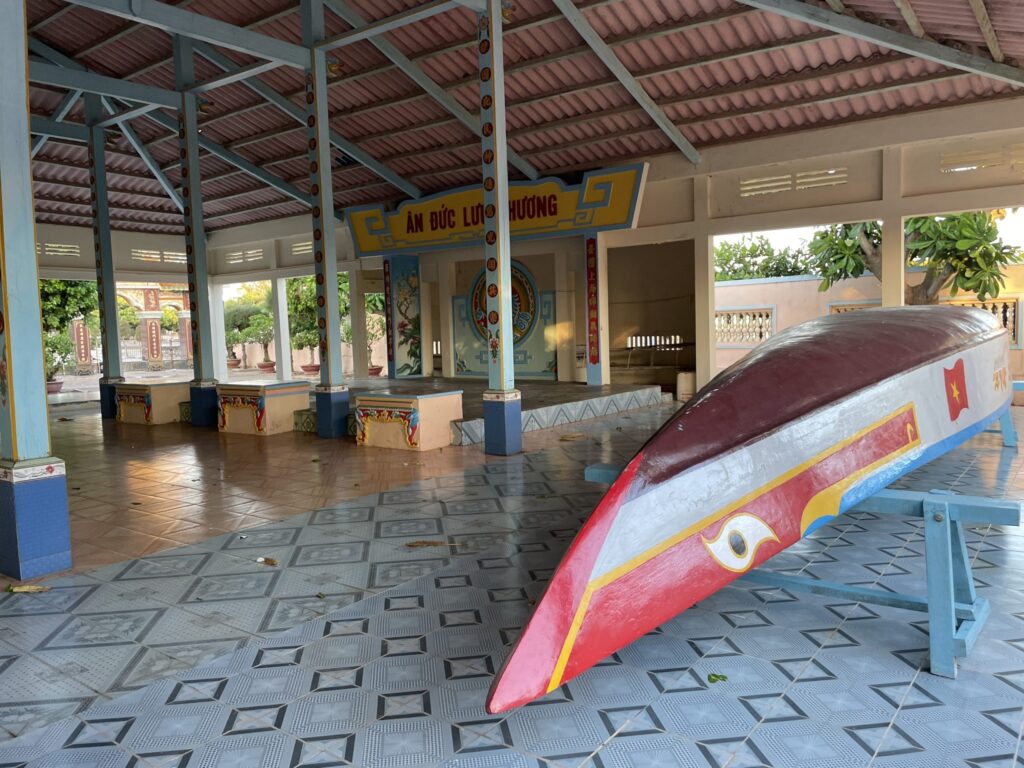
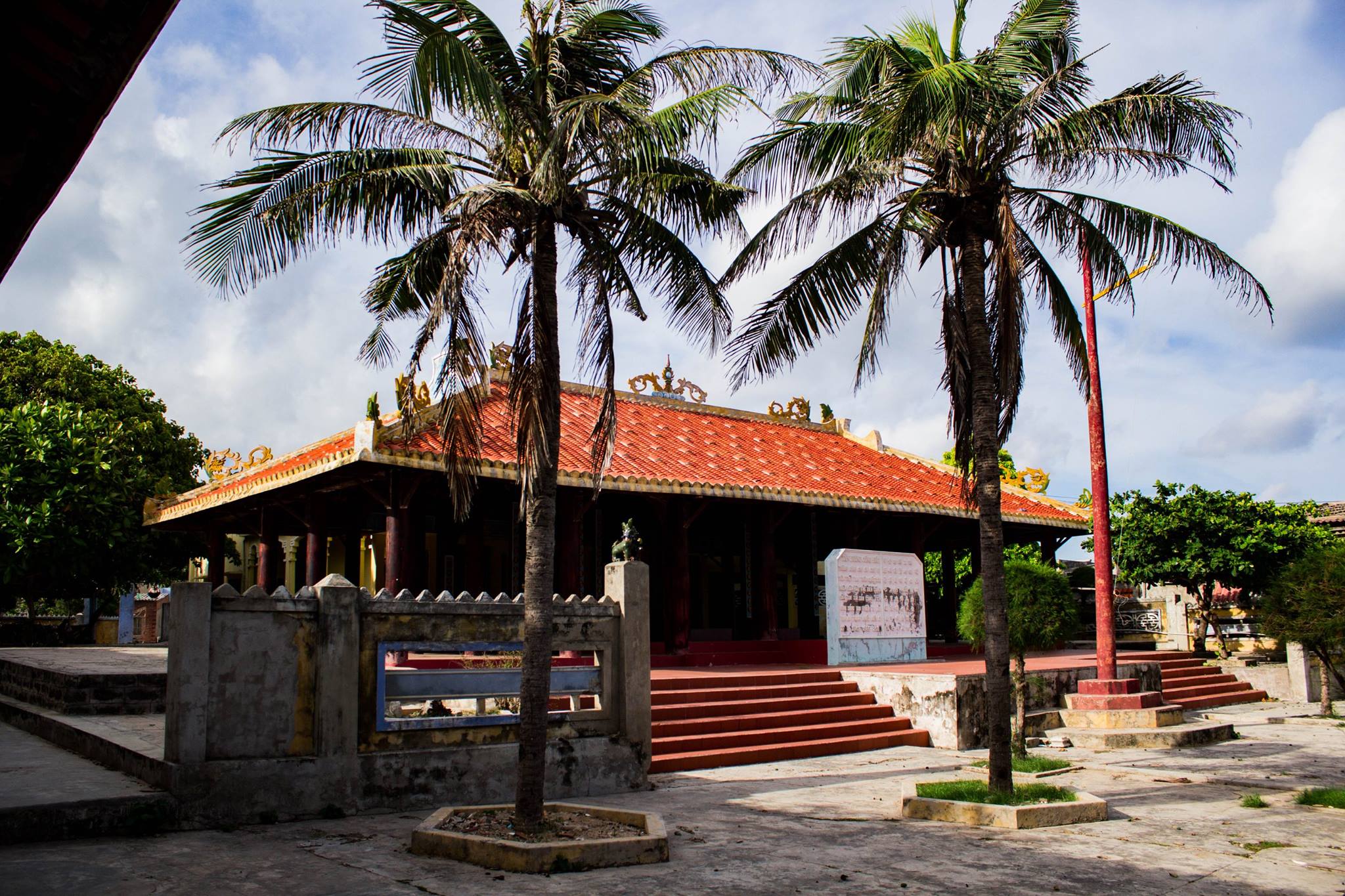
Visitors to Vạn An Thạnh will find architectural elements rich in traditional aesthetics, reflecting both the spiritual structures typical of Central Vietnam and the unique maritime culture of Phu Quy. The temple’s layout follows the Tam (three-building) configuration, consisting of the Main Hall, Võ Ca Hall, and the Ancestors’ Hall. The temple faces southward, overlooking the vast sea. The Main Hall is built in the “four-pillar” architectural style, featuring a sturdy wooden frame connecting principal and secondary beams. It is divided into three compartments: the central area dedicated to the Nam Hai Deity, with the whale shrine located behind; side altars honoring the Tiên Sư (Founding Masters) and Thủy Long Goddess are placed to the left and right.
The Võ Ca House, situated in front of the Main Hall, serves as the venue for ceremonial rituals, festivals, cultural performances, and traditional entertainment. Behind the Main Hall lies the Ancestors’ House dedicated to the Tiền hiền.
Inside the temple, numerous wooden plaques, parallel sentences, and ancient Sino-Vietnamese inscriptions are preserved—honoring the Nam Hai Deity, praising the contributions of the founders, and reflecting the islanders’ spiritual values rooted in gratitude and remembrance.
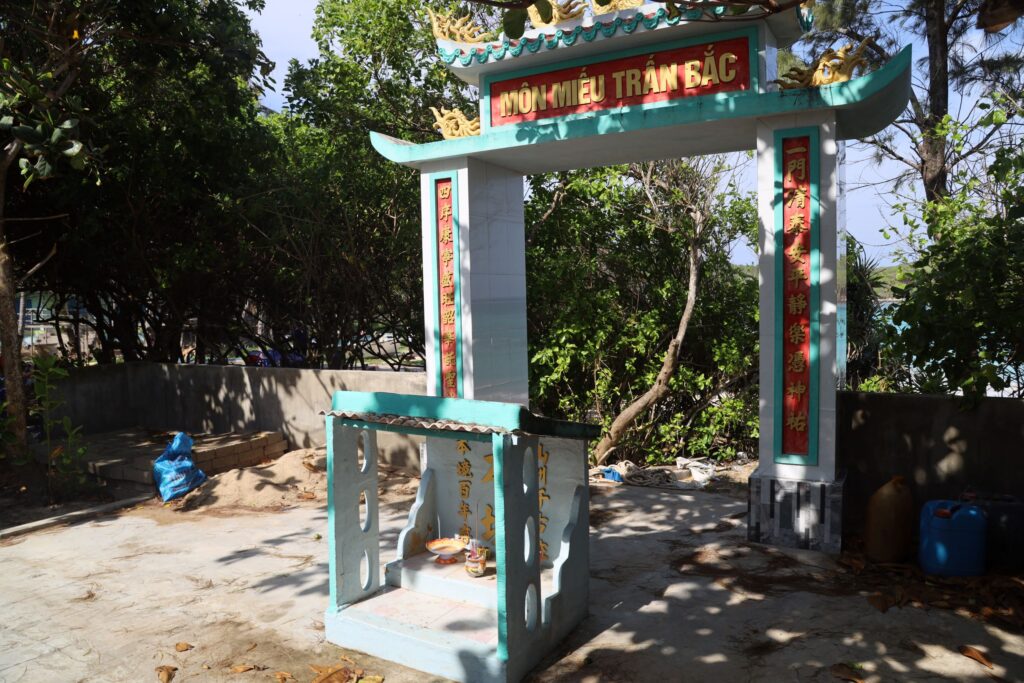
To the left of the temple grounds lies the whale burial compound. According to long-held custom, whenever a whale is found dead at sea, fishermen immediately cease their voyage and escort the whale to shore. A solemn funeral is held, and the whale is buried on temple grounds. After 24 months (for small and medium-sized whales) or 36 months (for larger ones), the bones are exhumed and ceremonially enshrined in the temple’s sanctuary. This practice, known as thượng ngọc cốt, expresses profound respect for the whale deity.
Beyond its architectural value, Vạn An Thạnh preserves ten royal decrees issued by the Nguyễn emperors Tự Đức, Đồng Khánh, and Duy Tân—affirming the cultural and spiritual importance of the site. Vạn An Thạnh is also regarded as a maritime cultural museum, housing more than 70 sets of whale bones, including those of sperm whales, leatherback turtles, and dugongs—all venerated with utmost respect.
The temple currently exhibits the skeleton of a large sperm whale, over 17 meters long, with 50 vertebrae (37 original and 13 restored) and 30 lower–jaw teeth.
Each year, Vạn An Thạnh hosts two major festivals:
• The Spring Offering Festival (Lễ Tế Xuân):
Held from the 10th to the 20th day of the first lunar month, this is also the temple’s annual Whale Worship Ceremony (Lễ Cầu Ngư), praying for peace, favorable weather, abundant fish, and prosperity.
• The Autumn Offering Festival (Lễ Tế Thu):
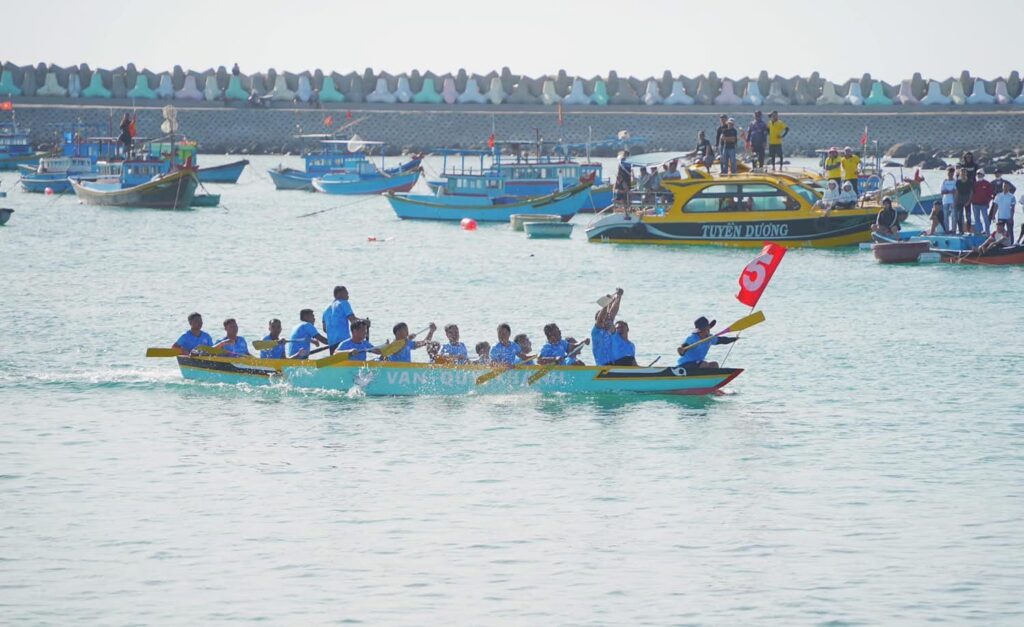
Held annually on the 15th day of the tenth lunar month, combined with the memorial day of “Vị Cố”—the first whale honored at the temple. The festival includes a ceremonial procession to welcome the living sea deities (rước Ông Sanh) from the open sea, accompanied by boats, flags, incense altars, and traditional music.
During these festivals, visitors can experience unique folk performances such as ritual singing and chèo bả trạo—traditional boat-rowing chants that embody the maritime spirit of Phu Quy. Islanders, even those living far away, return home to contribute to the festivities, reinforcing community bonds and honoring their ancestors in the spirit of the Vietnamese saying, “Uống nước nhớ nguồn” (When drinking water, remember its source).
A visit to Vạn An Thạnh offers invaluable insight into the whale-worship tradition of Phu Quy fishermen and the rich cultural heritage associated with the island’s seafaring livelihood. Through its rituals, festivals, and relics preserved over centuries, the temple provides a profound understanding of the island’s history and the unique spiritual identity of its people.