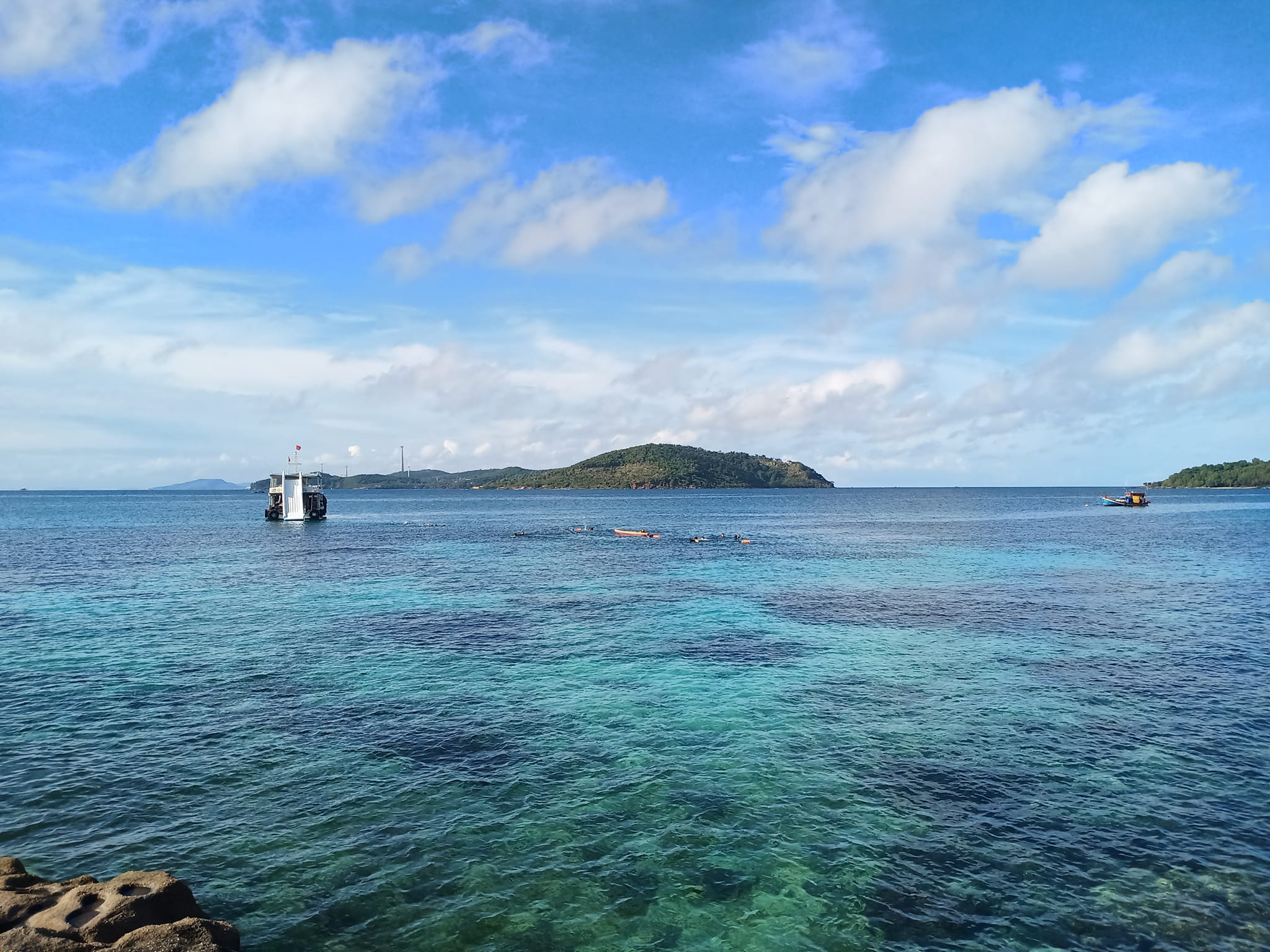
Hon Vang lies just south of Hon Thom, within Hon Thom Commune (Phu Quoc), and is the closest island to the southern cluster of the An Thoi Archipelago, located about 9 km from An Thoi Port. Although not as famous as Hon May Rut or Hon Gam Ghi, Hon Vang has its own quiet charm—raw, peaceful, and almost completely untouched by mass tourism. The island is relatively large, slightly bigger than Hon May Rut Ngoai, with a nearly round shape and sloping rocky shores that descend naturally into the sea. Around the island are small beaches nestled between natural rock formations, with clear blue water but without the long white-sand beaches found on other islands in An Thoi. Its vegetation is sparse; most of the island consists of exposed hills and low shrubs due to strong ocean winds, thin soil layers, and the lack of fresh water. These natural conditions give Hon Vang a distinct rugged beauty that feels fully preserved.
Hon Vang is not yet open to mass tourism. To visit, travelers typically hire a private canoe from An Thoi Port or stop by the island during a fishing or snorkeling trip if the captain agrees. The journey takes only 10–12 minutes from the mainland, making it a convenient detour. Despite its simplicity, Hon Vang is ideal for nature-driven activities such as photographing the rocky coastline, walking around the island, fishing, or swimming in the clear waters. However, visitors should be accompanied by someone familiar with the area, as the island has underwater rock beds and changing tides.
Part of Hon Vang is currently being planned as the Hon Vang Eco-Tourism Area, designed to preserve the island’s natural landscape while adding minimal, eco-friendly facilities such as walking paths, rest huts, viewing points, and basic services for visitors. Once completed, this project is expected to enhance Hon Vang’s appeal while maintaining harmony with its natural environment. In the future, tourists may be able to stop at Hon Vang for swimming, sightseeing, or combining it with other islands such as Hon May Rut Trong, Hon May Rut Ngoai, Hon Gam Ghi, Hon Mong Tay, and Hon Vong.
Though not the most prominent island in Phu Quoc, Hon Vang offers something different: tranquility, purity, and a sense of discovery. It is a perfect choice for travelers seeking a peaceful escape away from crowded tourist spots. And when the eco-tourism project is finished, Hon Vang will undoubtedly become a new highlight of the An Thoi Archipelago—adding yet another unique stop to Phu Quoc’s island-hopping map.