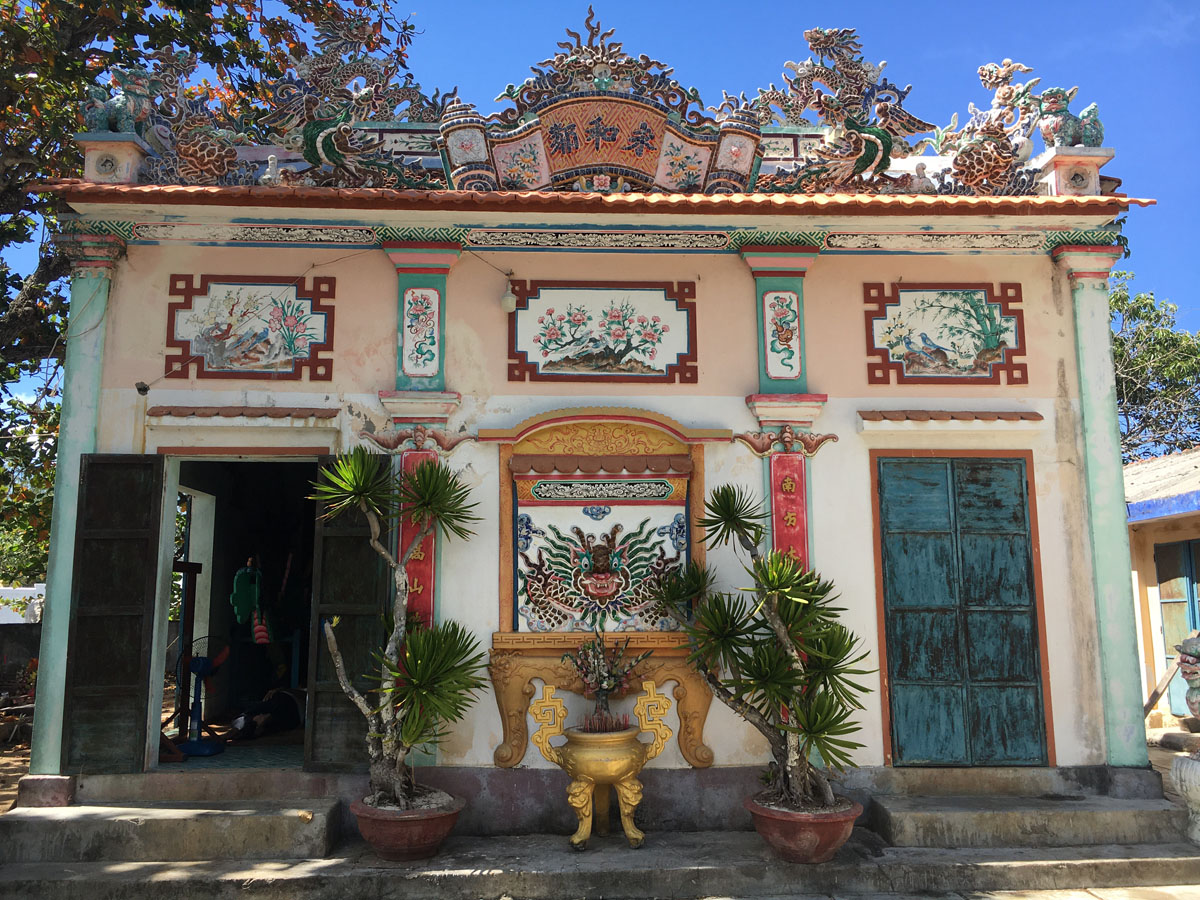
Vinh Hoa Lan, recognized as a Provincial-level Relic in 2017, is located in Đông Hamlet, An Vĩnh Commune. It is one of the rare traditional religious structures on Lý Sơn Island that has been preserved intact, reflecting the deep spiritual life and enduring connection between the local community and the sea.
In traditional understanding, a “lân” refers to a small residential unit—essentially a sub-hamlet within a larger village—each with its own dedicated worship space. Vinh Hoa Lan therefore serves not only as a place for spiritual activities but also as a site honoring the tiền hiền (pioneers) and hậu hiền (successors) who first reclaimed and settled this land.
Today, the lan primarily worships the Holy Mother Thiên Y A Na, while also enshrining several protective deities, including Hồng Châu Thái Tử, Hồng Bửu Thái Tử, Chúa Chưởng, Thượng Thiên, Thủy Long Thần Nữ, the Five Elements Goddesses, and Hồng Nương Princess. This diverse pantheon highlights the rich folk belief system of the island, shaped by a unique blend of Cham and Việt cultural influences.
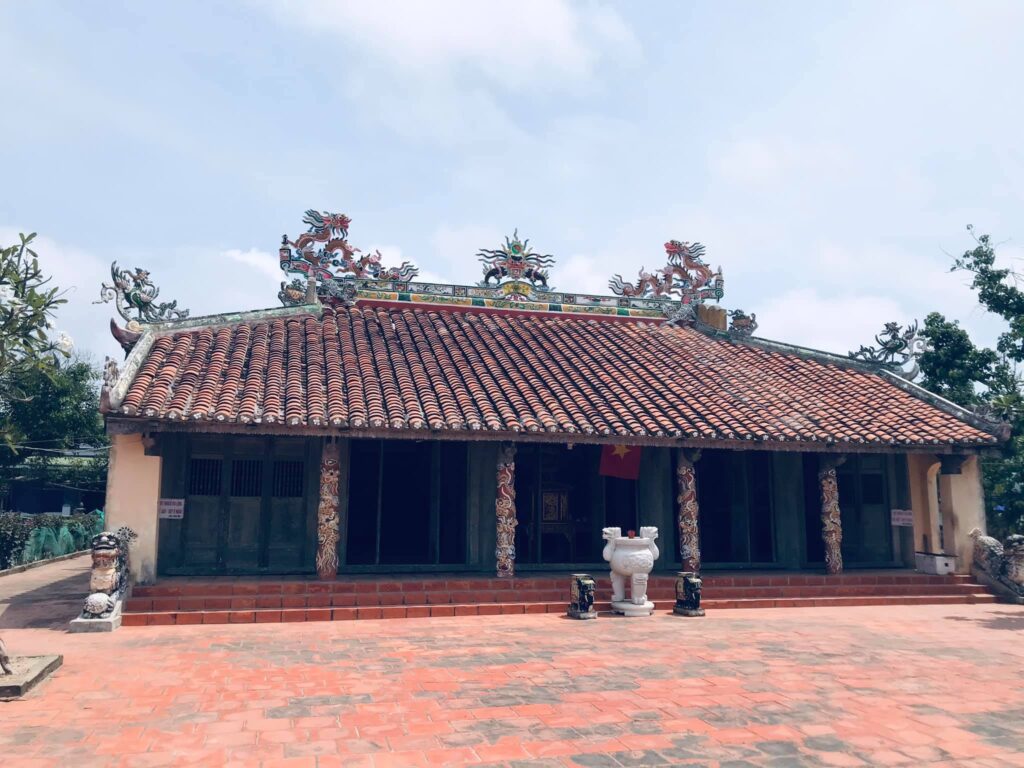
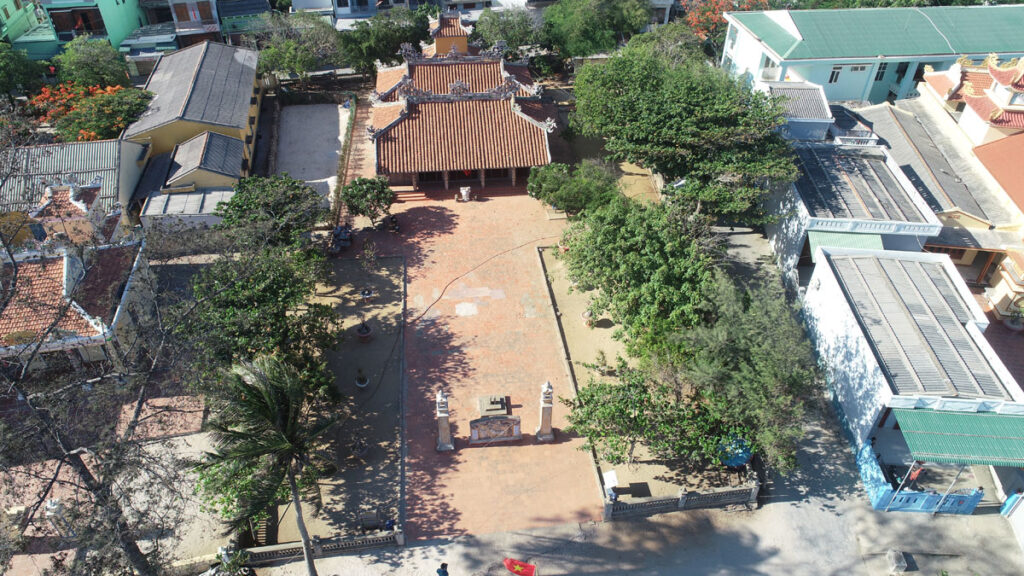
Although modest in scale, Vinh Hoa Lan is harmoniously integrated with its natural surroundings. Its layout features three main components: the tiền đường (front hall with three bays), the chính điện (main sanctuary with one bay and two side wings), and the hậu tẩm (rear chamber). A distinctive architectural detail is the front hall’s closed central bay—decorated with a dragon-like motif—while the two side bays serve as the entrances. A ceremonial incense burner stands prominently in front, giving the structure a unique character.
The roof is beautifully adorned with intricate motifs: the Four Sacred Creatures (dragon, kylin, tortoise, phoenix), the Four Seasons flora (apricot, bamboo, pine, chrysanthemum), and the iconic “two dragons flanking a pearl” at the ridge. In front of the hall lie the ceremonial pond, the screen wall (bình phong), and the pair of pillar-gates (trụ biểu), forming a complete architectural ensemble typical of Central Vietnamese folk temples. Inside, the wooden framework and decorative carvings—couplets, floral motifs, and sacred ornaments—have been well preserved, enhancing the solemn and artistic atmosphere of the sanctuary.
Vinh Hoa Lan is more than a small community shrine; it is a cultural landmark that embodies the history of land settlement, the spiritual traditions, and the communal identity of Lý Sơn’s people across generations. It stands today as a meaningful cultural–historical destination and a vital element of the island’s unique heritage.