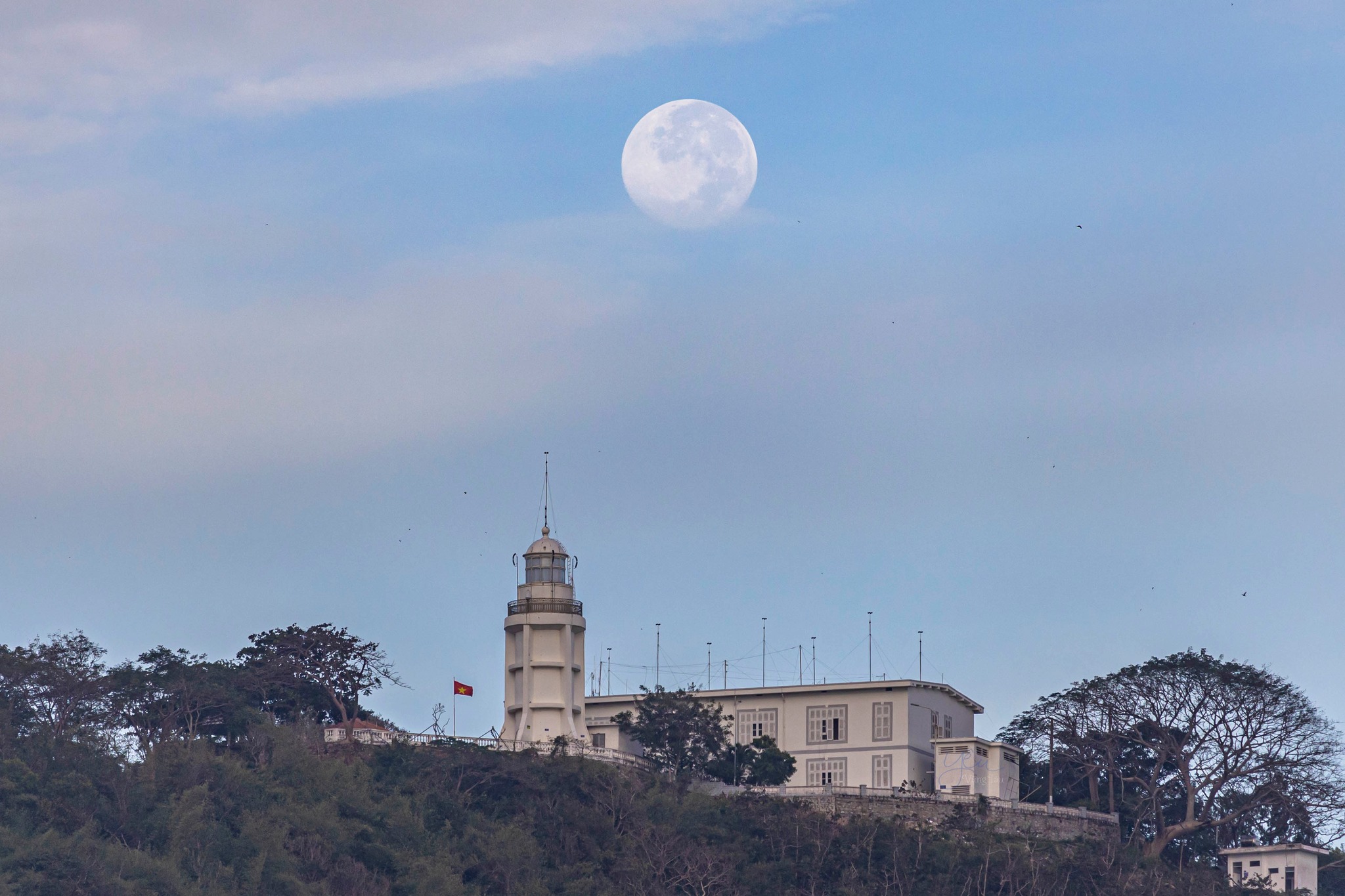
Vung Tau Lighthouse is among the oldest lighthouses in Vietnam. It was first built by the French in 1862, eight years after Southeast Vietnam became a French colony. The original lighthouse stood on the southern slope of Small Mountain, but it was small and had limited visibility.
Between 1910 and 1913, the French rebuilt it entirely at its present location, raising its elevation from 149 m to 193 m above sea level to enhance its light range.
Classic French Architecture
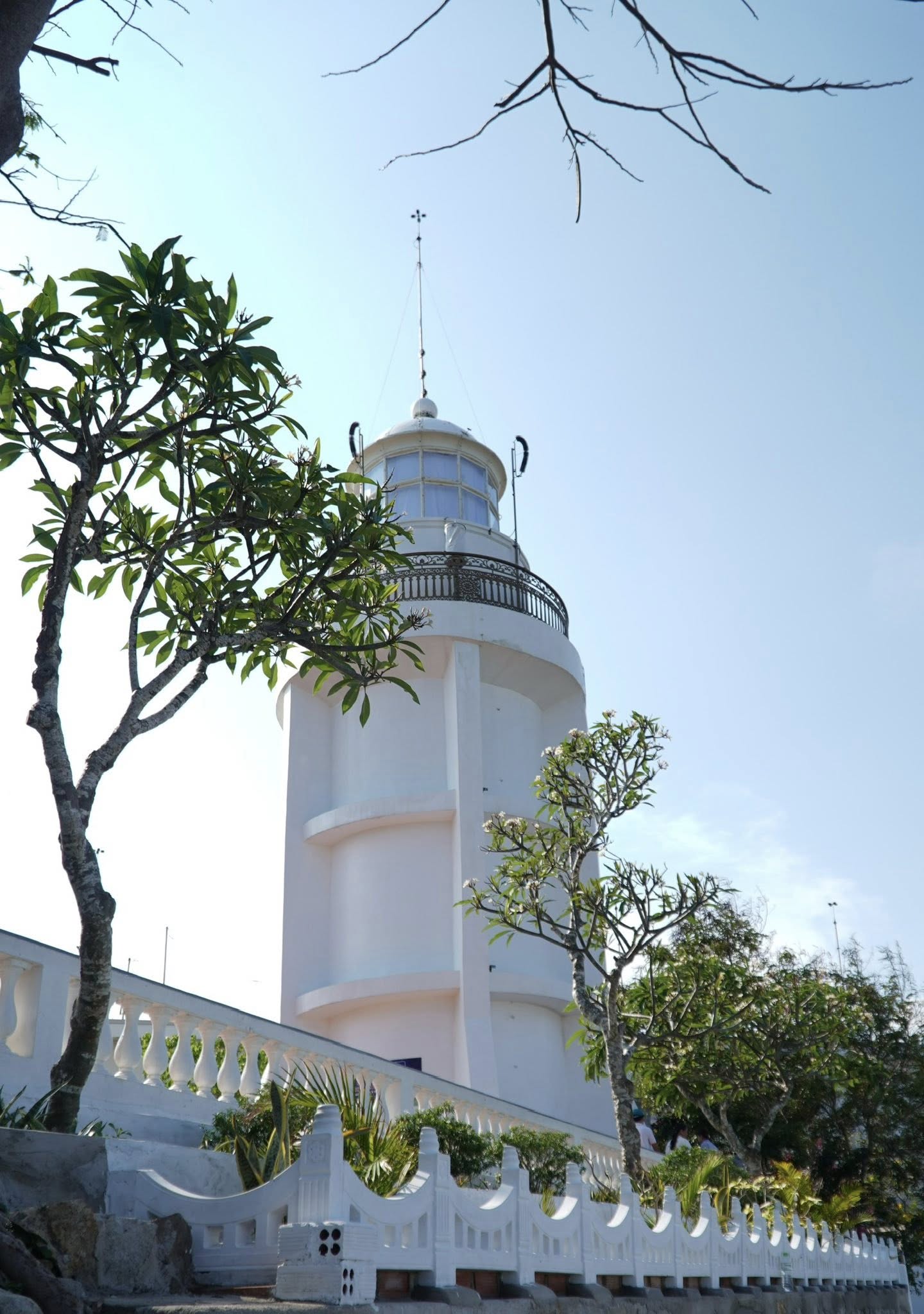
The current lighthouse preserves its original French colonial design:
- Circular tower, painted white
- Height: 18 m
- Diameter: 3 m
- Coordinates: 10°20’02.6”N – 107°04’39.7”E
- Visibility range:
- 23 nautical miles at night (≈43 km)
- 34 nautical miles by day
- Lighting System
- 172V – 1000W bulb
- Two 300 mm thick glass lenses in “lantern” style
- Flash pattern: 2 flashes every 12 seconds
- Rotating mechanism: 5 rpm
Before electricity, the lighthouse operated on oil and rotated using a counterweight system that had to be rewound every 3 hours.
Inside the tower is a 55-step spiral staircase leading to the main lantern. A balcony encircling the tower lets visitors enjoy panoramic views of Vung Tau. On the third level, there is an auxiliary light (18 nautical miles) and a 12-nautical-mile radio beacon.
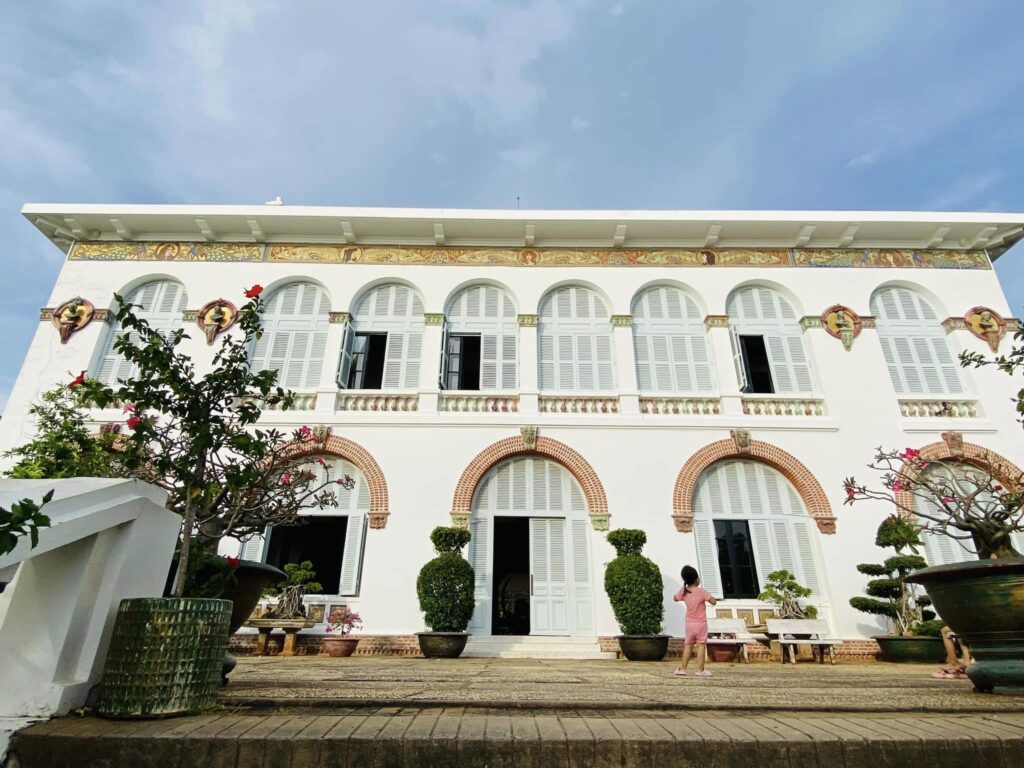
The Keeper’s House – A French Architectural Gem
A solid, curved underground passage connects the lighthouse to the old keeper’s house—a rare architectural feature in Vietnam.
Keeper’s house highlights:
- Built between 1910–1913
- Two-storey French colonial structure with nearly 25 rooms
- A 100 m³ rainwater tank supplying year-round water for lighthouse staff
- Home to 6 lighthouse keepers operating 8 rotating shifts, 24/7
The surrounding garden is filled with decades-old frangipani trees, creating a peaceful and fragrant atmosphere on the top of Small Mountain.
The Journey to the Lighthouse
From Front Beach (Ha Long Street), visitors turn onto Lighthouse Road, following a nearly 3 km paved route winding up Small Mountain. The higher you go, the stronger the sea breeze and the more magnificent the scenery becomes.
Along the way:
- Patches of primitive forest
- Frangipani blossoms and wildflowers
- A stunning row of five 15–20 m kapok trees, blooming white in late March—one of Vung Tau’s most unique photo spots
A Perfect Viewpoint Over the City
From the lighthouse balcony, visitors can admire:
- Front Beach & Back Beach
- Christ the King Statue
- Big Mountain & Minh Dam Mountain
- Ganh Rai Bay
- And on clear days: Can Gio and Go Cong in the distance
Sunset is considered the most beautiful time to admire the city from above.
Maritime, Military & Historical Significance
French Colonial Era
Vung Tau Lighthouse and Bay Canh Lighthouse (Con Dao, built in 1883) are the two oldest lighthouses in Vietnam. They served to:
- Guide international maritime routes
- Lead ships entering Saigon – Vung Tau – Kien Giang
The original lighthouse (“Ancien Phare”) was mentioned in Nguyễn Trường Tộ’s poem Phong Cảnh Cần Giờ in 1866, confirming its early existence.
Resistance Against the French
The lighthouse was a strategic military point. It was attacked twice by Vung Tau commandos (April 1950 and 10 May 1950) in attempts to disable the beacon and disrupt French military logistics.
Resistance Against the Americans
During the Vietnam War, the lighthouse’s glow served as a key navigational marker for the No-Number Ships carrying weapons to Lộc An, contributing to victories such as Bình Giã (1964–1965).
A Cultural and Tourism Icon of Vung Tau
Today, Vung Tau Lighthouse is:
- One of the most famous check-in spots in Vung Tau City
- Welcoming nearly one million visitors per year
- A cultural symbol appearing on logos, souvenirs, and in the memories of generations
- A spiritual companion for fishermen: “When lost at sea on a dark night, the lighthouse is the hope that guides us safely home.”
In the near future, the 2 km cable car project connecting Big Mountain and Small Mountain will make it even easier for tourists to reach the lighthouse, alongside the traditional options of driving or trekking.