If you visit Con Dao between May and October, don’t miss the chance to witness sea turtles coming ashore to lay their eggs at night on Bay Canh Island—one of the most remarkable ecological destinations in the archipelago.
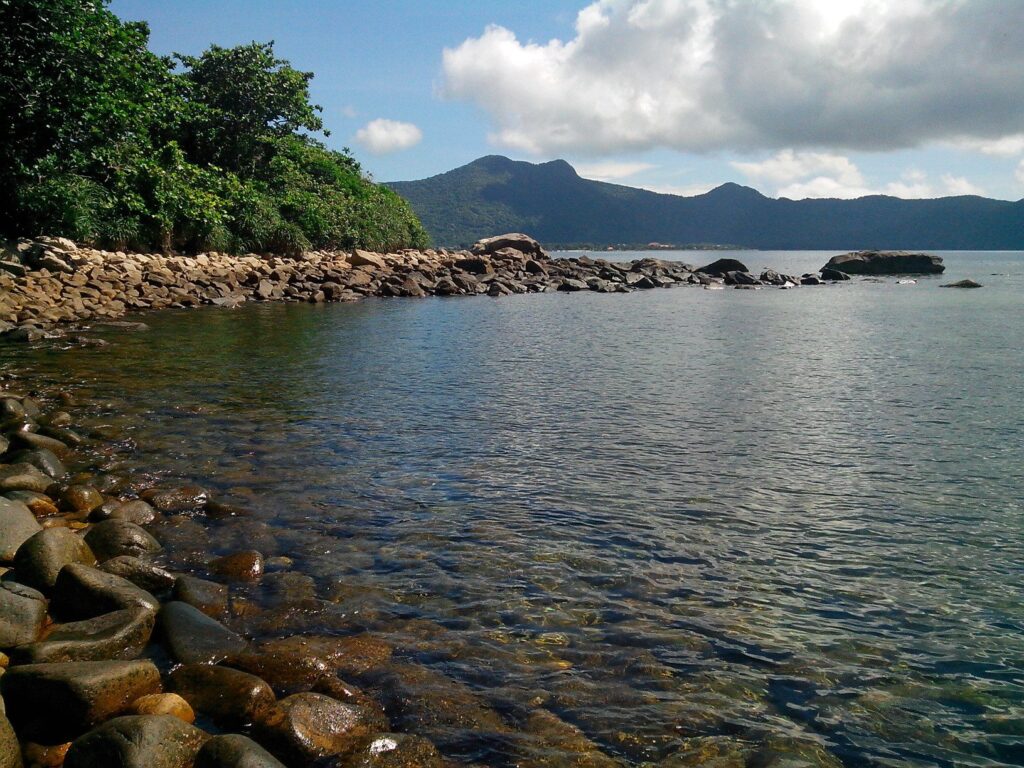
Bay Canh is known as the largest sea turtle conservation site in Vietnam and is considered the top eco-tourism island in Con Dao. As the island lies within the strictly protected area of Con Dao National Park, visitors must obtain a permit from the park’s management office on Con Son Island before traveling there.
After a 45-minute boat ride from Con Son and a short 700-meter walk through the mangrove forest, you will reach the Bay Canh Ranger Station. The island’s Bai Cat Lon is one of 14 nesting beaches in Con Dao and is the most active site where mother turtles come to lay eggs.
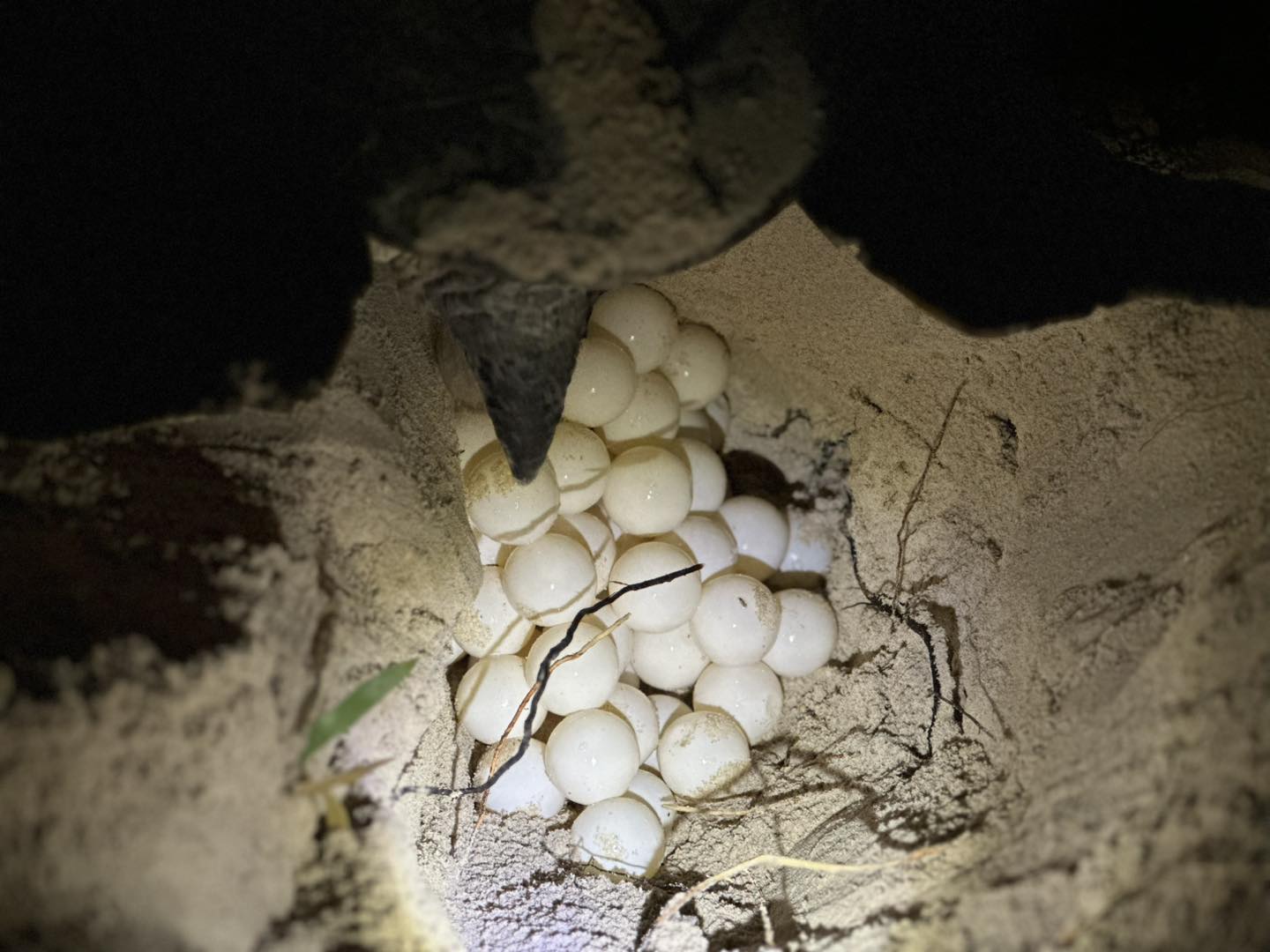
Around 7 PM, when the tide rises, the first turtles begin to appear near the shoreline. Slowly and silently, they crawl up the soft sand toward the bushes to find a safe spot for nesting. Using their front flippers, they clear the surface sand, then dig a deep chamber with their hind flippers—typically 50–60 cm deep and about 20 cm wide. Under the soft glow of ranger flashlights, visitors can see the round, white eggs—looking like ping-pong balls—dropping one by one into the nest.
A mother turtle lays an average of 80 eggs, though some may lay up to 200. Once finished, she carefully covers the nest, disguising it with sand over a radius of 5–6 meters to erase any trace before returning to the sea.
After the turtle leaves, rangers collect the eggs and transfer them to protected hatcheries. Half of the eggs are incubated under direct light while the other half are shaded, helping balance the gender ratio—since temperature and light determine whether hatchlings become male or female.
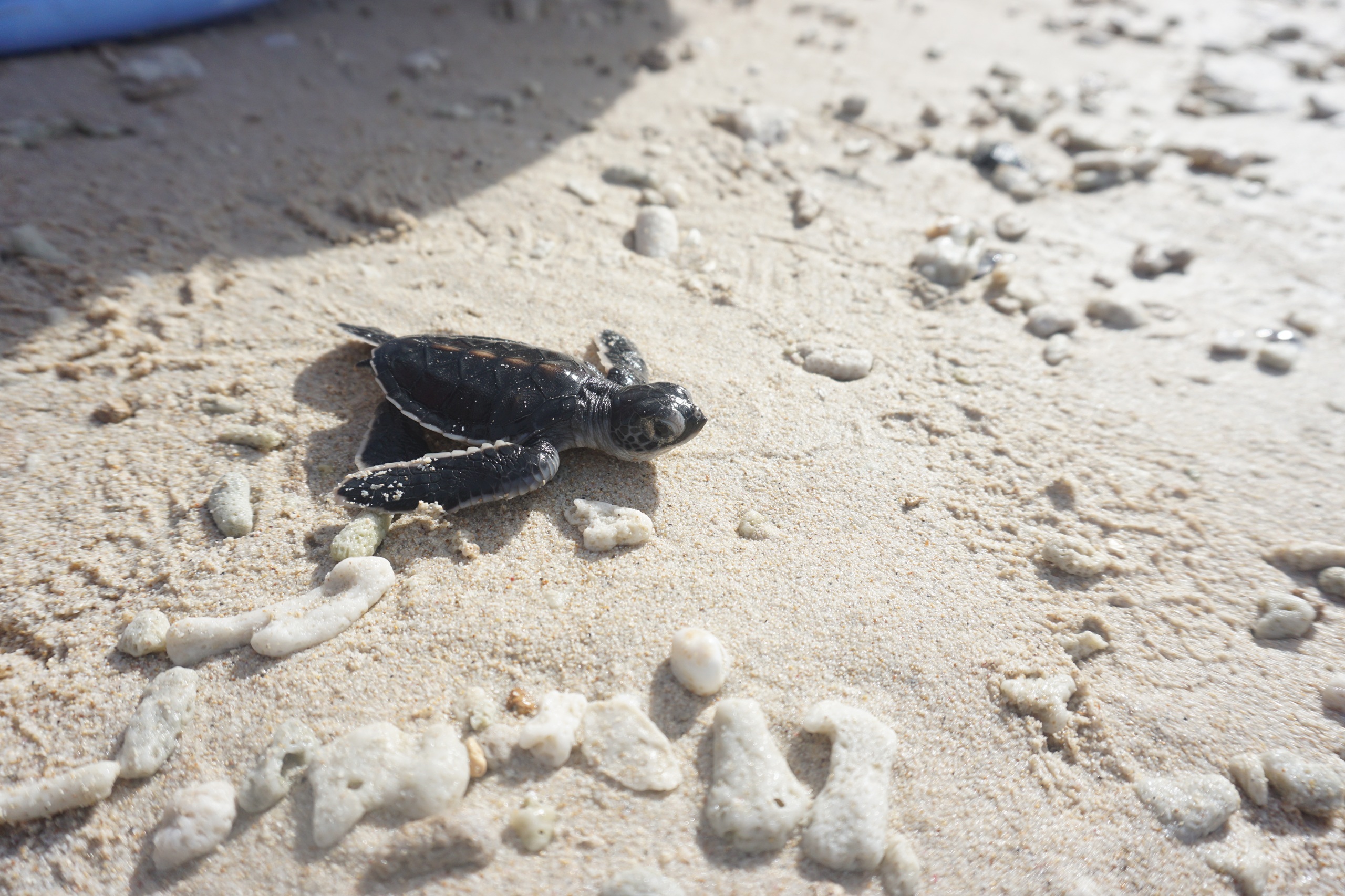
After 45 to 60 days, the eggs begin to hatch. Visitors can observe the tiny hatchlings pushing through the sand, scrambling to reach the surface. When tide and temperature conditions are right—usually early morning or late evening—rangers place the hatchlings in baskets and release them at the shoreline. Watching hundreds or even thousands of baby turtles instinctively crawl toward the ocean is an emotional and unforgettable moment.
Incredibly, about 30 years later, surviving turtles will return to the exact beach where they were born to lay their own eggs. With a survival rate of only 1 in 1,000, sea turtles are listed in both the Vietnamese and global Red Books.
Besides Bay Canh Island, visitors can also watch turtle nesting on Cau Island, Tre Lon Island, Tai Island, and several others during the nesting season.