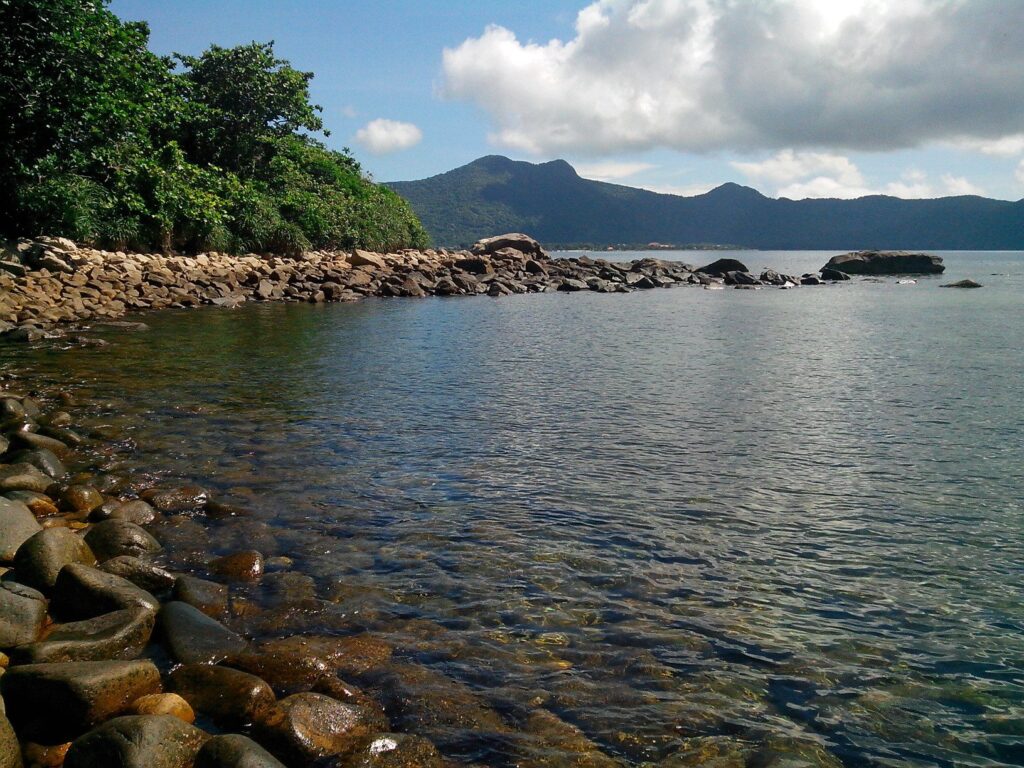
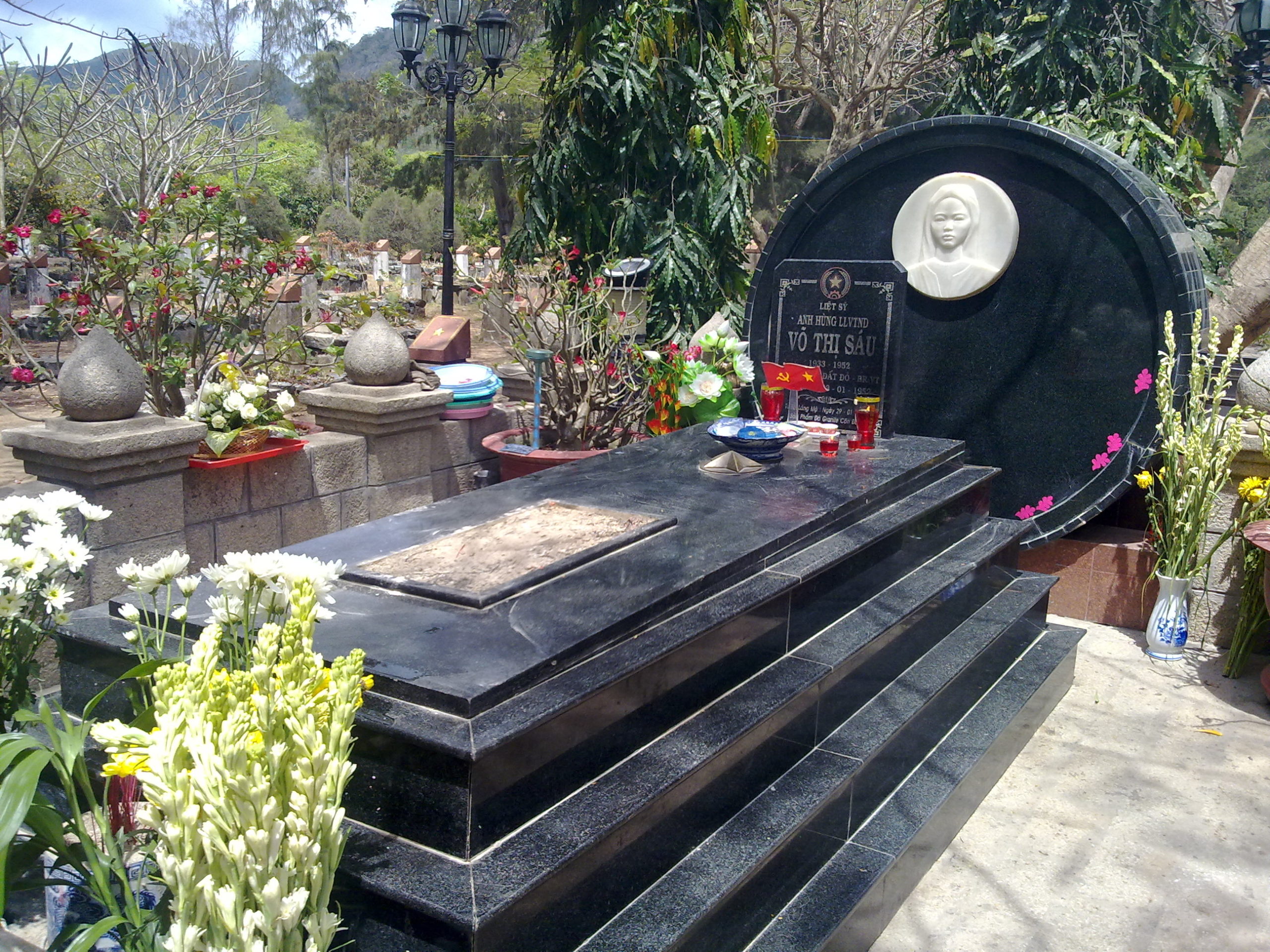
For many travelers, a journey to Côn Đảo begins with a heartfelt visit to Hàng Dương Cemetery, where thousands of national martyrs rest — including the revered Heroine Võ Thị Sáu, whose grave has become one of the most sacred spiritual sites on the island.
A Symbol of Faith and Reverence
Located in Zone C of Hàng Dương Cemetery, the grave of Heroine Võ Thị Sáu has long been a place where visitors come to pay respect, express gratitude, and quietly send their wishes. Day or night, the site is never empty — a reflection of the deep spiritual connection that people feel toward her.
Many believe that Heroine Võ Thị Sáu protects and blesses those who approach with sincerity and kindness. It is not uncommon to see high-ranking officials, successful businesspeople, and even ordinary workers returning month after month to offer their respects. Their presence speaks to the enduring belief in her spiritual guidance.
Nighttime is considered the most sacred period to visit. Visitors often say that wishes made during these quiet hours are especially blessed.
Offerings Commonly Prepared for the Visit
Traditionally, visitors prepare a small set of offerings to show gratitude and reverence toward the Heroine. A standard offering set includes seven items:
- A stack of votive paper money
- A conical hat (nón lá)
- A small mirror-and-comb set
- A bottle of drinking water
- Sheets of gold and silver votive papers
- A bundle of incense
- A bouquet of white flowers
For more elaborate offerings, some visitors prepare a tailored áo dài, a gesture of deep respect for the young Heroine.
All items are usually placed inside the conical hat, which is then gently laid at the grave.
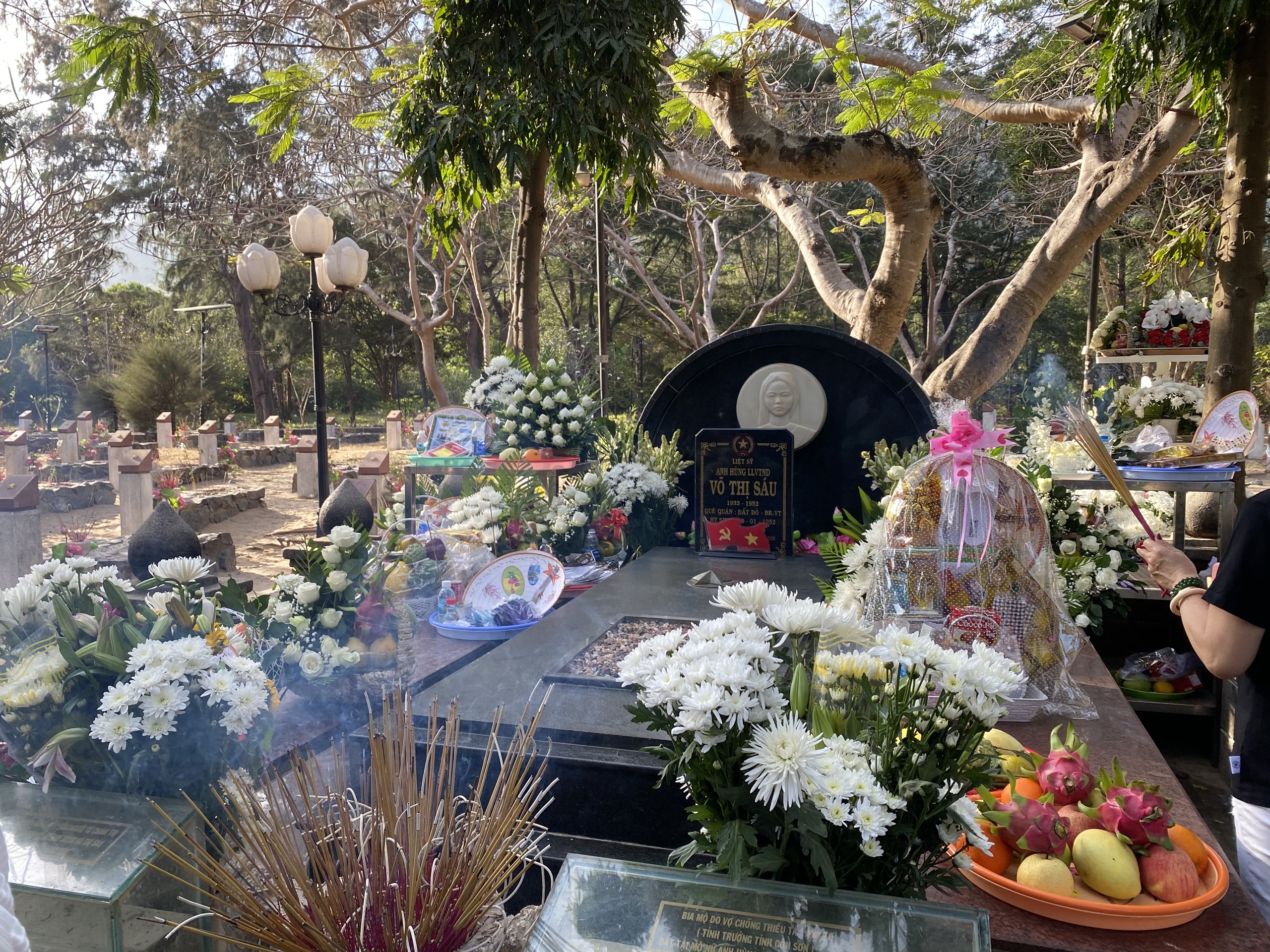
Visitors also bring along a prepared prayer, including their name, hometown, whom they are praying for, and their wishes. After offering incense, they bow three times before leaving the area to burn the votive papers.
Additionally, many visitors prepare symbolic gifts for other martyrs in the cemetery, such as:
- National flags
- Soldier scarves
- Army uniforms
- Jungle hats
These offerings honor the thousands of men and women who sacrificed their lives for Vietnam’s independence.
Important Etiquette When Visiting Hàng Dương Cemetery
Because this is one of Vietnam’s most sacred historical sites, visitors should observe the following:
- Dress respectfully and modestly
- Avoid loud conversations and inappropriate behavior
- Keep the area clean; take back all offering wrappings
- Wait patiently in line; do not push or crowd the space
- Maintain a calm and respectful atmosphere
A Land of Sacrifice
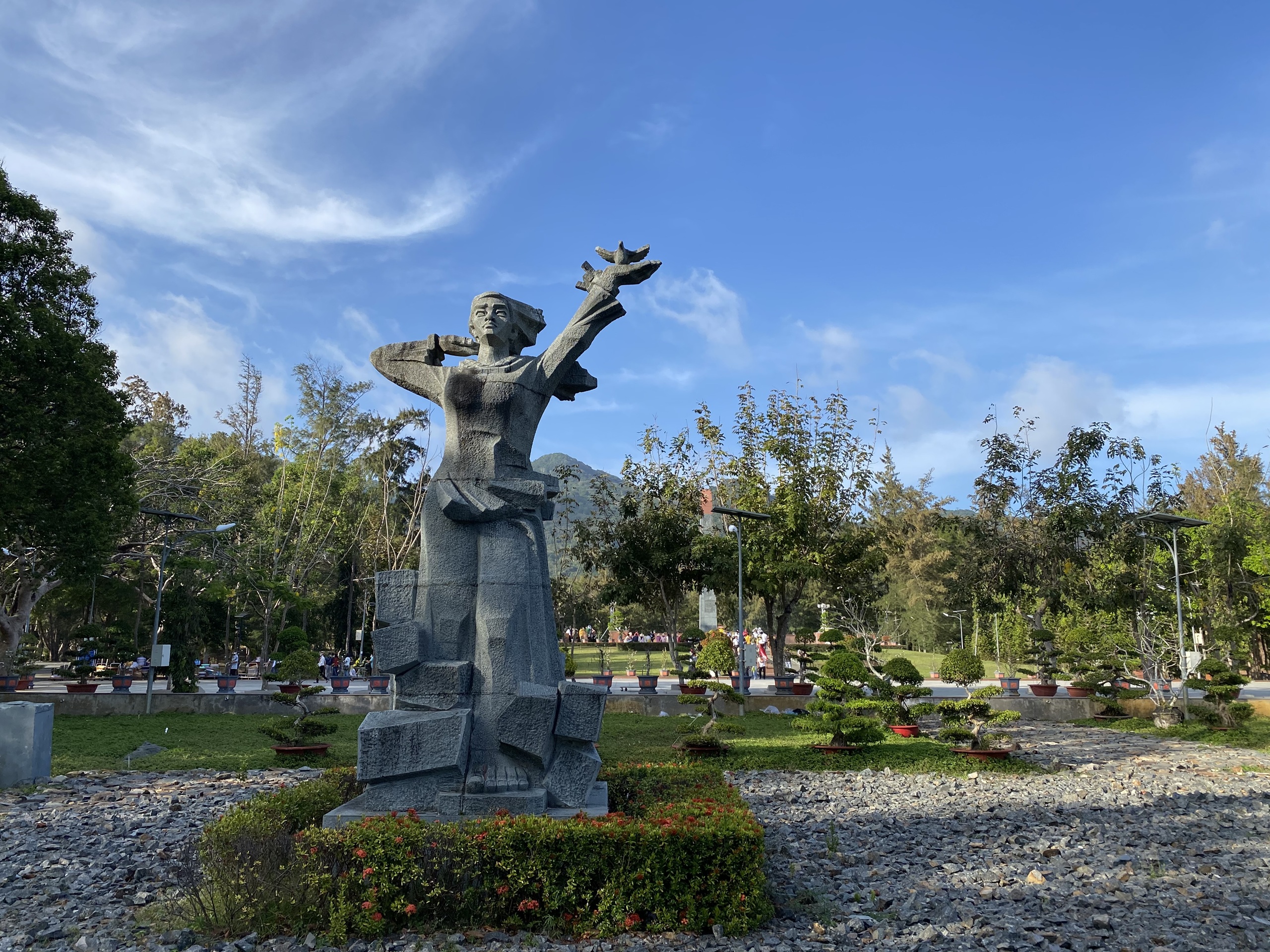
Across 53 generations of prison wardens, thousands of prisoners suffered and perished in places such as Phú Hải, Phú Sơn, Phú Thọ, Phú Tường, Chuồng Bò, and the notorious Tiger Cages.
It is estimated that one in every ten prisoners never left the island alive.
Today, Hàng Dương Cemetery records 1,922 graves, including 25 mass graves, but only 714 graves bear names.
The rest — nearly twenty thousand souls — remain scattered across the island’s forests, mountains, beaches, and even the open sea.
For survivors, the price of freedom was often lifelong illness, injury, and hardship. For many women, the brutality of prison meant losing the ability to become mothers.
A Living Monument of National Spirit
Since 1979, the Côn Đảo prison system has been preserved as a national relic — a place to honor the unyielding courage, resilience, and sacrifice of generations who fought for Vietnam’s independence.
Their stories, including that of Heroine Võ Thị Sáu, continue to inspire countless visitors and guide younger generations in their understanding of patriotism and freedom.
Today, Côn Đảo has transformed into a serene “green paradise,” yet the island remains a sacred landmark, a place where history, spirituality, and natural beauty meet — and where visitors can feel the enduring spirit of the nation’s heroes.