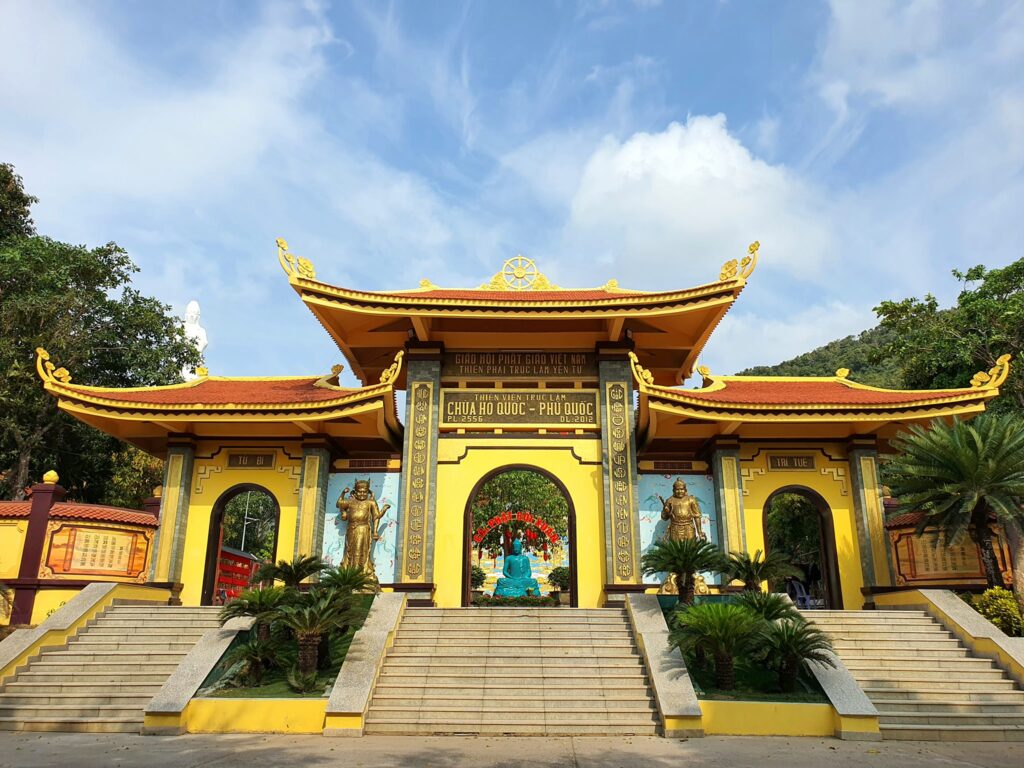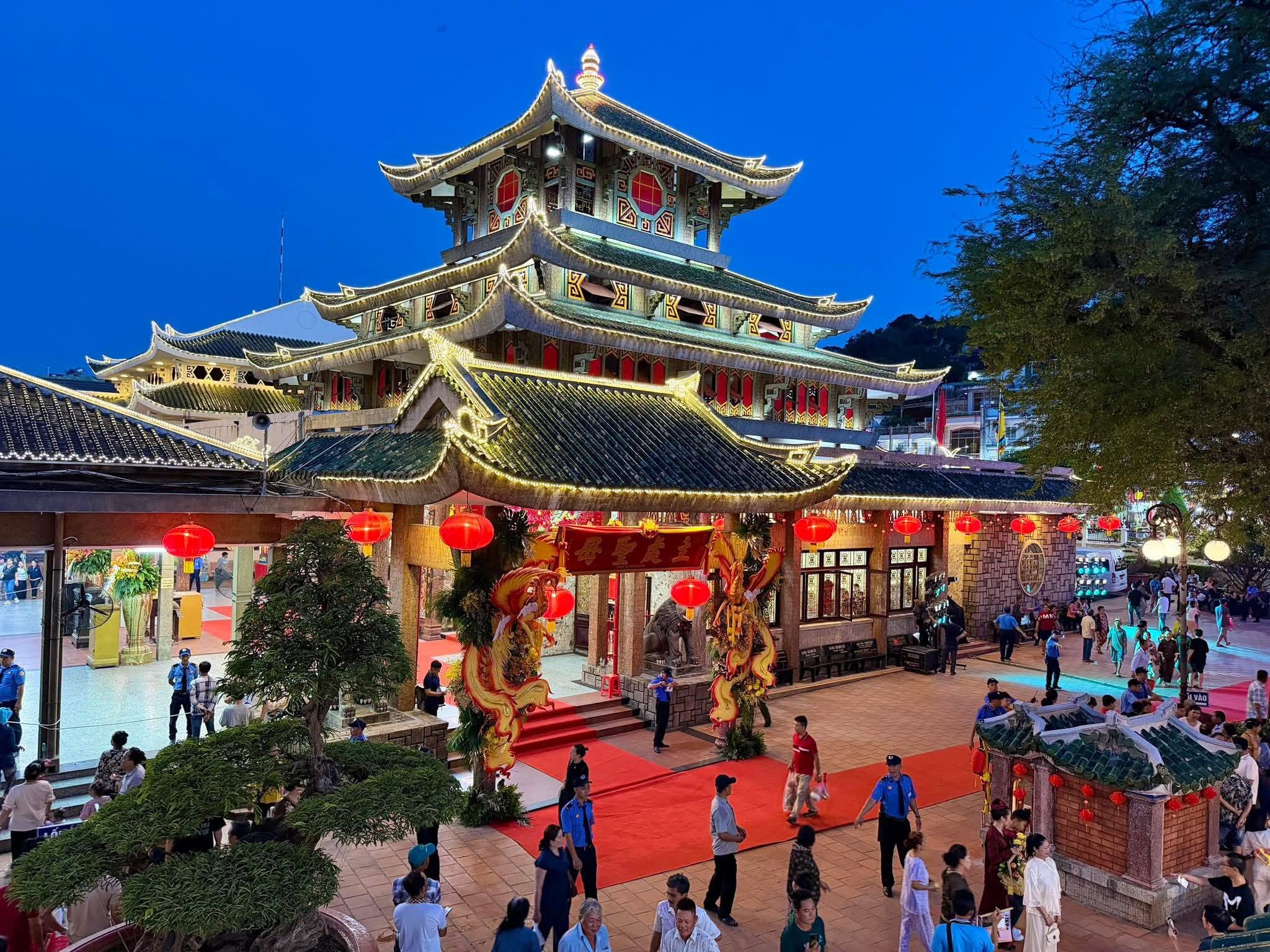
The Ba Chua Xu Goddess Festival at Sam Mountain is one of the most important traditional festivals of southern Vietnam, held annually at the Ba Chua Xu Temple and the sacred stone pedestal on Sam Mountain in the Chau Doc area of An Giang Province. Taking place from the 22nd to the 27th day of the fourth lunar month, the festival brings together local communities and visitors in a series of solemn religious ceremonies, folk traditions, and cultural activities.
The festival reflects the long history of settlement and cultural exchange in the southwestern region of Vietnam. It is particularly associated with the Kinh, Khmer, Cham, and Hoa communities living in and around Chau Doc. Through its rituals and beliefs, the festival expresses gratitude to the Mother Goddess, whom devotees regard as a spiritual protector of the land and the community.
On 4 December 2024, the Ba Chua Xu Goddess Festival at Sam Mountain was inscribed by UNESCO on the Representative List of the Intangible Cultural Heritage of Humanity. It became Vietnam’s 16th intangible cultural heritage element recognized by UNESCO.
Basic Information
- Name: Ba Chua Xu Goddess Festival at Sam Mountain
- Vietnamese name: Lễ hội Vía Bà Chúa Xứ núi Sam
- Type: Traditional festival and religious folk practice
- Location: Ba Chua Xu Temple and the sacred stone pedestal on Sam Mountain, Chau Doc, An Giang Province
- Festival period: 22nd–27th day of the fourth lunar month
- Main communities: Kinh, Khmer, Cham, and Hoa
- National-level festival: Recognized in 2001
- National Intangible Cultural Heritage: Recognized in 2014
- UNESCO: Inscribed on the Representative List of the Intangible Cultural Heritage of Humanity in 2024
- Major rituals: Procession of the statue, bathing the Goddess, receiving the royal decree, Túc yết, Xây chầu, Chánh tế, and Hồi sắc
Historical Origins and Cultural Background
The worship of Ba Chua Xu developed within the historical and cultural environment of the Chau Doc region, an area where different communities have lived, interacted, and exchanged cultural practices for generations. The landscape around Sam Mountain was closely connected with settlement, agriculture, trade, and the gradual development of communities in the southwestern borderlands.
According to local legend, a sacred statue of Ba Chua Xu was found on Sam Mountain. When villagers attempted to bring the statue down from the mountain, it became extraordinarily heavy. After one of its arms was accidentally broken, the villagers were unable to move it further. According to the legend, Ba Chua Xu then appeared and instructed the people to build a shrine for her on the site.
This story belongs to the realm of local oral tradition rather than documented historical evidence. Its importance lies in the way it explains the relationship between the Goddess, Sam Mountain, the surrounding land, and the community that has worshipped her for generations.
Over time, the belief in Ba Chua Xu became closely associated with the process of settlement and the formation of communities in the Mekong Delta. The Goddess came to be regarded as a spiritual protector of the land, agriculture, livelihoods, and people’s lives.
The belief also reflects the cultural interaction that has taken place in Chau Doc. Vietnamese Mother Goddess traditions encountered and incorporated elements from the religious and cultural practices of Khmer, Cham, and Hoa communities. UNESCO describes the festival as a cultural synthesis that expresses the shared spiritual life of these communities in southern Vietnam.
The historical memory surrounding Thoại Ngọc Hầu, his wife Châu Thị Tế, and other figures associated with the development of the Chau Doc region also forms part of the festival’s ritual system. The presence of their royal decrees and commemorative rituals connects the religious festival with the broader historical memory of settlement and development in the region.
The Sacred Space and Traditional Rituals
The festival takes place mainly at Ba Chua Xu Temple and the sacred stone pedestal on Sam Mountain. The mountain itself is an important part of the spiritual landscape, while the temple serves as the central space for worship and ritual activities.
The festival traditionally lasts six days, from the 22nd to the 27th day of the fourth lunar month. Its ceremonies follow a sequence that combines religious practices, royal-era ritual traditions, community participation, music, and folk performance.
One of the important ceremonies is the re-enactment of the procession of the Goddess’s statue, in which the statue is ceremonially brought from the sacred stone pedestal on Sam Mountain to the temple. This ritual recalls the traditional story of the Goddess and symbolically reconnects the sacred mountain with the temple and the community.
The Bathing of the Goddess, or Lễ Tắm Bà, is another central ritual. The ceremony is conducted with solemnity and represents an act of reverence and purification.
The festival also includes the Thỉnh sắc ceremony, in which the royal decrees associated with Thoại Ngọc Hầu and his two wives are ceremonially received. This is followed by important rites such as Túc yết, Xây chầu, and Chánh tế, before the Hồi sắc ceremony marks the conclusion of the principal ritual sequence.
Alongside the religious ceremonies, the festival creates a broader cultural space featuring traditional performances, folk activities, lion and dragon dances, and community gatherings.
From a Local Belief to a National and UNESCO Heritage
For generations, the worship of Ba Chua Xu was primarily a community-based religious practice. As the reputation of the shrine and festival spread, the annual celebration gradually became an important cultural and pilgrimage event in southern Vietnam.
In 2001, the Ba Chua Xu Goddess Festival was recognized as a national-level festival. On 19 December 2014, it was officially included in Vietnam’s National Intangible Cultural Heritage List as a traditional festival.
The international recognition came on 4 December 2024, when UNESCO inscribed the festival on the Representative List of the Intangible Cultural Heritage of Humanity during the 19th session of the Intergovernmental Committee for the Safeguarding of the Intangible Cultural Heritage in Asunción, Paraguay.
The UNESCO inscription recognizes not simply a festival event, but a living cultural practice maintained and transmitted by communities. Ritual knowledge, beliefs, ceremonies, artistic expressions, and forms of community participation continue to be passed from one generation to another.
Cultural Values and Community Significance
The cultural significance of the Ba Chua Xu Goddess Festival extends beyond religious worship.
First, the festival preserves an important part of the spiritual heritage of southern Vietnam. The figure of Ba Chua Xu embodies the community’s relationship with the land and its desire for peace, prosperity, protection, and favorable conditions for life and agriculture.
Second, the festival reflects the cultural diversity of the Mekong Delta. The participation and interaction of Kinh, Khmer, Cham, and Hoa communities demonstrate how different cultural traditions have coexisted and influenced one another in the Chau Doc region.
Third, the festival preserves historical memory. References to Sam Mountain, local settlement, Thoại Ngọc Hầu and his family, and the development of the Chau Doc region connect religious practice with the history of the southern frontier and the formation of communities in the Mekong Delta.
Most importantly, the festival remains a living heritage. Its rituals are not merely historical reenactments displayed for visitors. They continue to be practiced by communities who regard them as part of their religious and cultural life.
Preservation and Contemporary Practice
The recognition of the festival as national and UNESCO heritage has increased its visibility as a cultural destination in southern Vietnam. At the same time, the continued vitality of the festival depends on the communities that maintain its rituals, transmit its knowledge, and participate in its ceremonies.
Preservation therefore involves more than maintaining the temple or organizing annual celebrations. It includes safeguarding traditional ritual knowledge, respecting the sacred character of the worship space, supporting ritual practitioners and communities, and ensuring that tourism develops alongside the cultural values of the festival.
Today, the Ba Chua Xu Goddess Festival stands at the intersection of belief, history, community, and cultural tourism. Sam Mountain remains not only a destination for pilgrims and visitors, but also a sacred landscape in which generations of people have expressed their relationship with the land and with one another.
Frequently Asked Questions
When is the Ba Chua Xu Goddess Festival held?
The festival is traditionally held from the 22nd to the 27th day of the fourth lunar month every year.
Where does the festival take place?
The main ceremonies take place at Ba Chua Xu Temple and the sacred stone pedestal on Sam Mountain in the Chau Doc area of An Giang Province.
What are the main rituals of the festival?
Important rituals include the procession of the Goddess’s statue, the Bathing of the Goddess, the Thỉnh sắc ceremony, Túc yết, Xây chầu, Chánh tế, and Hồi sắc.
Which communities participate in the festival?
The festival is associated particularly with the Kinh, Khmer, Cham, and Hoa communities, reflecting the cultural diversity of the Chau Doc region.
When was the festival recognized by UNESCO?
The Ba Chua Xu Goddess Festival at Sam Mountain was inscribed on UNESCO’s Representative List of the Intangible Cultural Heritage of Humanity on 4 December 2024.
What does the festival represent?
The festival represents a living tradition of religious belief, community identity, historical memory, and cultural exchange in southern Vietnam. It also expresses people’s reverence for the Mother Goddess and their connection with the land and community.