When people think of Da Lat, they often picture a highland city known for its cool climate, pine forests, romantic landscapes and distinctive architecture. These characteristics have given Da Lat familiar names such as the “City of Dreams,” the “City of Flowers” and the “City of Mist.”
Yet behind the peaceful image of the city are places that preserve memories of a turbulent period in Vietnam’s modern history. Da Lat Children’s Prison (1971–1973) is one of these sites. It was a detention facility where hundreds of political prisoners between the ages of 12 and 17 were held during the early 1970s.
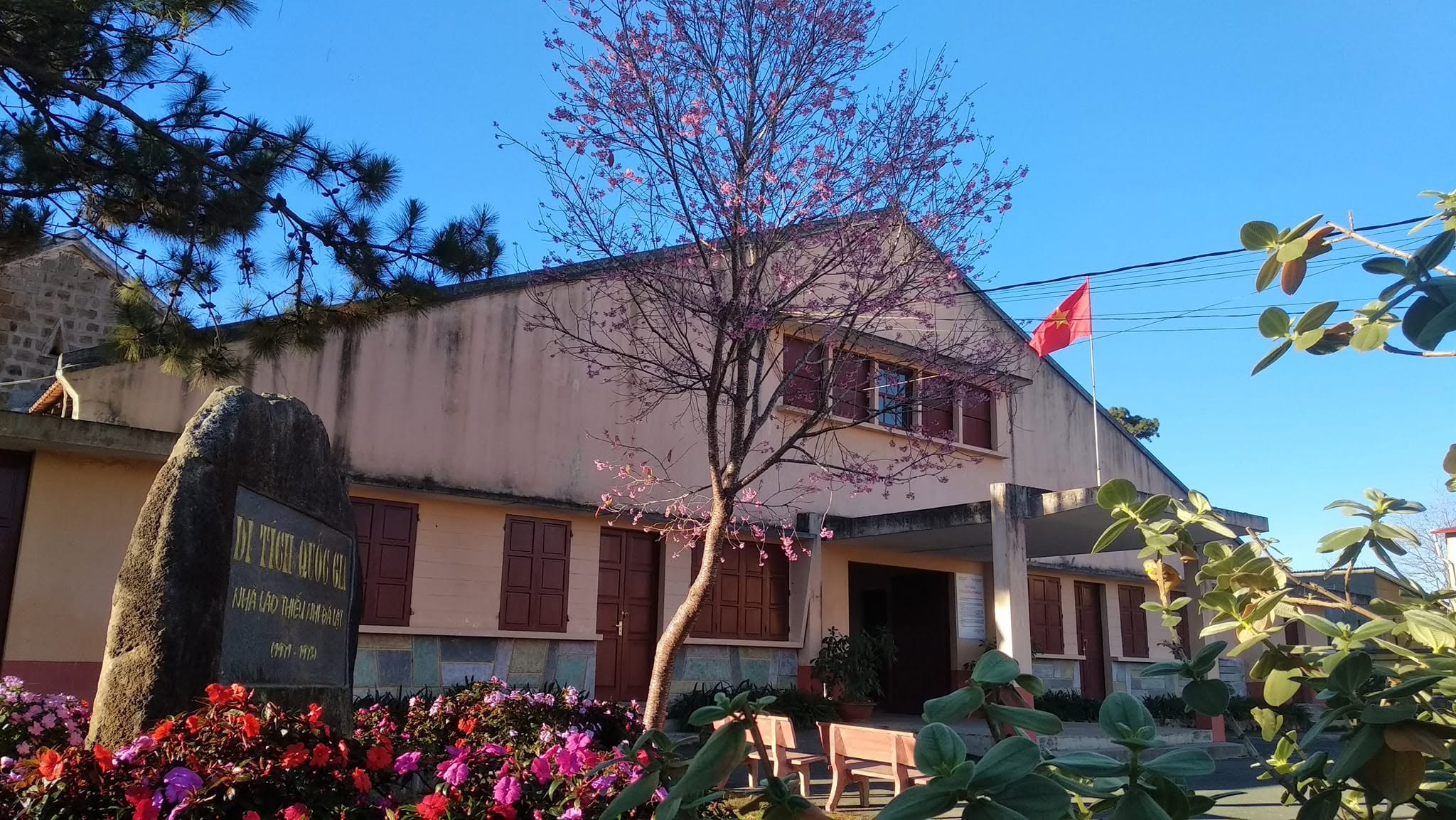
On June 22, 2009, the site was recognized by the Ministry of Culture, Sports and Tourism as a National Heritage Site, becoming an important place for understanding the history of young political prisoners and a particular period of Da Lat’s wartime history.
The Establishment of a Special Prison
At the beginning of 1971, the government of the Republic of Vietnam established a detention facility for young prisoners on a hill approximately 4 kilometers from central Da Lat. The site is now located at 9A Ho Xuan Huong Street, Ward 9.
The facility was officially called the Da Lat Juvenile Education Center. According to historical materials about the site, it was in practice used to detain political prisoners between the ages of 12 and 17 who had been transferred from various prisons throughout southern Vietnam.
More than 600 young prisoners are recorded as having been held there. Unlike some other juvenile education centers in southern Vietnam at the time, the Da Lat facility was placed under the direct command of the Saigon Police Directorate and operated with a relatively organized administrative structure.
The establishment of the prison was associated with a policy of concentrating young political prisoners in a separate facility and isolating them from older generations of political detainees.
A Closed Space Behind Stone Walls
The prison was built as an enclosed rectangular complex surrounded by thick stone walls. At the front stood an A-shaped building that, from the outside, resembled a villa.
Prison cells and solitary-confinement rooms extended along both sides. Two transverse buildings formed two courtyards in the center, which were used for certain activities when prisoners were allowed outside their cells.
The entire complex was tightly controlled through multiple doors and extensive barbed wire. Dense coils of barbed wire were installed across the roofs, restricting contact with the outside.
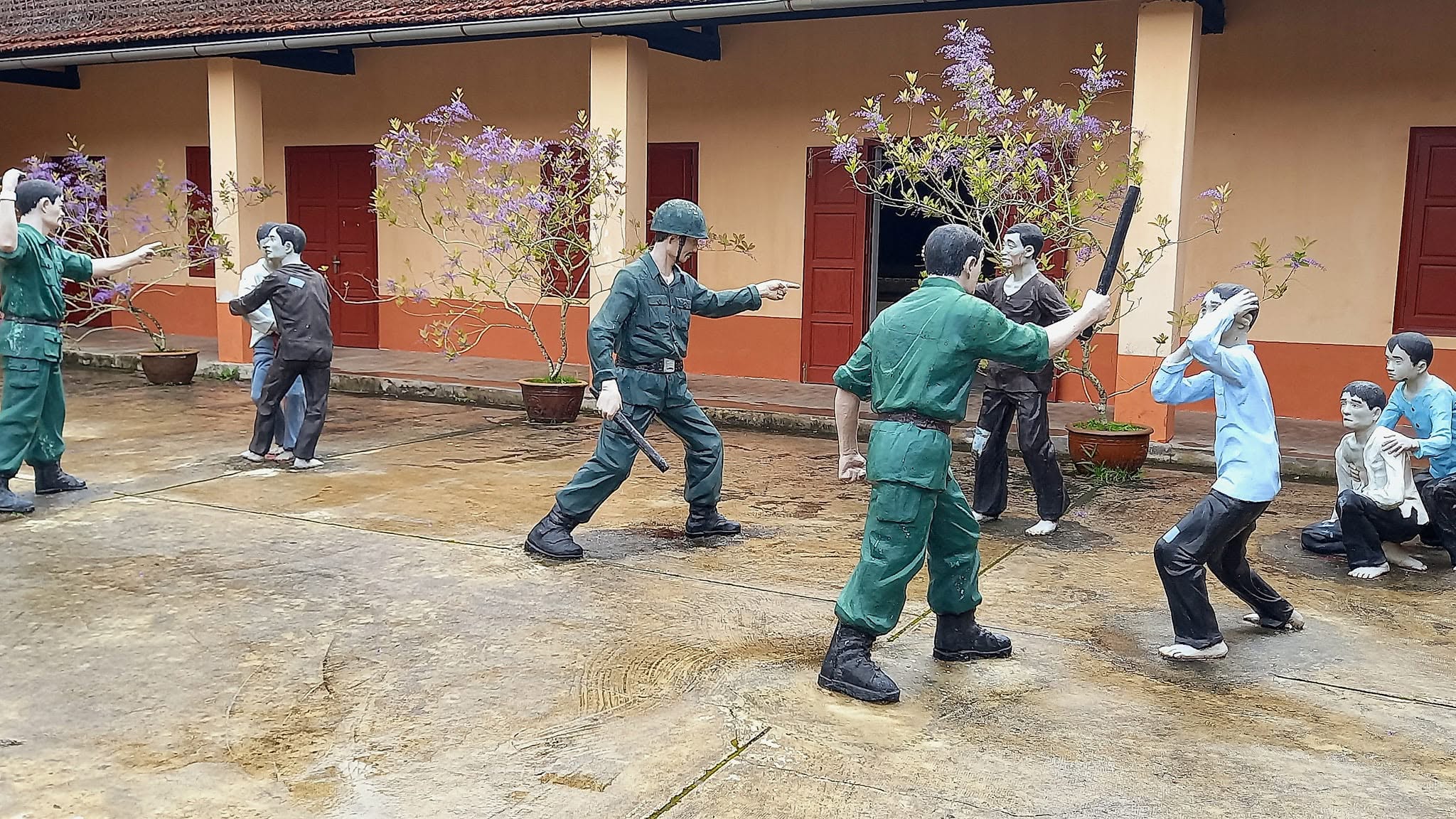
Beyond the two doors of the A-shaped building was the flag courtyard and flagpole. According to historical accounts, young prisoners were required to gather there for flag ceremonies. Those who refused to follow the required ceremony could be punished.
The flag courtyard therefore became a particularly significant space in the history of the site, representing the confrontation between the prison authorities and the young political prisoners.
The prison contained eight cells, including six for male prisoners and two for female prisoners. Each cell measured slightly more than 50 square meters and normally held around 60 to 70 prisoners, with numbers reportedly approaching 100 at certain times.
At the end of the corridors were solitary-confinement cells. Behind this area was a roofless stone enclosure covered with barbed wire, which was used for solitary confinement and punishment.
Young Prisoners Transferred from Prisons Across Southern Vietnam
On April 23, 1971, 126 young prisoners from the Kho Dan prison in Da Nang were transferred to the Da Lat Juvenile Education Center. This marked the beginning of the facility’s operation as a prison for young political detainees.
Prisoners from Hoi An, Quang Ngai, Binh Dinh, Phu Yen, Ben Tre and other locations were subsequently transferred there.
Toward the end of 1971, young revolutionary prisoners who had previously been detained at Con Dao and Chi Hoa prisons were also brought to Da Lat. As prisoners from different locations came together, they gradually formed an internal organization, established a leadership structure and coordinated their methods of resistance.
From that point onward, organized protests took place repeatedly, with prisoners putting forward specific demands. Solidarity among the detainees became an important factor in maintaining their organization and morale under imprisonment.
Resistance Behind the Prison Walls
According to historical materials, the young prisoners endured harsh detention conditions, including various forms of punishment, solitary confinement, food shortages and exposure to Da Lat’s cold climate.
Those held in solitary confinement faced particularly difficult conditions. Living conditions were extremely limited, and prisoners had to share food, water and sleeping space.
Despite these circumstances, the young detainees continued to support one another. Their solidarity became an important part of daily life inside the prison.
Resistance took various forms. On November 21, 1971, a group of prisoners organized an act of self-injury in the flag courtyard as a protest against the treatment they received. According to the source, five prisoners participated in the plan. Three carried out the action before the other two were detected and restrained.
On the evening of January 23, 1973, another major incident took place when young prisoners attacked and killed prison guard Nguyen Cuong, whom the source identifies as a collaborator with the prison authorities.
The young prisoners also organized seven escape attempts, reflecting their desire to leave the prison and return to revolutionary bases.
The sixth escape attempt took place on the night of May 7 and early morning of May 8, 1973. With connections to outside contacts, 11 prisoners successfully escaped and reached a revolutionary base.
The Struggle to Preserve Their Status as Political Prisoners
At the beginning of 1973, the prison authorities reportedly sought to reclassify the young revolutionary prisoners as ordinary criminal detainees. Among the measures described in historical materials were demands that prisoners provide fingerprints and photographs so that their records could be changed.
In response, a major protest broke out on February 22, 1973.
According to the source, the prisoners’ continued resistance created significant difficulties for the operation of the facility. By the middle of 1973, Da Lat Children’s Prison was dissolved.
Although the prison existed for only a little more than two years, the site became associated with numerous events reflecting the experiences and organized resistance of young political prisoners.
Former Prisoners After National Reunification
After 1975, former prisoners of Da Lat Children’s Prison returned to their home provinces and continued their lives during the period of national reunification.
According to the source, some later held important positions within local political and social institutions.
In 2009, the collective of former political prisoners of Da Lat Children’s Prison was awarded the title Hero of the People’s Armed Forces by the President of Vietnam. Six former prisoners were also individually awarded the same title.
These distinctions recognized the contributions of the former prisoners during the resistance and helped preserve the story of the young detainees as part of Vietnam’s historical memory.
A Historical Address in the Heart of Da Lat
The war has long ended. Many of those who were detained at the prison have since grown old, while others have passed away. Their memories of the prison have consequently become an increasingly important part of the historical record to be preserved and shared with later generations.
Following restoration and its reopening to visitors in mid-2016, the site became a destination for historical and educational visits in Da Lat.
The surviving cells, flag courtyard, solitary-confinement areas and other architectural traces allow visitors to gain a clearer understanding of the conditions experienced by young prisoners between 1971 and 1973.
The site is also regarded as an important historical address for educating younger generations about the past. Its significance lies not only in the surviving structures but also in the stories of a generation of teenagers who experienced war, imprisonment and organized resistance under extraordinary circumstances.
For Da Lat, a city more commonly associated with landscapes, flowers and distinctive architecture, the prison represents another layer of its history: memories of war, young political prisoners and a turbulent period in Vietnam’s 20th-century history.
Da Lat Children’s Prison Today
Today, Da Lat Children’s Prison is a destination for visitors seeking to understand revolutionary history and wartime memories in the Central Highlands.
The surviving stone walls, cells, solitary-confinement areas and flag courtyard help reconstruct the physical environment of the former prison. Together with historical documents and the memories of former prisoners, these elements provide a more tangible way to approach this chapter of history.
The site also reminds visitors of a lesser-known aspect of Da Lat’s past. Beyond its image as a romantic highland destination lies a place that witnessed war, imprisonment and resistance involving people who were still very young.
Preserving Da Lat Children’s Prison therefore means more than conserving a historic structure. It also means preserving the memories of the people who lived and struggled there, allowing their stories to remain part of the historical record for future generations.
Basic Information
| Item | Information |
|---|---|
| Name | Da Lat Children’s Prison |
| Period of operation | 1971–1973 |
| Location | 9A Ho Xuan Huong Street, Ward 9, Da Lat |
| Type | Revolutionary historical relic |
| Recognition | National Heritage Site, June 22, 2009 |
| Original name | Da Lat Juvenile Education Center |
| Prisoners | Political prisoners aged 12–17 |
| Number according to the source | More than 600 young prisoners |
| Main structure | 8 cells, including 6 for male prisoners and 2 for female prisoners |
| Notable events | Organized protests and seven escape attempts, including the successful escape of 11 prisoners during the sixth attempt |
| Restoration and reopening | From mid-2016 |
| Key values | Revolutionary history, wartime memory, historical education and community remembrance |