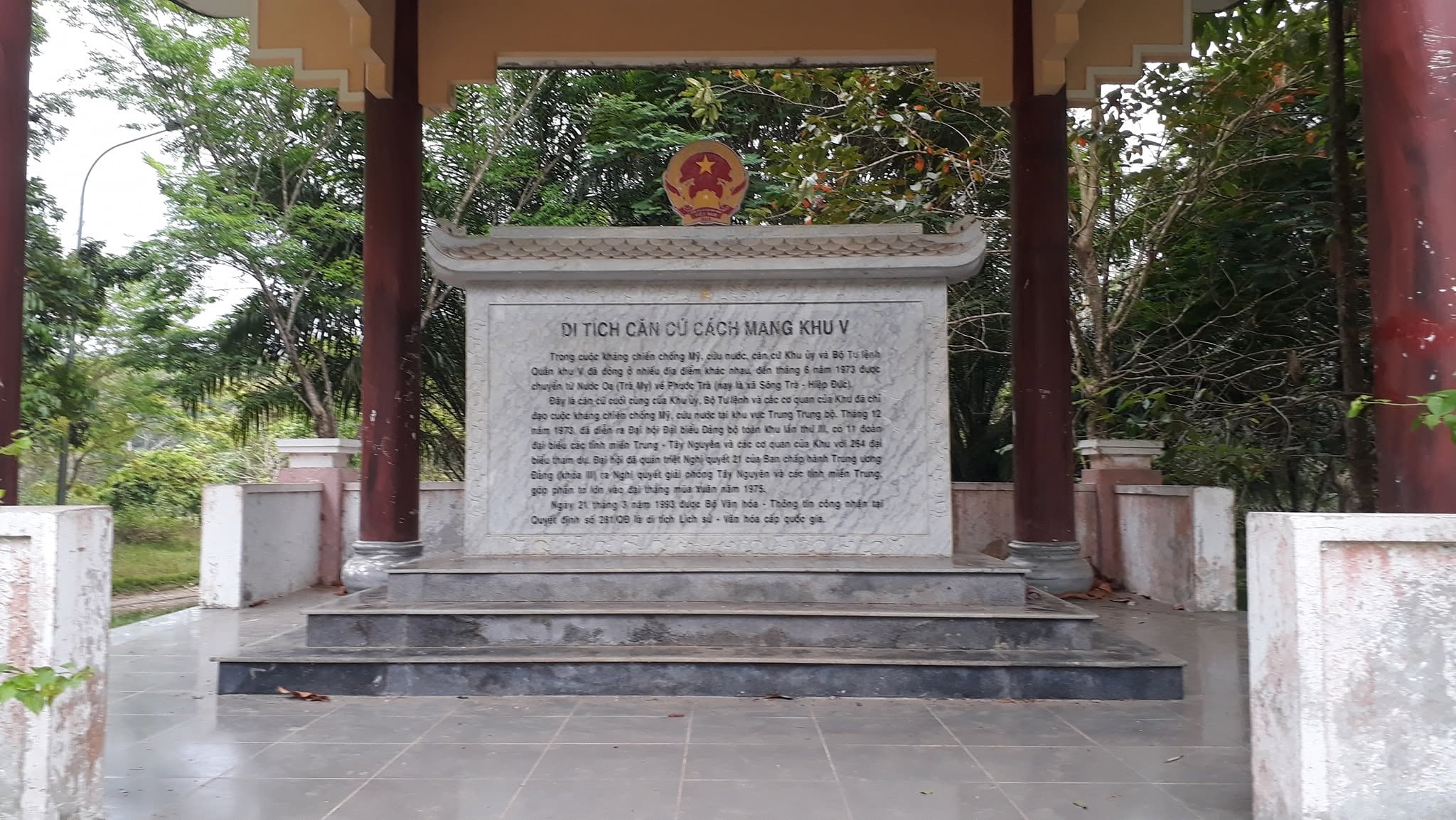
Phước Trà Base, located in Phước Trà Commune, Đà Nẵng City, formerly part of Sông Trà Commune, Hiệp Đức District, Quảng Nam Province, is an important national historical relic. It served as the final headquarters of the Party Committee of Military Region 5 from 1973 to 1975, bearing witness to significant events during the resistance war against the United States.
Beyond its role as a strategic command center in the final years of the war, Phước Trà Base stands as a testament to the resilience, unity, and fighting spirit of the people and armed forces of central Vietnam. Its history is closely associated with the Spring 1975 General Offensive and Uprising, which led to the liberation of southern Vietnam and the reunification of the country.
History and Development of the Base
In December 1946, the Central Committee of the Communist Party of Vietnam decided to establish Military Region 5, initially comprising the provinces of Quảng Nam, Quảng Ngãi, Bình Định, Gia Lai, and Kon Tum. In early 1955, the Central Committee decided to transfer Quảng Trị and Thừa Thiên to Interzone 5, creating a vast battlefield stretching from the 17th parallel to the area bordering southeastern Vietnam. Throughout this period, military operations were extremely difficult and intense.
From its establishment until 1973, the main resistance headquarters of the forces and people of Military Region 5 was relocated eight times. Each move reflected changing strategic requirements and battlefield conditions, while marking the continued efforts to maintain a presence, build forces, and direct the resistance.
In late 1973, the Party Committee of Military Region 5 decided to relocate its headquarters to the Phước Trà area. According to the supplied source, the base was situated in Phước Sơn District, Quảng Nam Province, now part of Đà Nẵng City. The leadership operated from this location and prepared for the Third Congress of the Military Region 5 Party Organization.
Phước Trà became the final headquarters of the Party Committee of Military Region 5 during the closing stage of the resistance war against the United States. From this base, important policies and strategic decisions were implemented to strengthen revolutionary forces, intensify operations across the battlefields, and prepare for the opportunity to liberate southern Vietnam completely.
Nguyễn Nguyên Sa, a heritage preservation officer at the Military Region 5 Base Relic Site, explained that the base symbolized the determination to protect the Party and maintain strategic leadership throughout the war. He also emphasized the historical significance of the Third Congress of the Military Region 5 Party Organization in the resistance efforts of the region’s armed forces and people.
A Historic Milestone: The Third Congress of the Military Region 5 Party Organization in 1973
One of the most significant events associated with Phước Trà Base was the Third Congress of the Military Region 5 Party Organization in 1973. This important political gathering helped establish the direction and priorities of the revolutionary movement during the final years of the war.
The congress was attended by 264 delegates representing approximately 47,000 Party members from battlefields and local units. It elected Võ Chí Công as Secretary of the Party Committee of Military Region 5, continuing the leadership of the revolutionary movement throughout the region.
During the congress, delegates studied and implemented Resolution No. 21 of the Party Central Committee, which called for intensified offensives against opposing forces and preparations for a general offensive and uprising to achieve the complete liberation of southern Vietnam.
The congress also established several key tasks:
- Continue to strengthen the political awareness and resolve of cadres, soldiers, and the people.
- Intensify political, military, civil agitation, and diplomatic activities.
- Firmly defeat opposing efforts to consolidate control and expand occupied territory.
- Reduce areas under opposing control, expand liberated zones, and develop revolutionary movements in areas that remained under such control.
- Strengthen and develop military, political, and economic capabilities to advance the revolutionary cause.
The resolutions adopted at the congress provided an important foundation for organizing major military campaigns, defeating opposing forces, and expanding liberated areas from the Central Highlands to the lowlands. These efforts helped create favorable conditions for the liberation of provinces throughout Military Region 5.
The Third Congress was therefore significant not only in terms of political organization and leadership but also as an expression of the revolutionary forces’ strategic determination during a decisive phase of the war.
Stories and Memories from Phước Trà Base
Today, Phước Trà Base continues to offer valuable historical lessons to younger generations, military personnel, and visitors.
Hồ Văn Hoàng, a communications platoon soldier with the 270th Engineer Brigade, expressed his pride at being given the opportunity to visit the historic site by his unit. Through the preserved artifacts and photographs, he gained a deeper understanding of the sacrifices made by previous generations, who gave not only their sweat but also their lives.
The stories and historical materials displayed at the site help visitors understand the conditions under which revolutionary leaders operated during wartime. They also convey the hardships endured by the people and armed forces of Military Region 5 as they defended the base, maintained leadership activities, and organized resistance operations.
A Living Monument to Revolutionary Tradition
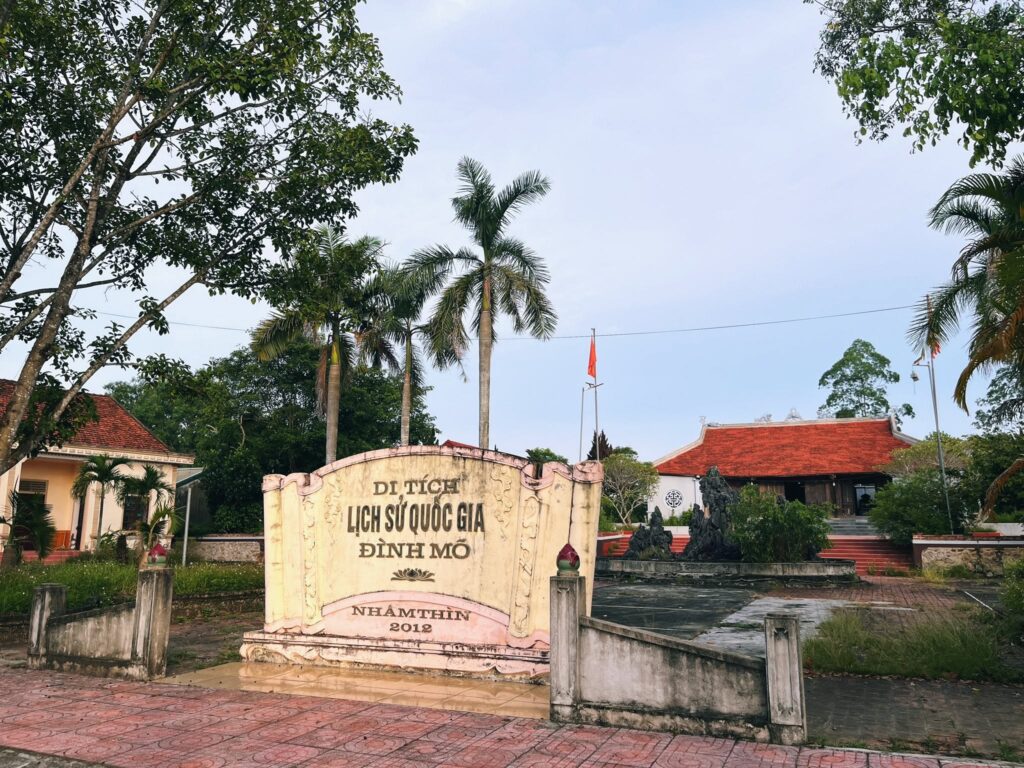
Phước Trà Base is now not only a national historical relic but also an important destination for educating younger generations about revolutionary traditions. Through several phases of investment, restoration, and preservation, important facilities have been constructed or renovated to support heritage conservation and historical interpretation.
Key structures at the site include an exhibition building, the hall where the Third Congress of the Military Region 5 Party Organization was held, the former working residence of Võ Chí Công, and commemorative steles. These facilities preserve and present artifacts, photographs, and documents related to the period when the Party Committee of Military Region 5 operated from Phước Trà.
Senior Lieutenant Colonel Phạm Thanh Hải, Deputy Political Commissar of the 270th Engineer Brigade, stated that the brigade regularly organizes visits to historical sites and locations associated with revolutionary traditions. These activities aim to educate officers and soldiers about their military heritage, promote the qualities of the armed forces, and strengthen their sense of responsibility for national construction and defense.
Bùi Đỗ Huy Phúc, a soldier serving with Company 13, Battalion 4, of the 270th Engineer Brigade, shared that visiting Võ Chí Công’s former working residence left a deep impression on him. Seeing how a prominent revolutionary leader lived in a modest house with simple household items helped him better appreciate the example set by earlier generations and their sacrifices for the country’s independence and freedom.
Such firsthand experiences bring history closer to the present, nurturing gratitude, pride, and a sense of responsibility for preserving revolutionary traditions.
Connecting Historical Tourism with Community-Based Tourism
Beyond its historical significance, Phước Trà Base has the potential to become a destination for cultural tourism, historical education, and exploration of local life. Promoting the site through tourism can help preserve its heritage while creating additional economic opportunities for the surrounding community.
To strengthen the connection between the historical site and local life, Phước Trà Commune has invested in the development of Trà Va Village, with plans to promote community-based tourism rooted in the traditional culture of the Ca Dong ethnic community.
Visitors are expected to have opportunities to learn about traditional handicrafts, including basket weaving, rattan and bamboo crafts, and brocade weaving. Cultural experiences such as campfires, traditional singing and dancing, and learning about local community life may also help introduce visitors to the distinctive cultural identity of the area.
Combining a visit to Phước Trà Base with cultural experiences in Trà Va Village offers a potential tourism model that brings together history and community life. This approach can make the historical site more accessible to visitors while enabling local residents to participate directly in heritage preservation, cultural interpretation, and livelihood development.
If developed in accordance with local conditions and with due respect for cultural identity, the combination of historical and community-based tourism could become a sustainable development pathway for the area.
Historical Value and Significance for Future Generations
Phước Trà Base is an important historical site associated with the leadership, organization, and direction of the resistance conducted by the Party Committee of Military Region 5 in the final years before national reunification. Events connected with the base, particularly the Third Congress of the Military Region 5 Party Organization in 1973, demonstrate the importance of strategic leadership during a decisive period in the struggle to liberate southern Vietnam.
The value of the site lies not only in its preserved structures but also in the stories of the people, their perseverance under difficult conditions, and the sacrifices made by earlier generations. It serves as a valuable resource for historical research, traditional education, and heritage visits.
Looking ahead, preserving Phước Trà Base should go hand in hand with presenting its history systematically, improving the visitor experience, and establishing appropriate links with the cultural heritage of the local community. In this way, the site can continue to serve as a place of historical remembrance, conveying enduring messages of peace, independence, solidarity, and the responsibility to safeguard heritage for future generations.
Quick Information
| Item | Details |
|---|---|
| Name | Phước Trà Base |
| Location | Phước Trà Commune, Đà Nẵng City, Vietnam |
| Former administrative location | Sông Trà Commune, Hiệp Đức District, Quảng Nam Province |
| Historical role | Final headquarters of the Party Committee of Military Region 5 during 1973–1975 |
| Major historical event | Third Congress of the Military Region 5 Party Organization, 1973 |
| Historical figure associated with the site | Võ Chí Công |
| Key structures | Exhibition building, Third Congress hall, former working residence of Võ Chí Công, commemorative steles |
| Historical significance | Preserves the legacy of Military Region 5’s revolutionary leadership during the final years of the resistance war against the United States |
| Tourism potential | Historical tourism, traditional education, and community-based tourism in Trà Va Village |