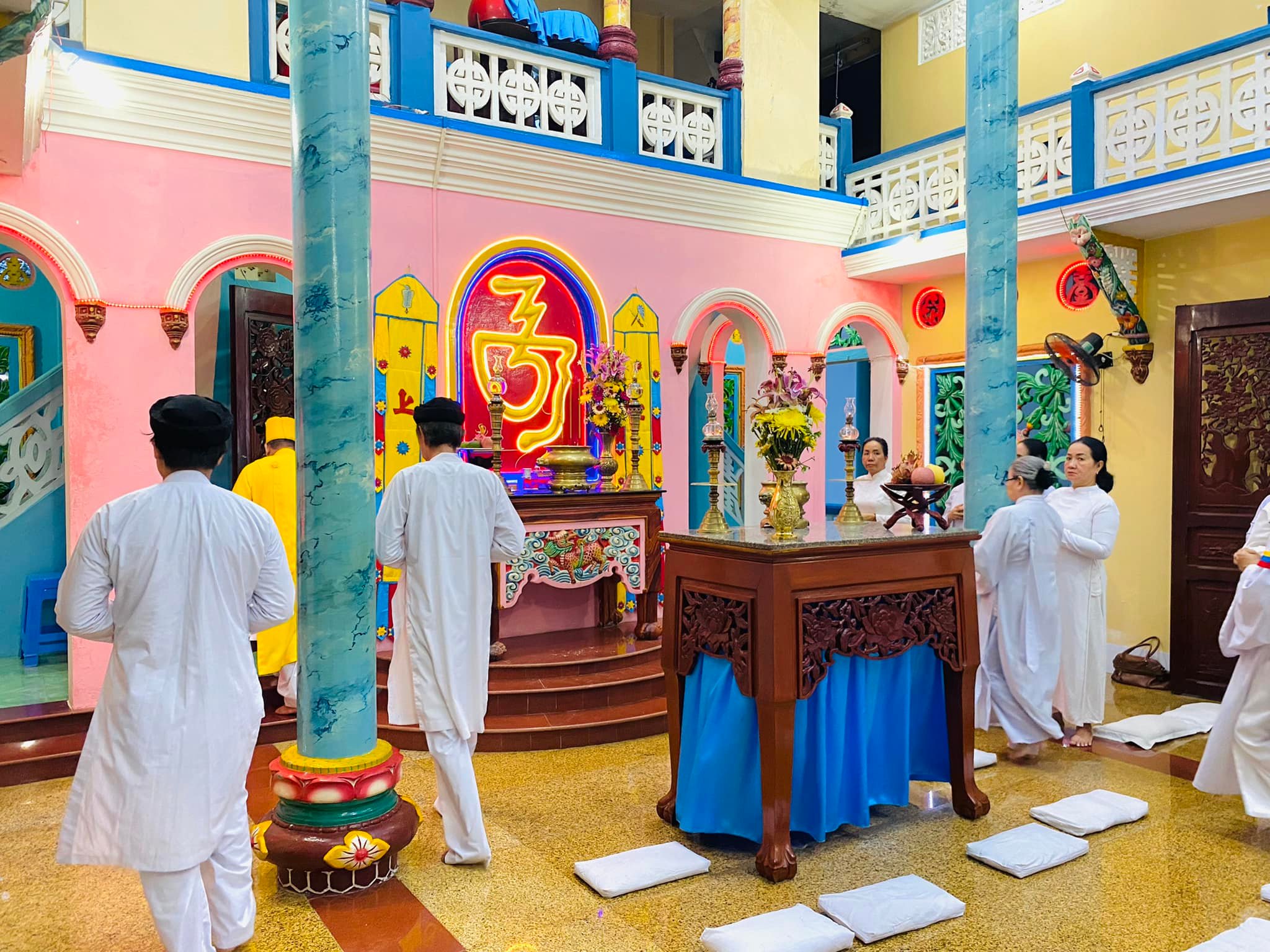
Located at 40 Nguyen Trai Street, right in the center of Duong Dong and just a short walk from the Dinh Cau Night Market, Duong Dong Cao Dai Temple is one of the island’s most historic and significant religious sites. It serves not only as a worship place for Cao Dai followers but also as a symbolic location connected to the early formation of Caodaism in Vietnam.
Phu Quoc – The Birthplace of Caodaism
The Journey of Ngo Van Chieu
Phu Quoc holds an important place in the spiritual journey of Ngo Van Chieu, the first Cao Dai disciple and the key figure who developed the foundations of the religion.
In 1919, while serving as the administrative district chief of Phu Quoc, he conducted many spirit-writing séances and received teachings from Cao Dai, the Supreme Being. These revelations on the island laid the groundwork for the doctrine of Dai Dao Tam Ky Pho Do (The Great Way of the Third Universal Salvation).
The “Huyen Chieu” Sacred Stone
Inside the temple, visitors can find a stone engraved with the characters “Huyen Chieu”, carved by Ngo Minh Chieu himself. This relic is considered an important mark of Caodaism’s origins in Phu Quoc.
The Establishment of Caodaism
By 1926, Caodaism was officially founded in Saigon. Thanks to its early spiritual roots on the island, the religion rapidly spread and established a strong community in Duong Dong.
History of Duong Dong Cao Dai Temple
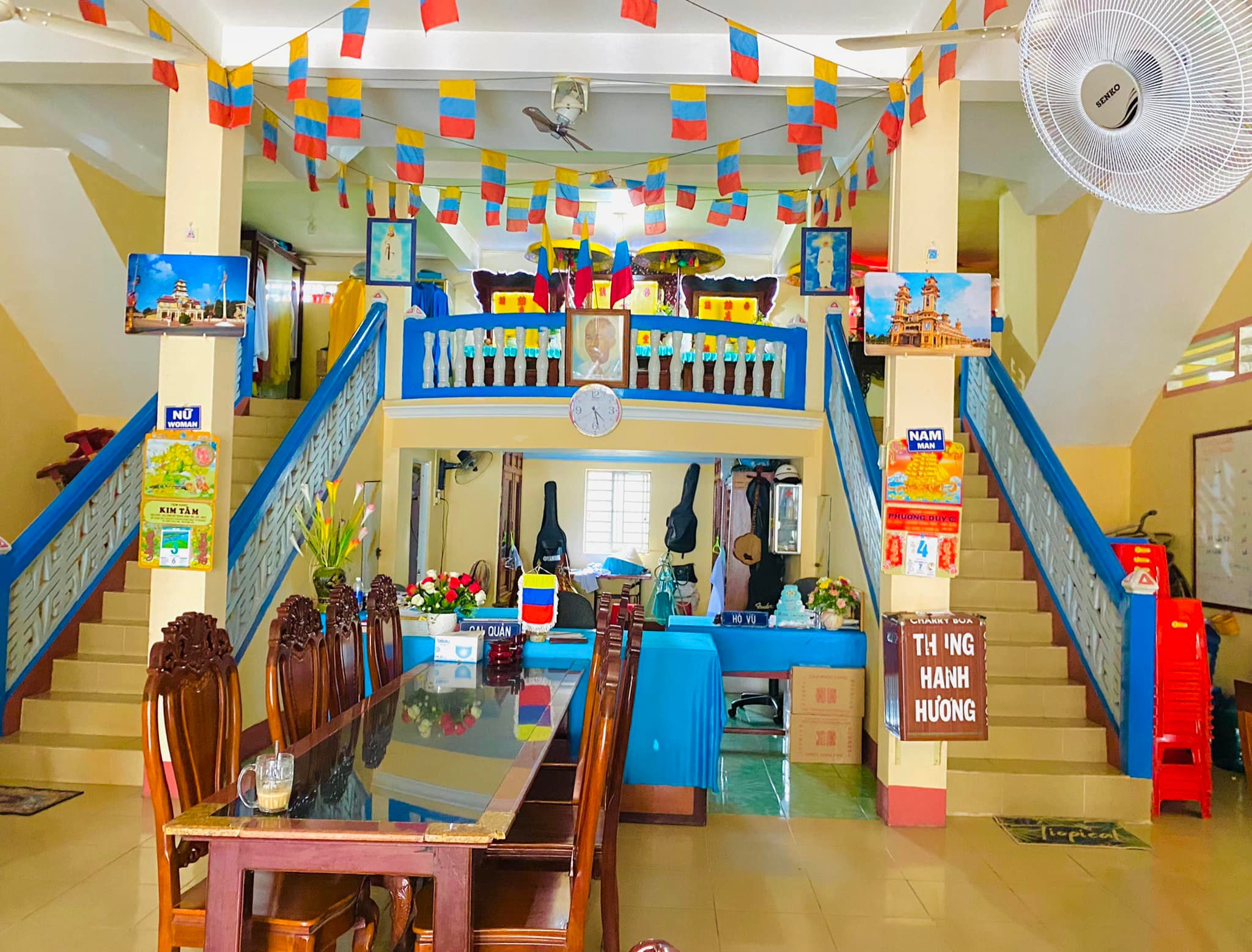
Built in 1961 on the site of the former Quan Am Pagoda, which had deteriorated over time, the temple was constructed through the collective effort of local Cao Dai followers.
Since its establishment, the temple has become a major religious center for the Cao Dai Tay Ninh branch on Phu Quoc.
Over the decades, the temple remains an essential spiritual space for the local community and a fascinating cultural attraction for visitors interested in Vietnam’s diverse religious traditions.
Unique Architectural Features
The temple is easily recognizable by its:
- Two symmetrical bell towers
- Vibrant and colorful façade
- Detailed symbolic decorations typical of Cao Dai art
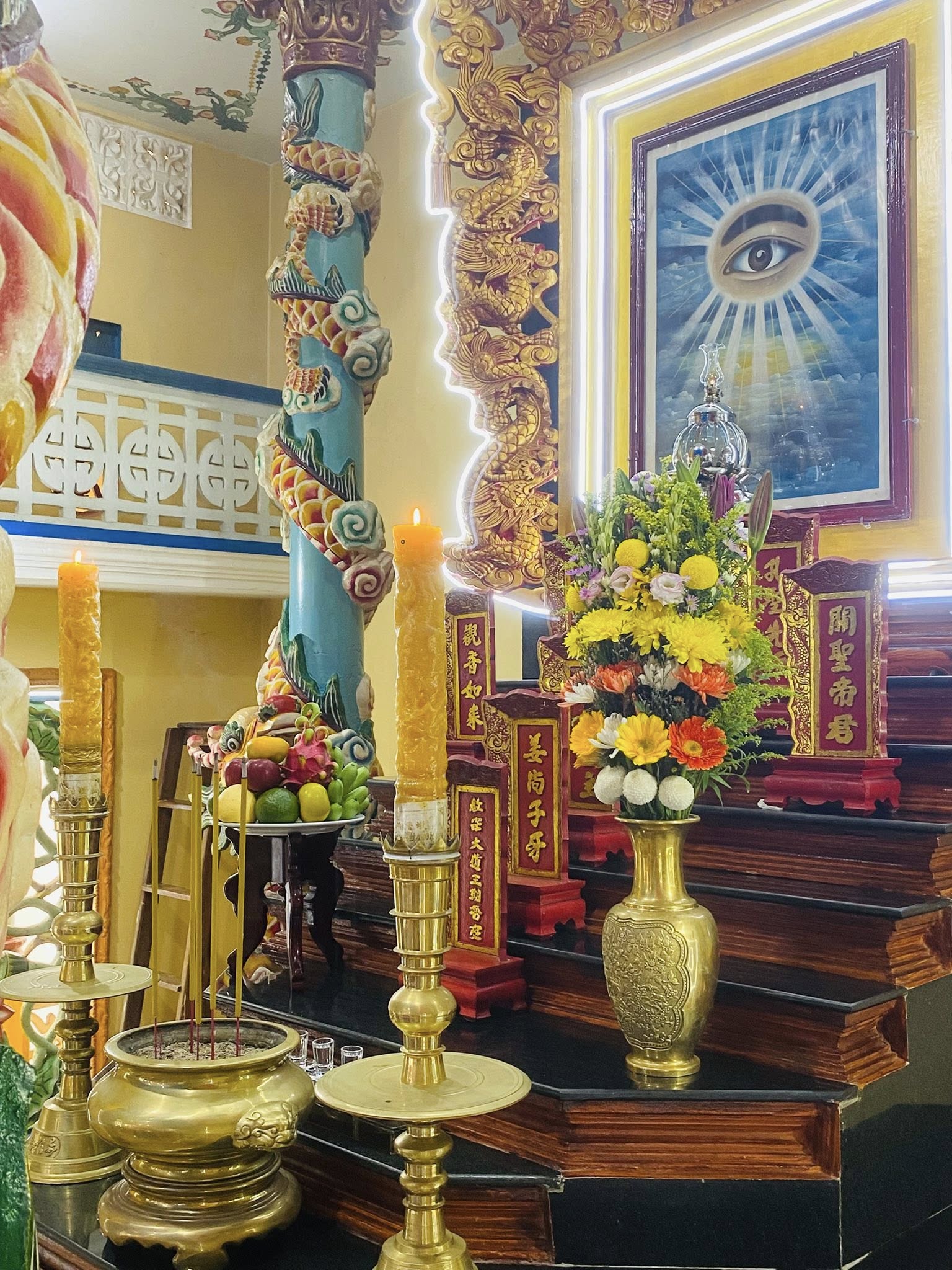
Inside, the main hall prominently features the Divine Eye (Thien Nhan) — the most sacred symbol of Caodaism, representing the all-seeing presence of the Supreme Being. The space is airy, peaceful, and filled with a sense of spiritual purity.
A Harmonious and Inclusive Faith
Caodaism is a monotheistic religion but uniquely integrates elements from several major belief systems, including:
- Buddhism
- Taoism
- Confucianism
- Christianity
- Japanese Shintoism
This harmonious blend makes the temple known as a “house of the sacred beings,” reflecting a rich spiritual unity between Eastern and Western philosophies.
A Peaceful Spiritual Stop in Central Duong Dong
With its prime location, the temple is within walking distance of several key attractions:Dinh Cau Night Market – 350 m, Dinh Cau Shrine – 600 m, Duong Dong Market – 700 m
Visitors can easily include this site in their itinerary while exploring the vibrant town center.
At Duong Dong Cao Dai Temple, travelers can:
- Learn about the origins of Caodaism
- Admire colorful, symbolic architecture
- Experience a serene spiritual atmosphere amidst the bustling island
Duong Dong Cao Dai Temple is undoubtedly a must-visit destination for those who want to explore the cultural and religious heritage of Phu Quoc.