
Located at the southeastern gateway of Ho Chi Minh City, Can Gio is known not only for its lush mangrove forests but also as a unique source of brackish-water seafood. Thanks to the meeting point of rivers, sea, and mangrove ecosystems, the area produces a wide range of local specialties, including sea worms, green mussels, khoai fish, clams, crabs, mud crabs, grouper, and black tiger shrimp. These specialties are commonly found in Long Hoa, Thanh An, Ly Nhon, An Thoi Dong, Tam Thon Hiep, and Can Thanh Town.
If you want to experience the distinctive flavors of the Can Gio coast, these are some of the specialties worth trying.
Can Gio Sea Worms, the “Ginseng” of Mudflats
Sea worms, locally known as sam dat or sa sung, live in sandy-muddy areas along the mangrove forests. Digging for sea worms is a traditional livelihood for many households in Can Gio, particularly during low tides.
According to traditional Vietnamese medicine, sea worms have a salty taste and cooling properties and are believed to help clear internal heat, nourish yin, and support the lungs and digestive system. In local tradition, they are also regarded as a nourishing food believed to help restore energy and vitality.
Fresh sea worms can be stir-fried, grilled, cooked into porridge, or deep-fried until crispy. They have become a prized ingredient sought after by restaurants specializing in local seafood.
Finding them is far from easy. Harvesters must carefully look for tiny holes appearing on the surface of the mud and work quickly because sea worms can burrow deep into the mud and move surprisingly fast. They also avoid digging near young mangrove roots to protect the mangrove ecosystem that provides their habitat.
Can Gio Green Mussels, Treasures from the Sea
Green mussels, locally known as vom xanh, do not appear throughout the year. They are usually harvested during only two or three periods each year, with each period lasting less than a week. The mussels attach themselves to rocks and bricks at depths of around 6 to 10 meters and become easier to find when the tide recedes, making harvesting highly dependent on tidal conditions.
Green mussel meat is sweet, slightly rich, and naturally high in protein and minerals. Besides being steamed, grilled, or stir-fried, the mussels are also processed into dried or frozen products for export. They are also traditionally valued for their potential benefits for bones and joints due to naturally occurring enzymes and glycosaminoglycans.
Can Gio Khoai Fish, Soft and Sweet as Porridge
Khoai fish is a brackish-water species with a slender body, smooth skin, no scales, translucent white flesh, and soft bones. In the past, it was sometimes regarded as an undesirable fish because its flesh is exceptionally soft and difficult to handle. Today, however, it has become one of Can Gio’s sought-after local specialties.
The most famous dish is lau ca khoai, or khoai fish hot pot. The fish is cleaned and lightly seasoned before being added to a simmering broth made with tomatoes, pineapple, and mushrooms. Once cooked just right, the flesh becomes exceptionally tender and almost melts in the mouth, with a delicate sweetness balanced by the broth’s mild sourness.
Many experienced diners also save the fish’s stomach, which is considered one of the most prized parts when preparing khoai fish soup or hot pot.
Can Gio Clams, Sweetness from the Tidal Flats
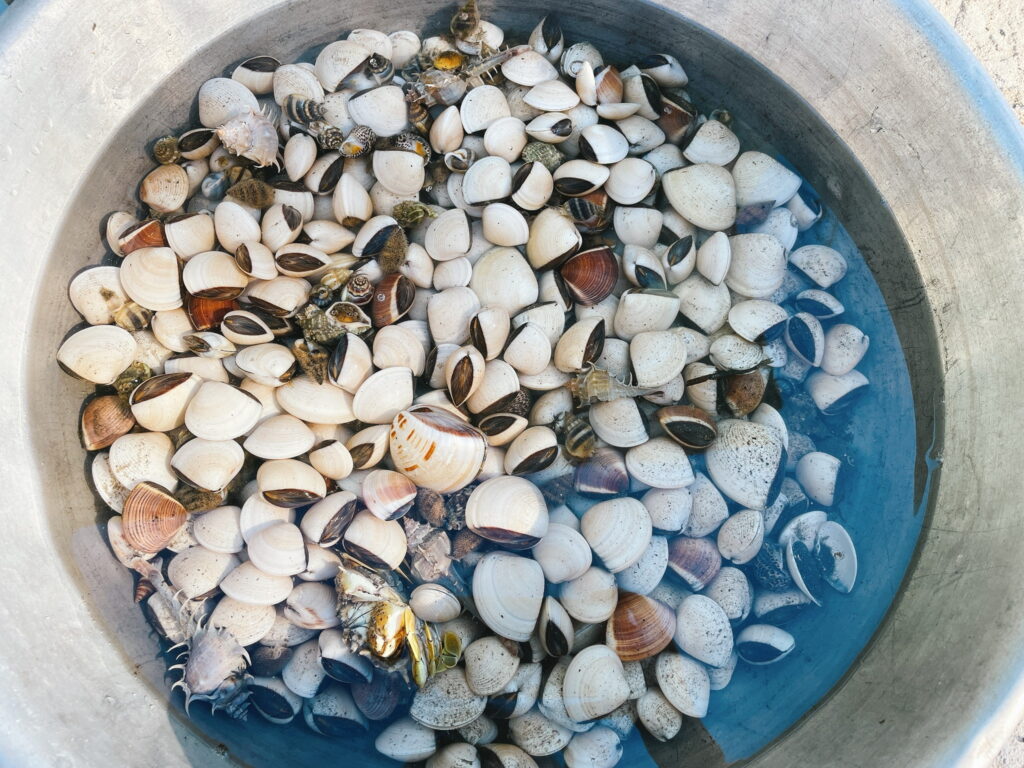
Can Gio clams are known for their plump meat and relatively low sand content. September and October are considered a particularly good period, when the clams grow quickly and become full of meat and naturally sweet. In the following months, when the seasonal winds become stronger, the clams burrow deeper into the sand, slowing their growth and giving the meat a saltier taste.
Along the Can Gio coast, rows of stakes protruding from the water mark the boundaries of clam farming areas. Each clam carries not only the briny flavor of the sea but also the result of the persistent work of communities living and working along the tidal flats.
Can Gio Crabs, a Taste of the Mangrove Forest
Can Gio crabs live in muddy burrows among the mangroves or are raised in integrated shrimp and crab ponds. With abundant natural food sources, local crabs are known for their firm meat, rich sweetness, and distinctive aroma.
Among the varieties prized by local diners are female crabs approaching maturity, cua com crabs during the molting stage, and roe-filled female crabs. Firm-meat crabs are often associated with certain lunar-calendar periods, particularly around the 10th and 25th days, while roe-filled crabs are especially abundant from the full moon of the eighth lunar month through the ninth lunar month.
Whether steamed, grilled, or stir-fried with tamarind sauce, Can Gio crabs retain their natural sweetness, carrying the distinctive flavor of the region’s mangrove waterways.
From muddy shores beneath the mangroves to tidal flats farther offshore, Can Gio offers much more than its famous mangrove forests. It is also home to a diverse and distinctive coastal food culture. Each specialty reflects a different aspect of the natural environment and everyday life in this river-and-sea landscape, making Can Gio a rewarding destination for anyone who enjoys the flavors of Vietnam’s coast.