The Nghinh Ong Festival in Can Gio is one of the most important traditional festivals of coastal fishing communities in Ho Chi Minh City. The festival is associated with the worship of Ca Ong, or the Whale, a sacred sea creature believed by fishermen to protect them, rescue boats in distress and guide them safely through dangerous waters.
Beyond its spiritual significance, the festival is also an occasion for fishermen to give thanks for the sea, celebrate the completion of a fishing season, commemorate those who lost their lives at sea, and participate in cultural, sporting and community activities. With its distinctive rituals taking place at Lang Ong Thuy Tuong and along the coastal waters of Can Thanh, the festival has become an important cultural expression of Can Gio’s maritime heritage.
Time and Location of the Festival
In earlier times, the Nghinh Ong Festival in Can Gio was commonly held around the middle of the third lunar month. However, from 1914 onward, the festival was moved to the 15th day of the eighth lunar month. This change was associated with the fishing calendar, as the period was considered favorable for fishing, when catches were often more abundant and fishermen had better opportunities to return home and participate in the celebrations.
Since then, the festival has generally been held annually over three days, from the 15th to the 17th day of the eighth lunar month, with the scale of a city-level cultural event. The festival also coincides with the Mid-Autumn Festival, making it not only an important occasion for fishermen but also a community celebration for local children and residents.
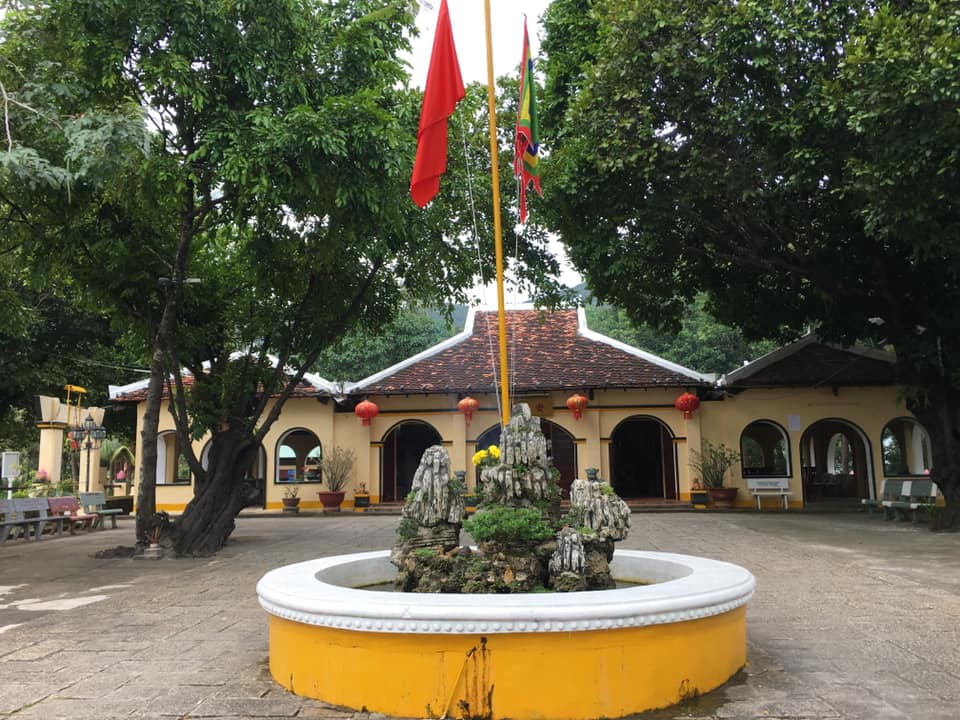
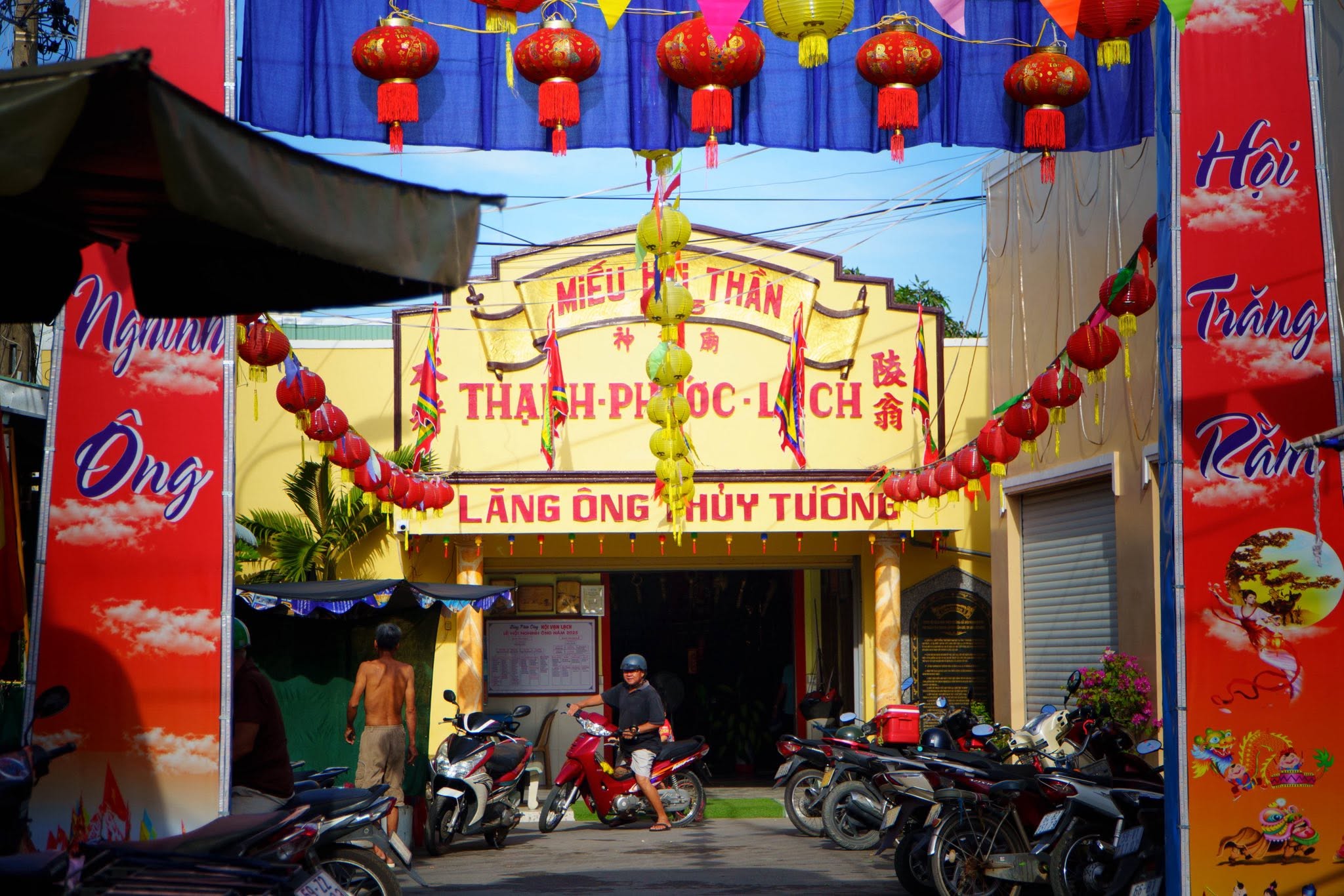
The main venue is Lang Ong Thuy Tuong, also known as Thanh Phuoc Lach, a city-level architectural and artistic heritage site in the Can Thanh area. Other activities take place at the Can Gio historical and cultural park associated with the Rung Sac Revolutionary Base, Can Thanh Communal House, central streets in Can Thanh and the coastal waters.
Several communal houses and shrines dedicated to Ca Ong in other parts of Can Gio, including Binh Khanh Communal House, Dong Hoa Communal House, An Thoi Dong Communal House, Thanh An Communal House, Tam Thon Hiep Communal House and the Ba Shrine in Long Hoa, also hold whale-worship ceremonies on the 15th day of the eighth lunar month. After their local ceremonies, fishermen from different areas gather in Can Thanh to participate in the main Nghinh Ong Festival of the region.
Origins and Cultural Meaning of the Nghinh Ong Festival
Can Gio has developed through a close relationship with rivers, coastal waters and fishing. For centuries, the area served as an important maritime gateway and trading region. In Gia Dinh Thanh Thong Chi, scholar Trinh Hoai Duc described the Can Gio estuary as a deep, broad and relatively calm waterway where merchant vessels frequently entered and departed, while local residents largely made their living from fishing.
For communities whose livelihoods depended on the sea, storms, strong waves, dangerous currents and maritime accidents were constant threats. As a result, Ca Ong, or the Whale, came to be revered as the sacred guardian of the sea, believed to rescue fishermen in distress and help boats return safely to shore.
According to local traditions, fishermen in Can Gio established a sea deity shrine known as Mieu Hai Than, which later became Lang Ong Thuy Tuong. Over time, worship practices developed into a larger community ritual system and eventually formed the Nghinh Ong Festival, also known as the whale-worship festival.
Several folk legends explain the origins of the belief in Ca Ong. One story influenced by Buddhist traditions identifies the whale with an incarnation of Avalokitesvara Bodhisattva, who appears to save people from suffering and danger. Another legend connects the whale with the time when Lord Nguyen Anh was being pursued by Tay Son forces. When his fleet encountered violent storms at sea, a giant whale was believed to have guided the boats safely to shore. After becoming emperor, Nguyen Anh reportedly remembered the whale’s assistance and honored it with the title Nam Hai Dai Tuong Quan, or Great General of the Southern Sea, while ordering the establishment of shrines dedicated to it.
In Can Gio, local people also preserve a story associated with the 16th day of the eighth lunar month. According to the legend, Ca Ong once failed to protect a boat because he had neglected his duty, resulting in the boat sinking and many people losing their lives. The Dragon King became angry and ordered a swordfish to cut the whale’s body into three sections. The remains were said to have drifted to Thang Tam in Vung Tau, Phuoc Tinh in Long Dat and Can Thanh in Can Gio. Residents in each location brought a part of the whale’s body back for worship, creating important whale-worship centers along the southern coast.
The Nghinh Ong Festival therefore expresses the fishermen’s wishes for calm seas, favorable weather, safe voyages, successful fishing trips and prosperous family life. It also marks the closing of one fishing season and the beginning of another, accompanied by prayers for abundance and good fortune.
The festival reflects the traditional principle of gratitude and remembrance. Fishermen honor the Sea Deity, commemorate those who contributed to the development of boats, fishing tools and maritime occupations, and remember people who lost their lives at sea. It is also an opportunity for fishing families to rest after long voyages, visit relatives, exchange experiences and strengthen community relationships.
For these reasons, the Nghinh Ong Festival is often regarded as the traditional New Year celebration of Can Gio’s fishing community, while also sharing the joyful atmosphere of the Mid-Autumn Festival.
Main Rituals of the Nghinh Ong Festival
The festival consists of two major components: the ceremonial section and the festive section. The ceremonial activities take place solemnly at Lang Ong Thuy Tuong and on the sea, while the festive activities are held in public spaces, parks, beaches and central streets.
The 15th Day of the Eighth Lunar Month: Opening Ceremonies and Prayers for Peace
Preparations for the festival begin several days in advance. Roads, parks, markets, communal houses, shrines and the area surrounding Lang Ong Thuy Tuong are cleaned and decorated with festival flags, banners and ceremonial ornaments. The Van Lach Association, together with local residents, prepares the worship space, repairs altars and organizes the necessary ritual objects.
Many fishing families, especially those living along the procession route, set up small altars in front of their homes with incense, candles, flowers, fruit, rice, salt, tea, wine and other offerings. Some families also prepare ancestral tablets or memorial objects. According to local belief, welcoming the procession as it passes by brings blessings, peace and protection to the household.
Fishing boats from nearby and distant areas are also repaired, cleaned and decorated with flowers and colorful flags before joining the maritime procession.
The first day generally includes the Flag-Raising Ceremony, the Fishermen’s Achievement Celebration, the Ceremony for Former Boatmen and Fishing Companions, and the Peace-Prayer Ceremony. In recent years, a visit to the Rung Sac Martyrs’ Cemetery has also been organized before the flag-raising ceremony to commemorate fallen soldiers and fishermen who died at sea.
The Flag-Raising Ceremony takes place in front of Lang Ong Thuy Tuong. After three rounds of drums and ceremonial gongs, elders, local authorities and fishermen offer incense before the five-colored festival flag is raised. The flag flying above the shrine symbolizes the connection between heaven, the sea and the coastal community.
The Fishermen’s Achievement Celebration reviews the year’s fishing and aquaculture activities. It is also an occasion to recognize individuals and groups with notable achievements, share production experiences and encourage the sustainable development of local maritime occupations.
The Ceremony for Former Boatmen and Fishing Companions is held at Lang Ong Thuy Tuong to express gratitude to Ca Ong for protecting fishermen and to commemorate people who contributed to the fishing profession, as well as those who died at sea. The ceremony traditionally includes three rounds of wine and one round of tea, presided over by the head of the fishing association and senior elders.
The Peace-Prayer Ceremony usually takes place in the evening, often beginning around 7:30 p.m. or continuing from approximately 11 p.m. until midnight. Influenced by communal-house worship and Buddhist traditions, the ceremony prays for peace, safe voyages, successful fishing, family happiness and protection from the Sea Deity. After the prayer text is read, it is burned as an offering and a symbolic message of the community’s wishes.
At the transition into the 16th day of the eighth lunar month, the Thinh Sinh Ceremony, also known as the Mao Huyet ritual, is conducted according to traditional customs.
The 16th Day of the Eighth Lunar Month: The Maritime Nghinh Ong Ceremony
The 16th day of the eighth lunar month is the main day of the festival. Its central event is the Nghinh Ong Ceremony at sea, usually held at around 10 a.m. in the coastal waters of Can Thanh.
From early morning, thousands of local residents and visitors gather at Lang Ong Thuy Tuong. The ceremonial palanquin carrying the spirit of Ca Ong is paraded through the central streets before being taken to the Can Thanh waterfront and transferred onto the main ceremonial boat.
The boat selected for the procession is usually chosen in advance by the Van Lach Association and decorated more elaborately than the other participating vessels. According to traditional customs, the boat owner selected for this role should not be observing a period of mourning in the family. The ceremony at sea takes place at an area traditionally known as “Tam Giang Khau,” where three waterways meet, approximately four nautical miles from the shore.
Fishing boats from different areas gather in the coastal waters of Can Thanh. Their decks are decorated with flags, flowers and lanterns, while ceremonial offerings are carefully prepared. Offerings may include chicken, duck, pork head, roasted pig, sticky rice, sweet soup, wine, tea, flowers and fruit. According to local belief, Ca Ong is the guardian of the sea, while seafood creatures are regarded as the deity’s spiritual forces and are therefore not used as sacrificial offerings.
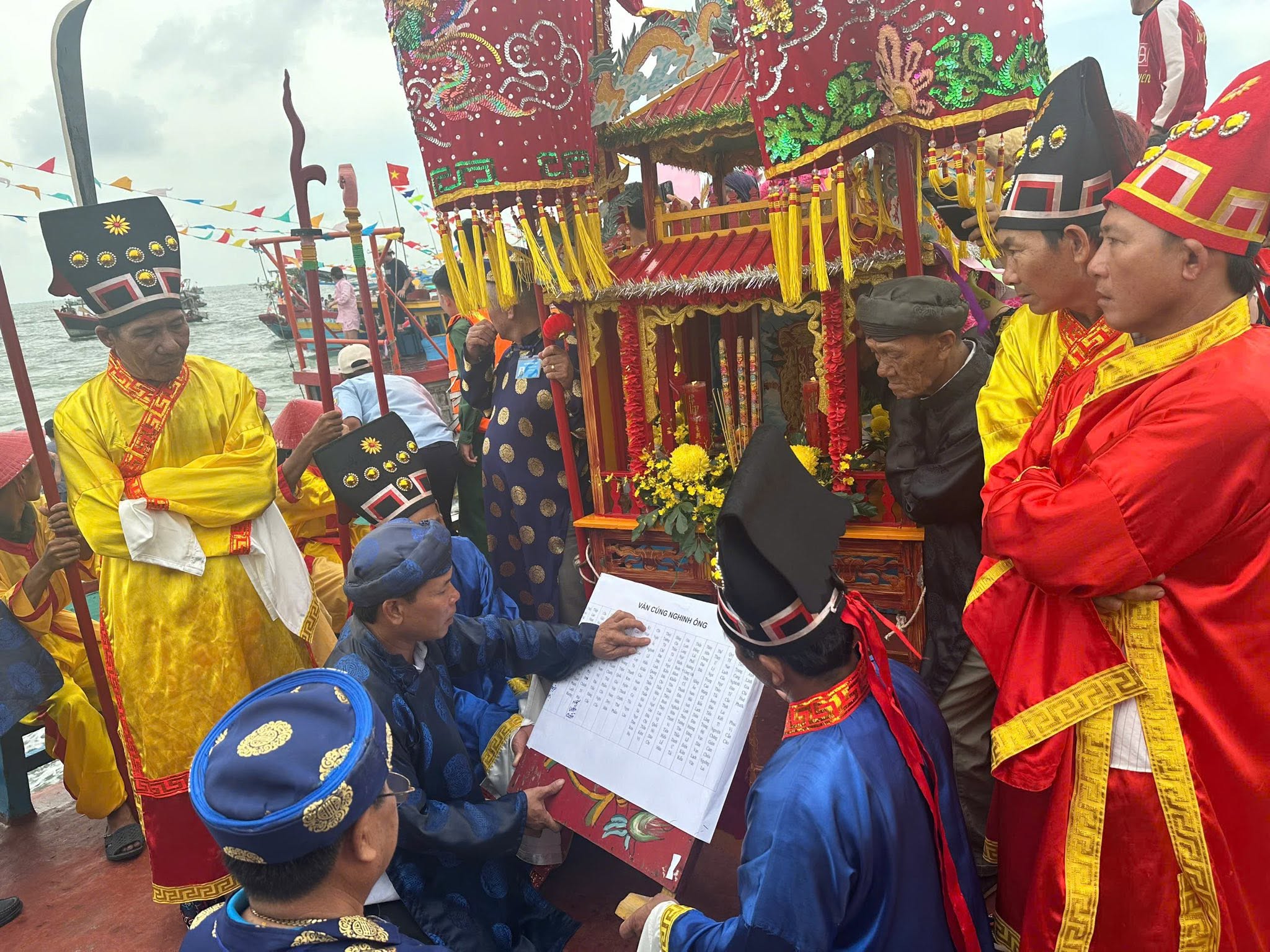
The ceremonial procession includes the ritual committee, assistants, ceremonial singers, musicians, flag bearers, attendants and the main worship altar. At the front is the head of the fishing association, followed by ritual participants, ceremonial singers, attendants carrying five-colored flags, elders dressed in traditional long robes and turbans, and people carrying the altar.
The ceremonial altar is made of precious wood and carved in the form of a miniature main sanctuary of Lang Ong Thuy Tuong. It contains the tablet of the Sea Deity, incense burners, candle holders and offerings. The incense burner traditionally holds three tablets representing deities associated with rivers and waterways, Nam Hai Cu Toc Ngoc Lan Thuy Tuong and Thuy Long Than Nu Nuong Nuong.
At approximately 10 a.m., when the fleet reaches Tam Giang Khau, the maritime Nghinh Ong Ceremony officially begins. Following three rounds of ceremonial drums, the elders conduct incense offerings, wine offerings, the reading of prayer texts and tea offerings. After the prayer text is read, it is burned and its ashes are released into the sea as part of the traditional ritual.
Rice and salt are also scattered into the water, symbolizing gratitude to the sea and to the spiritual forces believed to accompany and protect the procession.
When the ceremony is completed, the fleet returns to shore. As the boats approach the landing area, they move in circles amid the sound of drums, gongs and the cheers of fishermen and spectators. This lively moment represents the joyful return of Ca Ong from the open sea and serves as a public ceremonial greeting for local residents and visitors.
After the procession returns to Lang Ong Thuy Tuong, the Tuc Yet Ceremony is held. This includes the Xay Chau Vo ritual and the Dai Boi ceremony.
The Xay Chau Vo Ceremony centers on the Dai Loi ceremonial drum. The ritual includes inviting the drumstick, opening the cosmic balance, beating the drum in three rounds, offering incense, reading the ceremonial text and formally opening the performance space. The drumbeat symbolizes the beginning of celebration and marks the return of Ca Ong.
The Dai Boi Ceremony consists of traditional opera performances presented for Ca Ong at the Vo Ca theater of Lang Ong Thuy Tuong. Performances may include classical plays such as Moc Que Anh Dang Cay, Luu Kim Dinh Giai Gia Tho Chau, Ngoc Ky Lan Xuat The, Tam Nu Do Vuong and Phung Nghi Dinh.
The combination of worship at sea, the procession back to the shrine and traditional opera performances creates a distinctive character for the Nghinh Ong Festival in Can Gio, deeply reflecting the cultural heritage of Southern Vietnam’s coastal communities.
The 17th Day of the Eighth Lunar Month: The Grand Thanksgiving Ceremony
The final day of the festival is dedicated to the traditional Grand Ceremony and the thanksgiving ritual to the Sea Deity. Fishermen and visitors continue to return to Lang Ong Thuy Tuong to offer incense, pray for peace, prosperity and happiness, and express their gratitude to Ca Ong.
This ceremony marks the conclusion of the formal ritual program of the Nghinh Ong Festival in Can Gio.
Cultural and Recreational Activities
Alongside the traditional ceremonies, the festive section features a wide range of cultural, sporting and community activities. Folk games associated with coastal life, such as net casting, duck catching in the sea, crab tying and beach stilts football, are often organized in the area stretching from the Can Gio market beach to Can Thanh Park Beach.
In recent years, the festival has expanded to include pétanque, marathon races, Chinese chess, beach volleyball, exhibitions highlighting maritime achievements and displays introducing local occupations and products. These activities allow residents and visitors to interact with fishermen, learn about coastal livelihoods and discover the economic and cultural development of Can Gio.
Lion, unicorn and dragon dances add excitement to the festival atmosphere. Performances may include lions balancing on balls, traditional martial formations and dragon dances, attracting large crowds.
Since 2011, the festival has also featured artistic illuminated kite performances organized by the Saigon Kite Club. A floating-lantern ceremony is held at sea at around 11 p.m. on the 15th day of the eighth lunar month, creating a striking scene over the dark coastal waters.
Because the festival coincides with the Mid-Autumn Festival, organizers also arrange lantern processions for children on the evening of the 15th day. This makes the Nghinh Ong Festival a celebration shared by different generations, from elderly fishermen to local children and visitors.
Cultural Value of the Nghinh Ong Festival in Can Gio
The Nghinh Ong Festival in Can Gio reflects the beliefs, folk knowledge, traditional rituals and maritime experience of coastal fishing communities. Its ceremonies demonstrate how local people understand the relationship between human life, the sea, nature, spiritual forces and livelihoods.
The festival preserves numerous traditional cultural elements, including processions, sacrificial ceremonies, prayer readings, traditional opera, ritual music, ceremonial costumes, decorated boats and folk legends associated with Ca Ong.
Like other Nghinh Ong and Cau Ngu festivals held along Vietnam’s coastline, the Can Gio festival shares common themes of whale worship, prayers for safety and gratitude to the sea. However, it retains distinctive local features, particularly the maritime Nghinh Ong ceremony, the procession back to Lang Ong Thuy Tuong, traditional opera performances and its timing during the Mid-Autumn Festival.
Through the festival, stories about the formation of Can Gio, the lives of mangrove and coastal communities, fishing traditions and collective values are passed from one generation to the next.
The festival serves not only a spiritual purpose but also strengthens community solidarity, encourages gratitude toward ancestors, commemorates those who have passed away and honors fishing and aquaculture occupations. It is an important expression of the intangible cultural heritage of Can Gio’s coastal society.
Heritage Information
Name: Nghinh Ong Festival
Type: Traditional festival
Main location: Lang Ong Thuy Tuong, Can Thanh and the coastal waters of Can Gio
Time: From the 15th to the 17th day of the eighth lunar month each year
Object of worship: Nam Hai Deity, Ca Ong and the Whale
Key cultural values: Whale worship, coastal fishing traditions, maritime procession, traditional opera, folk games and community activities
Recognition decision: Decision No. 3084/QD-BVHTTDL dated September 9, 2013