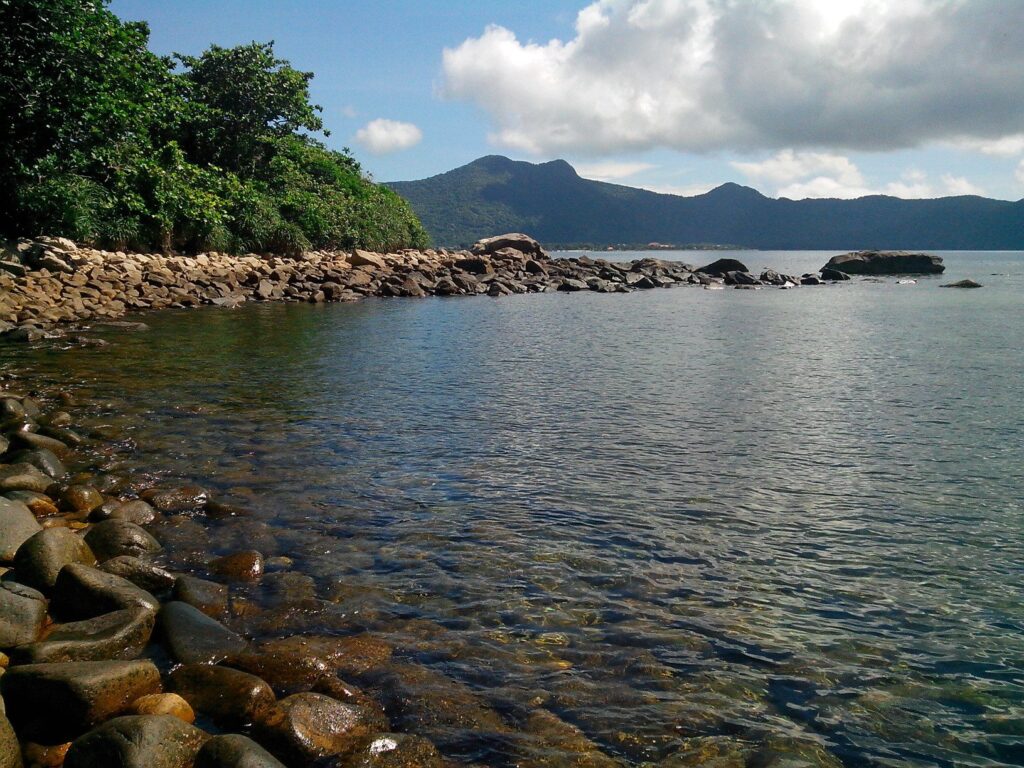
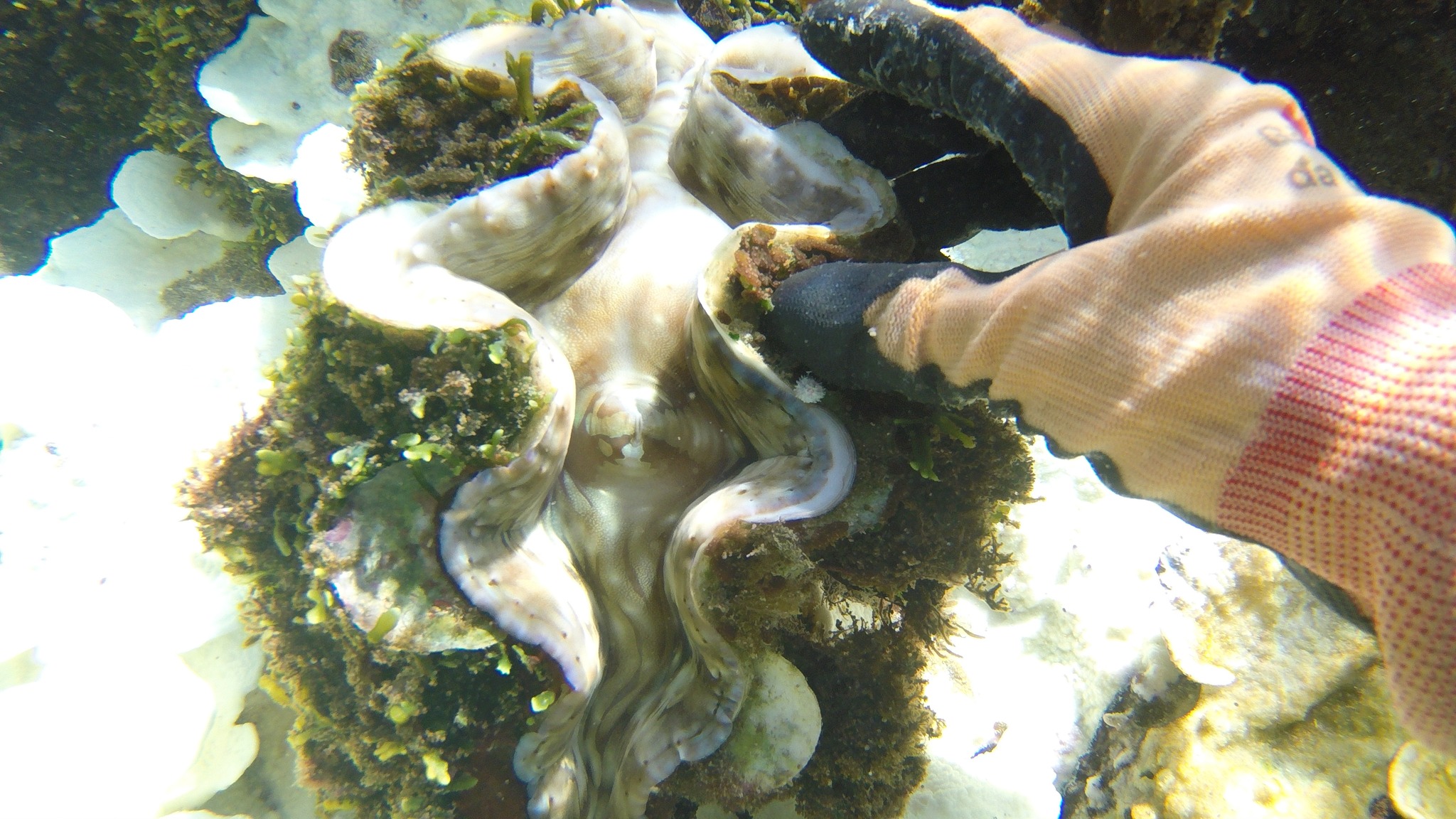
Within Con Dao’s rich marine ecosystem, the giant clam—locally known as Ốc Tai Tượng—is considered the hidden “giant” of the coral reefs. Its unique name comes from its massive double shells that resemble an elephant’s ear when closed.
Distinctive Characteristics
The giant clam is one of the largest mollusk species in Vietnam’s seas, with some individuals weighing up to 10 kg. They live firmly attached to deep rocky reefs, making them extremely difficult to harvest. Their shells are incredibly hard and tightly sealed, requiring special tools and considerable strength to open.
Culinary and Nutritional Value
Giant clam meat has long been prized for its crisp, cartilage-like texture, milky-white color, and naturally sweet flavor. According to local fishermen, clams weighing around 1 kg offer the best taste and tenderness. This species is highly nutritious, rich in vitamins A and C, iron, zinc, calcium, and beneficial unsaturated fats.
Traditionally, giant clams were prepared in a variety of beloved dishes such as:
- Sashimi-style slices with mustard
- Stir-fried with garlic butter
- Steamed with herbs
- Cooked into porridge
- Grilled with scallion oil
Their large calcium shells have also been widely used to create decorative handicrafts.
⚠️ IMPORTANT CONSERVATION NOTICE
Today, the Giant Clam (Ốc Tai Tượng) is listed in Vietnam’s Red Data Book and classified as a rare, endangered marine species requiring strict protection. Wild populations have declined significantly due to overharvesting.
For this reason, visitors to Con Dao are encouraged to avoid consuming wild giant clams, and only support licensed aquaculture farms—helping preserve the island’s precious marine ecosystem for future generations.