
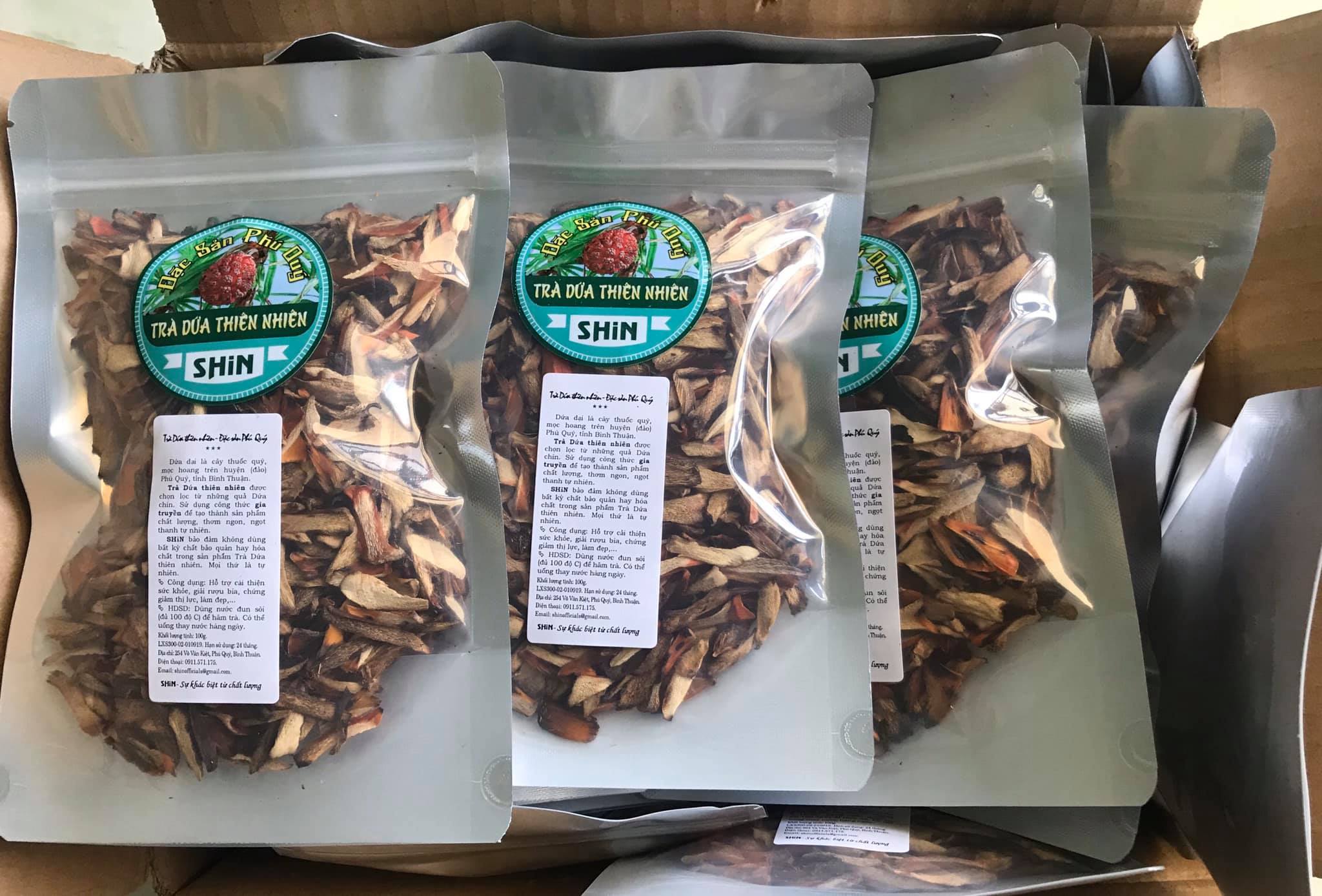
Wild pineapple (also known as pandanus fruit) grows abundantly across Phu Quy Island. For generations, it has been valued as a natural medicinal herb believed to support liver health, kidney stones, diabetes, and overall wellbeing. Today, several local households have transformed this wild plant into a signature product: Phu Quy Pineapple Tea.

Holding the product “Phu Quy Specialty – Shin Natural Pineapple Tea” in hand, I felt both surprised and delighted. Instead of carrying fresh pineapple bundles onto the boat as before, the journey back to the mainland is now much lighter. The packaging clearly lists its benefits: supporting general health, skin beauty, recovery from heat exhaustion, reducing symptoms of the flu, helping with diabetes, and improving vision. According to Mrs. Tri, the producer, her workshop also makes pineapple wine and pineapple-fiber hammocks. After harvesting, the fruits are selected for the sweetest pulp, roasted, dried, tested for quality, and then packaged using specialized equipment. Pineapple wine is even more complex to make—requiring precise fermentation and blending with traditional flavors such as vodka, cognac, and fermented sticky rice to create three main product lines. In the future, more variations will be developed to meet market demand. Their handcrafted hammocks, made from pineapple fibers, follow standardized designs while preserving the cultural touch of Phu Quy Island.
Wild pineapple belongs to a tropical flowering plant family and often grows naturally in coastal areas, sandy soils, mangrove forests, and rocky hillsides. Once considered a simple forest plant, it is now widely recognized in herbal medicine for its nutritional and healing properties. In traditional Eastern medicine, wild pineapple is described as sweet and mild, helping to balance energy, strengthen the spleen and blood, refresh the mind, and detoxify alcohol. These benefits have made the fruit increasingly sought-after.

Anyone visiting Phu Quy will notice vast stretches of wild pineapple plants lining coastal roads and hillsides. When we visited in summer—outside the harvest season—the plants bore almost no fruit. Locals say that even unripe fruits are often picked by visitors, contributing to their scarcity; decades ago, islanders mainly used the plant as firewood.
Thanks to the creativity of local producers, this once overlooked wild plant has become a meaningful island specialty. From herbal tea to infused wine and handcrafted hammocks, Phu Quy’s wild pineapple now carries both cultural identity and economic value, offering visitors a unique taste of the island to take home.