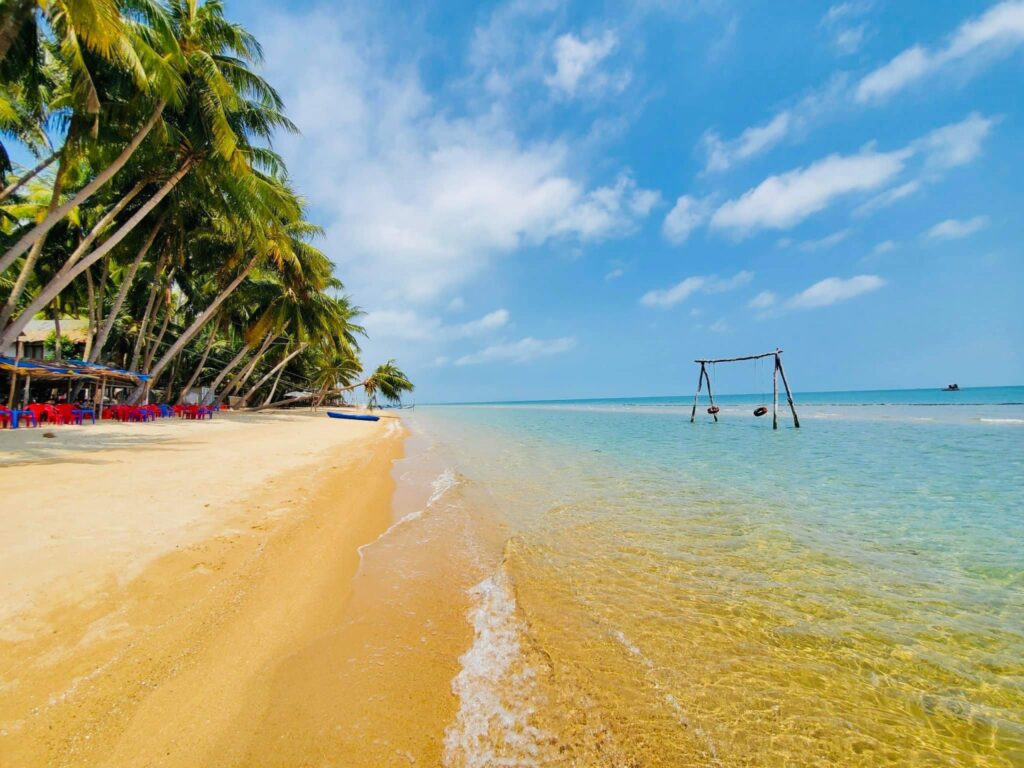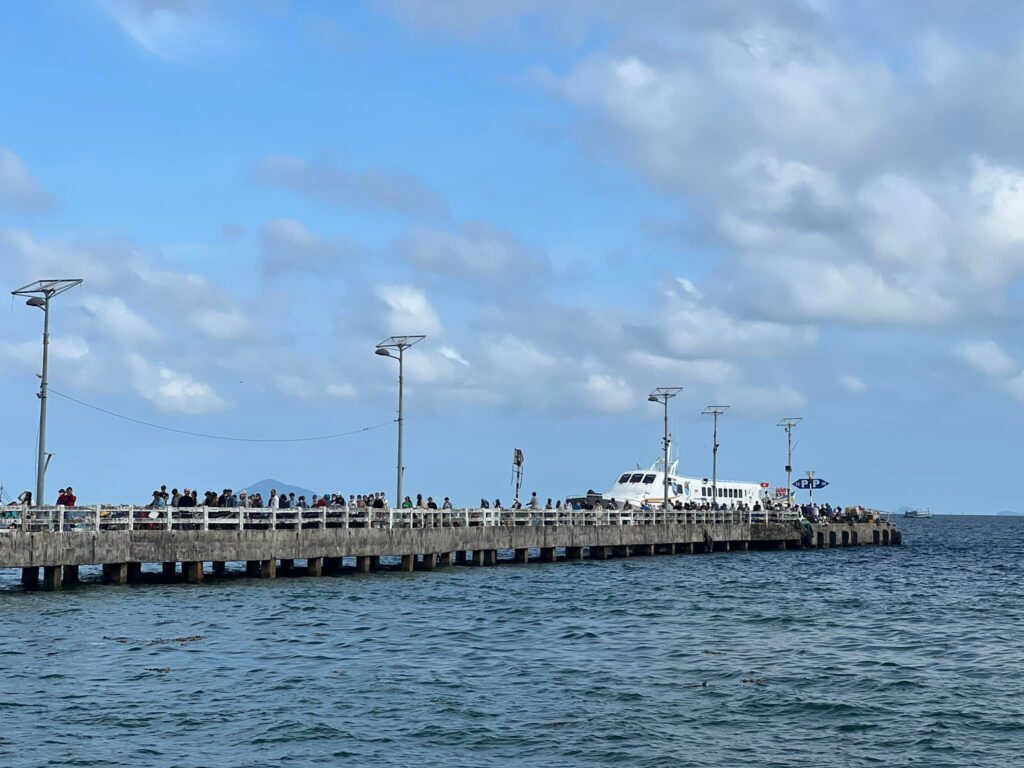
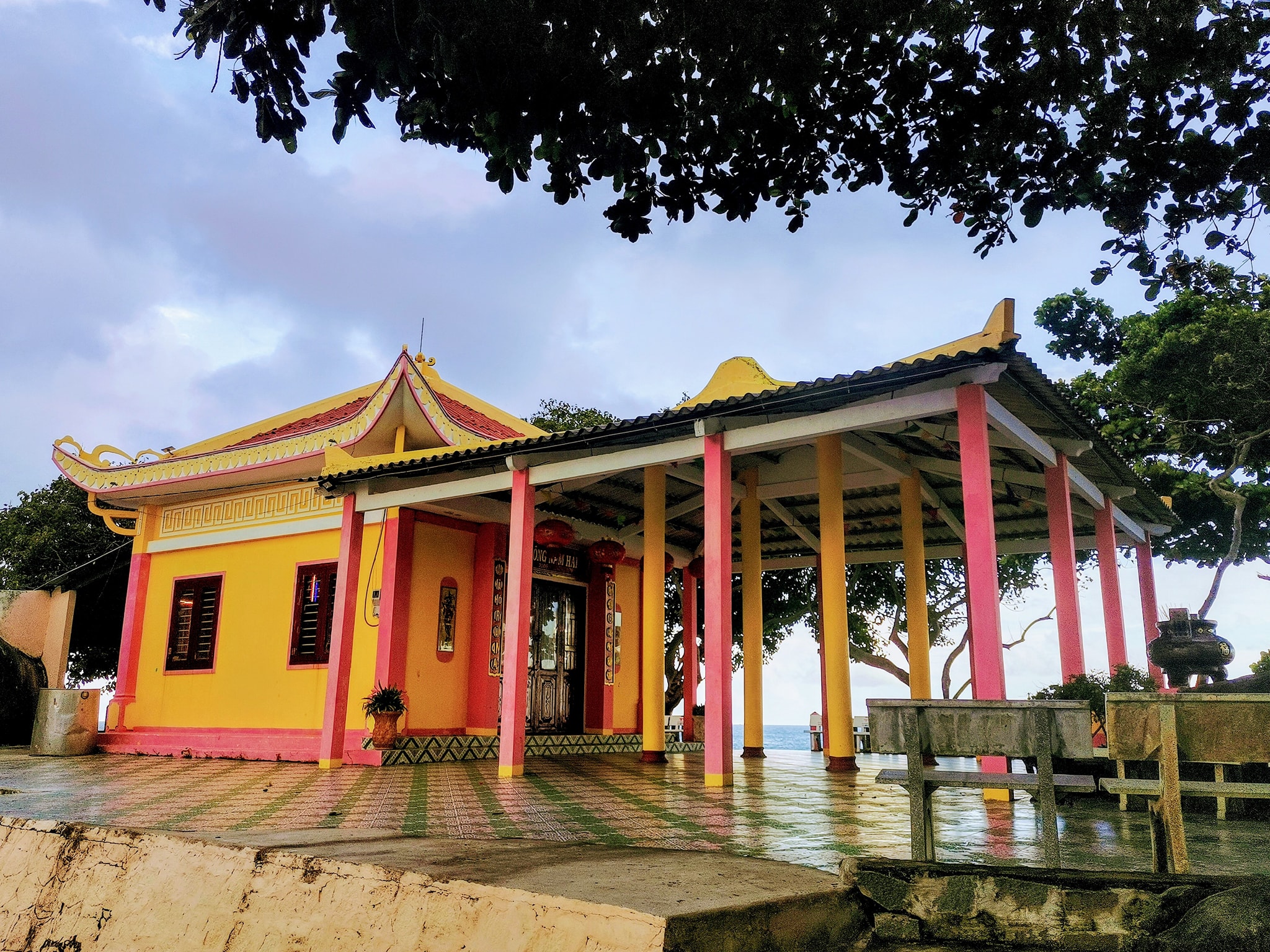
Located just in front of the Nam Hai Whale Temple, right along the shoreline, Ha Ba Temple is a small yet spiritually significant shrine for the local coastal community. Although modest in size, the temple plays an important role in the folk belief system associated with river and sea livelihoods, reflecting the close relationship between local residents and the water environment they depend on for survival.
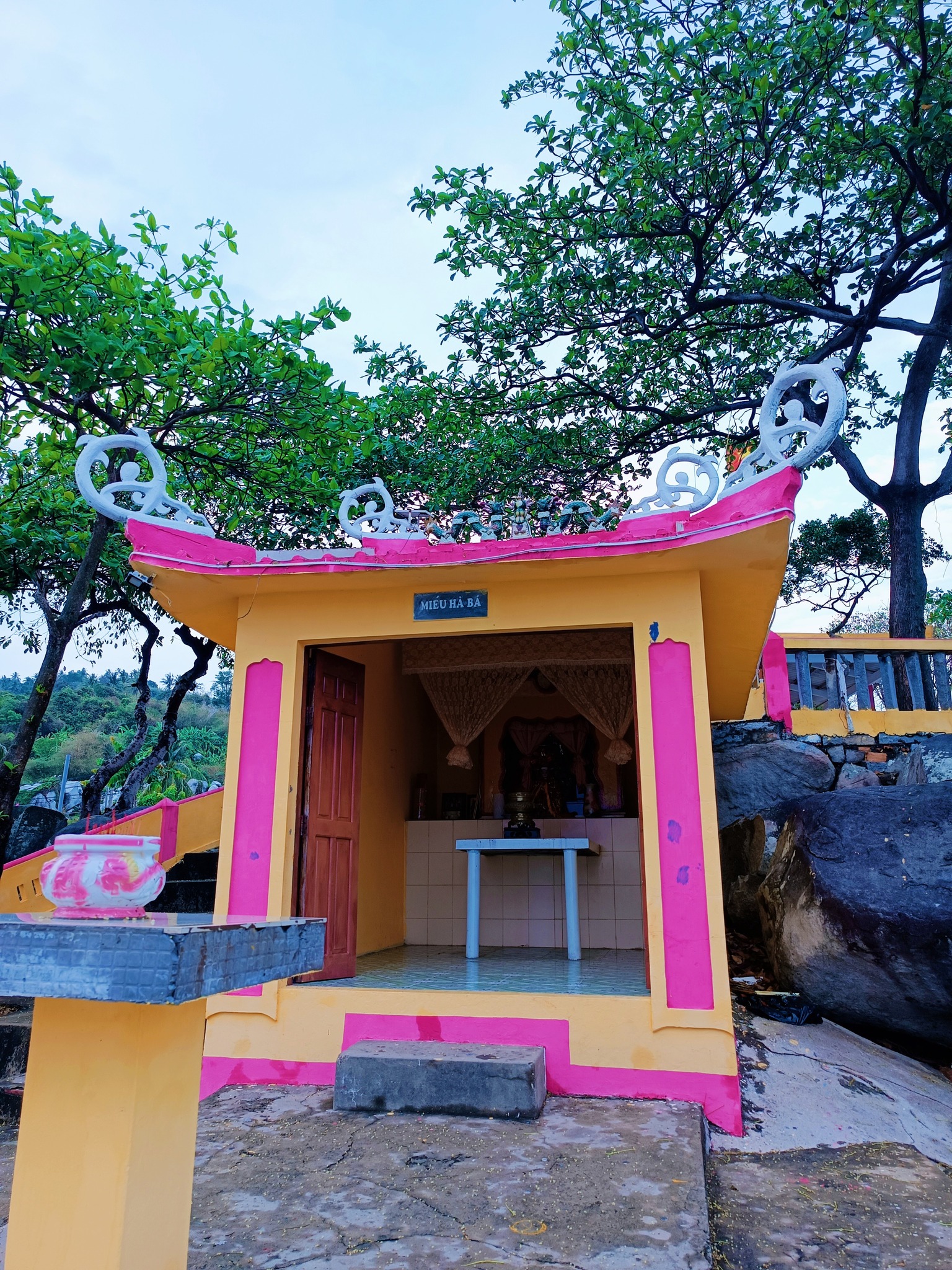
Ha Ba worship represents a form of occupational folk belief. While the worship of the Whale Deity (Ca Ong) is believed to have originated from Cham culture, the belief in Ha Ba traces its roots to Chinese cultural traditions. In folk understanding, Ha Ba is the deity who governs rivers, streams, estuaries, and waterway areas. This belief is encapsulated in the well-known saying: “Land has the Earth God, rivers have Ha Ba.” For this reason, families and individuals whose livelihoods are closely tied to water—such as fishermen, boat operators, and traders—often offer incense and prayers to Ha Ba for safety and smooth journeys.
Unlike benevolent guardian deities who are believed to bring clear blessings and protection, Ha Ba occupies a more ambiguous position in folk consciousness. The deity is thought to possess both benevolent and potentially harmful aspects, capable of bestowing safety or causing misfortune if not properly respected. As a result, worshipping Ha Ba is not only an act of devotion but also an expression of reverence and caution, seeking to avoid accidents, storms, and unforeseen dangers on the water.
Today, Ha Ba Temple stands quietly by the sea, forming a meaningful spiritual complement to the nearby Nam Hai Whale Temple. Together, these sacred sites illustrate the layered belief system of coastal communities, where different cultural influences coexist and merge. For visitors, Ha Ba Temple offers a glimpse into the traditional worldview of fishermen and seafarers, highlighting how faith, respect for nature, and cultural exchange have shaped the spiritual life of Vietnam’s island and coastal regions.