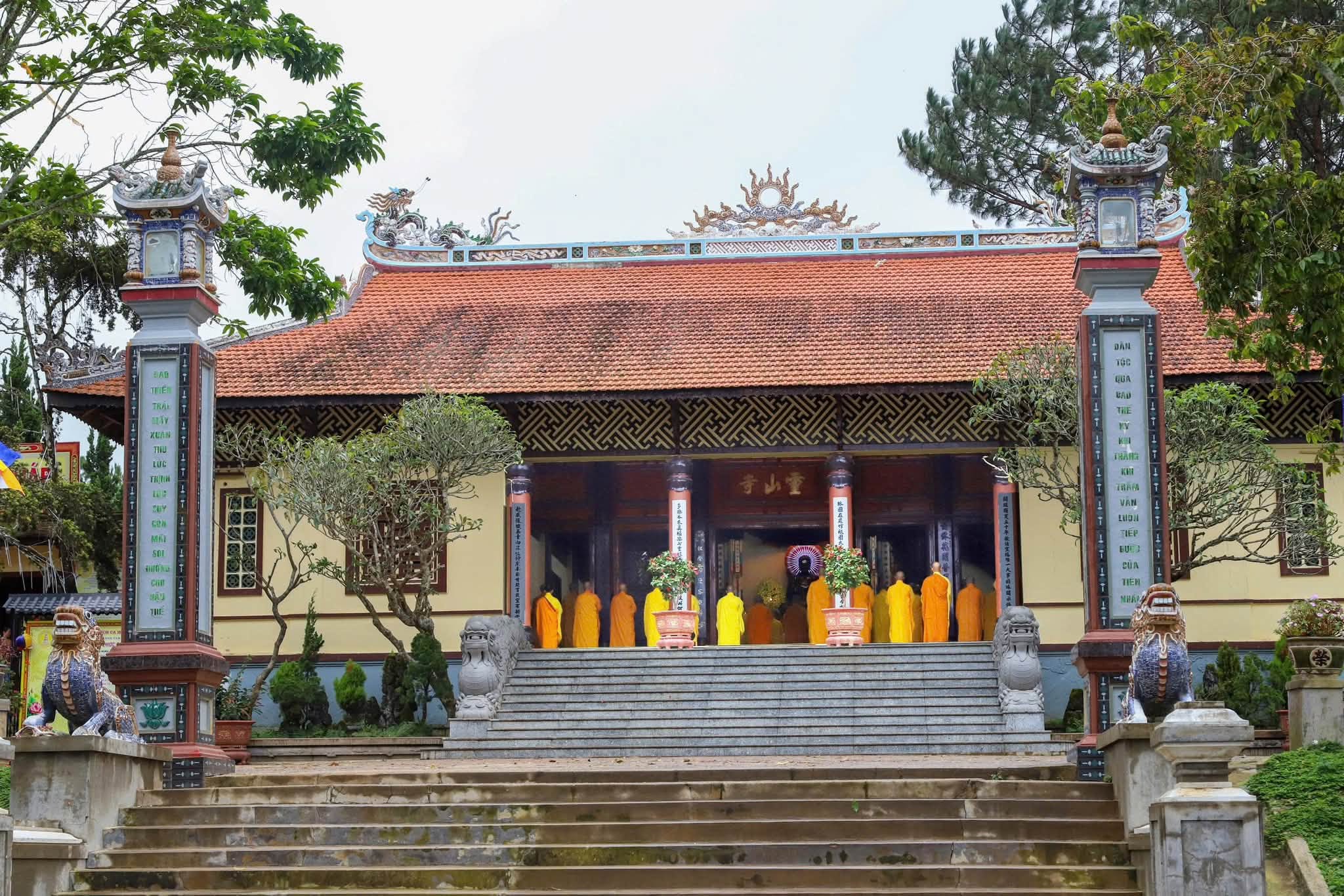
Set on a gentle hill in the heart of Da Lat, Linh Son Pagoda is one of the city’s long-established Buddhist temples. Rather than being monumental in scale, the pagoda is known for its quiet atmosphere, traditional East Asian architecture and leafy surroundings.
Located at 120 Nguyen Van Troi Street, approximately 700 meters northwest of central Da Lat, Linh Son is conveniently situated for visitors exploring the city’s historic and cultural landmarks.
The pagoda is not only a place of Buddhist worship but also has an important connection with the development of Buddhism in Da Lat and the Central Highlands during the 20th century.
The History of Linh Son Pagoda
Linh Son Pagoda was established in 1938, at a time when Da Lat was attracting increasing numbers of residents from Vietnam’s central provinces. As the local community grew, so did the need for a Buddhist place of worship and spiritual gathering.
The pagoda was developed with contributions from Buddhist followers and support from prominent figures associated with the Buddhist community of the period. After its completion, Linh Son gradually became one of the important Buddhist institutions in Da Lat.
The name Linh Son refers to Vulture Peak, or Gṛdhrakūṭa, in India, a sacred site traditionally associated with several important teachings of the Buddha and particularly with Mahayana Buddhist tradition.
Venerable Thich Tri Thu was among the early abbots of the pagoda. He was followed by other respected monks, including Venerable Thich Dieu Hoang and Venerable Thich Tu Man, who continued the temple’s religious and educational traditions.
Over time, Linh Son developed from a local place of worship into an important center of Buddhist activities in the Da Lat area.
Linh Son and the History of Buddhism in Da Lat
During the 20th century, Linh Son Pagoda played an important role in Buddhist activities in Da Lat. The temple was associated with religious organization, Buddhist education and community activities involving monks and lay followers.
It also served as a center for local Buddhist organizations, helping coordinate religious, charitable and educational activities in the highlands.
The pagoda became particularly significant during the Buddhist movement of 1963, when religious tensions and demands for freedom of worship led to demonstrations and other forms of peaceful protest across South Vietnam.
In Da Lat, Linh Son was one of the places where monks, Buddhists and supporters gathered. Prayer sessions, hunger strikes and peaceful activities took place here during a period of considerable political and social upheaval.
These events form an important part of the temple’s modern history, linking Linh Son not only to Buddhist religious life but also to the broader social history of Da Lat in the 20th century.
Today, the pagoda remains an important Buddhist institution and houses the office of the Buddhist Sangha of Lam Dong Province, while continuing to welcome Buddhist followers and visitors.
Traditional East Asian Architecture Among the Trees
Linh Son has a distinctly different character from some of Da Lat’s other famous Buddhist temples.
While Thien Vuong Co Sat reflects the cultural heritage of the Chinese community and Truc Lam Zen Monastery is known for its grand setting and scale, Linh Son has a more restrained appearance rooted in traditional Vietnamese and East Asian Buddhist architecture.
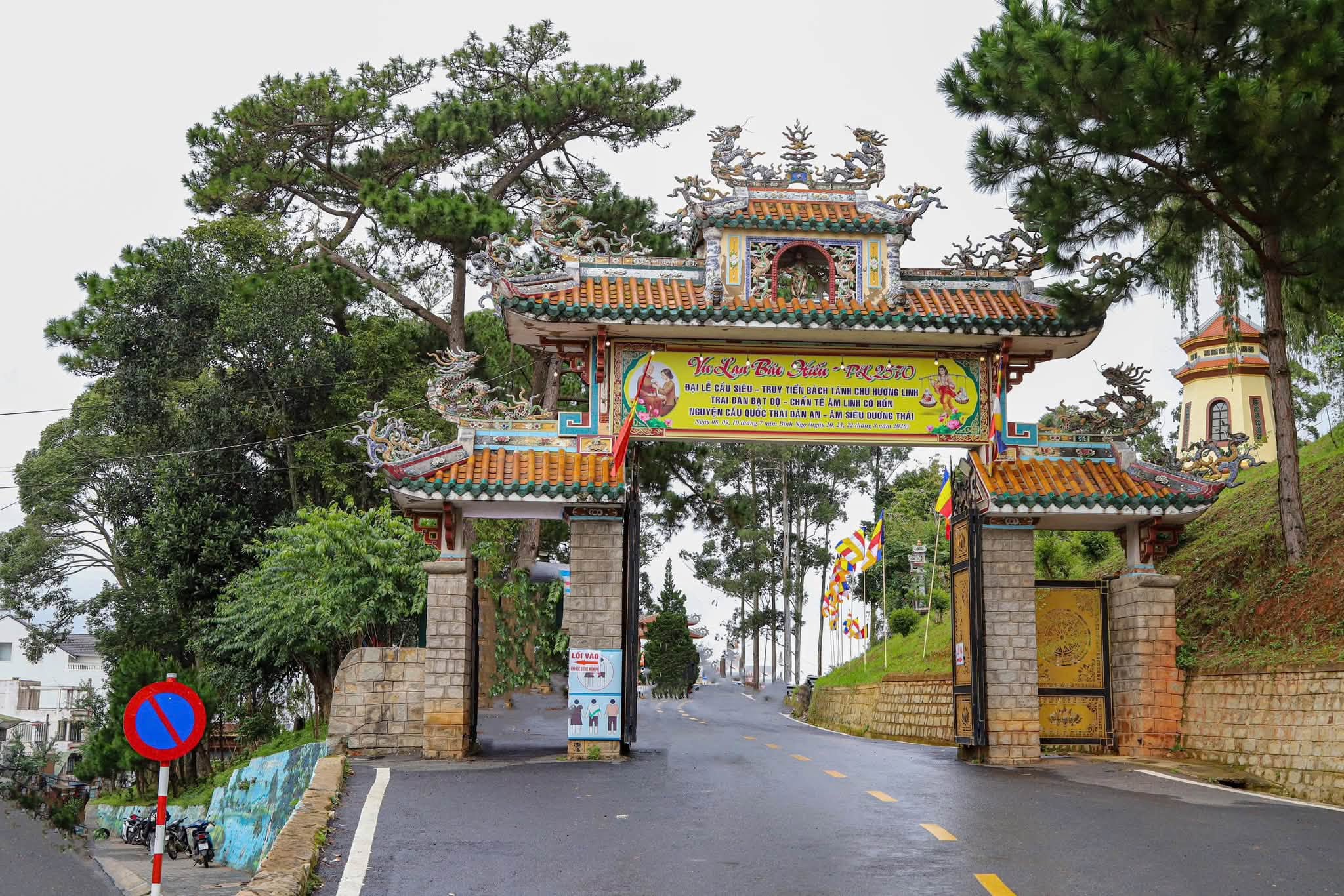
Visitors enter the temple grounds from Nguyen Van Troi Street and follow a path leading gently uphill. In front of the temple stands a statue of Avalokitesvara Bodhisattva, positioned on a lotus pedestal, accompanied by a three-tier octagonal stupa.
Pine, eucalyptus and other tall trees surround the grounds, while rock gardens and landscaped areas add to the peaceful atmosphere.
The main buildings follow a traditional Buddhist layout, with tiled roofs, wooden architectural elements and decorative details characteristic of East Asian religious architecture.
The overall design is relatively modest. Rather than relying on monumental scale, Linh Son creates its atmosphere through proportion, traditional details and the way the buildings blend into the surrounding greenery.
The Historic Bronze Buddha
The most notable object inside the main sanctuary is the bronze statue of Shakyamuni Buddha, cast in 1952.
The statue is approximately 1.7 meters tall and weighs around 1,250 kilograms. It occupies the central position in the sanctuary, depicting the Buddha seated in meditation on a lotus throne.
For visitors interested in art and history, the statue is one of the most significant features of Linh Son. Beyond its religious importance, it represents the craftsmanship of bronze casting during the mid-20th century.
The temple also houses a large bronze bell, dating from the same period. The sound of the bell carrying through the surrounding trees contributes to the quiet, contemplative character of the pagoda.
A Peaceful Hill in the Heart of Da Lat
One of Linh Son’s greatest attractions is its location.
Although the pagoda is close to the city center, its elevated grounds create a sense of separation from the surrounding urban environment. Tall trees, open courtyards, rock gardens and traditional Buddhist buildings give the temple a calm atmosphere.
The grounds also include areas for monks, memorial stupas associated with senior monks and green garden spaces. From some elevated points, visitors can look toward the surrounding neighborhoods and hills of Da Lat.
For architecture enthusiasts, the temple is worth exploring slowly, paying attention to its tiled roofs, Buddhist sculptures, octagonal stupa and decorative details. For travelers seeking a quiet moment during a busy Da Lat itinerary, the peaceful setting may be its greatest attraction.
Visiting Linh Son Pagoda
Because Linh Son is located within Da Lat’s urban area, it is easy to reach by motorbike, car or as part of a walking and sightseeing itinerary around the city.
Morning and late afternoon are particularly pleasant times to visit, when temperatures are generally comfortable and the softer light complements the trees and traditional architecture.
As Linh Son remains an active religious site, visitors should dress modestly, keep their voices low and respect ongoing ceremonies. When taking photographs inside the sanctuary or around areas of worship, follow the temple’s instructions.
Linh Son does not require a long visit, but it offers a valuable opportunity to discover another layer of Da Lat’s history.
Nearly a century after its establishment, the pagoda continues to sit quietly on its hill, preserving the character of a traditional Buddhist temple while serving the local community. Amid the increasingly lively atmosphere of modern Da Lat, Linh Son remains a place of quiet reflection where architecture, history and Buddhist life come together.
Quick Facts
| Information | Details |
|---|---|
| Name | Linh Son Pagoda |
| Address | 120 Nguyen Van Troi Street, Da Lat |
| Location | On a gentle hill, about 700 m from central Da Lat |
| Established | 1938 |
| Architectural style | Traditional Vietnamese and East Asian Buddhist architecture |
| Main highlight | Bronze statue of Shakyamuni Buddha, cast in 1952 |
| Statue weight | Approximately 1,250 kg |
| Other features | Avalokitesvara statue, octagonal stupa and large bronze bell |
| Historical significance | Connected with the development of Buddhism in Da Lat |
| Current role | Buddhist temple and office of the Buddhist Sangha of Lam Dong Province |