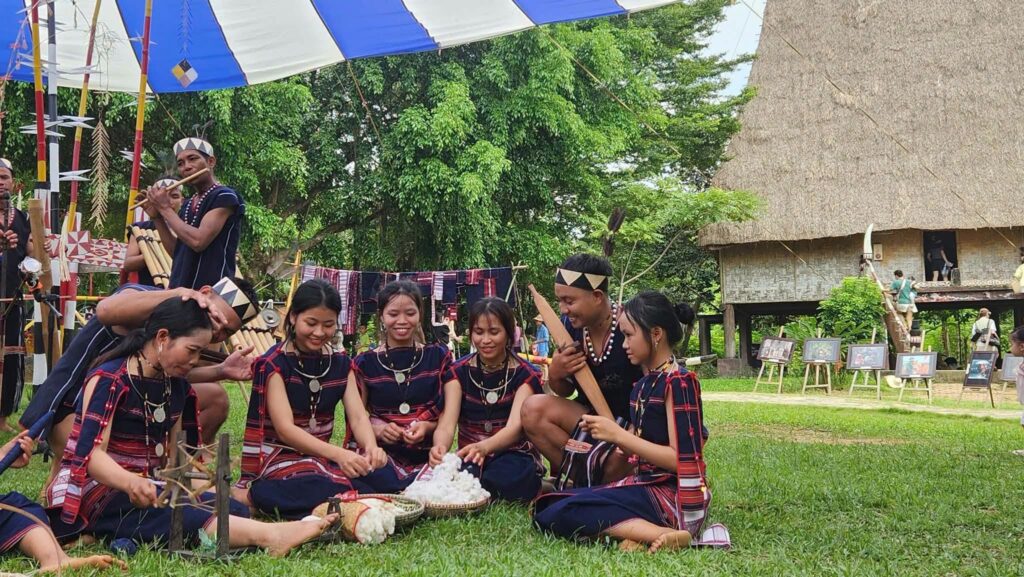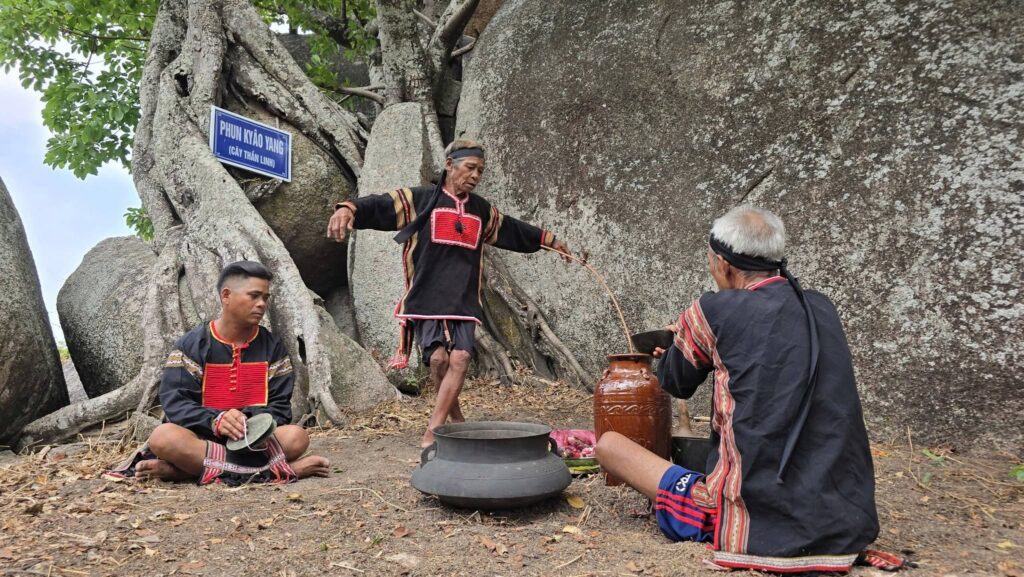
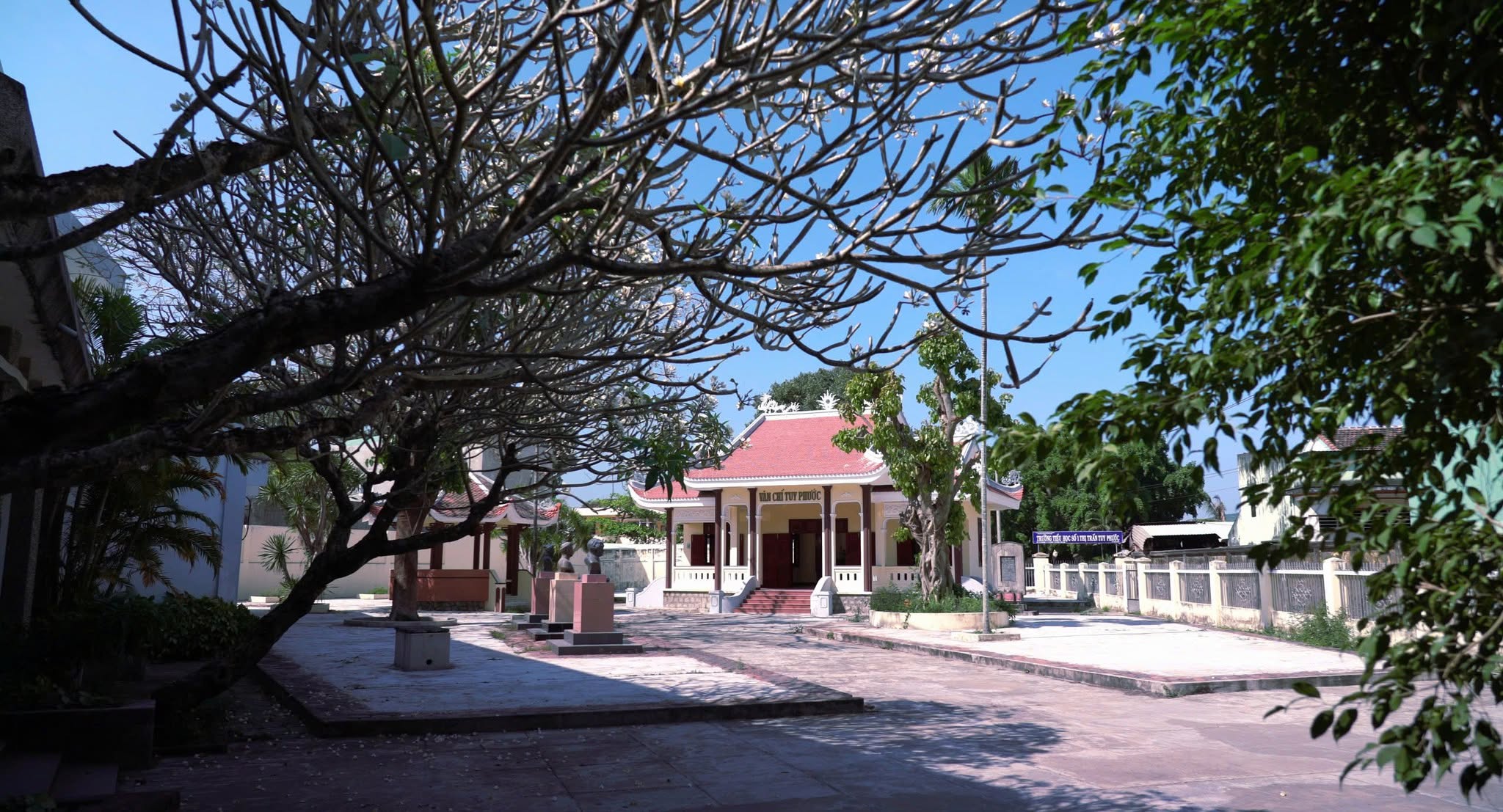
Located at No. 17 Xuan Dieu Street, Trung Tin, Tuy Phuoc Commune, Van Chi Tuy Phuoc is a historic cultural site associated with the intellectual and educational traditions of the Tuy Phuoc community. More than simply a place of worship for Confucius, Van Chi once served as a gathering place for scholars, where literary activities, rituals and the spirit of respect for learning were maintained for generations.
| Information | Details |
|---|---|
| Name | Van Chi Tuy Phuoc |
| Address | No. 17 Xuan Dieu Street, Trung Tin, Tuy Phuoc Commune |
| Type | Historical and cultural relic |
| Established | 1843 |
| Main figure worshipped | Confucius |
| Founder | Lê Dai Cang |
| Historical period | From the Nguyen Dynasty to the modern era |
| Cultural significance | Symbol of learning, respect for teachers and scholarly tradition |
| Architectural character | Traditional Vietnamese architecture, later renovated and expanded |
A Traditional Institution for Scholars
Van Chi was a type of cultural and religious institution that existed in many parts of northern, central and southern Vietnam before the August Revolution. Unlike communal houses and pagodas, which generally served the wider village community, Van Chi was primarily associated with successful scholars and the local scholarly class.
The establishment of a Van Chi usually depended on contributions from scholars, while land could be voluntarily donated by individuals. The institution was commonly administered by respected scholars, particularly those who had achieved high academic degrees.
In Tuy Phuoc, Van Chi was established in 1843 to worship Confucius. Its activities continued from the time of its establishment until before the August Revolution of 1945. Each year, ceremonies were held in spring and autumn, particularly on the anniversary of Confucius’ death. Following the ceremonies, scholars would gather for traditional literary activities such as tuồng performances, poetry exchanges and discussions and appreciation of literary works.
These activities turned Van Chi into more than a place of worship. It became a cultural space where the scholarly community could meet, exchange ideas and reinforce the importance of education.
Founded by Lê Dai Cang
The establishment of Van Chi Tuy Phuoc was closely associated with Lê Dai Cang, a scholar and mandarin who served under several Nguyen emperors from Gia Long to Thieu Tri.
Lê Dai Cang organized a board to collect contributions for the construction of Van Chi. The land was donated by Tran Van Dien, who served as an An Sat official. Construction was completed and inaugurated in 1843.
Lê Dai Cang subsequently gathered scholars from Tuy Phuoc as members of the institution and established its management structure. Among those who later held an important position was Dao Phan Duan, who became Chanh Van Chi. He had passed the doctoral-level examination in the At Mui examination of 1895.
The history of Van Chi therefore reflects not only the development of Confucian worship but also the formation of a local scholarly community whose members regarded education and academic achievement as important values for the village.
Architecture and Changes Through Time
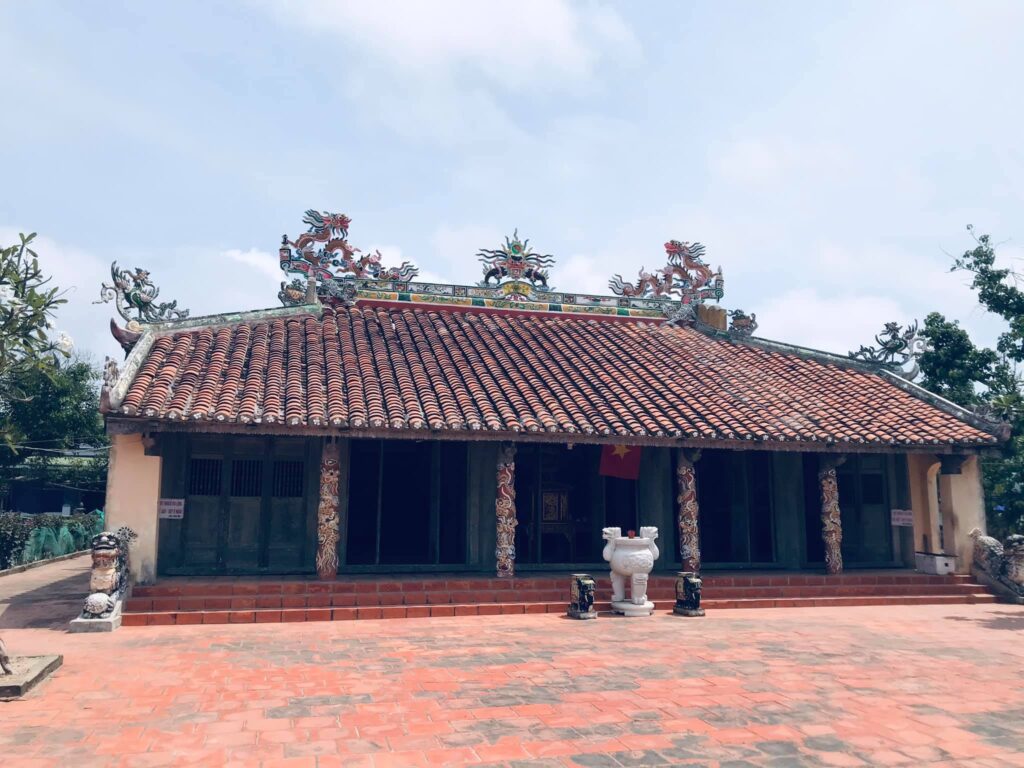
The present-day Van Chi Tuy Phuoc stands on its original foundation, although the building has undergone changes and renovations over time.
The original structure was relatively modest, consisting of a single room with four worship altars dedicated to Confucius, the associated figures known as Tu Phoi, the Ten Philosophers and the Twelve Worthies. These original elements no longer survive in their entirety.
In 1962, the structure was expanded with the addition of Thanh Mon and two rooms extending to the east and west. The building now features a tiled roof decorated with dragon motifs, including paired dragons competing for a pearl. Decorative vegetal patterns appear along the eaves, while the front section has a flat-roofed tiền sảnh.
The entrance is divided into compartments by architectural columns. Earlier kylin sculptures were once placed at the front, although these have since been damaged. At the center is a large opening shaped like a traditional cuốn thư, bearing three Chinese characters meaning “Khổng Tử Thánh”, referring to Confucius as a sage.
Although modest in scale, the architecture preserves the atmosphere of a traditional scholarly sanctuary and reflects the importance once attached to Confucian learning in local society.
A Cultural Space for Learning and Respect
The significance of Van Chi Tuy Phuoc extends beyond its architectural remains. For generations, it represented the intellectual aspirations of the community and the belief that successful scholars were important assets of the village.
The spring and autumn ceremonies brought scholars together in an atmosphere of reverence and fellowship. Literary exchanges, poetry recitation and discussion created opportunities for scholars to maintain relationships and share knowledge.
These gatherings also reflected the social standing of the scholarly class in traditional village society. Academic achievement was not regarded solely as an individual accomplishment. A successful scholar could bring honor to the family and contribute prestige to the wider community.
Through this tradition, Van Chi became a symbol of tôn sư trọng đạo, the Vietnamese cultural principle of respecting teachers and honoring learning. The institution also reflects the strong influence of Confucian thought on the intellectual and cultural life of Tuy Phuoc.
Historical Significance
Van Chi Tuy Phuoc is also associated with important events in the local revolutionary history. According to local historical accounts, the site was connected with activities during the period of resistance against foreign invasion and the August Revolution.
The site is also associated with the establishment of the Tuy Phuoc District Party Committee and with events related to the seizure of political power in 1945. These historical connections make Van Chi a source of value for understanding the political and social transformation of Tuy Phuoc during a period of major change.
Taken together, its scholarly, cultural and revolutionary associations give Van Chi Tuy Phuoc a significance that extends well beyond its physical structure.
Preserving the Memory of a Scholarly Tradition
Today, Van Chi Tuy Phuoc remains a reminder of a cultural tradition in which education, scholarship and respect for teachers occupied an important place in community life.
The site preserves memories of generations of scholars who gathered here, as well as the rituals and literary activities that once formed part of the intellectual life of Tuy Phuoc. Its value lies not only in the surviving architectural details but also in the historical memory and cultural ideals associated with the place.
For visitors interested in the history and culture of Tuy Phuoc, Van Chi offers a different perspective from more familiar religious and communal monuments. It tells the story of a community through its pursuit of learning, its respect for knowledge and its belief that education could bring honor not only to an individual but to an entire village.