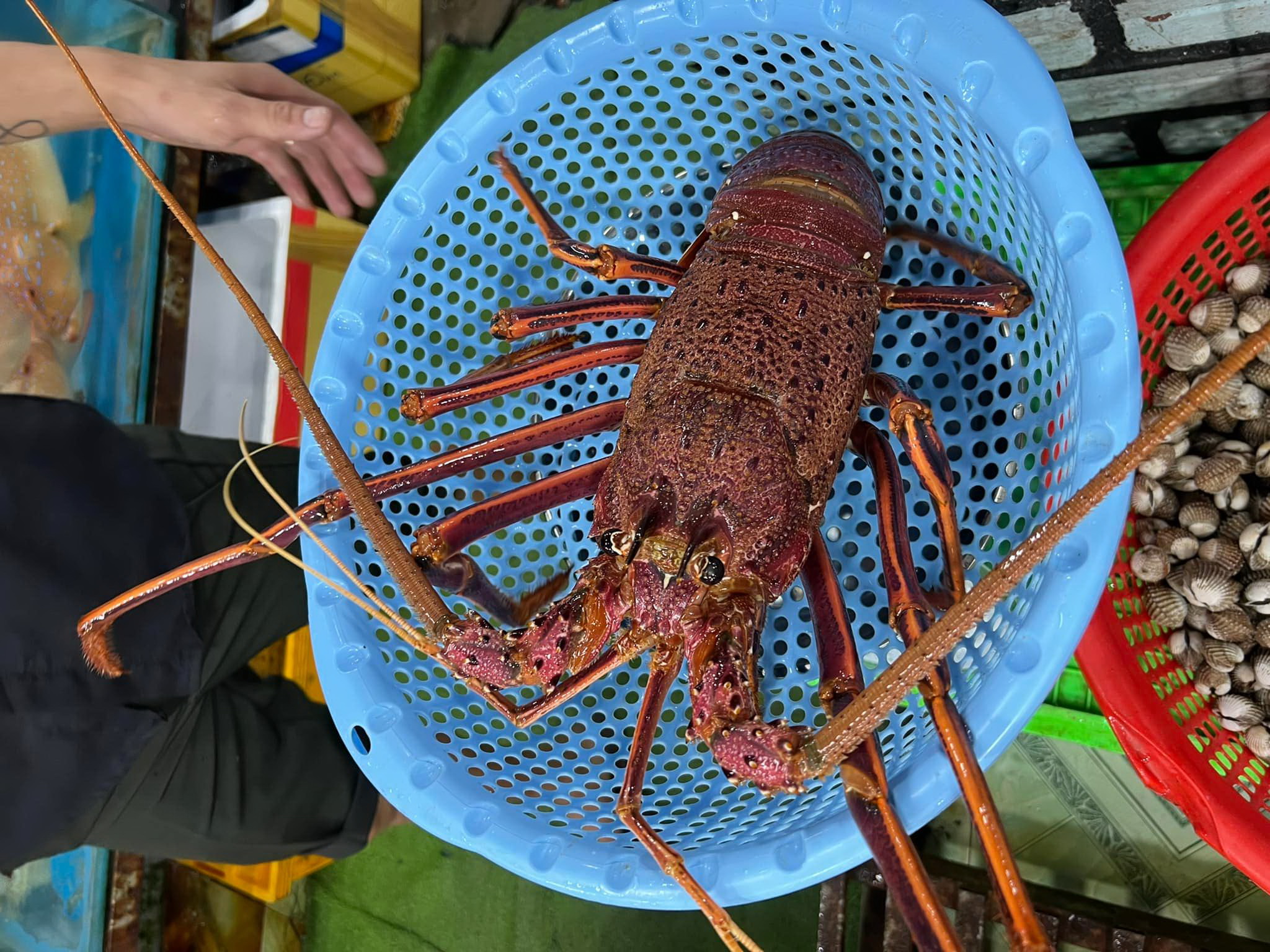
Phu Quy Island is blessed with an abundant marine ecosystem, and lobster—both wild-caught and farm-raised—has long been considered one of the island’s most luxurious and unforgettable culinary experiences.
Wild-Caught & Farm-Raised Lobster
Local fishermen often dive in deep waters around coral reefs to catch wild lobsters. In addition, floating sea farms across the island have successfully developed lobster aquaculture, making prices far more affordable than on the mainland.
On Phu Quy, lobster typically ranges from 1.5 to 3 million VND per kilogram, depending on size.

A Must-Try Dish When Visiting Phu Quy
A trip to Phu Quy would be incomplete without tasting its famous lobster. The meat is firm, sweet, and slightly crunchy—an irresistible combination that leaves a lasting impression on any seafood lover.
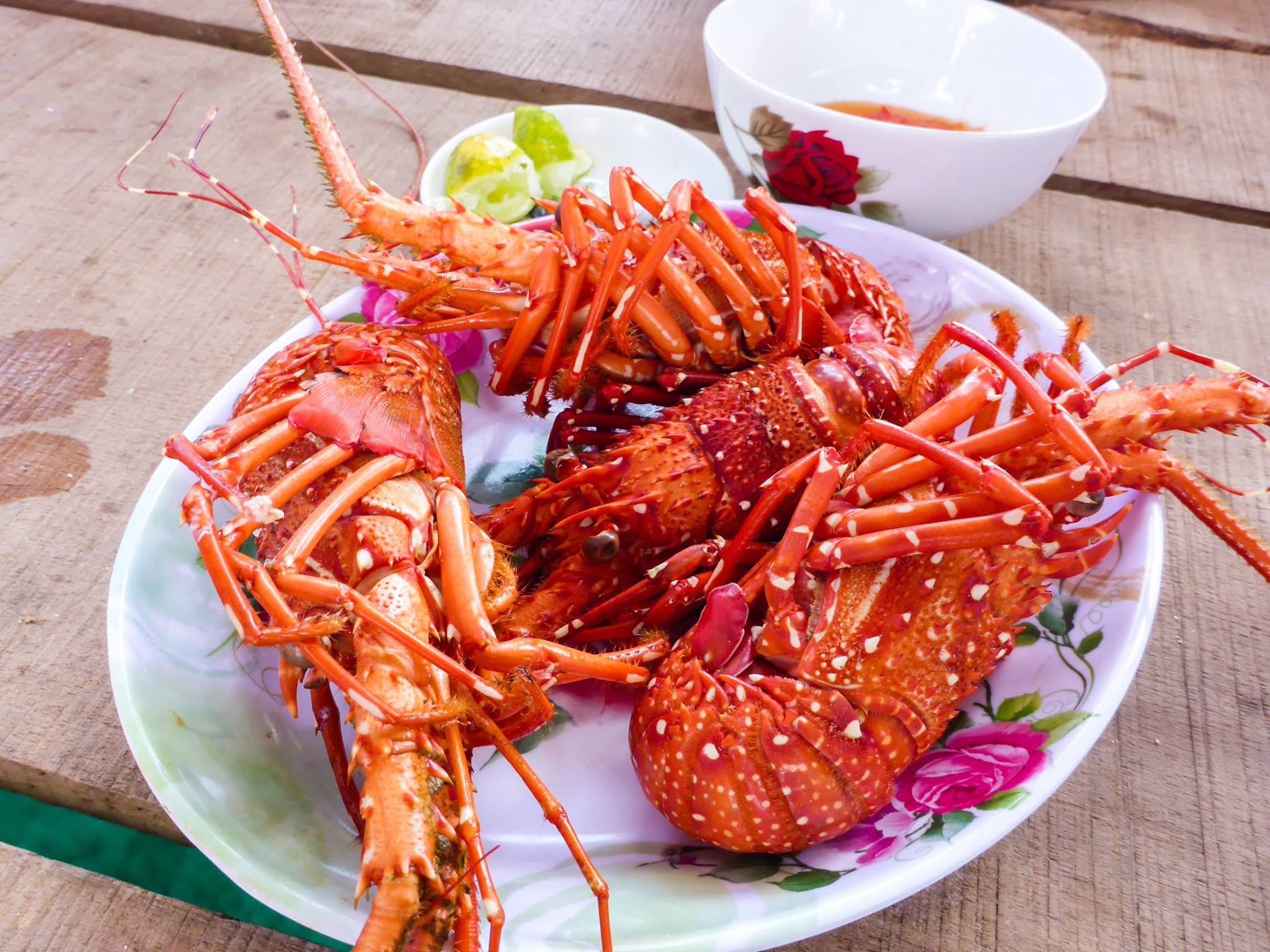
Lobster is available everywhere, from the fishing port to local seafood restaurants. Popular cooking methods include steaming, grilling, sashimi-style salads, and lobster porridge. When cooked, the shell turns a vibrant red, revealing glistening white meat in thick, succulent layers.
The Lobster-Hunting Tradition
In the past, Phu Quy was known for having large numbers of wild lobster, especially around Hon Den, Hon Do, and Hon Tranh—areas filled with underwater rock formations and caves ideal for lobster habitat.
During the day, lobsters hide in crevices; at night, they crawl out to forage. The lobster-hunting season traditionally lasted from January to May.
Lobster hunters equipped themselves with lead belts for weight, single-lens diving goggles, protective gloves, a 50 cm metal hook, a net, and a basket tied to the waist. At dawn, when the seawater was “warm,” divers plunged beneath the surface. Once reaching the seabed, they used the metal rod to probe inside rock holes to locate lobsters.
Before 1975, lobster diving was a thriving profession on Phu Quy. Many diving boats operated daily, each carrying 4–5 divers, often harvesting about 100 kg of lobster per day. Most divers were exceptionally strong swimmers capable of staying underwater far longer than the average person.
Besides their premium meat, lobster shells were once used to make decorative items. Today, lobster farming thrives across Phu Quy, especially on floating fish farms that raise fish, lobsters, and sea snails.