
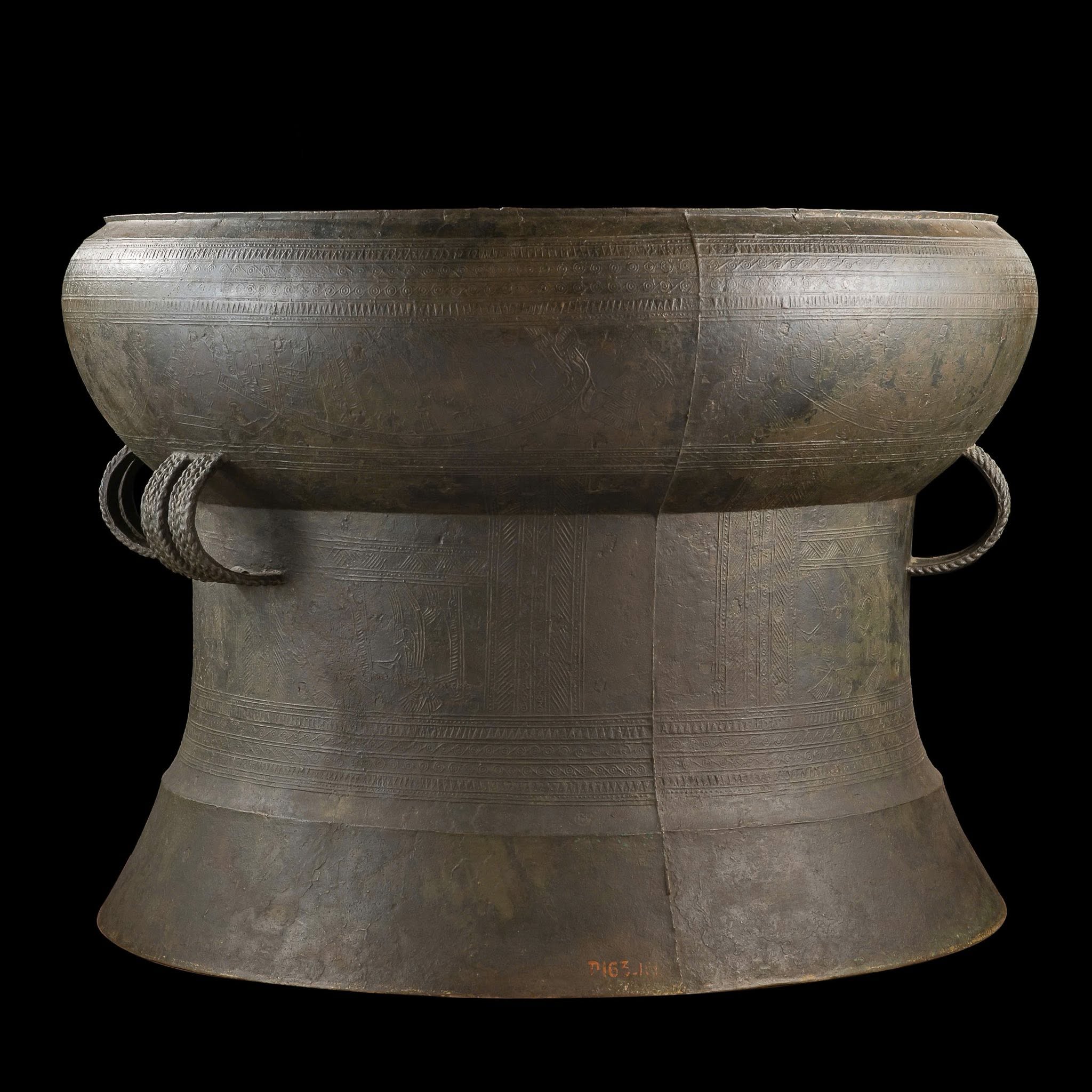
The Ngoc Lu Bronze Drum is one of the most representative artifacts of the Đông Sơn culture and a distinctive symbol of ancient Vietnamese civilization during the formative period of the nation.
Basic Information
- Material: Bronze
- Date: Approximately 2,500–2,000 years ago
- Artifact type: Ancient artifact of the Đông Sơn culture
- Classification: H1 – Heger
- Dimensions: Face diameter: 79.3 cm; base diameter: approximately 80 cm; height: 63 cm
- Weight: Approximately 86 kg
- Color: Bluish gray
- Current collection: Vietnam National Museum of History
- Recognition as a National Treasure: Decision No. 1426/QĐ-TTg, dated December 1, 2012
Discovery and Preservation History
The Ngoc Lu Bronze Drum was discovered around 1893–1894 in an alluvial area along the Red River, in Như Trác Commune, Nam Xang District, Lý Nhân Prefecture, in what was formerly Hà Nam Province. While excavating soil at a depth of approximately two meters, local residents discovered a large bronze artifact. The drum was subsequently taken to the communal house in Ngọc Lũ Village, where it was worshipped and preserved.
Approximately seven or eight years later, a French artist visited the communal house to make drawings and recognized the artifact’s exceptional value. The information was reported to the Hà Nam Resident Superior. In 1902, during an exhibition held in Hanoi, the drum was purchased by the École française d’Extrême-Orient for 550 đồng.
From 1958 to the present, the Ngoc Lu Bronze Drum has been preserved, displayed, and introduced in the main exhibition system of the Vietnam History Museum, now the Vietnam National Museum of History.
Shape and Decorative Patterns
The Ngoc Lu Bronze Drum consists of four principal sections: the drum face, upper body, cylindrical body, and base. Its overall form is well-balanced, with substantial dimensions and a remarkably advanced level of bronze-casting technology.
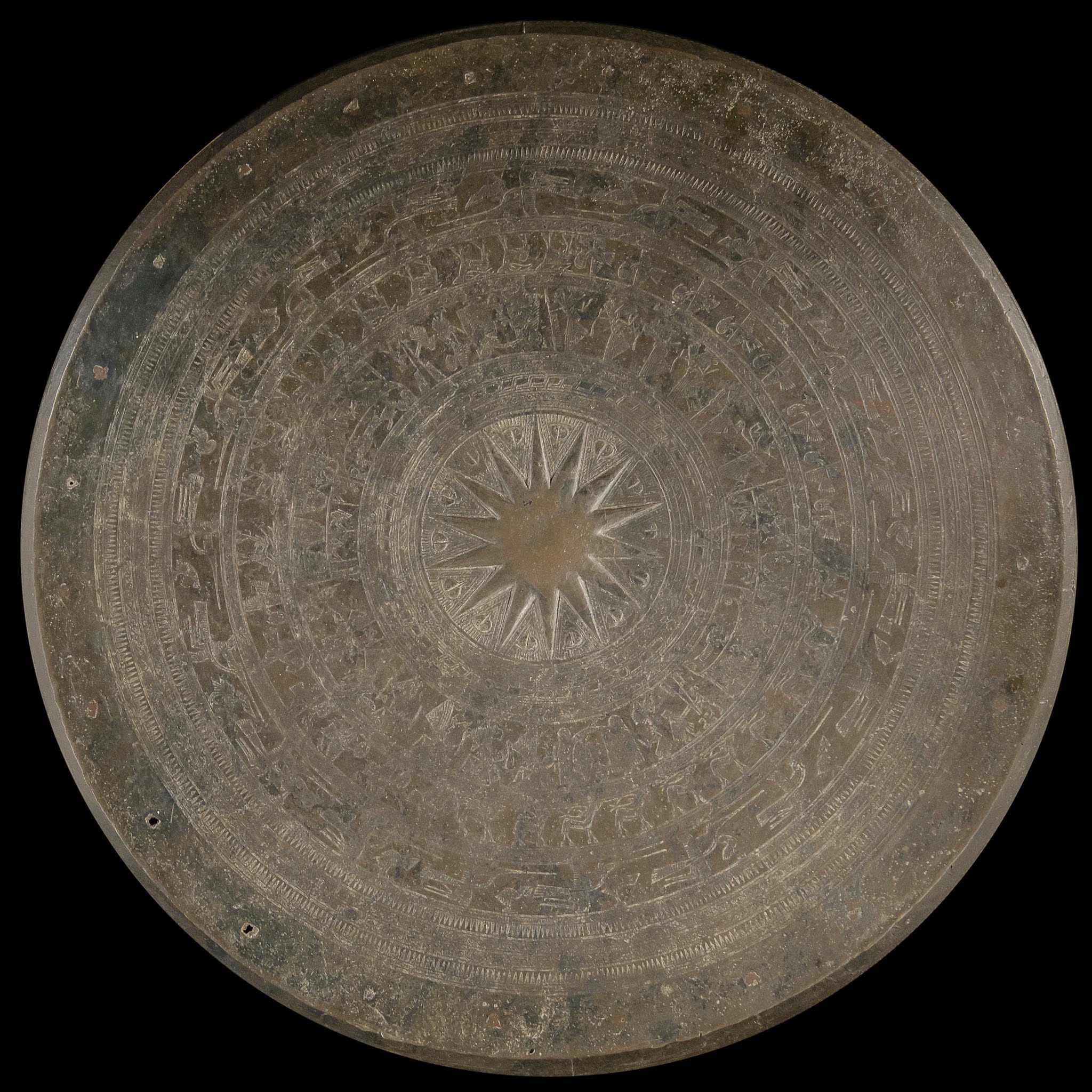
The drum face features a 14-pointed star at the center, surrounded by 16 decorative bands containing a rich variety of motifs. These include circles with central dots and tangential lines, geometric patterns, sawtooth designs, feather-dressed figures, people pounding rice, drummers, curved-roof stilt houses, deer, and birds. These images vividly reflect the material life, spiritual world, and religious beliefs of Đông Sơn communities.
The upper body of the drum functions as a resonating section that helps amplify its sound. The upper part is decorated with geometric bands, while the lower section depicts six boats carrying warriors and captives, interspersed with images of birds, hunting dogs, and various stylized motifs.
The cylindrical body helps regulate and refine the sound produced by the drum. Geometric patterns divide the surface into rectangular panels, each containing figures of warriors wearing feathered headdresses and holding weapons while appearing to walk or perform ritual movements.
The base is slightly flared and shaped like a truncated cone. It is undecorated, allowing the sound to escape and spread more effectively.
Historical and Cultural Significance
The Ngoc Lu Bronze Drum is particularly valued for the exceptional harmony between its form, dimensions, casting technique, and decorative artistry. Among the thousands of Đông Sơn bronze drums discovered, it stands out for its rich decorative system, carefully organized composition, and ability to reflect numerous aspects of ancient society.
The images depicted on the drum illustrate familiar activities of Lạc Việt communities, including agricultural labor, rice pounding, communal gatherings, music and dance, warfare, and travel by boat. These scenes make the drum an invaluable source of information for studying the economic life, social organization, beliefs, and artistic traditions of the people who lived during the era traditionally associated with the Hùng Kings.
In Đông Sơn society, bronze drums were not merely musical instruments used in major ceremonies, harvest rituals, festivals, and funerary rites. They also served as symbols of authority and social status among the ruling elite. The sound of the drum was closely associated with important communal activities, reflecting its role in both spiritual life and the organization of society.
The Ngoc Lu Bronze Drum also provides evidence of the highly developed metallurgy and bronze-casting techniques of ancient Vietnamese communities. The combination of alloy composition, mold-making skills, sound-producing technology, and sophisticated decoration demonstrates the remarkable creativity and craftsmanship of Đông Sơn artisans thousands of years ago.
National Treasure
With its outstanding historical, cultural, artistic, and technical values, the Ngoc Lu Bronze Drum is a quintessential representative of the Đông Sơn culture and a symbol of ancient Vietnamese civilization. It holds a special place in the study of Vietnamese history during the nation-building period and is regarded as one of the most influential artifacts in understanding the cultural heritage of Southeast Asia.
The Ngoc Lu Bronze Drum was officially recognized as a National Treasure of Vietnam under Decision No. 1426/QĐ-TTg, dated December 1, 2012.